vip in the city, page 26

To die dreaming

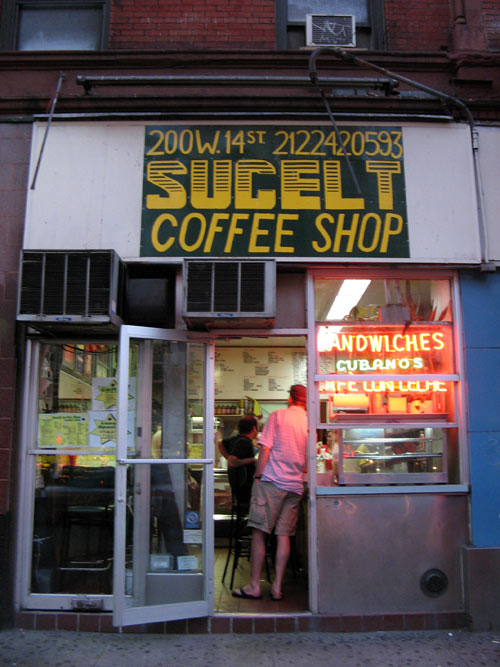
Perhaps it’s the impending arrival of cooler weather, but I’ve been tempted the past few Tuesdays after my weekly CSA vegetable pick-up at the McBurney Y to stop in at Sucelt Coffee Shop, located just off the subway entrance at the southwest corner of 14th Street and Seventh Avenue.

Back when SC and I were living in the West Village, this divey luncheonette was our regular source for good and cheap Latin comfort food. Solid steam table fare with a rotating menu of daily specials, at times trending towards the overly salty: ropa vieja, chuletas, pollo guisado, plantains, arepas, rice and beans… all culled from a multitude Latin American countries. SC loves the warmly satisfying tripe soup; I’m partial to their empanadas and cubanos.

The Village Voice named Sucelt one of New York’s “100 Best & Cheapest Latin Restaurants” in 2003.

Sucelt

When I’m not in the mood to be caffeinated through the night on the coffee shop’s top-notch café con leche, I opt for a batida, which Sucelt translates as a “tropical milkshake,” though the made-to-order drinks can be ordered sin leche. In addition to the more familiar passion fruit, mango, and banana varieties, they also offer tropical fruit blends of mamey and soursop, and an intriguingly named “morir soñando,” which literally translates into “to die dreaming.”

The drink, popular in the Dominican Republic, is usually made of oranges, condensed or evaporated milk, sugar, chopped ice and vanilla.

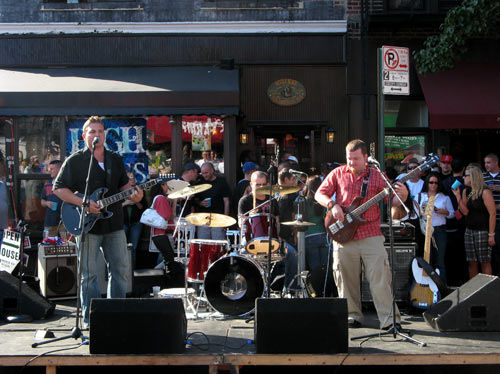
Bay Ridge Festival

Yes, another street festival! I just can’t help myself!

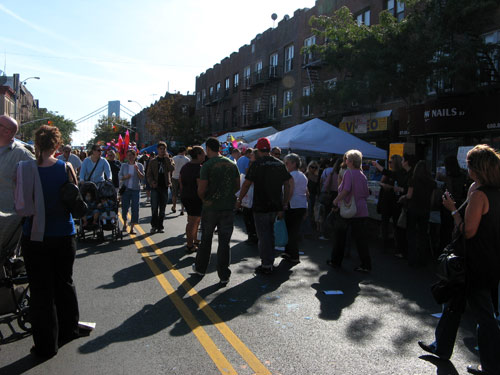
But this one is different. It’s in Brooklyn. It’s the 34th annual Third Avenue Street Fair and Festival in Bay Ridge.

I hopped on the R at Times Square and an hour later — no weekend express service, thanks a lot, MTA — joined the rest of our group at DK and LC’s home. The scene upon my arrival was one of shellshock: three pairs of eyes were riveted to the travesty unfolding on television. Top of the first inning, and with the Mets still to come up to bat, we could not bear to watch any more. So off to Third Avenue, where the scene was somewhat more joyful.

Over the next couple of hours, we explored the length of the fair, from 69th to 95th Streets. SK and KC met us for a bit, en route to J’s soccer game, so we got to hear from the perspective of a six year old, all about High School Musical: The Ice Tour at MSG and yesterday’s Ragamuffin Parade, a Bay Ridge tradition in which children dress in costume and march along Third Avenue.

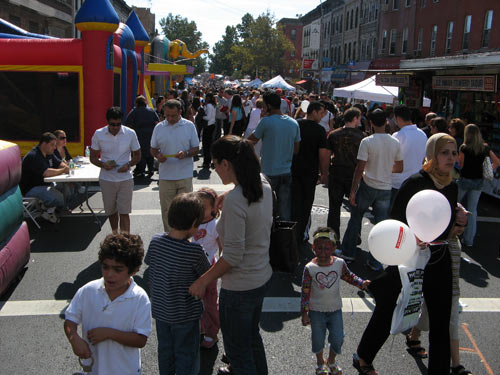
There were plenty of activities for the kids today as well: facepainters, miniature ponies, games, rides, and two solid blocks devoted to those inflatable bouncy-castles, none markedly different from the last.

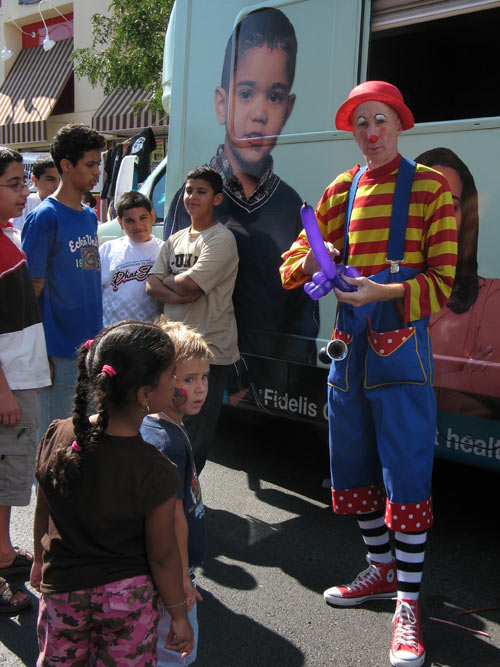
Prayer stations were set up at almost every corner, and tables for politicians (Bay Ridge for Obama, anyone?) and local organizations and businesses. The New York Blood Center brought in a blood mobile… and a clown.

3rd Avenue Festival

3rd Avenue Festival

3rd Avenue Festival

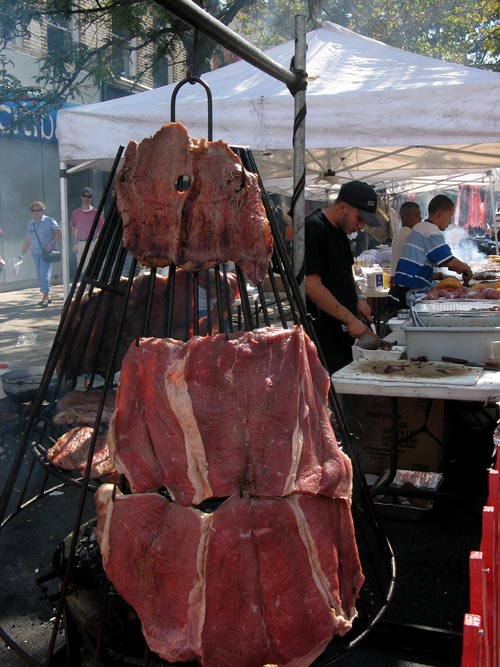
Over 100 merchants participated, from the usual array of street market vendors to restaurant-sponsored buffet tables stacked with almost every type of food imaginable, reflecting the neighborhood’s rich culinary variety. Absurdly large Italian sausages, trays of zeppoles — ours had a chocolate surprise in the middle, which was worrying until we realized that the centers were purposely filled with near-black paste — Thai, Japanese and Chinese food stands, Greek gyros, French crêpes, pastas, pizzas, corn on the cob. Clouds of thick smoke wafted through the air from huge cage-like grills loaded up with slabs of cooking meat.

3rd Avenue Festival

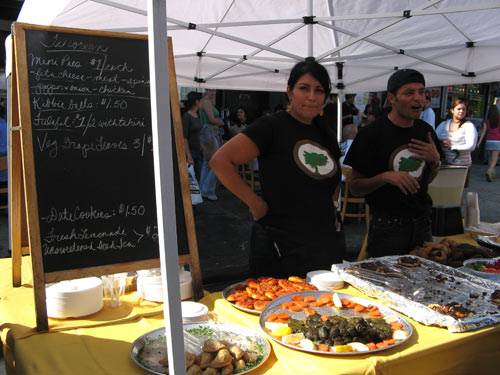
We couldn’t decide upon one place for lunch among the abundance of Bay Ridge eateries, so opted instead to food sample our way through the fair. Here at the popular Tanoreen station, we picked up plates of tasty kebbie balls (minced meat, bulgur wheat, onion and pine nuts), mini pies topped with spinach and chicken, and the restaurant’s lemonade brew, spiked with fresh mint and a splash of rosewater.

3rd Avenue Festival

Karaoke singers and street musicians battled for our ears all along the fair route: local bands, Christian rockers, musical theatre performers performing Smoky Joe’s Café, the Beatles tribute band Yesterday And Today, even an Elvis impersonator.

3rd Avenue Festival

The Brooklyn Eagle estimated 300,000 in attendance that afternoon which seemed high, until we saw the teaming crowds lining the streets towards the bridge.

3rd Avenue Festival

Check out the rest of the street fair photos on flickr. And while you’re at it, take a peek at my photo sets from openhousenewyork weekend (October 6 & 7) since it probably will be a couple of weeks before I get around to those blog entries:

The Voelker Orth Museum and Bird Sanctuary
The Paul Rudolph Foundation
The Rockefeller Center Rooftop Garden
Murray’s Cheese caves tour
and
Scandinavia House

Do well, do GOOD

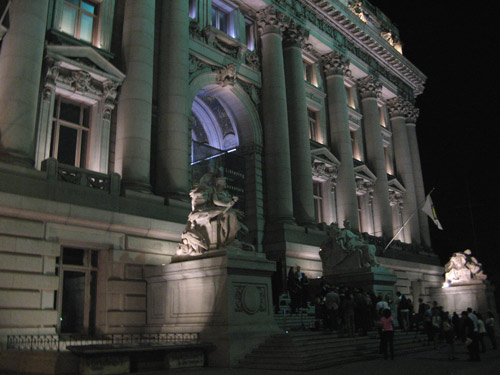
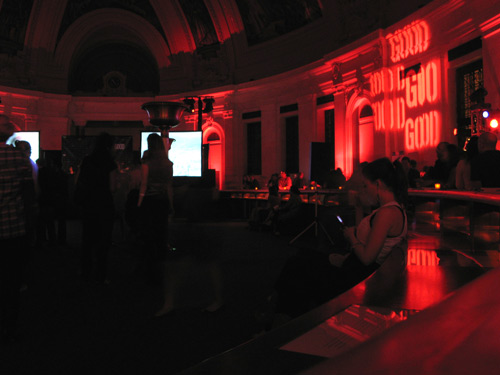
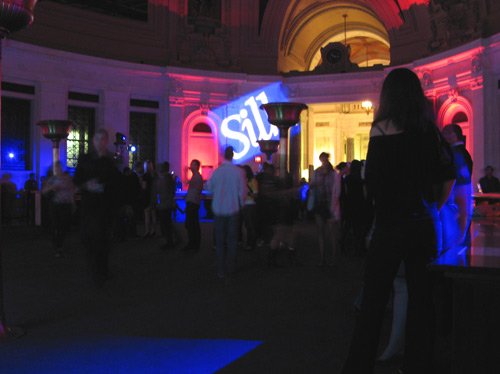
After the barbecue and scotch tasting in Chelsea, B and I made our way downtown for the GOOD magazine one year anniversary party being held inside the old Alexander Hamilton U.S. Custom House at One Bowling Green.

National Museum of the American Indian

GOOD is described as “media for people who give a damn.” Through their LA-based magazine (printed on recycled paper, naturally), feature and documentary films, original multimedia content and local events, GOOD encourages and inspires socially conscious global citizens to band together to effect positive change. To do good, as it were.

For all the weightiness of the topics – a recent cover featured Bruce Bueno de Mesquita, “the man who is putting the ‘science’ back in political science” – the clever design, elegant layouts, slick photography and whimsical illustrations keep the magazine accessible without sacrificing its intelligent edge. And the publication doesn’t just advocate for social, environmental, and political responsibility; subscribe through their website and the full $20 annual subscription cost is donated to the non-profit of your choice. No catch: it’s an experiment in building a new subscriber base without resorting to wasteful advertising, generating interest among a self-selecting group of individuals, while raising money for worthy organizations in the process. How can that be anything but good?

GOOD party

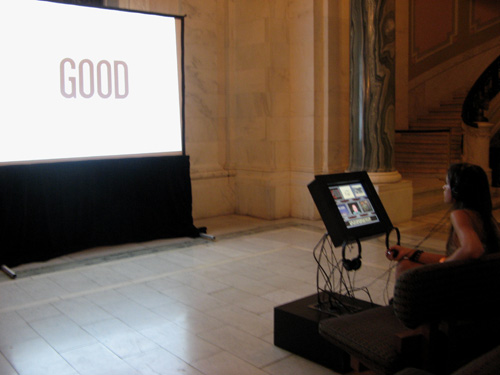
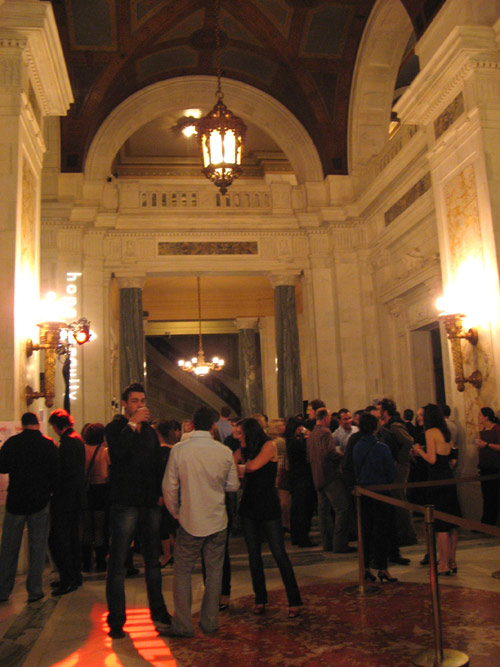
Plus, did I mention that they host fantastic parties? What a thrill to be wandering around this stunning century-old Cass Gilbert-designed Beaux Arts building — now the Smithsonian’s New York branch of the National Museum of the American Indian — among similarly-motivated guests as DJs piped thumping music on two floors.

GOOD party

GOOD party

Among the tables set up outside the Rotunda: one for Hope Equity, an online community modeled after a financial portfolio, allowing individuals to “invest” in endowment funds for one or more chosen countries or causes.

GOOD party

Fall for Dance 2007

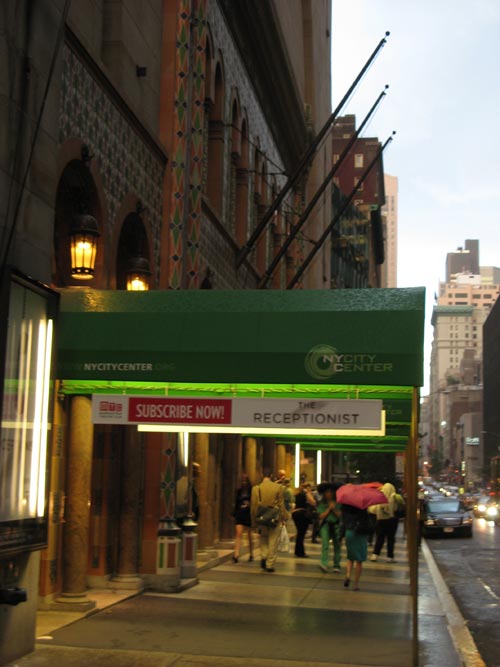
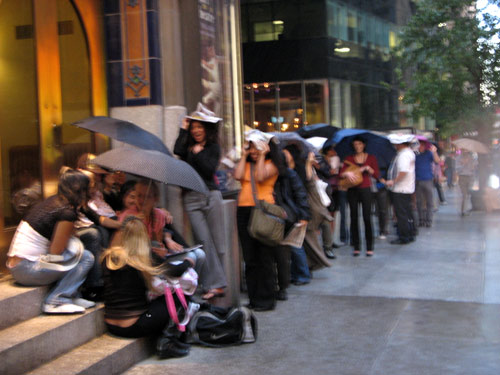
Tonight, we convened in midtown for the annual Fall for Dance Festival at City Center. Around 6:30PM, a hard and steady rain began to fall, drenching all those lined up along West 55th Street, hoping for a crack at last-minute availabilities to this evening’s sold out performance.

We, of course, had snagged our hard-won tickets the first hour they went on sale, a couple of weeks ago.

Fall for Dance

Fall for Dance standby

SYB for his efforts in the endeavor, unfortunately, didn’t even get to attend, ceding his seat to DM.

On the bill tonight: The American Ballet Theatre‘s only festival appearance: “Le Corsaire” (Pas de Deux), which is among classical ballet’s most celebrated and performed — some would say: clichéd — excerpts. It was to be the evening’s most traditional set, nestled among four other non-ballet segments. My personal favorite was the show opener, a rousing acrobatic, street dance-influenced set by the French hip-hop company Compagnie Käfig. Just before the intermission, the Ballet Hispanico spiced things up with excerpts from their sultry “Club Havana,” followed by dance legend Carmen deLavallade, in a short, rather hammy set piece. (deLavallade, for her part, looked remarkably limber for her 76 years.) Doug Varone and Dancers closed out the show with a frustratingly repetitive modern dance segment, set to Philip Glass’s “The Light“.

For $10 a seat, though, the audience could afford to be, and was, enthusiastic and magnanimous in their applause throughout. I’ll leave the peformance reviews to the experts, but overall we had a great time, enhanced in no small part for some (or at least one) of us by the pre-show vodka and sake flights. Yes, you know who you are.

DM, who knows more about dance than the rest of our group combined, offered some insights into tonight’s venue and program, visibly wincing at my woefully misguided frames of reference: deLavallade’s husband (and costume designer for her set) Geoffrey Holder as “the guy from those 7-Up commercials” and Pilobulus as “the troupe that performed at the Oscars.”

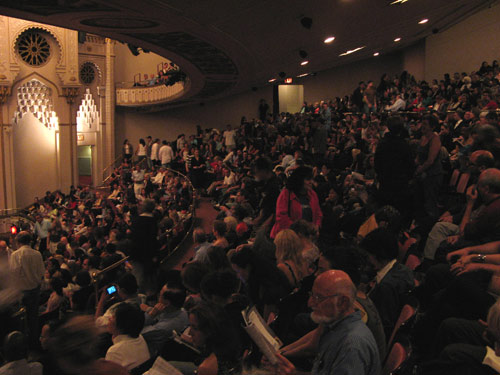
Fall for Dance

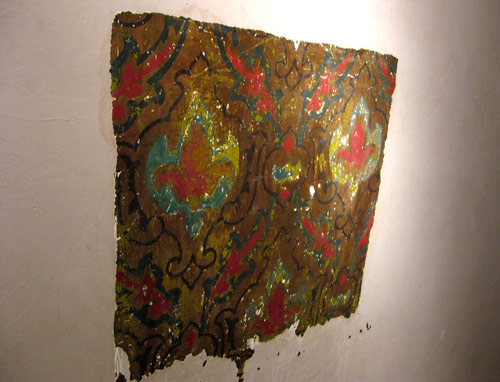
A patch left unpainted during the City Center’s 1980s renovation, to reveal the original intricate Moorish detailing beneath:

City Center wall

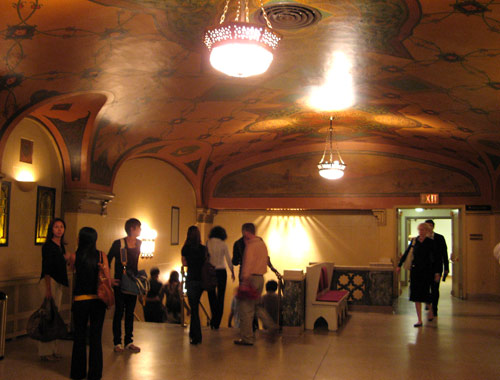
Fall for Dance

After the show, hoping to catch one last glimpse of those Käfig dancers at the adjacent Lounge FFD, we had our minor celebrity sighting of the night when we spotted deLavallade mingling with Mr. Keaton from Family Ties, a.k.a. Michael Gross.

What would we do, baby,
Without us?
Sha la la la.

Free ice cream!

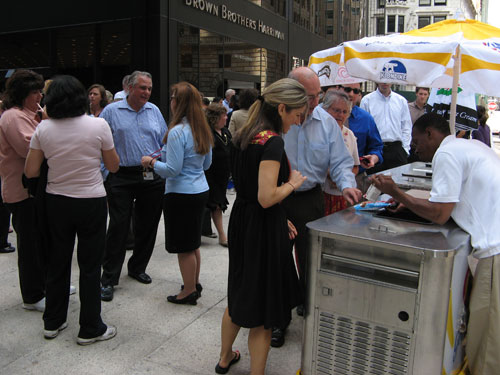
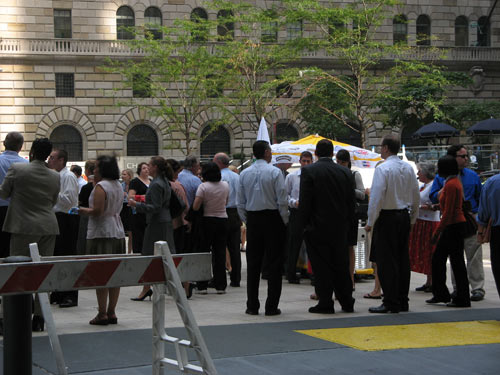
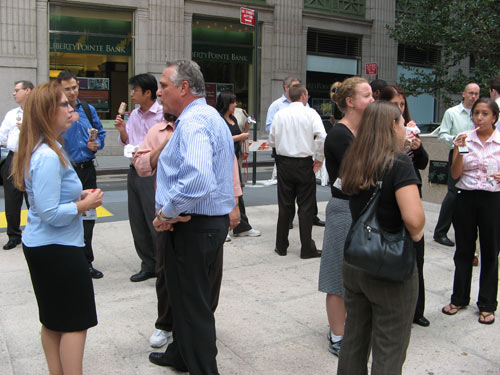
On my way back to the office after lunch, I came upon this swirling, happy crowd, at the center of which was the Good Humor Man, handing out free ice cream to financial district workers on this unseasonably warm afternoon. Strawberry Shortcake, Chocolate Eclair, Toasted Almond, REESE’S Peanut Butter Cup and OREO bars… and it’s not even National Ice Cream Day!

I can’t remember the last time I had ice cream on a stick.

Good Humor Man

Good Humor Man

Good Humor Man

Did you know that the company also make ice cream sandwiches for dogs?

XO XO

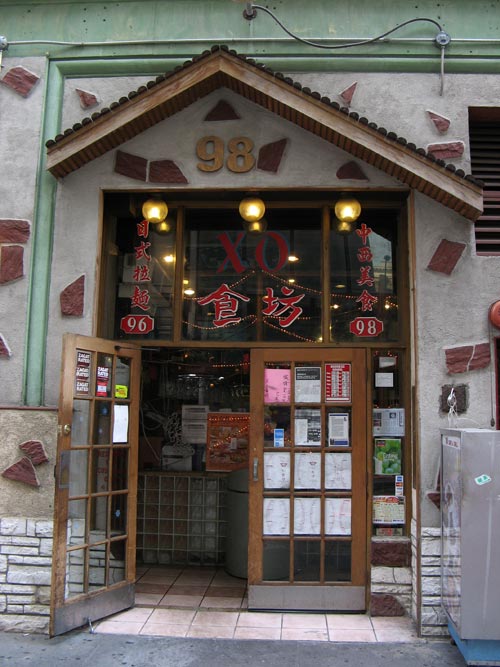
On Walker Street for lunch at XO Cafe & Grill, presumably named for the Cantonese spicy seafood sauce, and not the extra old cognac or the affectionate sign-off. “You know you love me.

XO Cafe

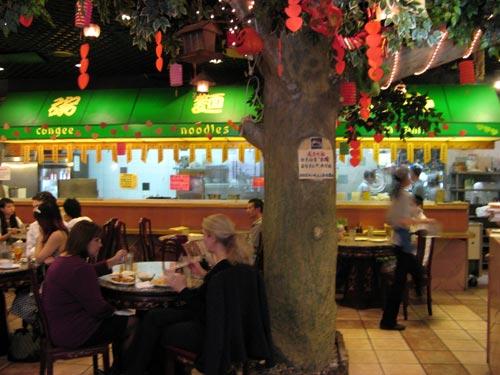
Two things immediately gave me pause when we stepped inside. One: the giant fake tree smack in the middle of the dining room, strung with red paper cut-out hearts. And two: the Thai, Japanese, Korean, Cantonese and Szechuan items on the hodgepodge menu… despite which, there were still items which didn’t seem to fall under any of those categories. Baked razor clams with cheese? Dishes on rice… or spaghetti?

XO Cafe

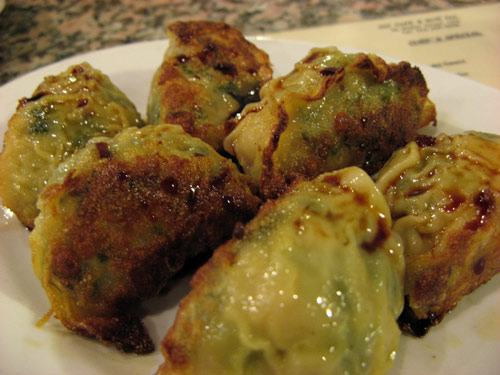
Lunch turned out all right anyway. Not many restaurants in Chinatown offer gyoza after all:

XO Cafe dumplings

What is XO sauce, anyway? In 2000, William Grimes of The New York Times did some investigation into the origins of this curiously named sauce. (Brandy isn’t one of the ingredients; the “XO” is used to connote a similar luxury.) It first started cropping up on menus in Hong Kong in the 1980s, though the exact origin is unclear. High end restaurants began adding (and advertising) the strongly-flavored sauce in their stir-frys and braising liquids, or offering it as a premium condiment, and soon a culinary trend was born. The basic recipe calls for some combination of high-priced ingredients like conpoy (dried scallops), dried fish, dried shrimp and ham, blended with garlic, onion, chili peppers and oil. This “caviar of the Orient” is even now available in commercial versions, for time-pressed home cooks.

I Speak of the City

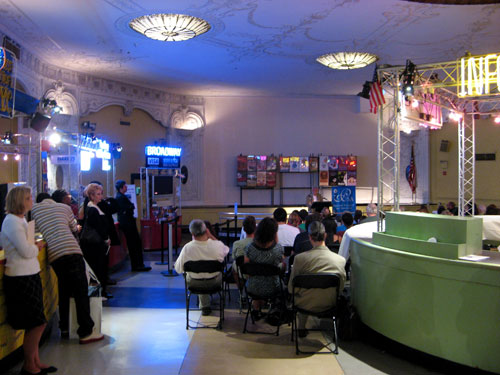
At the Times Square Visitors Information Center for a poetry reading celebrating the publication of I Speak of the City: Poems of New York. The event was sponsored by the Poetry Society of America, Columbia University Press and the Times Square Alliance.

Times Square Alliance

I Speak of the City

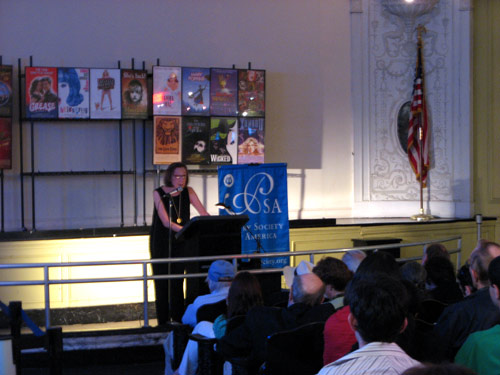
Some of the city’s and the nation’s most prominent poets were in attendance tonight: Andrea Carter Brown, “neglected master” Samuel Menashe, Tom Sleigh and Gerald Stern. I met up with J just as “Hip-Hop poet” Kevin Coval took the stage. He was followed by The Nation‘s former poetry editor, award-winning poet and distinguished professor of English at Baruch, Grace Schulman:

Grace Schulman

Harvey Shapiro came up to the podium next — still spry for his 80+ years — reading his contributions from the landmark collection of poems about the city. Shapiro, onetime editor of The New York Times Book Review, has been called the “reigning laureate of New York’s vox populi” by The Times; his pieces this evening were inspired by his New York neighborhoods.

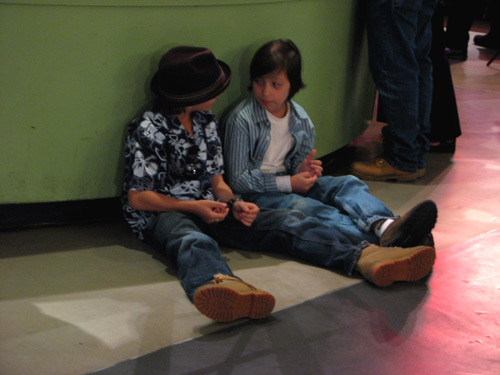
Though most of the attendees seemed to fit the prototype of those you’d expect to see at a poetry reading (scholarly, elderly), there were a few among the audience who broke that mold. I like to think that these two young lads wandered in from the street, and stayed on, riveted by the beauty of the prose.

Young bohemians

Who says poetry is dead?

We didn’t stay for the entire event, or for the reception afterwards, but there will be another opportunity to mingle with the poets on Monday, October 29 when anthology editor Stephen Wolf and other contributors will be reading their impressions in verse at KGB Bar.

“I speak of the city that dreams us all, that all of us build and unbuild and rebuild as we dream, the city we all dream, that restlessly changes while we dream it, the city that wakes every hundred years and looks at itself in the mirror of a word and doesn’t recognize itself and goes back to sleep…”

Octavio Paz, “I Speak of the City

We're not in Buffalo anymore

SC and JG had been talking about Tebaya‘s chicken wings ever since our trip to BonChon last month.

Teba, a specialty of Nagoya, are Japanese-style deep-fried chicken wings. Food & Wine listed this place among their “50 Best Asian Finds” in 2005 (along with Beard Papa cream puffs and Nicky’s Vietnamese Sandwiches.) Tebaya owner Hoi Bang has former experience in sushi restaurants around the city, and in the “sacred” sumo ring, where he was a onetime Sumo wrestler (which explains the winged wrestler logo on the shop’s business cards and menu.)

We’d been trying to compare this Japanese version against the Korean fried chicken since Labor Day when the shop’s holiday schedule thwarted our initial attempt. This time, there were no such snafus. After calling in our order from the apartment, JG set out for 19th Street ten minutes later for the strategic pick-up of our food, fresh from the fryer.

I didn’t see the shop myself, but I understand it’s primarily a takeout place, though there is some counter space and a few round tables at which to eat on the premises. I did see the takeout menu, though, and overall it is pretty limited: mostly chicken, mostly fried. Their specialty wings are available in orders of 8 to 50, or individually for 75 cents.

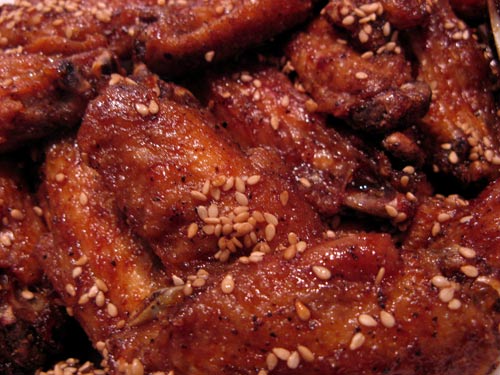
Tebaya chicken wings

But what wings! Crispy and sweet on the outside, juicy inside. The uncoated chicken pieces are fried twice in soy oil, and then tossed in an outrageously addictive garlicky “Teba sauce” and finished with sprinkles of black pepper and roasted sesame seeds. Potemochi (pan-fried potato cake) was good too, chewier than a hash brown, and served with a pair of dipping sauces, one soy-miso, the other which I believe was just melted sweet butter.

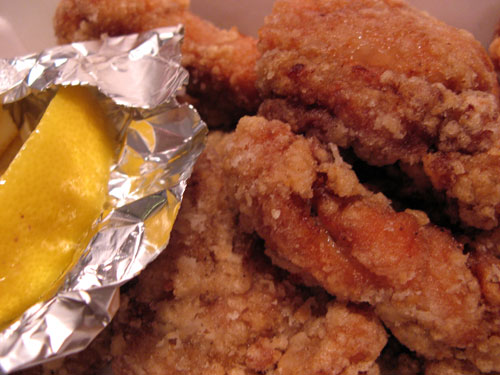
And here, the Karaage — marinated and battered chicken thighs. There was some debate around the table over which was the favorite chicken of the night. I call the Teba on the basis of the sauce, by a slim margin:

Tebaya Karaage

In reviewing the shop’s website for this blog entry, I came across this tidbit about the collagen in Tebaya’s chicken wings:

“Collagen is good for this, for it works in our bodies to keep our skin elastic and resilient. As we get older and lessen the intake of collagen, the result is an increase in aging, coupled with lost in elasticity in our skin, causing it to wrinkle or sag. To help prevent unnecessary aging, you will find that our chicken wings are a great source of collagen. [emphases added.]”

So these wings prevent wrinkles — who knew?! There’s even a molecular diagram accompanying the blurb, so really, it must be true.

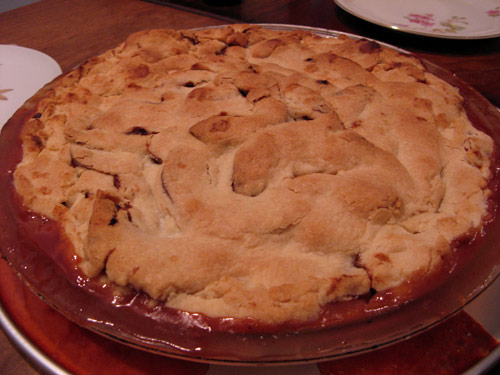
JG’s beautiful apple pie, made with apples, fresh picked from Croton:

JG’s apple pie

Clemente's Maryland Crab House

We never made it out to the Cape this summer, but this Sunday, on a tip from DM, we had the unique opportunity to approximate the experience.

For years, I’ve been scouring New York City for a place like Clemente’s Maryland Crab House. An unapologetic shack with open air seating, a view of boats, brown butcher paper on the tables… a place where upon being seated you’re handed hefty mallets and tin buckets for holding the detritus of more crabs than you ever thought you could eat. Disposable bibs, too, are an essential element of the experience — bonus points if they’re emblazoned with an animated shellfish. I had high hopes when I first read about the Waterfront Crab House in industrial Long Island City, until I walked past it one afternoon on my way to the “Beach” to find that it wasn’t even on the water.

We had to drive out to Emmons Avenue in Sheepshead Bay to find it — improbably tucked away just yards from a multiplex — but Clemente’s comes awfully close to what I had in mind. We were given nutcrackers instead of mallets, but the all-important plastic bibs were in good supply. The ambience is rather more refined than a true shack, but only slightly. And from our wooden deck, with just the far distant view of Shore Parkway and the occasional JFK plane overhead to break the illusion, there was little to suggest that we weren’t dining in some oceanside resort town.
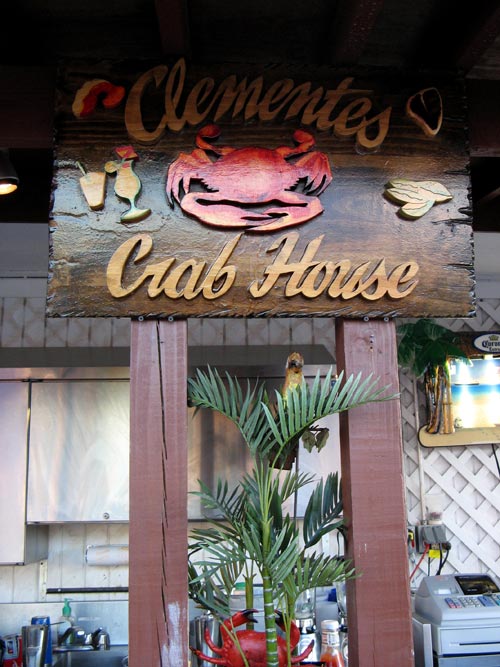
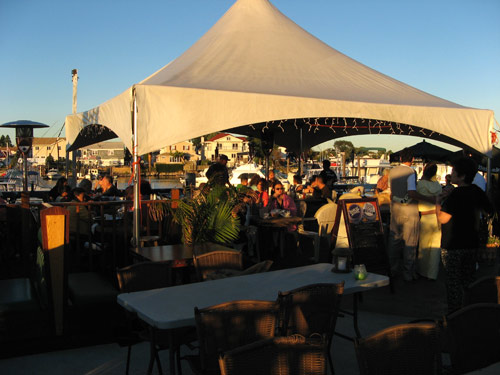
Clemente’s Crab House

Clemente’s Crab House

The menu is what you’d expect from a place like this: seafood-focused with a few bar-type items (burgers, Buffalo wings) thrown into the mix. I enjoy a good lobster roll as much as anyone — and Clemente’s does offer a so-called “angry” version, spiced with chipotle remoulade — but for me, tonight was all about the crabs. After starters of fried calamari, Zuppe de Mussels, and an order of Blue Point oysters on the half shell, that was the business of the evening.

Blue crab season usually runs from April through November, though many waterman cease their crabbing in October when oystering starts in the Chesapeake. During that time, Clemente’s gets their crabs shipped directly from Maryland every day. The rest of the year, the owners serve Florida stone crabs, whose season runs opposite to their Mid-Atlantic brethren, though presumably the restaurant name remains the same.

We had all sworn off buffet, but Clemente’s does offer a $29.95 all-you-can-eat crab dinner, for which we calculated that one would have to eat more than a dozen crabs to best the a la carte price. It seemed several diners had made that same calculation and taken up the challenge, which they met with gluttonous abandon. Our party was somewhat less ambitious, though, and ordered just a couple dozen crabs (an option, by the way, which oddly appeared on the online menu only.) The crusteaceans can be ordered in two varieties, both accompanied by corn on the cob and fries: spicy with traditional Old Bay seasoning, or slick with olive oil, garlic and parsley. We tried both versions and most of us declared the garlic preferable. Combined with a few of the other entrees, it was truly all we could eat.

The wait for food was long, but we were in no real rush to tear ourselves away from the idyllic harbor scene on this clear and warm early fall evening. There was a perfectly chilled bottle of pinot grigio, sent compliments of DM, and our friendly server made up for the delay with the surreptitious addition of several extra garlic crabs, which she brought to the table with a conspiratorial wink.

Sietsema of the Voice rather accurately (if a little crudely) describes the dining experience.
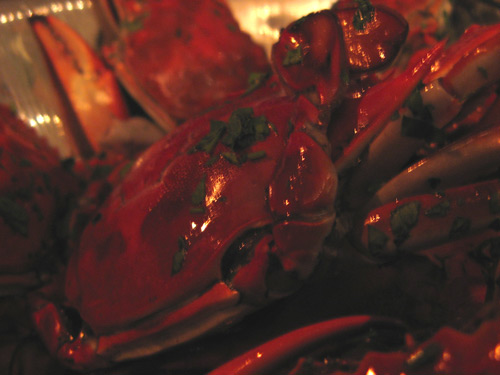
Clemente’s crabs

From our waterside table, we had a prime spot overlooking Venice Marina on Shell Bank Creek. I wonder if anyone lives out on their boats here, like at the 79th Street Boat Basin? There, with average fees of just $7,000 a year per slip, it’s perhaps the best real estate bargain in the city.
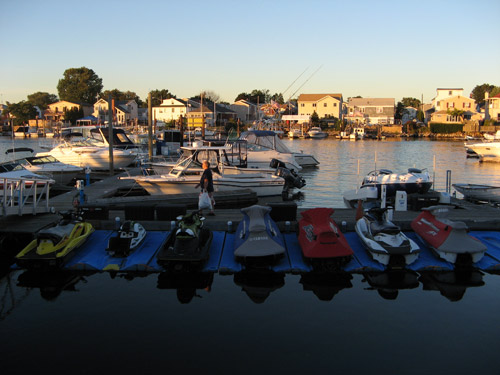
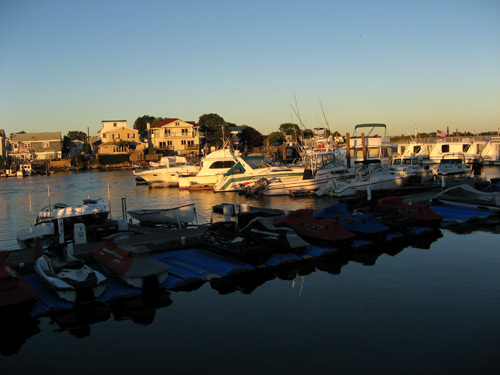
Clemente’s Crab House

Clemente’s Crab House

Clemente’s Maryland Crab House is accessible by car (get very specific directions beforehand – seriously, Google Maps won’t help you here) or, I assume, by boat.
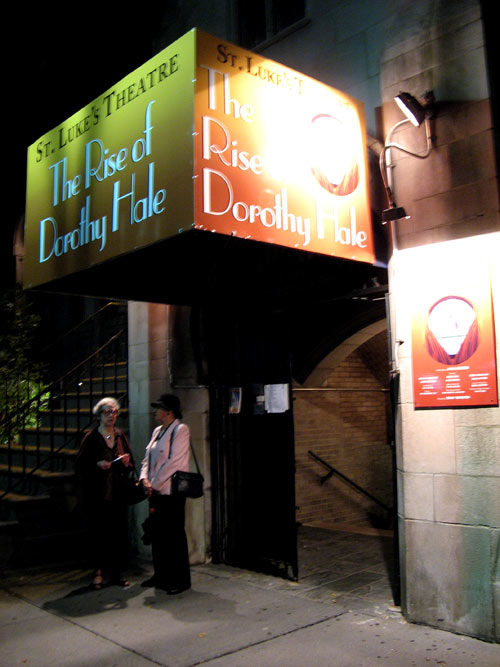
The Rise of Dorothy Hale

The Rise of Dorothy Hale” began previews at St. Luke’s Theatre on September 19, and we were there for the first weekend of performances. The play by Myra Bairstow explores the suspicious circumstances surrounding the alleged 1938 suicide of socialite Dorothy Hale, widow of noted American muralist Gardner Hale. Ms. Hale died in New York City after plunging sixteen stories from the window of her Hampshire House apartment at 150 Central Park South. At the time, her death was ruled a suicide – Hale’s New York Times obituary declared “Painter’s Widow Said to Have Been Dissatisfied With Her Progress on the Stage Fell or Jumped” — but history has a means of revising of itself… sometimes under the influence of wealthy and powerful people. The story of Hale’s death at age 33 involves the likes of her friend Clare Booth Luce (author of “The Women” and wife of Time magazine founder Henry Luce), onetime companion Harry L. Hopkins (WPA Administrator and one of President Franklin D. Roosevelt’s closest advisers), and Frida Kahlo, who painted the work that inspired the play.

The playwright first became transfixed with her subject after seeing Kahlo’s mysterious oil painting in a museum. The work had been commissioned by Mrs. Luce, who had intentions of presenting it to her deceased friend’s mother, but Luce was so horrified with the finished product that she stored it away for decades until donating it anonymously to the Phoenix Art Museum. It was not until the 1970’s that the story behind “El Suicido de Dorothy Hale” came to light. Painted like a multiple exposure photograph, the image is of an eerily calm woman descending from an open window through a swirl of clouds, before finding her final bloody rest on the New York City sidewalk below.

Kahlo’s inscription (translated into English) reads: “In New York City on the 21st of October 1938, at 6:00 in the morning, Dorothy Hale committed suicide by throwing herself from a very high window in the Hampshire House. In her memory …[words erased]…, this retablo was executed by Frida Kahlo.” Over the course of a decade researching the painting’s backstory, Bairstow encountered many historical inaccuracies and contradictions surrounding Hale’s death, intriguing and disturbing details which ultimately became the basis of her play.

Rise of Dorothy Hale

The Rise of Dorothy Hale” intersperses scenes from Hale’s life in the months leading up to her death, with Kahlo’s creative process and her psychic connection with the deceased.

Was that the actual painting mounted on an easel inside the theater lobby, surrounded by framed news clippings and personal correspondence between the playwright and Hale’s niece Penny Weeks? Or a clever replica? The latter seems more likely, but I couldn’t say for sure.

Director Pamela Hall led the production, which starred a few faces familiar from film and television, including Emmy winner Michael Badalucco (Jimmy Berluti from The Practice) as a suspicious Hampshire House doorman, and Sarah Wynter (Kate Warner from Season 2 of 24) as an imperious Clare Booth Luce. Sarita Choudhury (Denzel Washington’s lover in Mississippi Masala and the cuckolded queen Tara in Mira Nair’s Kama Sutra: A Tale of Love) played the Mexican Kahlo, in yet another nationality-defying turn for the half-Indian, half-English actress.