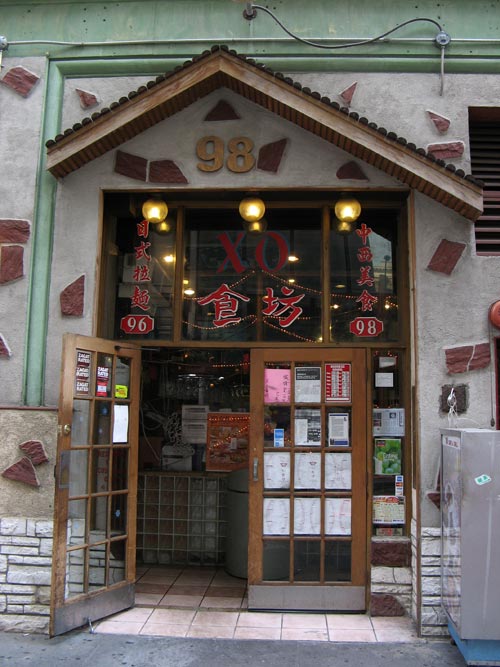
On Walker Street for lunch at XO Cafe & Grill, presumably named for the Cantonese spicy seafood sauce, and not the extra old cognac or the affectionate sign-off. “You know you love me.”
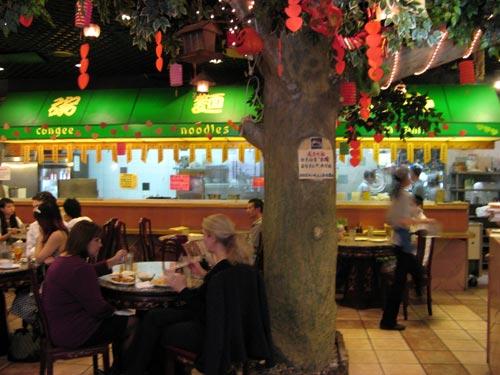
Two things immediately gave me pause when we stepped inside. One: the giant fake tree smack in the middle of the dining room, strung with red paper cut-out hearts. And two: the Thai, Japanese, Korean, Cantonese and Szechuan items on the hodgepodge menu… despite which, there were still items which didn’t seem to fall under any of those categories. Baked razor clams with cheese? Dishes on rice… or spaghetti?
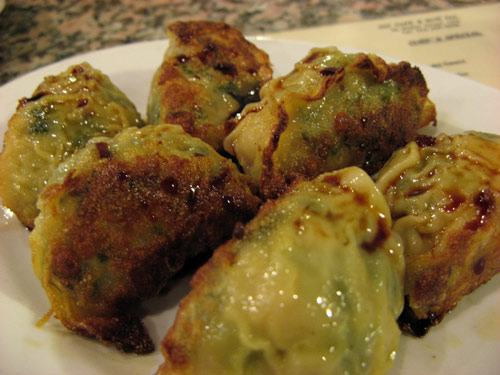
Lunch turned out all right anyway. Not many restaurants in Chinatown offer gyoza after all:
What is XO sauce, anyway? In 2000, William Grimes of The New York Times did some investigation into the origins of this curiously named sauce. (Brandy isn’t one of the ingredients; the “XO” is used to connote a similar luxury.) It first started cropping up on menus in Hong Kong in the 1980s, though the exact origin is unclear. High end restaurants began adding (and advertising) the strongly-flavored sauce in their stir-frys and braising liquids, or offering it as a premium condiment, and soon a culinary trend was born. The basic recipe calls for some combination of high-priced ingredients like conpoy (dried scallops), dried fish, dried shrimp and ham, blended with garlic, onion, chili peppers and oil. This “caviar of the Orient” is even now available in commercial versions, for time-pressed home cooks.
5 comments
Qsoz on
vipnyc on
Qsoz on
vipnyc on
Qsoz on