vip in the city, page 27

Garden in Transit

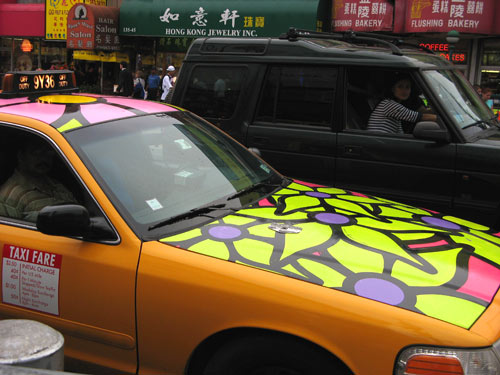
I’ve been spotting these flower-decaled cabs all around town this month – part of temporary, mobile public art project “Garden in Transit,” which celebrates the 100th anniversary of New York’s first motorized taxicab. 23,000 children and adults, drawn mostly from the city’s public schools, hospitals and youth programs, participated in the Portraits of Hope creative therapy program. The massive project of painting the flowers on adhesive weatherproof panels to be applied to the hoods, roofs and trunks of an estimated 13,000 of the city’s yellow cabs began last September; negotiations with city officials for the deployment began six years earlier. Owners volunteer their cabs for the project; individuals can sponsor cabs for $500 apiece, which includes a signed certificate with the cab’s medallion number.

I always enjoy public art in unexpected places: whales in Cape Cod, cows in Boston, apples in New York City. These colorful blooms will remain on the streets through December 2007, long after their real life counterparts brown and wither away for the season.

Flower taxi

A tale of two NoLItas

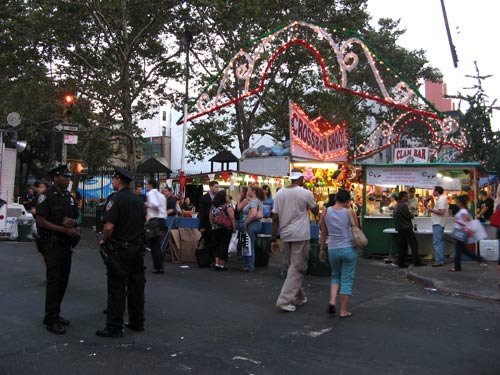
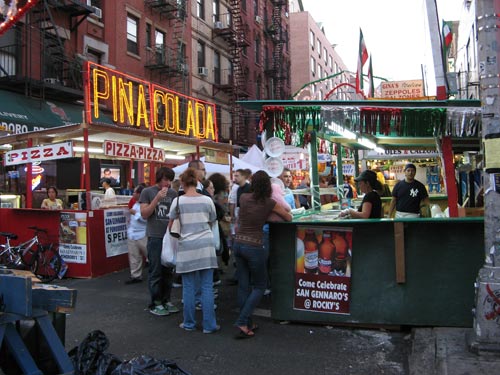
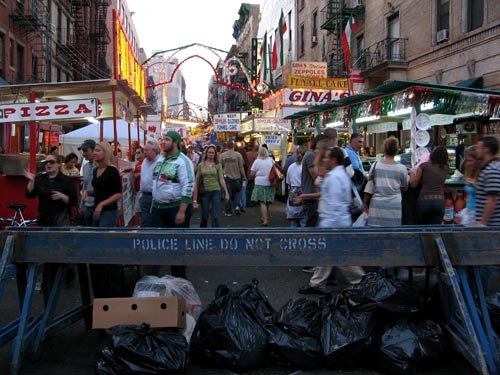
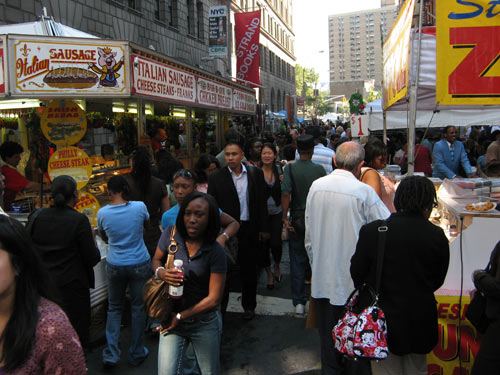
On the way to dinner this evening, I passed through the largest and most famous of the New York City street festivals: the Feast of San Gennaro. For eleven days in September, this sprawling, chaotic celebration — now in its 80th year — takes over Mulberry Street from Chinatown/Little Italy to SoHo.

San Gennaro Festival

San Gennaro Festival

San Gennaro Festival

Just two blocks east of the festival was an entirely different scene, as even the permeating scent of sausage grease seemed to fade from the air.

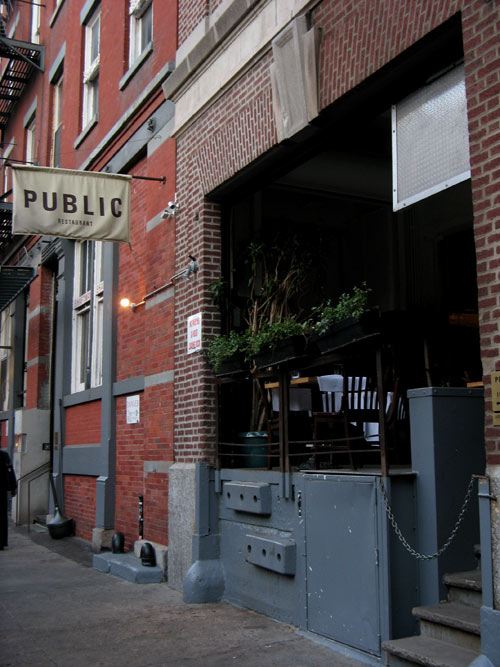
MB made our reservations for dinner at — where else? — our favorite temple of Australasian cuisine, Public. She and LW were already waiting at the bar when I arrived, and within minutes, our party was shown to a table on the open patio/loading dock. As these autumn days grow shorter and cooler, we won’t have many more opportunities to dine al fresco this year.

Public patio

My pan-seared Tasmania sea trout was served on a tangy and refreshing bed of fennel, green apple and pistachio, to which MB contributed a robust, screw-capped red from her wine mailbox. Later, a quick perusal of the dessert menu and our choice was clear: the Hokey-Pokey, for which MB may be single-handedly responsible for bringing back to the restaurant’s offerings. Not the dance, mind you, but the ice cream from New Zealand (where, incidentally, that same dance is known as the “Hokey Cokey.“) Here at Public, the ice cream (a malted vanilla laden with crunchy bits of caramel toffee) is served with mango sauce and a ginger snap. Delicious.

Visiting neighbors

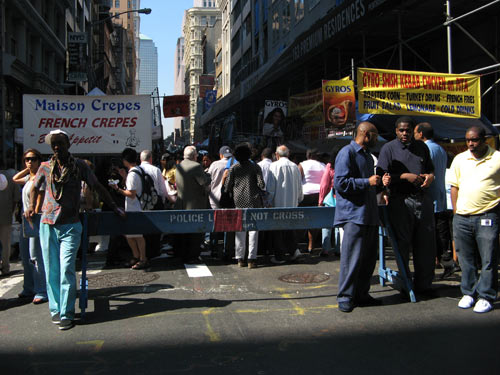
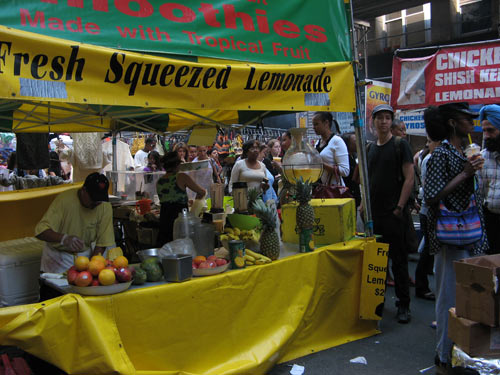
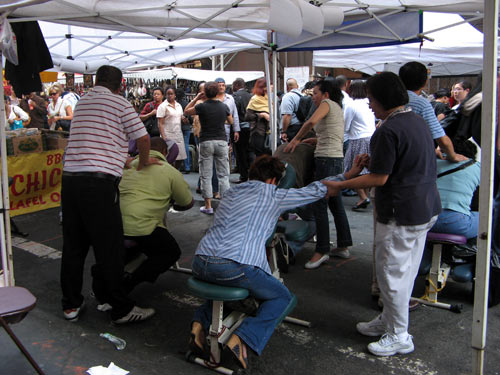
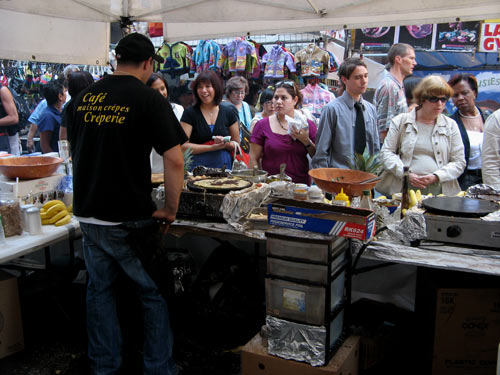
On a tip from SC, I took a walk over to Fulton Street for the Downtown Visiting Neighbors Festival, taking place in the financial district this Friday afternoon.

Who are these “visiting neighbors”? Italian sausage purveyors? Chinese masseuses? French crêpe-makers?

Fulton Street Fair

Fulton Street Fair

Fulton Street Fair

Fulton Street Fair

Fulton Street Fair

A block from the festival, I ran into DD who just then was returning to his office from lunch. Funny to think how it’s been almost a decade since I first met his sister, and though it’s been several years since she left New York — another defector! — I still cross paths with DD around town with startling regularity. It is primarily through these happy, random meetings that we’re all still able to maintain tenuous tabs on each other’s lives.

This city is the biggest small town in the world.

Hens and gators

Tonight, a gathering of the work crew — past and present — at English pub-themed watering hole, Pound and Pence, where Wednesdays is “Hen night.” Translation: 2-for-1 drinks for the ladies.

The bar operates on the first two floors of Liberty Tower, where in the 1920s future president Franklin D. Roosevelt had an office during his tenure as vice president of the Fidelity and Deposit Insurance Company of Maryland. The sublevel is now home to a wine store and a Starbucks — one of three within a one block radius of the office.

This unique-looking Neo-Gothic skyscraper was designated a National Historic Landmark in 1966, and in 1979, it became of one of the earliest conversion projects in Lower Manhattan when architect Joseph Pell Lombardi bought the building and converted it into luxury apartments. Still pricy  luxury apartments.

The 33-story tower, based on a Henry Ives Cobb design, was completed in 1910. In 1919, it was purchased by the Sinclair Oil Company for use as their headquarters. Harry Sinclair, head of the company, had his private office suite built on the 29th floor with its views of the East and Hudson rivers. It was from those offices that in 1922, Sinclair bribed Interior Secretary Albert Fall to secretly lease the U.S. naval petroleum reserve in Wyoming to his oil company without competitive bidding, in what became known as the Teapot Dome Scandal.

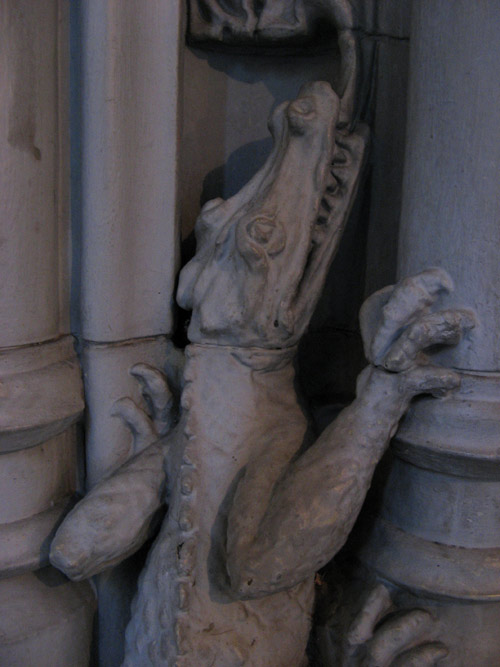
The white terracotta-clad limestone building – unique for its time — is most notable for its fanciful ornamentation: birds, lions, this alligator (which flanks the Pound and Pence entrance) and a dozen roof gremlins, including one “who looks like a demonic Santa’s elf.”

Pound and Pence gator

Opening night at the Philharmonic

On my way home, I passed through a parade of finery heading into Avery Fisher Hall for the New York Philharmonic’s Opening Night Gala Concert. Flashbulbs, red carpet, tuxedoed men and their burnished and ballgowned escorts – hey, that’s Henry Kissinger and his wife Nancy — and me with my dirt-smudged canvas sack of organic vegetables.

Opening Night is always something of an event here in the city, and to add to the excitement this season, the Philharmonic hosted its first free public dress rehearsal earlier in the day. At midnight Tuesday, the first of the eager music lovers arrived at Lincoln Center to line up for the 8:00 am ticket distribution. 2,500 others would eventually join him. The 9:45 am open rehearsal of the evening’s gala concert was to be an all-Dvořák program, featuring Yo-Yo Ma, (and Petunia, his 1733 Montagnana) led by Music Director Lorin Maazel. The run-through would be Ma’s only one with the orchestra and conductor.

The concert launches the Philharmonic’s 166th season and Maazel’s sixth and penultimate season as music director.

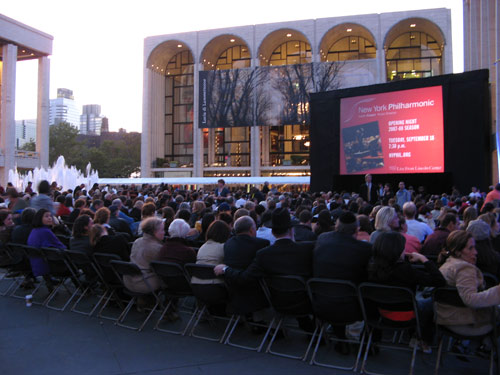
At showtime, there were more opportunities for the plebes to take part in the event, as 1,000 chairs were set up on the Lincoln Center’s plaza for a free, live broadcast of the concert, sponsored by the Philharmonic’s new (and first) exclusive global sponsor, Credit Suisse. Thousands more eventually filled the standing room only slots, or caught the simulcast on PBS.

Philharmonic opening night

Mighty Aphrodite

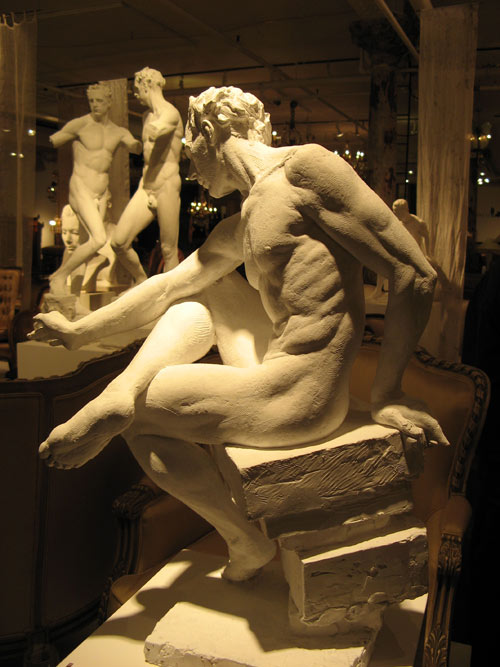
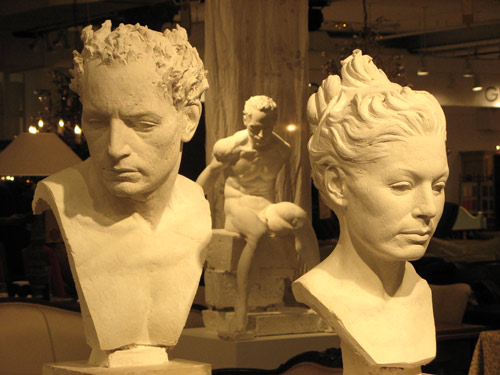
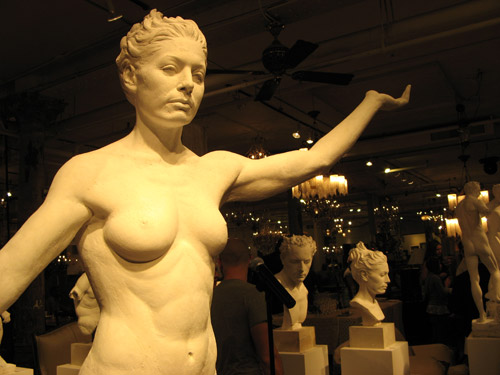
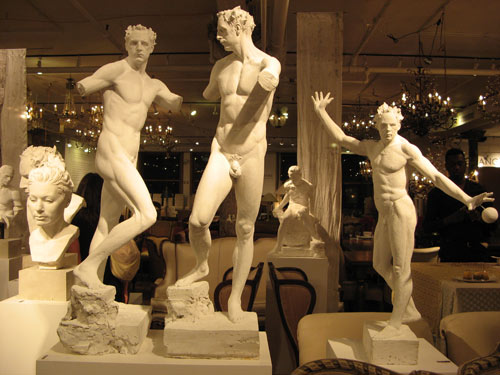
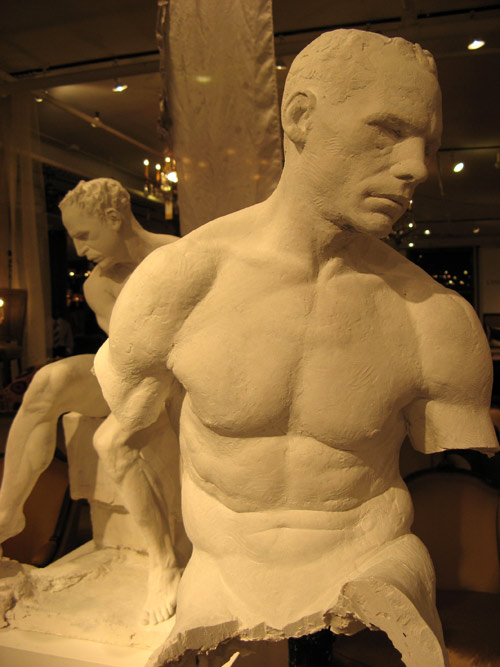
At ABC Carpet & Home for the grand unveiling of Sabin Howard’s “Aphrodite Collection” – a series of sculptural figures inspired by Greek mythology and abstract forms. By the time the elevator spirited me up to the fifth floor, the artist was already sharing his welcoming remarks among the ghostly white figures and assembled guests. Not mutually exclusive, those two groups; art lovers and collectors aren’t generally viewed as the most rugged of individuals.

The sculptures themselves were riveting to behold: finely rendered faces, muscled torsos, sinewy limbs. Classical nudes of heroic proportions. Sadly, it seems that Howard’s talent outpaces his name recognition. No doubt this is due in part to the nature of his chosen medium, which harkens back to the antiquated art of classical statuary rarely seen now outside of museums. New Yorker Howard did have one local exhibition that I recall: his 7 foot bronze Hermes graced the second floor of the Time Warner Center for a few months in 2005… assuming one can count a showing near the United Colors of Benetton as an “exhibition.”

Sabin Howard

Sabin Howard

Sabin Howard

Sabin Howard

Sabin Howard

The collection pieces will be available to the public for purchase through ABC, and range in price from $24,000 to $145,000.

The oldest home in NYC

After coming across a post on Charlie Suisman’s Manhattan User’s Guide, I called up the Queens Historical Society to reserve my spot on a Sunday afternoon tour of the 17th century Lent-Riker-Smith Homestead.

Who knew that that the oldest private dwelling in New York City (and arguably: the country) was located in Jackson Heights — or is this East Elmhurst? — in the shadow of LaGuardia Airport’s historic Marine Air Terminal? By most historical accounts, the original Dutch Colonial farmhouse at 78th Street and 19th Road was built by Abraham Rycken Van Lent circa 1655, on land granted to the Rycken (Riker) family by Governor Peter Stuyvesant. Around 1729, Abraham Lent, another Riker descendent, made several structural additions, which survived through the 20th century as the house changed ownership through generations of the Lent-Riker-Rapelyes clan. Eventually, the farmhouse left the family hands when it was passed to William Gooth, the personal secretary of the last Riker to own the house. Gooth rented out the home to a string of tenants into the 1960s, among which was Michael Smith, who opted to buy the dilapidated property — lock, stock and barrel — for $65,000 in 1975.

A 350-year old farmhouse, with its own cemetery, in the outer reaches of Queens? This I had to see for myself. But getting there was no easy task. I’d never been to this part of the borough before, which was situated a couple of miles from the nearest subway station. From Steinway Street in Astoria, I hopped on the Q101 to the last stop: Hazen and 19th Street.

The connection I did not make at the time – but which I came to rather quickly – was that the Q101 also happens to be the bus to Rikers Island — itself once part of the Riker estate, until it was purchased by the city in 1884. As the bus pulled up to its terminal at the entrance of the bridge to the penitentiary, and all the other riders trudged off, I paused unsure of which direction to head along these desolate streets marked by bail bondsmen and a taco truck. What had I gotten myself into?

“Sweetie, where are you going?,” the bus driver asked me incredulously. Yes, I must have been that obviously out of my element.

“Um… there’s a farmhouse around here?,” I began, thinking how ridiculous I must have sounded. Quizzical silence. I went on weakly: “The Queens Historical Society is uh,… giving tours this afternoon?”

The bus driver considered this carefully. “Well, I don’t know what you’re talking about, but whatever it is, it’s going to be in that direction.“ He indicated a leafy, tree-lined turn-off. “Stay on this side of the street,” he added helpfully. Away from the barbed wire fencing. Got it.

I did as directed, and sure enough, a couple of blocks after the turn-off, I spied other people randomly milling about, looking just as out of place as I.

Through the white picket fence, into another world: the Lent-Riker-Smith House:
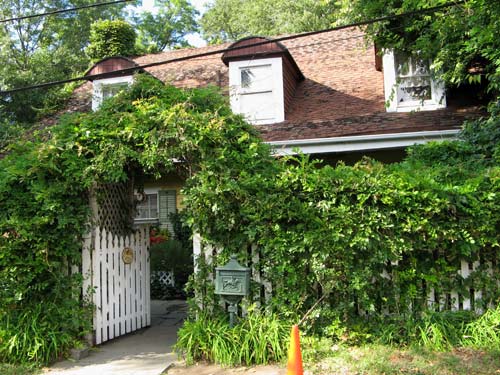
Lent-Riker House

The house tours were being led in groups of about a dozen by the owner/savior of the house, Marion Duckworth Smith, nicknamed “Lady Legacy” (to her husband’s “Lord Legacy”) by Parks Commissioner Henry J. Stern. Before our assigned time slots, there was ample opportunity to explore the grounds of Paradise Acre: gardens, gazebo, gingerbread house and cemetery.
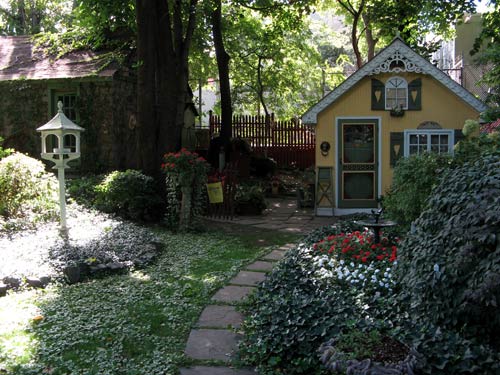
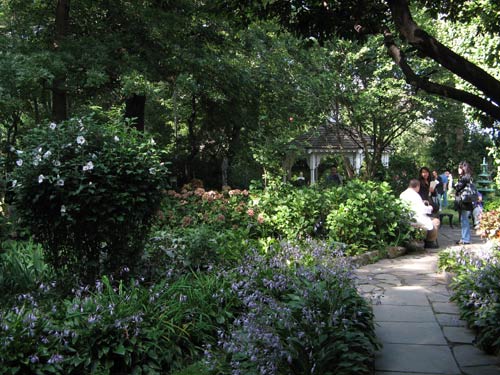
Lent-Riker House

Lent-Riker House

The Riker family graveyard behind the house contains 132 marked graves of the once-prominent Rikers and Lents, several cracked and worn, the oldest of which dates to 1744, the most recent: Mrs. Smith’s brother, Charles. We were each given a geneology chart and detailed map of the cemetery to decipher the stones for ourselves.
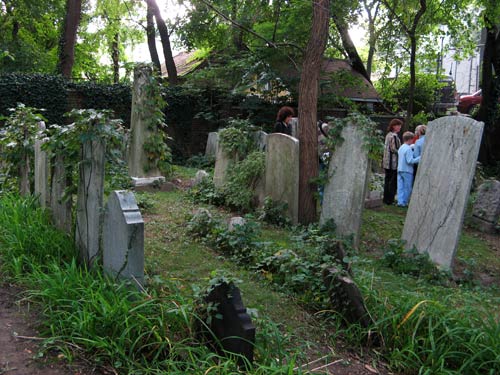
Lent-Riker House

Entry hall (with original 300-year old planked floors, rescued from under layers of black paint):
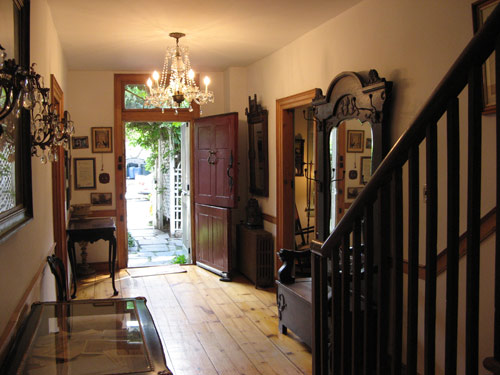
Lent-Riker House

Mrs. Smith told us the story, which she’s no doubt told hundreds of times before, of how she lovingly restored the house as a newlywed in the early 1980s. Clearly, it was a tale she relished telling: how she first set foot in the house one chilly night in November 1979, a month after meeting the man who would become her husband. It was their second date, and he had lured her out to the dark, then-abandoned house with the improbable line, “How would you like to see my cemetery?”

Mrs. Smith felt a deep and immediate connection to the house and grounds, and after she and Mr. Smith were married, took it upon herself — almost single-handedly — to restore this piece of history to its former glory. The attic, which had remained untouched for almost a century, proved to be a dusty treasure trove of Riker family papers (most of which the Smiths donated to a museum for a sizable tax donation.)
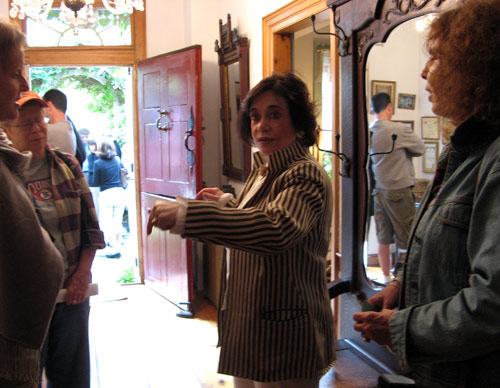
Lady Legacy

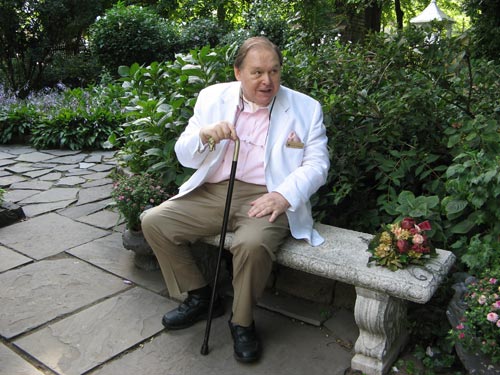
Lord Legacy

The couple live in the house to this day. Their dream is to have the home converted into a museum after their deaths. (Shoutout to intrepid reporter and Sunnyside CSA member AP for the piece.)

Check out the rest of the Lent-Riker Homestead photos on flickr.
Columbus Avenue street fair

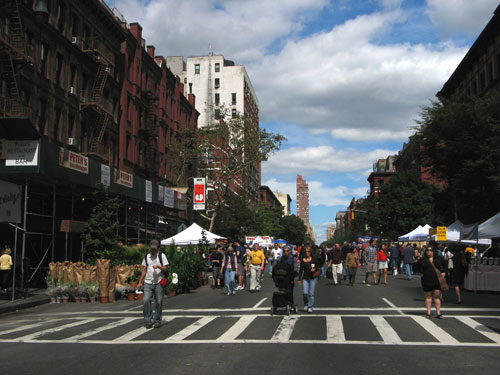
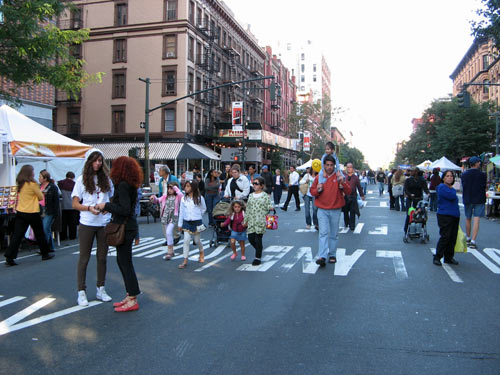
I stepped outside my door onto Columbus Avenue this warm September morning to find the Columbus Avenue street fair in full swing. Yes, the familiar smell of sausage and peppers, funnel cakes and crêpes. I didn’t mind so much, though; as Top Chef’s gentle giant Chris “CJ” Jacobson will tell you: all women love crêpes. (Ah, I will miss you, CJ. Though perhaps not quite as much as I missed Sam from Season 2.)

Columbus Avenue street fair

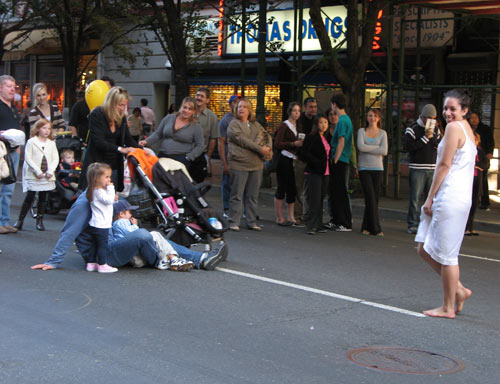
And in front of the Danskin: a performance artist confounded those gathered as she twirled and preened barefoot in a white slip. Not entirely sure that this was a fair-sanctioned performance, as I and a several others hastily dispersed once she launched into a round of maniacal laughter.

Columbus Avenue street fair

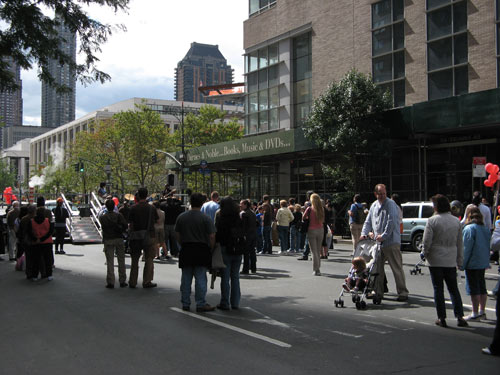
Another of the live entertainment acts consisted of a trio of youngsters, who commanded the stage set up at Columbus and 66th Street. As I passed through on my way to the subway, the band was in the middle of a cover of “Wild Thing.” The Troggs version, that is, not the Tone Lōc rap (co-written by fellow HCHS alum, Young M.C.) But still: there’s something a little disconcerting about a pre-pubescent boy growling out, “Wild thing… I think I looooooove you.”

Columbus Avenue street fair

Columbus Avenue street fair

My new favorite dish

At Imperial Palace in Flushing — no connection to the Vegas hotel and casino, home of the “dealertainers,” celebrity impersonators who deal blackjack.

This Cantonese seafood restaurant is extremely popular, and considered one of the best in Queens’s Chinatown — a standout even among the crowded slate of Flushing eateries. 37th Avenue, just three blocks north of the Main Street subway station, is also home to the original soup dumpling purveyor Joe’s Shanghai and in the evenings, the spillover of waiting diners fills the sidewalk.

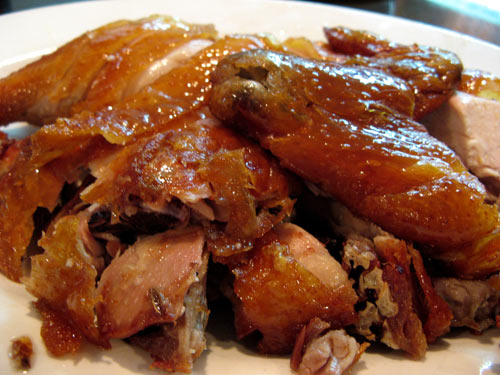
As expected, service is no-nonsense and extemely brisk. Less expected: the last time we were here, the servers began clearing the table around us while we were still in the middle of dessert. The food, though, makes up for a multitude of service sins. Among our dishes tonight: Chinese fried chicken. Very different from Korean fried chicken, and I imagine from Japanese fried chicken… though I’ll be able to confirm the latter in a couple of weeks.

IP fried chicken

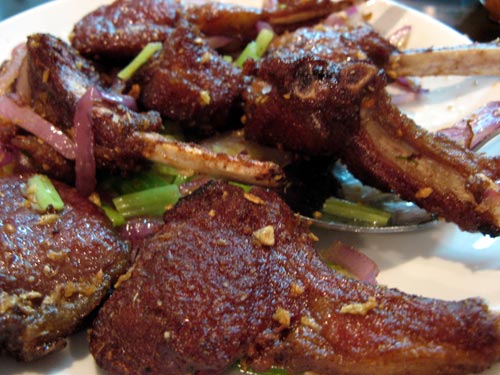
Lamb chops — very tasty, if unusually spiced for typical Cantonese cuisine. Is that a whiff of cumin, I detected?

IP lamb chops

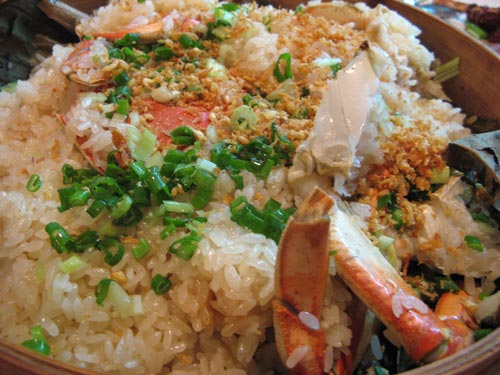
And my new favorite dish: the Dungeness crab steamed with sticky rice. It’s one of Imperial Palace’s signature dishes; a scan around the room revealed a lotus leaf-lined bamboo steamer on almost every table. The preparation seems simple enough, but every ingredient melds together beautifully: the savory juices of the large crab (or alternatively: lobster) steep into the glutinous rice, which is tossed with rice wine and topped with generous handfuls of chopped scallion and fried garlic. Divine!

IP crab rice

This little piggy

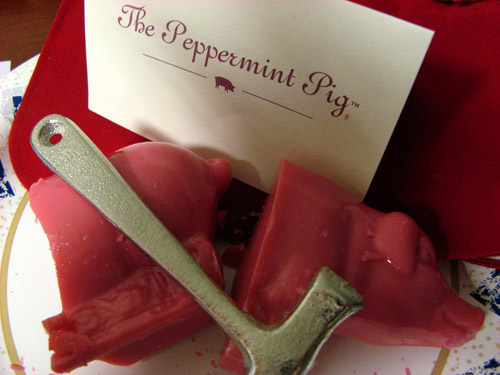
I noticed this broken pink candy pig on the communal coffee table at the office this evening.

For those (like me) who are unfamiliar, the Peppermint Pig was once part of a holiday tradition that originated in upstate Saratoga Springs in the 1880s. A full century later, Mike Fitzgerald, owner of Saratoga Sweets, was approached by the local Historical Society about reviving the lost tradition. Fitzgerald agreed, and in 1988 he made his first batch of 60 peppermint pigs, using the original recipe and replicas of the antique pig molds. The pigs sold out almost immediately to those nostalgic for the candies of their long-ago childhoods.

The company now handcrafts 130,000 of the holiday pigs a year. (Which I suppose means that we got ours early… or very very late.)

Peppermint Pig

The pig, which is considered a symbol of good health, happiness, and prosperity, comes with a red velveteen pouch and a small silver hammer. It is placed inside the bag (to catch the stray flying shards of hard peppermint candy), and shattered into pieces to be shared among friends and family with hopes of good fortune for the coming year.

Given the drama that often surrounds familial holiday gatherings, just how wise is it to be passing around a hammer?  Just askin’.