vip in the city, page 28

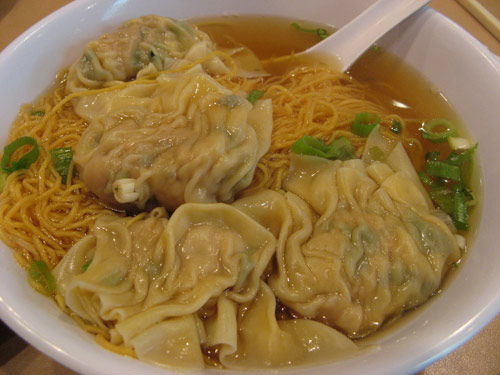
Wing Huang dumplings

Wing Huang ne New Wing Wong ne Wing Wong is a humble little noodle shop on Lafayette, south of Canal where it appears to have operated under different name variations for a good number of years. I couldn’t really say for sure, though, because despite my frequent jaunts to the neighborhood, I’ve never set foot in the place prior to this afternoon. The feel suggests old-school Chinatown, as does the solidly Cantonese menu of cheap noodles, rice plates, congee and roasted meats.

Several people have praised this “hidden gem” of a noodle shop, particularly for its dumplings, and I suppose part of the reason I’ve never ventured to sample them here is that the shop is situated right next door to the somewhat more popular Excellent Dumpling House.

Wing Huang’s are very good, too.

Wing Huang noodles

David Waltuck, chef-owner of Chanterelle (and 2007 James Beard Best Chef, New York City winner) likes their whole roast duck ($14).

American Sligo

To kick off the Rattlestick Playwrights Theater’s 13th season: the world premiere of Adam Rapp’s new play, American Sligo. Tonight’s first preview played to a packed house; I spied Rapp himself ensconced in the back row of the theater, surrounded by friendly cohorts, a fact which I surmised based on the raucous guffaws I heard emanating from the rear of the house throughout the performance.

Not that there wouldn’t have been laughs otherwise: American Sligo is billed as dark (very dark) comedy, set on the night of wrestling legend Art “Crazy Train” Sligo’s final professional bout. There’s something inherently, absurdly funny about a pot-bellied senior citizen in a shiny red singlet, black eyeliner and jet mullet wig.

Art Sligo (Guy Boyd) is a widower whose chaotic, dysfunctional household is made up of his two troubled sons (Rapp regulars Michael Chernus and Paul Sparks) and a loopy, but well-meaning sister-in-law (a brilliant Marylouise Burke). At the pre-fight dinner which makes up the first act, their guest is a twitchy, hugely devoted fan of Sligo’s (Matthew Stadelmann), who is visiting their Midwestern home as a part of a contest prize. As one disruption after another threatens to derail (or detonate) the evening, Aunt Bobbie desperately powers through the simmering hostilities with her infuriatingly cheery, mindless chatter. Never has two minues of silence been more golden.

Rapp, who made his Off-Broadway directorial debut with his 2006 Pulitzer-nominated Red Light Winter, takes up the directing duties again for American Sligo. As with the playwright’s previous works, the relationships portrayed are complicated, messy, and potentially destructive. Some snippets of dialogue were fiercely funny, while ringing painfully true, which made it all the more disappointing that the overall plot felt to me too contrived. By the melodramatic two-character second act, the play seemed to lose steam before culminating in its tacked on, over-the-top ending.

It will be interesting to see how audiences respond, and if Rapp’s latest piece proves as divisive as his last. Earlier this year, Charles Isherwood (in)famously skewered Rapp’s Essential Self Defense, prompting others, including Edge Theater director Carolyn Cantor and bloggers like Rocco (whom I miscredited as Marian Seldes when this post first went up — sorry!), to leap to the play’s… uh,.. defense. The resulting controversy raised questions about the impartiality of blogosphere reviews. But maybe there’s no such thing as bad publicity?

Outside the theater, on Waverly Place – one of the prettiest and most confounding streets in New York.
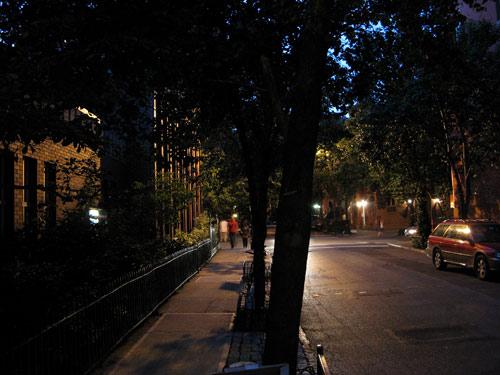
Waverly Place

Salt peanuts, salt peanuts and pizza pies

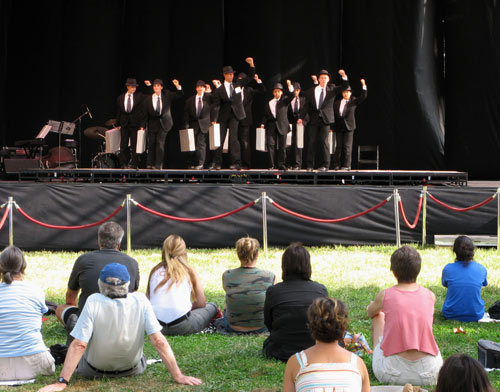
Outdoor dance performances are irresistible, even when they’re slightly weird.

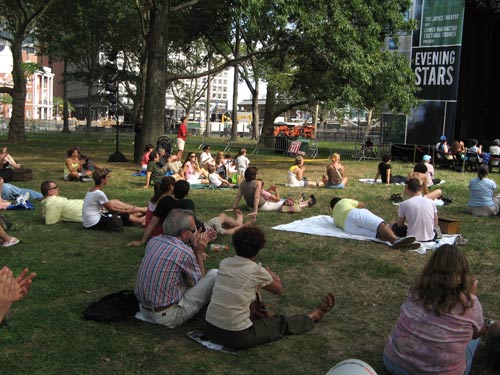
This afternoon, DK, LK, HH, SYB and I met in Battery park for Tap City, the al fresco dance series celebrating all things tap. This all-afternoon event was an extension of the New York City Tap Festival which took place in July; like the main event, it was co-produced by master tap dancer Tony Waag and the American Tap Dance Foundation (ATDF).

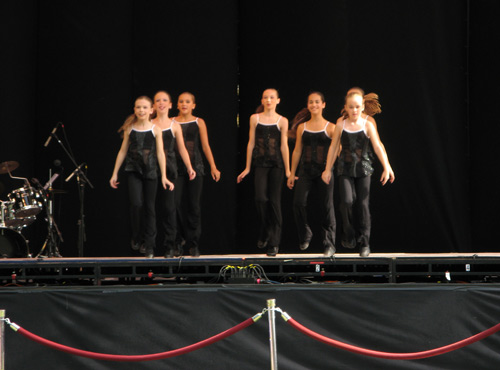
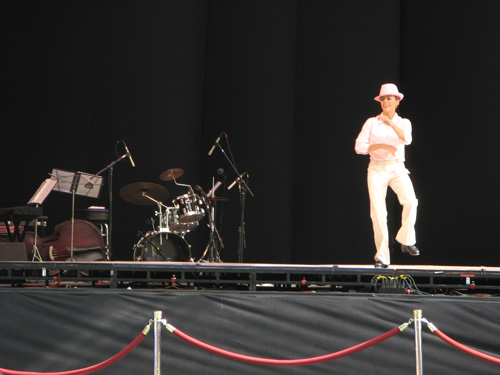
By the time we hit the lawn, the “Tap Off” competition had just gotten underway. One by one, contestants (soloists, duets, trios or ensembles, ages 9-19) took the stage to vie for cash prizes and the opportunity to perform with the dance professionals at the “Tap City Down Town” concert that evening.

Amid all the shuffles, clicks, rolls and flaps, we saw several talented young performers, and one black lycra-clad JonBenet-esque moppet in a pink feather boa. (Hmm.) One tenacious teen opted to tap out Dizzy Gillespie’s “Salt Peanutsa capella when there were technical difficulties with her music accompaniment. She was awarded an ADTF scholarship on the spot for being such a good sport, and went on to win second place overall.

Tap City audience

Tap City

Tap City

Tap City

Four out of five of us had little interest in the free tap lessons being offered after the competition, and that fifth person was starving, so instead we went hunting around the park for newly-opened Picnick, the double kiosk project by “rock star pastry chefWill Goldfarb and partner Kevin Pomplun, former chef at Thor. I was surprised to encounter a bespectacled Goldfarb manning the counter himself, but excited for the chance to chat a bit with him about his plans for the new venture – such as adding Room 4 Dessert-type sweets; he mentioned his panna cotta, specifically — and how overwhelmed he had been by the positive reception during Picnick’s first week. Well, not all positive as it turns out, but these things take time. I’ll be back to check up.

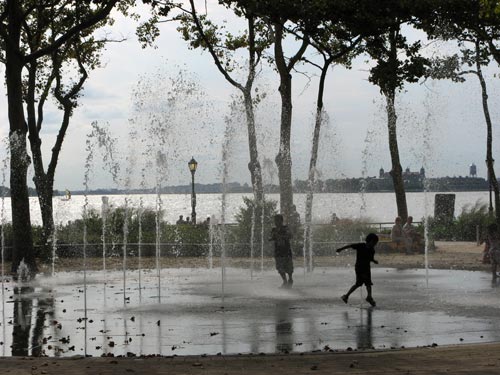
As SYB caught up on his daily meals, we plotted our next move by the Weisz + Yoes fountain where HH earned a dollar by taking up SYB’s dare to run through the shooting jets of water.

No, that’s not him.

Battery Park fountain

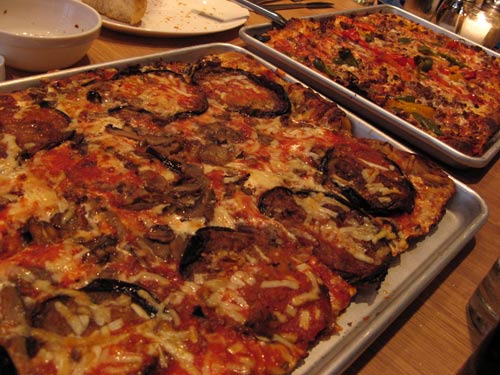
From the benches it was a brief stroll to Stone Street’s Adrienne’s Pizza Bar, where over a couple of old-fashioned rectangular pies (eggplant/mushroom and sausage/peppers), we watched Roger the Great win his fourth straight U.S. Open title in a dramatic and hard-fought victory over Serb Novak Djokovic. The best part was not having to wait two hours to eat.

Adrienne’s pizzas

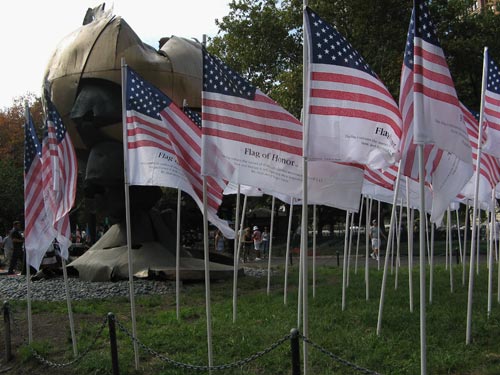
Flags of Honor

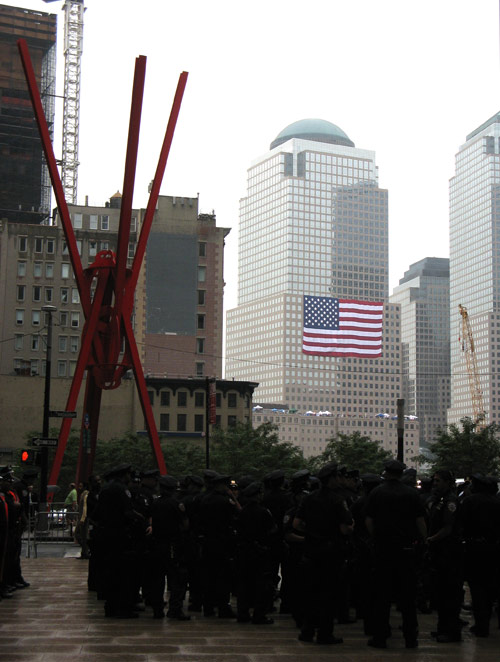
The weekend before the sixth anniversary of the September 11 attacks, Battery Park was been converted into a NYC 9/11 Memorial Field, seemingly endless rows of nearly 3000 “Flags of Honor”, each bearing the names of those lost on that day.

The Flag of Honor Fund was founded in May 2003 with a mission to donate a framed “Flag of Honor” artist canvas to the next of kin of each victim of 9/11.

Flags representing the 92 nations that lost citizens in the attacks surrounded the Memorial Field.

Flags of Honor

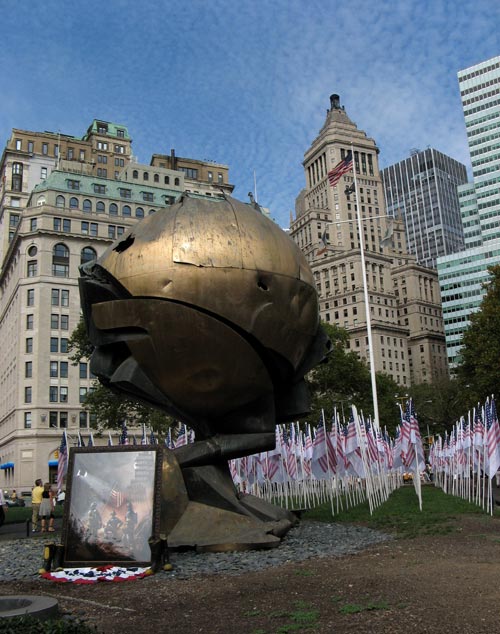
WTC Sphere

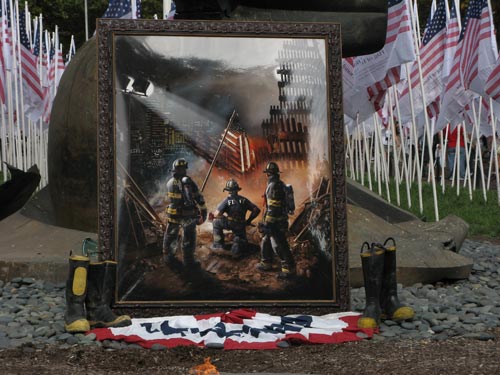
New York’s Bravest

I remember eating lunch in front of Fritz Koenig’s bronze sphere on warm, sunny days like this one, back when it was a fixture between the twin towers of the World Trade Center. The 25-foot sculpture was recovered from the rubble of the fallen buildings and in March 2002, the heavily scarred piece was relocated to Battery Park and formally rededicated with an eternal flame as a memorial to the victims of 9/11. It will be returned to its original home upon completion of the Freedom Tower project.

Fall (in line) for Dance

Fall for Dance is the annual dance festival presented by New York City Center every autumn since 2004. This year will see 10 evenings of dance and 28 companies, for $10 a seat anywhere in the venue, first come, first served. Approximately 85% of the festival’s cost is subsidized by donation, allowing City Center to sell the tickets that can cost as much as $125 for a full dollar less than the cost of a regular-priced movie ticket at my local cineplex. At those prices, even the dancers themselves can afford to attend.

The festival was established as a means to attract a younger and more diverse audience to dance, and according to City Center President and CEO Arlene Shuler, was modeled after the Delacorte Dance Festival, a free event that was held in Central Park’s open-air Delacorte Theater through the 1960s and 70s, inspiring a generation of dance lovers.

City Center has been increasingly successful in attracting not only unusual and interesting smaller troupes to the festival, but also some of the high-profile names familiar even to non-dance enthusiasts, such as the Paul Taylor Dance Company, St. Petersburg’s Kirov Ballet and The New York City Ballet. The FFD bills typically juxtapose classic ballet alongside modern, ethnic and experimental work.

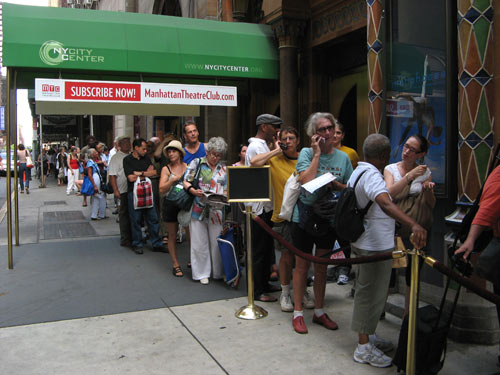
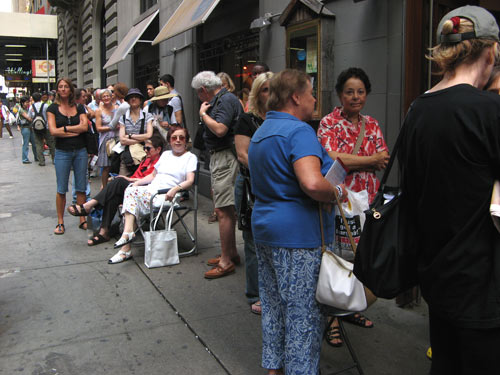
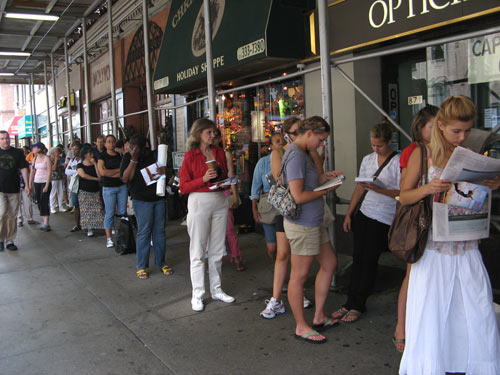
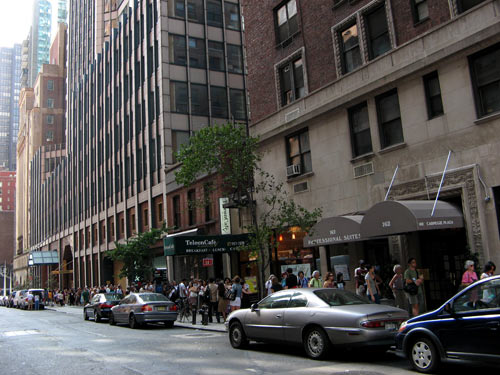
Is it any wonder the line for tickets stretched for blocks (and blocks and blocks) the Sunday morning the tickets went on sale?

Fall for Dance line

Fall for Dance line

Fall for Dance line

Fall for Dance line

Clearly I had vastly underestimated the appeal of $10 dance tickets. It could be hours before I made it to the box office, during which (I was certain) our desired Friday night program would be sold out. Every other person on line seemed to be on his or her cell phone calling the box office, so I knew that this was not the way to go. Plan C: a pleading call to SYB at home (service fees be damned – it’s still a tremendous bargain) after which he managed finally to access the crawling City Center website to order our tickets online.

The September 28 program will feature five companies, including both the American Ballet Theatre and the French-Algerian troupe Compagnie Käfig, compagnie de danse Hip-Hop. Yes, that means just what you think it means. Should be an interesting night.

And though this has nothing to do with dance: I love weekends in New York.
Edge at the Arclight

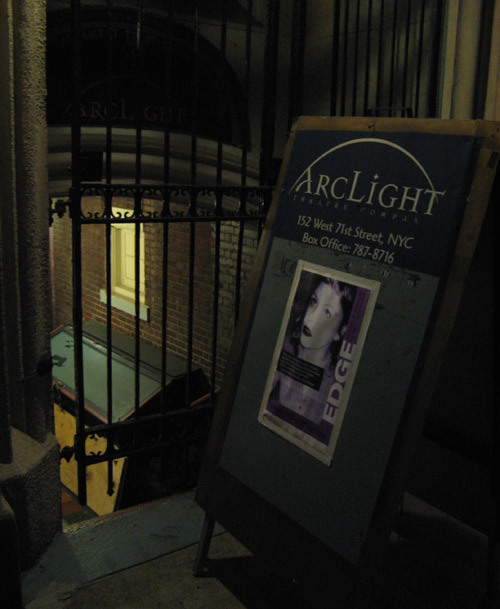
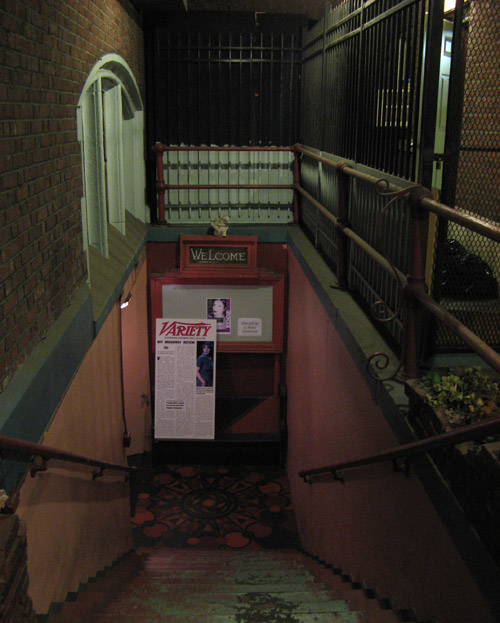
At the Arclight Theatre to watch award-winning actress Angelica Torn reprise her performance as poet Sylvia Plath in Paul Alexander’s solo play Edge. It was the final night of previews for the limited five-week run of this show which was previously seen in New York at the DR2 Theatre in 2003, the 40th anniversary of Plath’s death. (That same year Gwyneth Paltrow portrayed the poet on the big screen in Sylvia.) Since the original run, Torn has played Plath for audiences around the world, from the United States and England to New Zealand and Australia, where she will return for a second tour in 2008.

Edge

Edge

The entire play takes place on the final day of Plath’s life, opening with her composing a suicide note, and flashing back to episodes from her childhood in Massachusetts, to the loss of her brilliant, but tyrannical father at age 8, to her infamous suicide attempt in 1953 while a student at Smith College (which later inspired her only novel The Bell Jar) to Cambridge on a Fulbright scholarship to her whirlwind romance and rocky marriage to the English poet (and later Poet Laureate) Ted Hughes. The depiction of their volatile relationship is starkly one-sided – Hughes is demonized to the point that he is all but implicated in Plath’s untimely death at the age of 30 – but the image is nonetheless compelling. Hughes and Plath had two children together, Frieda and Nicholas, but separated in the autumn of 1962 over Hughes affair with Assia Gutmann Wevill — a name scorned biliously by Plath in the play. The demise of their marriage sent Plath into a spiral of depression (marked ironically, but an intensely creative period) during one of the harshest and coldest English winters on record, culminating with her death by gas oven that February. As Plath’s legal widower, Hughes became the executor of Plath’s personal and literary estates. (Ominously footnoted: six years later, Wevill took her own life together with that of her and Hughes’s four year old daughter Shura in a manner that closely resembled Plath’s suicide.)

Torn turns in an impressive marathon of a performance, fearlessly inhabiting her character for the full two hours. Her portrayal is a tumble of words – with episodes of intense physicality — biting and on occasion deeply bitter, at turns voracious and vulnerable. I anticipate liberal employment of the term “tour de force” in the reviews.

Torn is the daughter of Rip Torn and the late Academy Award, Golden Globe and Emmy Award-winning actress Geraldine Page, to whom this production is dedicated.

A new puff in town

As I turned the corner, south onto Main Street from Roosevelt Avenue in Flushing, I identified the buttery scent of fresh baked pastry floating anachronistically among the usual smells of Chinatown.

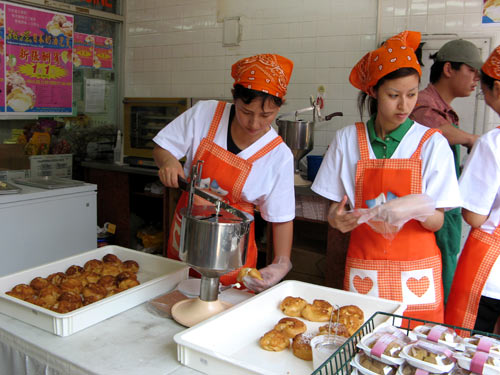
The source: a bright pink-bannered stand, advertising Japanese cream puffs for the introductory price of $1 apiece. Behind the counter, in a familiar tableau, cheery Chinese women sporting orange kerchiefs and matching aprons were lining up fist-sized balls of flaky choux pastry and piping into each a mixture of custardy vanilla cream.

In recent years, cream puffs have experienced a resurgence in popularity, thanks in no small part to Japanese chains like Beard Papa’s, which opened their first outlet on New York City’s Upper West Side in March 2004. Giant cream puffs were named hot dessert of the year by Bon Appétit in 2005.

Nice to see the trend finally trickle out to the end of the 7 line two years later.

Sakuraya

Sakuraya workers

Sakuraya, which lists an address of 113-19 14th Road in College Point — perhaps the location of the main bakery? — carries just the one vanilla variety of puff for now. I’ll need to come back another Saturday to investigate further.

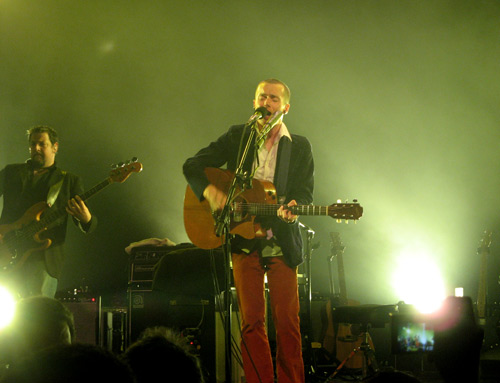
Damien Rice @ MSG

At the Damien Rice concert at Madison Square Garden, courtesy of HYB. (Thanks!) Our group met after work at the WaMu Theater for a night of music by the Irish troubador.

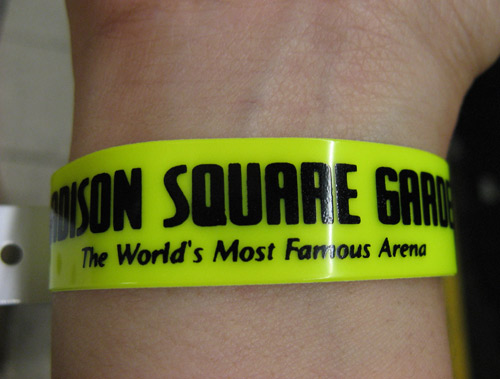
But first: another wristband!

MSG wristband

I was last at this theater in December — back when in it was still known as “The Theater”; this time, we staked (or more accurately: snaked) out prime spots in front of the stage, in a large standing area cleared for general admission. As we waited for Rice to emerge, HYB’s friend F and I got a preview of the tunes via BC’s iPod.

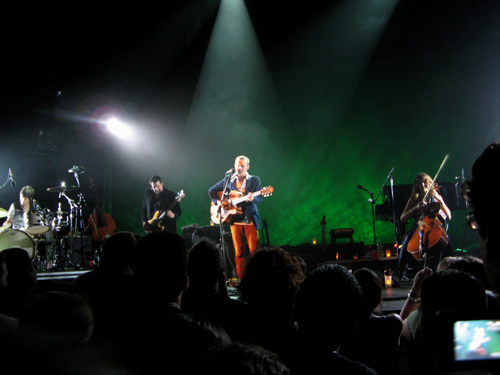
After nearly an hour of anticipation… Rice at last!

Damien Rice concert

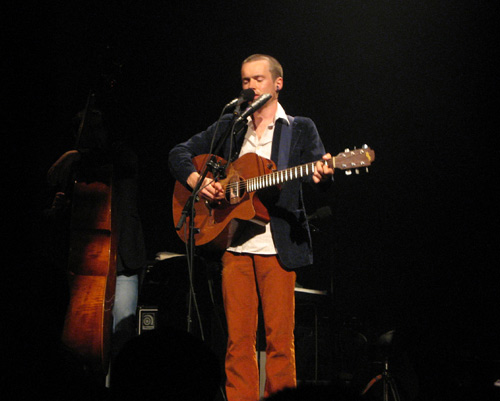
Damien Rice

Damien Rice

Both BC and HYB had seen him in concert a handful of times, but this was my (and F’s) first time. The first I heard Rice’s music at all was back in April 2004 through CL who had declared “O” her new favorite album. I remembering listening to a few tracks then: songs that sounded desperately sad to me (as, truth be told, just about everything did at that time) – including the one haunting tune I would come to remember and recognize later that year in the film Closer.

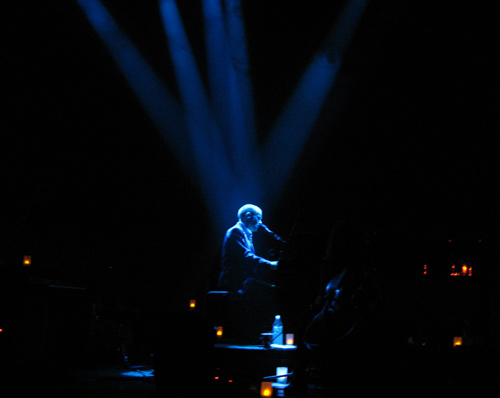
I’d pegged Rice then as a bit of a brooder, so it was a pleasant surprise that he turned out to be as dynamic and charismatic a performer as he was: at times, even raucous – quite a feat, when seated at the piano, accompanied by a cello. His interstitial banter was full of amusing chatter and self-deprecating anecdotes. At one point, he took up the Mad Lib-esque challenge by impressively improvising an entire song, based upon suggestions from the audience: adjective, color, name and chord became “Happy Green Joe,” in A.

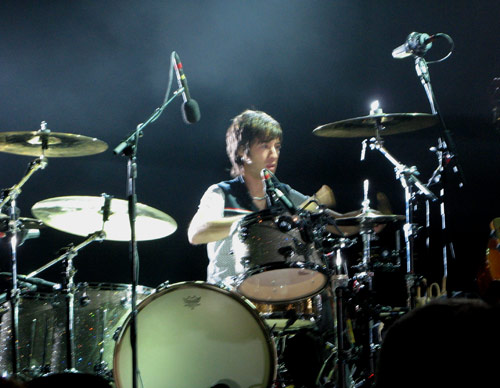
Is that a halfie drummer?

Damien Rice drummer

Towards the end of the concert, the audience was rocking so hard that the floor beneath our feet buckled and swayed in an ominous (but ultimately harmless) wave.

And for the encore: that first of Damien Rice’s songs I ever heard, better known as “The Blower’s Daughter“.

Damien Rice