vip in the city, page 71

Banh mi, oh my

For lunch this afternoon, I decided to stroll up to the Chinatown border for a bánh mì — the Vietnamese sandwich of warm, toasted French baguette, pâté, shredded carrots, daikon, cucumber, cilantro and meats topped with a variety of sauces and seasonings, a culinary marriage of French and colonial-era Vietnamese cultures.

On a nice day, it’s a pleasant stroll past City Hall Park to the closest sandwich shop, on the corner of Lafayette and Walker. Today, however, was not a nice day: it was, in fact, very hot and very humid, and halfway through my decidedly unpleasant 20 minute walk, I was berating myself for not having taken the subway.

Sáu Voi Corporation is not the name of a place one would associate with cheap and tasty sandwiches. In fact, it’s a tiny, no-frills convenience store, crammed to the brim with a random assortment of brassieres, Vietnamese pop music, cigarettes and lottery tickets. The neon sign advertises the primary reason for most visits to the shop.
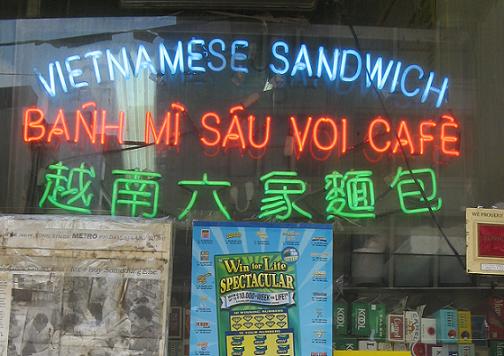
Sau Voi Corp

The right half of the store is dedicated to the Sáu Voi “Cafe” — really just a counter loaded with prepared Vietnamese snacks, behind which two women work in cramped quarters, brewing coffees and slapping together some dozen or so varieties of bánh mì.
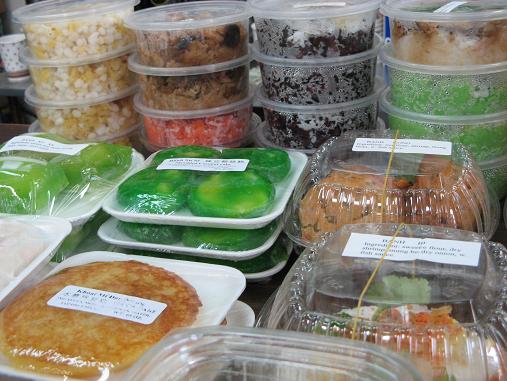
Vietnamese snacks

Maximum capacity for the store is about half a dozen people, and during peak lunch hour the line can spill over to the outside. The women working the food counter, though, are models of efficiency: from order to pick-up, I’ve never had to wait more than five minutes.

According to the menu, the Saigon bánh mì I ordered is made with “BBQ minced meat and slices of pork roll or ham.” Not sure what “pork roll or ham” means… is that chef’s choice? Or are they unsure about what to label the mystery meat? Well, whatever it is, it’s tasty — if not quite as tasty as the one I had in Ho Chi Minh City last month — and for $3.00, tax included, I’m not going to think about it too much.
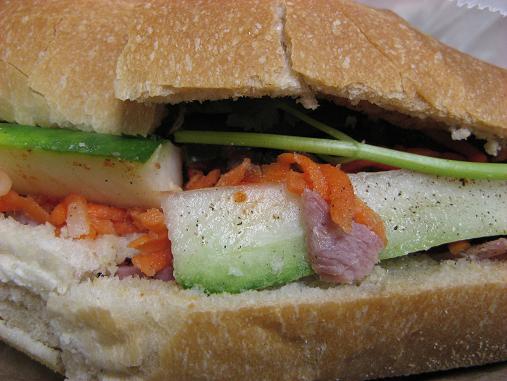
Banh Mi

New York City has several bánh mì shops scattered mostly throughout downtown Manhattan and in Brooklyn. The best one is a matter of some foodie debate, but many seem to recommend Saigon Bánh Mì, formerly located in the shadow of the Manhattan Bridge, but recently relocated to Mott at Grand Street. That’s about six blocks farther from my office than my old standby Sáu Voi, so I’ll wait for the weather to turn cooler before I investigate.

After work, I dashed home to pick up the pasta salad I made last night for SYB’s dinner party. As per sketchy usual, M and I had arranged to meet on the subway platform. She’d brought her usual contribution of booze, and we flirted briefly with the idea of ditching the dinner to set out on our own picnic. Cooler minds prevailed, though, and we made it to Sunnyside with our cargo intact.

Full house at SYB’s. We missed out on AC’s Baltimore crabcakes, which made me a little sad, but at least people seemed to enjoy the pasta, enough at least that I was spared having to carry home any leftovers. As the night wore on, the talk turned saucy — could it have been the effects of the Summer savory in my salad? More likely M’s giant pitcher of Sex on the Beach, made with cranberry juice, orange-pineapple juice, and entire bottles of Absolut vodka and Peach schnapps.
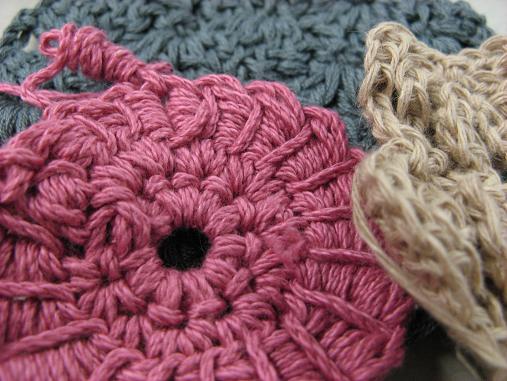
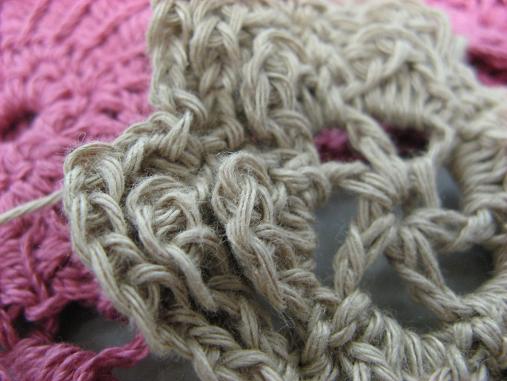
More hooking

Another good class: today we worked on yarn/color switching, tapestry crochet, making circles, and creating sculptural elements, like flowers. Lisa briefly demonstrated the broomstick crochet technique, so named because the stitches used to be worked around the end of a broomstick; a dowel or fat knitting needle is more manageable and common these days. Class went by so quickly that we didn’t get the chance to work on those stitches independently. Which means more (secret) practice at home for me this week.

Crochet

Crochet

Three-fourths through this course I’ve become comfortable enough with my technique to divert attention away to socialize with other students in the class. I got to talking to my seatmate this evening, NDB, a retired psychotherapist turned environmental activist/ inventor/performance artist/elderblogger (her term) and all around inspiring woman. Among her many social causes is increasing awareness about the growing crisis of HIV infection among women over 50.

Statistics show that AIDS cases rose faster in the over-50 population than in people under 40, accounting for 11-15% of new cases in the United States. Older women, among them new divorcees and widows, are particularly vulnerable: after menopause, condom use for birth control becomes unimportant, and physical changes put them at higher risk during unprotected intercourse. Seniors as a group are less aware about STD prevention methods — or consider STDs a concern for younger or gay people; HIV/AIDS educational campaigns generally are not targeted at older individuals.

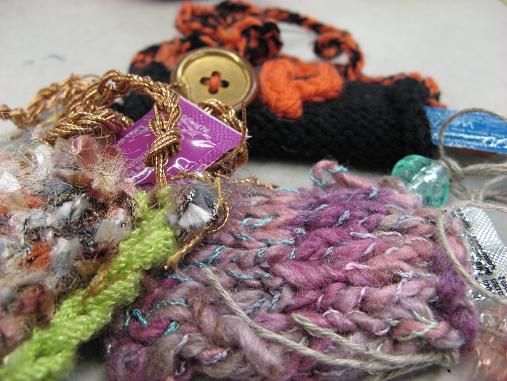
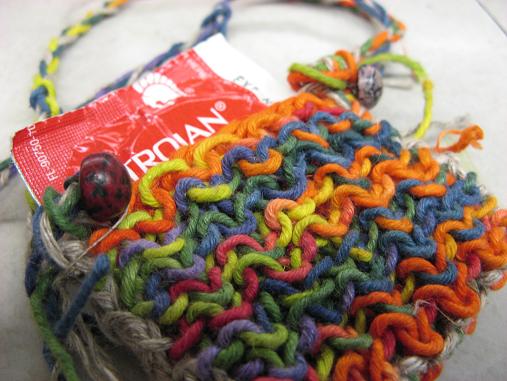
NDB herself has been married for over 40 years, but to promote awareness of this issue, she creates these knitted condom amulets, and encourages others to make (and use!) them:

Condom Amulets

Hemp Amulet

Safety first, everyone, regardless of your age.

I hope that when I’m a septuagenarian, I’ll still be trying to make a difference.

World Trade Center screening

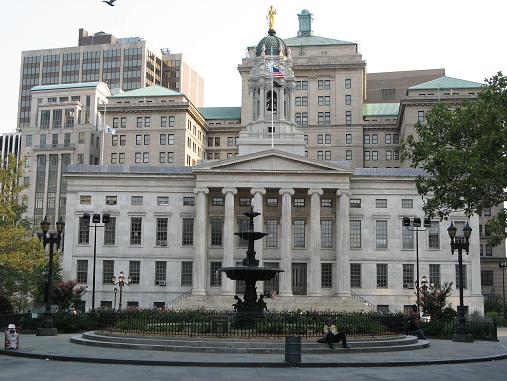
Brooklyn’s Borough Hall is a four-story marble Greek revival building that currently houses the borough president’s office. Before January 1898, when the independent City of Brooklyn was consolidated into the City of New York, it served as the City Hall of Brooklyn.

Borough Hall

Nearby on Court Street, I attended an advance screening of Oliver Stone’s World Trade Center. In contrast to yesterday’s screening attempt, this was a more orderly, lower key affair: RSVP required, and the Paramount representatives were checking names at the door, which cut down on the whole cattle-call feel these events tend to have. We arrived about 45 minutes before show time, and were among the first inside; at start time, the theatre was only two-thirds full — perhaps understandable given the still sensitive subject matter. The subdued atmosphere may also have been in keeping with the studio’s careful marketing of the film; the producers are planning no outdoor advertising in New York and New Jersey. In addition, 10% of the first five days’ grosses will be donated to September 11 charities.

What to say about the film itself, which unavoidably recalls all the emotions of that most terrible day? The natural comparison will be to the other recent September 11 movie, Universal Picture’s United 93, which I screened in film class earlier this year. From a purely cinematic standpoint, both films faithfully recreate events and characters, while offering little commentary. Even Stone, one of our more controversial working filmmakers, mostly shies from his usual editorializing. United 93, where most of the action was confined to the close plane cabin, may have been more viscerally “exciting,” but World Trade Center is broader in scale, and perhaps more emotional in its focus on the two Port Authority Police Officers and their families who are the film’s subjects. Of particular note was the startling accuracy and scale of the sets: I vividly remember roaming those very corridors of the World Trade Center concourse; the collapse — as seen from the perspective of the trapped officers — is terrifying. A few sequences had audience members quietly sobbing in their seats; particularly difficult to watch was the shot of the lone tower jumper.

Feeling drained after the movie, we wandered around the corner to Atlantic Avenue for dinner at Waterfalls Cafe. Wonderfully fresh, flavorful Middle Eastern fare — friendly owner, and their smokey Babaghanouj was I think the best I’ve had in New York City, or anywhere else.

Savory times

I headed to the McBurney Y alone after work to pick up this week’s abundant vegetable share: cucumbers, string beans, scallions, Early Jersey Wakefield heirloom cabbage, Perpetual spinach, fennel, Summer squash, Red Ace beets, Orient Express eggplant, and Summer savory. Quite a haul – and since SYB passed on his share this week, all for me.

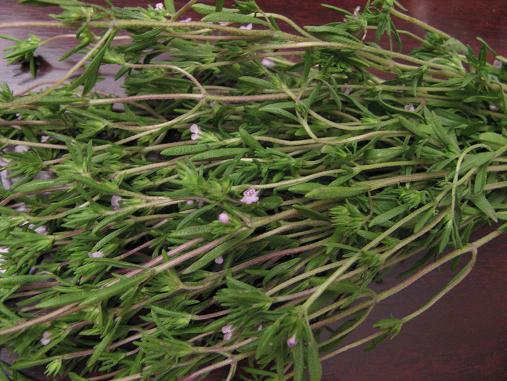
Savory

Savory is a member of the mint family, native to the eastern Mediterranean and is primarily known for its two main types: Summer savory (which I received) is an annual; Winter savory, a perennial. Summer savory is milder and sweeter than the winter variety and used more often in cooking.

The Romans used savory as a food seasoning long before they used pepper; their soldiers introduced it to England during Caesar’s reign, where it became established for its culinary uses and its medicinal properties. The colonists brought savory to America.

The old English word “saverey” was derived from the Latin “satureia” – meaning “satyr’s herb.” Satyr — the half-man, half-goat creature in Greek mythology renowned for its lechery — associates the herb with its aphrodisiac powers. Over the centuries, savory was considered the herb of love, used to augment physical fervor. The German’s word for the herb focuses instead on its use as a natural digestive aid. Bohenkraut, means “bean’s herb”; besides enhancing bean flavor, one of the components of the herb is known to combat the problems generally associated with legumes. Savory also has been used over the years as an antiseptic. Herbalists recommend topically applied savory for instant relief of wasp or bee stings.

With my canvas sack filled to bursting with fresh vegetables, I trudged up Seventh Avenue to meet CS in Chelsea for a preview screening of the new Woody Allen film, Scoop. By the time we arrived – over an hour in advance of show time – the line had snaked across West 23rd Street, past The Hotel Chelsea. Free movies always seem to draw people in droves, unaffected by poor early reviews. Still, Allen had recently proven himself still capable of making a watchable film, and since we couldn’t be certain that we would be shut out of the theater, we decided to wait it out as the lines of potential audience members grew steadily behind us.

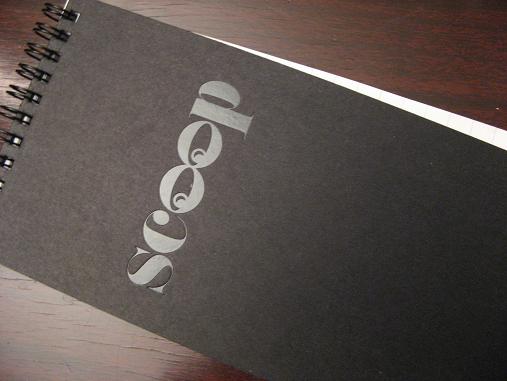
Just before 7:15pm, the theatre hit full capacity. As it turned out, CS and I weren’t all that close to the cut-off, so there were many others who’d waited in line longer than we and were denied admission. The very apologetic studio assistant came outside to break the bad news, bearing an armful of consolation swag. To make up for our not being able to see the film, we were given Scoop-emblazoned reporters notebooks.

Scoop

We took the subway back to our respective homes and made plans to reconvene at our local watering hole. Bartender Paul was working again (Mondays, Tuesdays, Saturdays), as was the new $15,000 air conditioning unit. Which was a very good thing, given the string of recent steamy nights. Paul greeted us warmly, and even comped us a drink — our first buyback! — so we’re well on our way to becoming regulars.

Konono No. 1 @ S.O.B.'s

Met SN for lunch this afternoon. We had initially considered dining al fresco, but the flimsy umbrellas the restaurant had set up in the patio area seemed to offer precious little protection from the blazing midday sun. I opted to take my maki rolls indoors. Scored an invitation on the boat, so depending on what else I’ll have going on at work, and weather permitting, I may be cruising the Hudson as early as next Monday. Sweet!

Met B after work for a pre-show dinner at the charming Ivo & Lulu, downtown offshoot of the popular (but equally tiny) far-Upper West Side restaurant , A. Good luck googling for information on that one. Both restaurants share a commitment to high quality, organic ingredients, and have similar gently-priced Caribbean-accented French menus. With just a handful of tables and a kitchen not much larger than mine at home, it’s a small miracle that the plates they turn out are as well-prepared and tasty as they are. Most patrons take advantage of the BYOB option – no corkage fees – giving a nice bump in business to neighboring Spring Street Wine Shop. When we arrived, our server automatically set out glasses for both water and wine. (Actually, they were four identical glasses: this casual spot only has the one type.) As we had come in empty-handed, B ran out to procure us a bottle for dinner while I placed our orders: jerked duck for him; rabbit and ginger sausage for me.

A satisfying meal, and a delightful find in one of the few remaining non-neighborhoods in Manhattan: not quite SoHo, not quite Chinatown, just off that sad stretch of Varick by the mouth of the Holland Tunnel.

After dinner, we strolled up to S.O.B.’s for the African All Stars Festival, just in time for the 8:00PM show… or so I thought.

SOBs

Some background first: Konono No. 1 is a 12-piece group hailing from Kinshasa, the capital of Congo. The band’s 2005 debut album, Congotronics created a global sensation, and earned the group the Best Newcomers Award at the BBC Radio3 World Music Awards in April 2006 – a mere forty years into their career. The original group was formed in 1966. In 1978, the then-nameless band recorded an LP with a French engineer that got some play on the radio station France Culture. Former Belgian punk musician turned record producer Vincent Kenis heard their sound and spent the next two decades trying to locate the mystery band he had heard once. Kenis made exoduses to Kinshasa in 1989 and 1996, and finally found the group in 2000.

Konono No.1’s music has been described as raucous Angolan/Congolese Bazombo trance music. Their lineup includes three electric likembés, or thumb pianos – bass, medium and treble – three singers (performing exclusively in the Bantu language Lingala) and a rhythm section, using traditional and makeshift percussion instruments. Their sound system, too, is their own creation: built from old car parts and discarded wood and machinery – in the early days, re-purposed detritus left behind by fleeing Belgian colonists in the wake of political turmoil. Though technically imperfect, the massive system of wooden megaphones — and attendant feedback — creates an entrancing blend of African dance grooves and dissonant distortions.

As I said, the show was scheduled to begin at 8:00pm. And although I’m generally suspect of advertised start times – knowing full well the s.o.p of building audience anticipation through warm-up acts and delays – I noted that there was no opening act, and more importantly, a second set was scheduled for 10:00pm. Both of which would indicate a reasonably prompt 8:00pm start, right?

Well, not quite. S.O.B.’s – which stands for nothing more coarse than “Sounds of Brazil” – specializes in Brazilian, Caribbean and Latin music. In keeping with the theme, the main room is decorated with bamboo accents and the drink offerings tend toward the tropical. Forty-five minutes and some sweet and minty mojitos and caipirinhas later, B consulted with the doorperson and learned that, unbeknownst to us, the club had decided to combine the early and late shows. So Konono No. 1 wouldn’t be taking the stage until 9:45PM.

What to do, but kick back, relax and let the evening unfold?

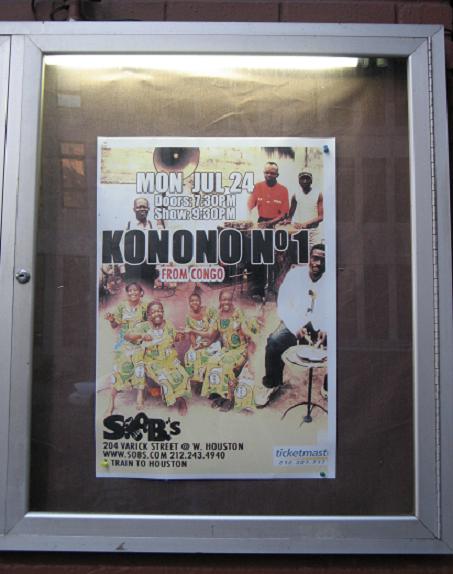
Konono Concert Poster

Konono No 1

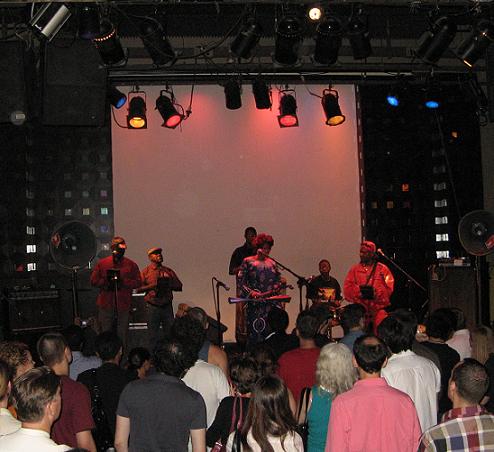
By the time the first likembés sounded off, we were both in hazy, festive moods, further enhanced by another cachaça-fueled hour. The musicians were energetic and genuinely enthusiastic in their performance… and seemed fully at ease with their rather recent success, despite emerging from such humble, unstable roots. The relentless onslaught of sound was contagious. Ultimately, though, I think I enjoyed the concert more than B did, his main objection being the repetitive beats: Ba-BONK-ba-bonk-bonk-bonk. Repeat for two hours.

Is it a bad thing to find comfort in familiarity?

Riverside Park performances

After a hearty lunch, I dragged my full belly (and leftover chilaquiles) through the Upper East Side. Out of habit, I peeked across at 94th Street, to check in on the old high school.

AC’s friend SC called while I was inside the East 86th Street Barnes and Noble. After exiting the store – because I know how it irks me when people persist in holding long, loud telephone conversations in a bookstore. And yes, I realize that a bookstore is not a library, but can we show some consideration? – we started comparing notes on books we’d read recently. Naturally, “The Da Vinci Code” came up. I explained — again — that no, I hadn’t read it, but that I was meaning to very soon. (And really, I am: current inertia to the contrary.) SC suggested that to better appreciate The Code, I should first read “Angels & Demons.”

What? There’s a prerequisite for this thing? Is this true? I’m even further behind than I thought.

By the way, I just learned that author Dan Brown made over $88M in 2005, earning him a top ten slot in Forbes’s Annual Celebrity 100. I’d like say that I learned this from a studious reading Forbes magazine, but the information was actually gleaned through my random viewing of VH1’s “Forbes Celebrity 100: Who Made Bank.”

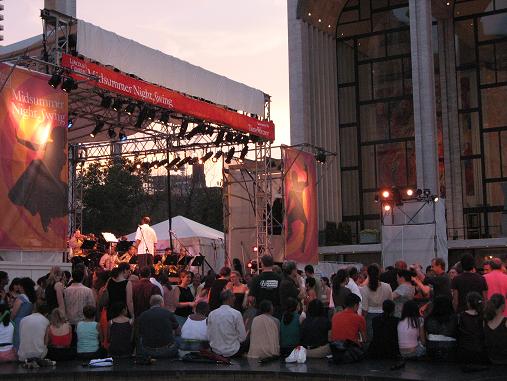
Passed by Central Park’s Summerstage on the way home, where Maldita Vecindad, Konono No. 1, Daara J were performing to a raucous and appreciative crowd. I’m seeing Konono No. 1 in concert at S.O.B.’s on Monday, so more on them tomorrow.

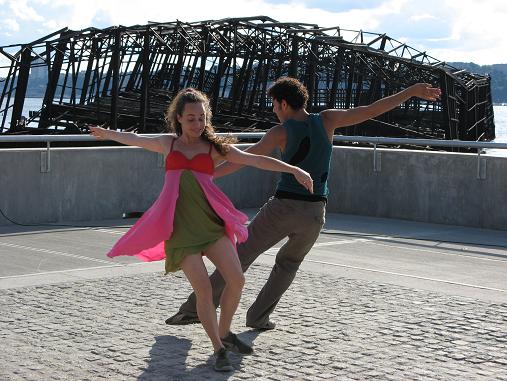
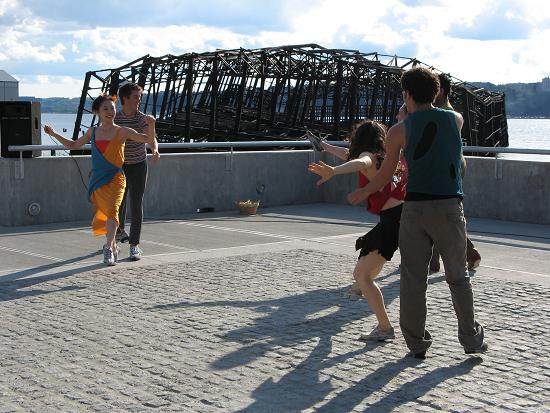
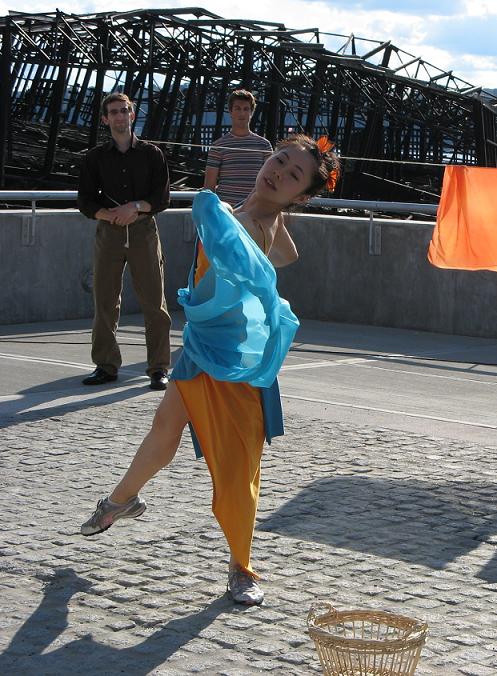
At Red Shade Plaza in Riverside Park South, Chashama, the not-for-profit NYC arts organization, presented the last of their “Site Specific Sundays” performances this summer.

This interpretive dance piece — accompanied by zither and harp — was titled “Three Elements”. I think this was the “Air” segment…

Chashama

…but I may not have been the only one the “interpretation” eluded.

Chashama Audience

The dance performances that followed were more mainstream, and accompanied by piped in Brazilian music.

Chashama

Chashama

Chashama

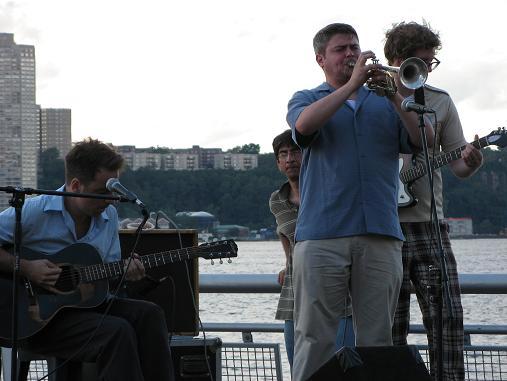
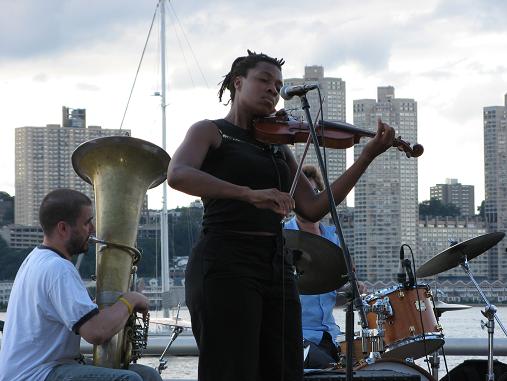
About half a mile North, on Pier I, The talented Howard Fishman Quartet (plus two) performed two jamming sets, fresh off their three night stint at Joe’s Pub earlier in the summer.

Howard Fishman Quartet

Howard Fishman Quartet

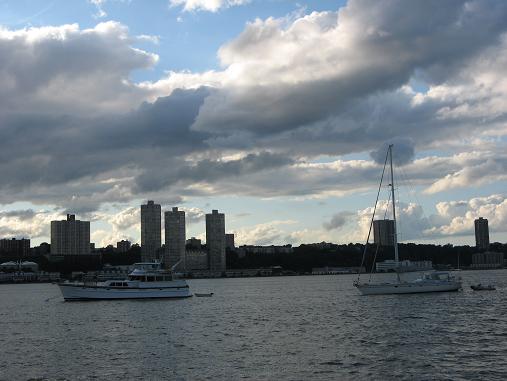
Riverside Boats

From The Conservatory Garden to El Barrio

For the first time in days, I woke to a day that was neither ridiculously hot nor ridiculously wet. Decided to take advantage by spending the day wandering around the city parks.

I gathered up my crochet and a couple of magazines and hopped the 2 to Central Park North. Living near the lower regions of the park – though still considered “uptown” in somewhat skewed Manhattan parlance – I’m less often in the northern, more pircturesque, end of Central Park. Frederick Law Olmsted and Calvert Vaux’s original Park design ended at 106th Street; In 1863, the city purchased an additional 65 acres of “rugged” land, to extend the northern boundary to 110th Street, bringing the Park to its current 843 acres. The highlight of the extension is the 11-acre Harlem Meer, a converted swamp that in March through May is stocked with bass, carp and catfish, for the public’s catch and release fishing pleasure.

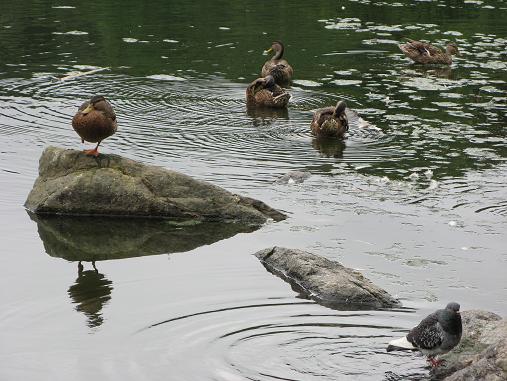
Harlem Meer Ducks

From there, it was a short stroll to the Conservatory Garden, Central Park’s only formal garden.

The six-acre garden is so named for the massive glass conservatory that stood on the same spot at the turn of the 20th century. During the Depression, when upkeep of the facility became too expensive, the conservatory was demolished and replaced with the present Garden, which opened to the public in 1937. The entrance on East 105th Street is marked by a black wrought iron gate that once graced the entrance to the Vanderbilt mansion.

The Conservatory Garden is popular with local artists and both amateur and professional photographers. This afternoon, I came upon just one couple taking their wedding photos – for $100.00 per half hour permit (yes, I’d looked into it); in the past I’ve counted up to half a dozen brides and grooms. Peak time is probably in the Spring when the Garden’s 20,000 tulips are in bloom, and the paths are lined with flowering crabapple trees, which were planted in the 1930s and early 1940s as part of the federal WPA projects under Parks Commissioner Robert Moses. Or in the Fall, when the leaves change color and the 2,000 Korean chrysanthemums are in season.

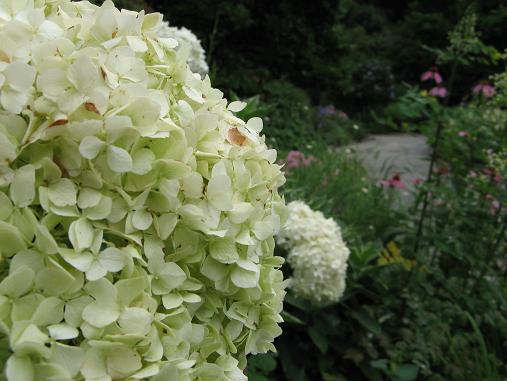
Conservatory Garden

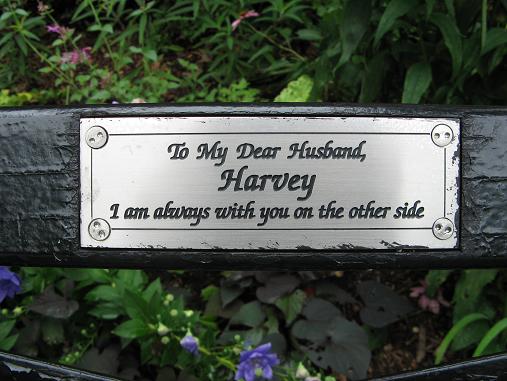
Bench

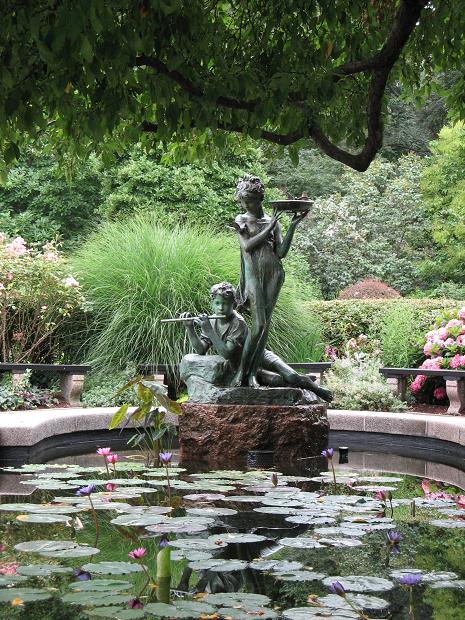
The English Garden’s Burnett Fountain depicting Dickon and Mary from Francis Hodgson Burnett’s book “The Secret Garden”

Burnett Fountain

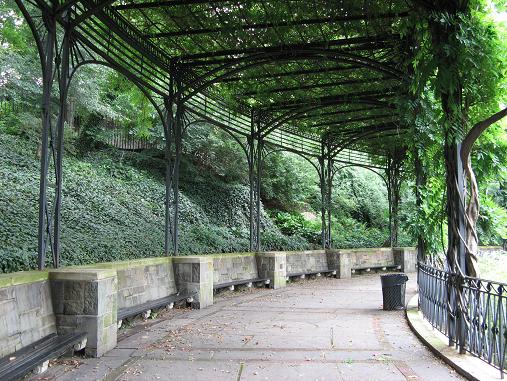
I picked out a bench under the shade of the pergola and set out to make some progress on KG’s baby hat. I’m reading the pattern wrong, I think. The hat I’m crocheting seems way too large for a newborn’s head. At least I’m hoping so – for KG’s sake.

Conservatory Garden

By mid-afternoon, my hunger proved too distracting to continue crocheting. And I had taquerias on the brain, since reading this weekend’s New York Times California Coast taco crawl article, which mentioned Julia Child’s favorite taco stand, La Super-Rica Taqueria.

But of course, I’m not in Southern California. The next best thing: far in feel from but near in geography to the formal gardens is the heart of El Barrio (Spanish Harlem), a vibrant neighborhood where casual, authentic Mexican joints abound.

Prior to my visit uptown, I’d read about El Paso Taqueria, located at 104th and Lexington. The Times – gee, two mentions in one entry – called this “extremely plain yet bustling little corner spot” “one of the best restaurants in the area.” And of course, as any of my friends will tell you, that’s all the endorsement I need. Kidding, people.

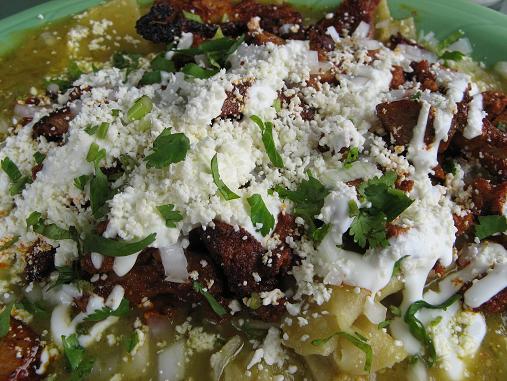
I was seated at a window table, and after perusing the offerings, I decided upon the first item on the lunch menu: the chilaquilescon carne enchilada (spicy pork) and green tomatillo salsa. No drinks were listed, so when I asked the friendly waiter for a recommendation, he suggested the “horchata.” Not knowing what that was, I tried to ask – en español – about the ingredients; instead he offered to bring by a sample of the iced, creamy-looking white concoction.

I took a sip: muy delicioso – not unlike a liquified rice pudding, I thought. I later learned that a horchata is a Mexican drink made from rice and blanched almonds, flavored with combinations of vanilla, cinnamon and sugar. It has the consistency and appearance of milk, but is apparently dairy-free.

I signaled my approval to the waiter, who smiled and promptly delivered a tall, brimming glass. The refreshing horchata made a heavenly accompaniment to the spicy, tangy – and enormous – chilaquiles that arrived at my table minutes later.

Chilaquiles

There is a Spanish saying: Cuando hay hambre, no hay mal pan (When there is hunger, there is no bad bread.). But even if I hadn’t been starving, I would have savored every bite. I’ll have to try out that theory the next time I’m in the neighborhood.

Lady in the Water

June 2006 was the fifth rainiest June recorded in New York City. Three years ago, 10.27 inches of rain fell in Central Park, making it the wettest June since record keeping began in 1869.

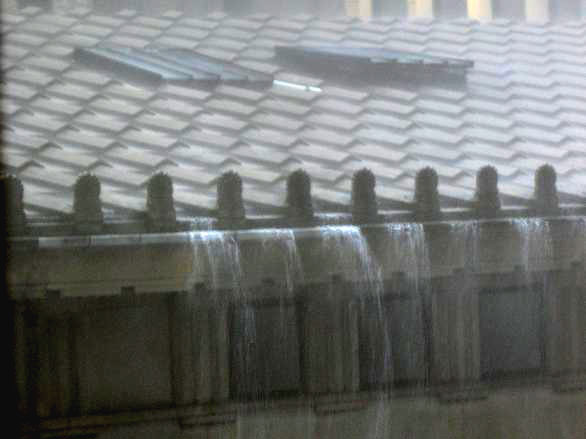
July’s weather, by contrast, has been drier, but much more volatile: the heat wave earlier this week melted parts of NYC’s public transportation system and contributed to widespread — and still ongoing — blackouts in Western Queens. Just before 5:00PM, the skies suddenly blackened and torrential rains came in, clearing the streets and sending rivers of water pouring down the sides of buildings, just in time for Friday evening rush hour.

The view from my office:

Eaves

So much for my plans to hit The South Street Seaport Museum and “Chicken Run” at Pier 46. Plan B: After a celebratory drink with JB, ST, RM and the summer interns across the street, I met SYB in SoHo to begin our “secret rock star” itinerary. Thankfully, by then the rain had tapered off.

First stop: pre-party bites at Verlaine on Rivington. According to the New York Magazine Bar Guide, the place is popular with “a less ostentatious breed of LES hipster.” Summer rolls, calamari, spinach dumplings and happy hour (until 10:00PM!) sangrias. Yum. CL and his friends began trickling in as our food arrived, and we made our way to the reserved area after dinner, where someone had brought in cupcakes from Sugar Sweet Sunshine. Chatted with JL, and got to meet IL about whom I’d heard so much over the years.

Next stop: Lolita on Broome for SK’s sendoff. From bisexual French poets to American nymphets! Got to watch SYB break out his origami bar trick for SK’s friend, Lauren. Tonight’s feature: the Kawasaki star. Not wanting to pull a WGY, I diverted my attention to SK’s friend DG, the Québécois attorney, instead of joining in the folding lesson.

An hour later, we were in a cab headed uptown: SYB on to party number three; me, home to call it a night… which I suppose makes me only two-thirds as cool. I can live with that.

From Joe Morgenstern‘s review:

M. Night Shyamalan’s “Lady In the Water” was inspired, we are told, by a bedtime story the filmmaker told his kids. I’m here to tell you that this cloying piece of claptrap sets a high-water mark for pomposity, condescension, false profundity and true turgidity — no small accomplishment for the man whose last two features were the deadly duo “Signs” and “The Village.”… [Mr. Shyamalan’s] first success in the genre was the genuinely creepy “The Sixth Sense,” with its signature line “I see dead people.” But that was seven years ago. Now everyone is dead in “Lady In the Water,” and they aren’t meant to be. They’ve simply been suffocated by super-seriousness in the telling of a small, murky fable.

Ouch. But aside from that: has it really been seven years since “The Sixth Sense”? I remember going to see that film in Great Neck with DK, HH and JC — a night I still recall with much fondness, despite everything that came after.

Granny Squares

My second crochet class started out much more smoothly than the first. Thanks to some hands-on tutoring from DM on Saturday and lots of late night practice, I was finally able to master the chain, single crochet, double crochet and triple crochet stitches. Well, “master” may be a bit strong, but at least I was able to create rows in general approximation of those basic stitches. Shame is a powerful motivator.

The class began with a review of last week’s lessons. Lisa called out the types of stitches for us to make and then circled the room to inspect our work individually. As she came to my desk, she pulled up a chair alongside — clearly anticipating the extra time and assistance I would need. She peered over my shoulder as I breathlessly awaited her verdict.

“Hey… nice work! Someone’s been practicing!”

My heart swelled with relief and nerdy pride. “YES, thank you!” I blurted out happily. “I practiced almost every day.”

Overhearing this exchange, another student piped up: “You did? Seriously?” Not mockingly, more… incredulously.

Too late, I recognized the absurdity of practicing “almost every day” for a non-credit continuing education crochet class… and then of actually admitting it out loud.

The class moved on to other starting techniques, the slip stitch, the half double crochet stitch, the bullion stitch, crocheting “around the post,” and finally, reading a granny square pattern.

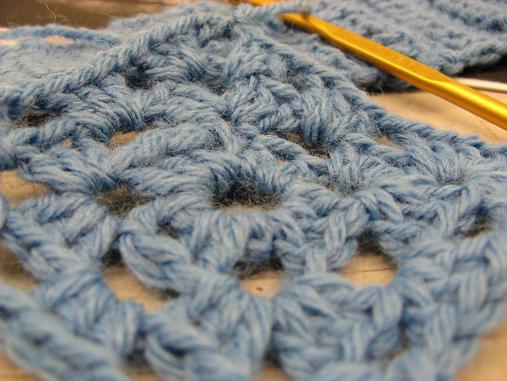
My first granny square!

Granny Square

For inspiration, Lisa brought in some of her own (far more advanced) work to show — beautiful, sculptural swatches that filled me amazement, and a little bit of envy. (Also a powerful motivator.)