vip in the city, page 70

The Dyckman Farmhouse

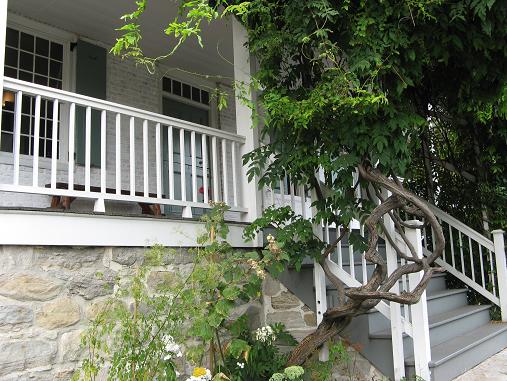
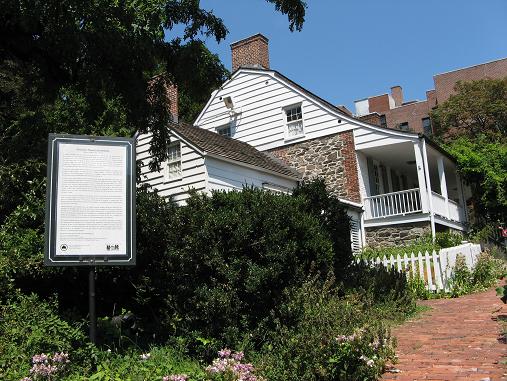
The Dyckman Farmhouse Museum sits anachronistically perched on a knoll, 15 feet above street level at 204th Street and Broadway on the narrow northern tip of Manhattan. The avenue has been lowered many times since the Dyckmans, one of the early Dutch families of New Amsterdam, built the house around 1783 to replace an earlier structure that had been burned down by British troops during the Revolutionary War. Today the original farmhouse is a museum, run by the City of New York/Parks & Recreation and the Historic House Trust since 1916, when it was restored and donated to the city by two daughters of the last Dyckman to grow up there. It is Manhattan’s only surviving 18th century Dutch Colonial-style farmhouse.

The Dyckmans harvested salt hay (from the marshes lining the river borders of the property) and planted cabbage and fruit orchards on land worked largely by indentured and freed slaves until the mid 19th century. The family owned several hundred acres of Manhattan property – worth about a bazillion dollars in today’s real estate market – before the last of the Dyckmans decamped for the urban comforts of a Queen Anne-style row house on East 71st Street in the 1870s.
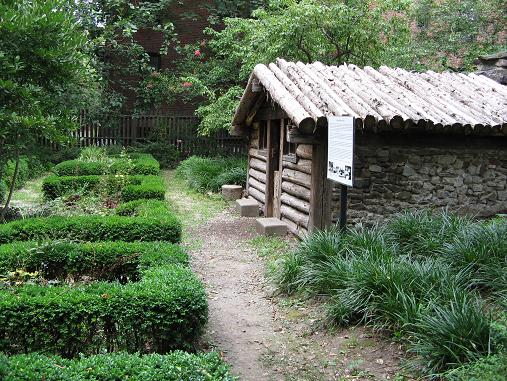
The museum grounds cover just under 1/2 acre on which sits the farmhouse itself – reopened this Summer after three years of extensive renovations – a reproduction smokehouse and a tiny formal garden (both put in by the Dyckman sisters) and a reconstructed Hessian Hut, which in its former life had housed German soldiers, primarily from the province of Hesse-Cassel, during the Revolutionary War.

Several weeks earlier, I had made reservations for the after-hours guided tour. The group numbered just six people, plus the guide, which was just manageable, given the confines of the small space. We toured the inside of the house, which was still in the process of being refurnished after the renovation. Most of the objects inside date from the 19th century, brought in by the Dyckman sisters. With the notable exception of a dining room sideboard, almost none of the furniture pieces are original to the 18th century farmhouse; many objects were scattered when the family vacated after three generations, and some were lost in a trade with Boscobel, another Dyckman home, in Putnam County. The wall along the interior stairs leading to the cellar kitchen bares one of Inwood’s many schist outcroppings. The upper floor houses museum offices and two refurnished bedrooms. The space was stiflingly hot in even today’s pleasant weather; the guide told us that during last week’s heat wave, the lone air conditioning unit, running at full blast, could not bring the temperature below the mid 80s.
Dyckman Farmhouse

Back Porch

Hessian Hut

On the way out, we chatted up Maeve, one of the summer interns, who earlier in the day had given us a good recommendation for our pre-tour lunch. Inwood, once home to Irish and Jewish immigrants, is a predominantly Dominican enclave. Galeria Restaurant at 207th and Vermilyea is just one of the many local eateries serving authentic food at reasonable prices. The slight snag was in the ordering process, which I couldn’t figure out: most of the pre-set meals seemed intended for much larger groups, and there didn’t appear to be any a la carte option posted. In the end, we just pointed at whatever looked good (fried/roast chicken, rice and beans, sweet plantains) which the server obligingly piled onto a plate until asked to stop — all for $6.
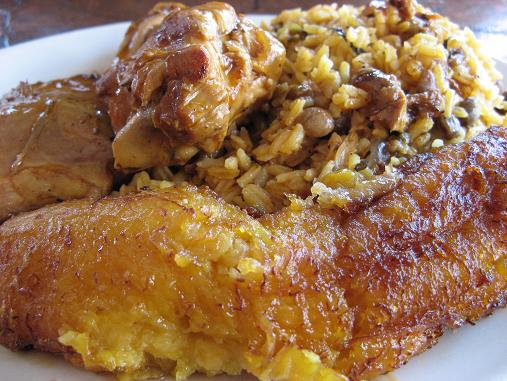
Galeria lunch

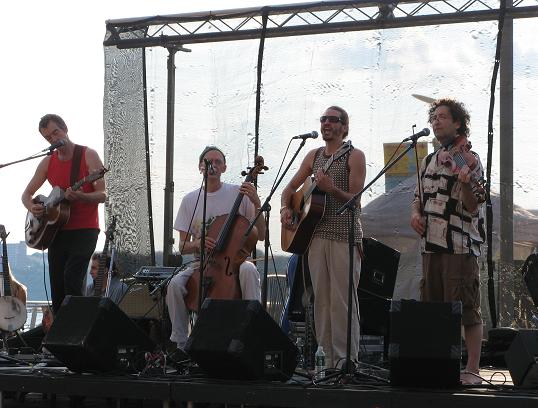
Páprika – an all-female group from Brooklyn, specializing in dance music from around the globe, e.g., Turkish pop star Tarkan‘s Simarik, better known stateside as “Kiss Kiss.” At Riverside Park South, Acoustic Sundays:
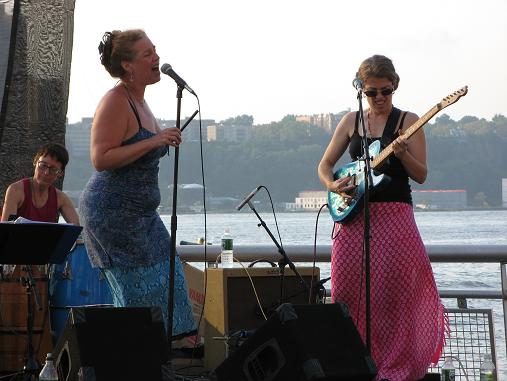
Paprika

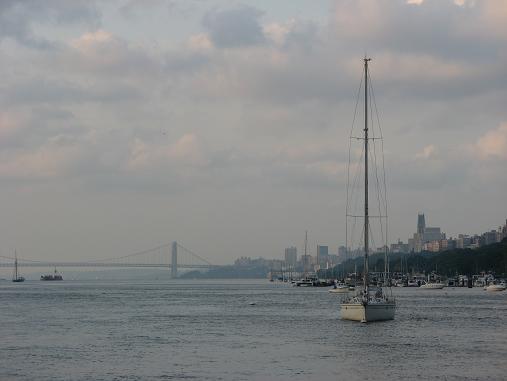
GW Bridge

Wedding at The Lighthouse

DK’s big day! Since neither SYB nor I were bringing dates, we agreed to meet at my apartment in the morning for the taxi ride to Chelsea Piers. As soon as I entered, I was delighted to see a familiar face in JE, the old college roommate, whom I hadn’t seen since running into her at The Conservatory Gardens two or three years ago. She was positively glowing with the news of her two-weeks’ old engagement. Her fiance was with her, in town from California; they’d met last year at her best friend’s wedding. How romantic (and inspiring)!

Best man HH came by to greet us as we were sipping our pre-ceremony seltzers in the foyer. Groom DK strolled in shortly afterwards, looking a little nervous, but otherwise happy. I hadn’t seen the boys in tuxes since our high school prom, and the sight of them as grown men, dashing in their wedding finery, made me a little nostalgic.

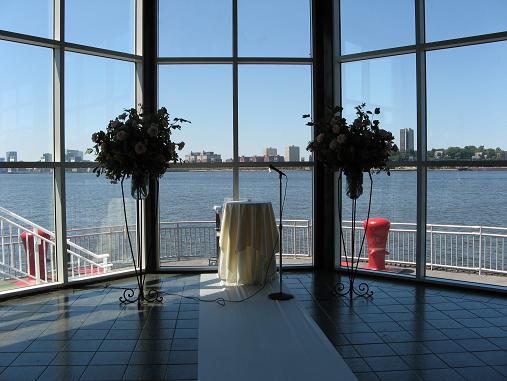
Show time. At my insistence, SYB, DK’s friend JR and I snagged seats near the front, overlooking the Hudson. The venue was as lovely as I remembered from touring it three years ago with J & J when they were considering wedding locales. The days-long heatwave had broken and the skies were clear and almost impossibly blue. The stage was set for a perfect day.

Pre-ceremony

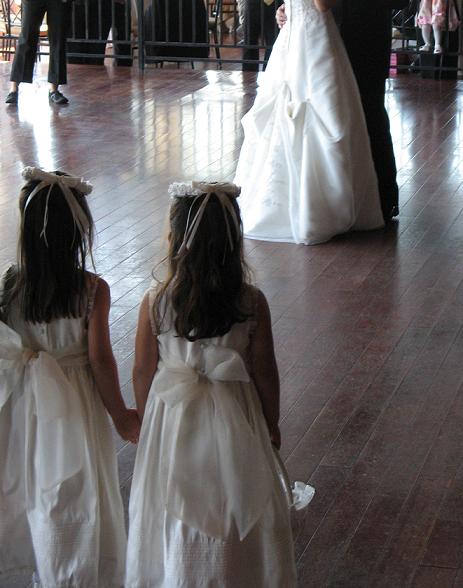
Short, sweet ceremony. DK’s twin nieces made adorable flower girls. The bride was, of course, beautiful in her white gown, but the range of emotions playing across DK’s face as she made her walk towards him down the aisle is what I will remember most.

A cocktail hour followed during which I had the opportunity to mingle with the other guests, none of whom I knew or recognized. HH introduced me to two of LC(K?)’s brothers and I chatted with one of DK’s cousins while we were in line for the smoked salmon and carved Smithfield ham. Probably spent the most time with LK’s friends, an architect/purse-designer couple from Park Slope. I was describing to them how I’d been friends with DK, HH and SYB since junior high school and the wife observed, “So you’re the girl! You’re their Elaine!” Which got me to thinking: can that possibly be true?

Naturally, this led to a discussion of the other characters in the dysfunctional quartet. Ultimately, we couldn’t decide whether DK or HH would be Jerry, but SYB would definitely be the Kramer.

According to Wikipedia:

Elaine is mostly a victim of fate throughout the series. Her storylines see her caught up in the machinations of the other characters, or coming into conflict either with inadequate boyfriends or the arbitrary requirements of her eccentric employers. Many episodes end with Elaine ruining something for someone.

Haha.

During the luncheon, I was seated at a table with HH, SYB, other friends of LK and a former co-worker of DK’s, who rather curiously brought her married, vegetarian trainer as her date.

The band and singer performed a classic rotation of American standards and smooth-jazz dining music. Perhaps due to the early hour, or the whims of the crowd, there was actually very little dancing after the bride and groom had their first dance to “At Last.” I was determined not to be a wallflower, though, and even managed to coax turns out of HH, SYB and JE’s fiance, SS.
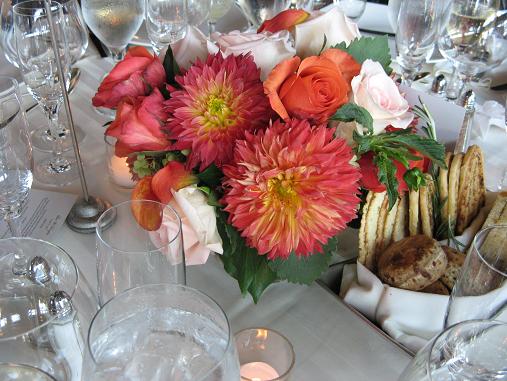
Wedding table

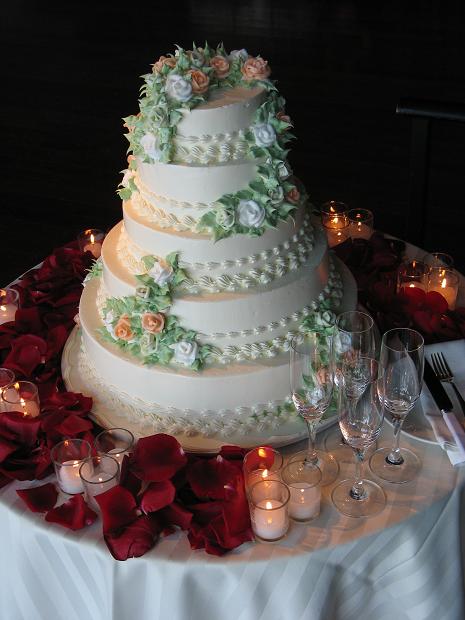
Wedding cake
Flower girls

As the festivities wound down, HH managed to snag 1.5 centerpieces for me — someone had cherry-picked the roses and swiped the vase of one, stuffing the remainders into a wine glass. We picked up our photo favors, and SYB accompanied me with the flowers to my place to change and recharge while HH wrapped up his best man duties for the day. After all the early excitement, it was probably no surprise that I ended up passing out in a champagne/cocktail haze until HH called to reconvene upon his return from Brooklyn.

After burgers at the Fairway Cafe, the three of us caught the 10:30PM show of Talladaga Nights: The Ballad of Ricky Bobby. It seemed I had vastly underestimated the draw of Will Ferrell; by the time we arrived just before 10:00 (having wisely purchased our tickets before dinner), the line snaked along the entire length of the second floor. Nonetheless, we still managed decent seats in the sold-out theatre.

I once read Ferrell described as “shame immune,” and I think that could well be the crux of his appeal. John C. Reilly (as best friend Cal) and Sacha Baron Cohen (as Ricky’s gay, Formula Un nemesis) provided impressively solid, comic support — which prevented the film from relying too heavily on Ferrell’s signature screaming and stripping. Despite a nagging headache, I found myself laughing aloud in parts. It seems Ferrell has rebounded nicely from the nadir of Bewitched (which I actually did see in a theatre, but for free… and even then felt it was not worth the 102 minute investment.)

So in spite of not experiencing JE’s wedding luck in love, it was a nice ending to an eventful day.

Tantric Siddhas and Dirty Birds

The Rubin Museum of Art opened in October 2004, in the Chelsea building on 17th Street formerly occupied by Barneys. I remember window-shopping through the same space when it was a department store — the Rubins, Shelley and Donald, bought the building in a bankruptcy sale for $22M to showcase their vast personal collection of predominantly Tibetan-region art, dating from the fourteenth through nineteenth centuries.

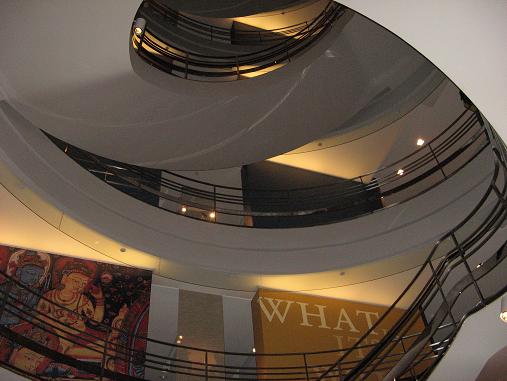
The most striking feature of the exhibition space is the six-story spiral staircase — original to the department store’s design. Architect Richard Blinder and graphic designer Milton Glaser (creator of the “I *heart* NY” logo and the DC Comics circular logo that was in use until 2005) are credited with the museum’s transformation.

RMA spiral staircase

The collection focuses on paintings, drawings, sculptures and photographs. This night, we were treated to a gallery tour and storytelling session focused on how gender lines are blurred in the imagery and folklore of Himalayan art traditions, during which I was struck by the museum’s guide/historian’s obvious passion for her work. The fifth and sixth floor galleries were taken up by a special exhibit entitled “Holy Madness: Portraits of Tantric Siddhas,” which focused on spritually accomplished men and women (siddhas ) who possessed magical spiritual and physical powers. Like stopping the sun to avoid paying a tavern bill — fun stuff!

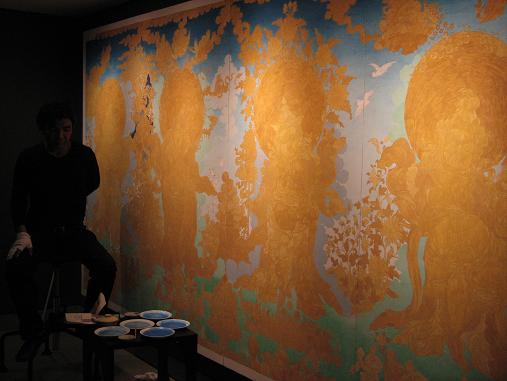
One gallery is devoted to a fantastic mural being painted through the end of the year by Himalayan-trained Tibetan artist Pema Rinzin, on a residency sponsored by the RMA and The School of Visual Arts, where he will be teaching a Tibetan painting course in the Fall. When I arrived, he was talking animatedly with a couple about his previous eight-year project in Japan. His painting technique involves hand grinding mineral stone into a water and rabbit-skin extract solution and painstakingly applying it to the the wall with a tiny brush.

Muralist

On Friday nights through mid-September, the museum plays host to CabaretCinema, an innovative themed film program. Their first floor K2 Lounge is a slick space serving drinks and light bites, and set up for live performances and DJ turns.

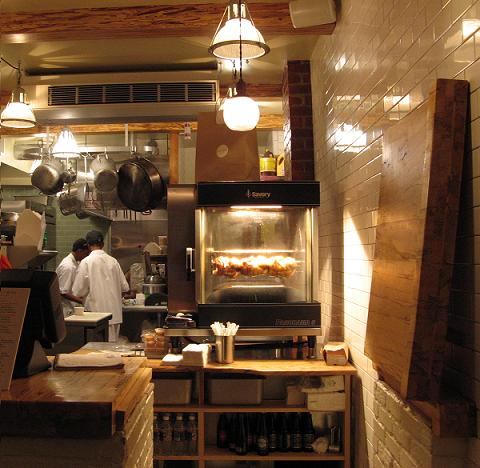
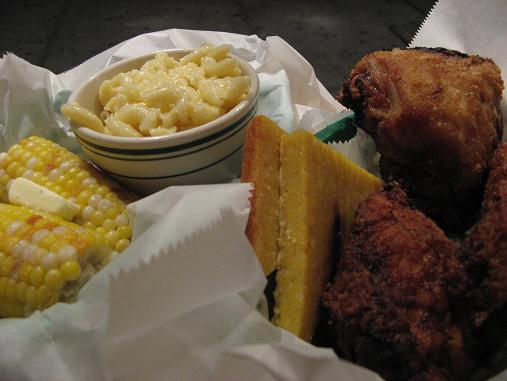
Afterwards, we stopped in for dinner at Dirty Bird to Go, the newish West Village organic fried chicken spot. Good — if slightly pricey — fried chicken: ours arrived hot, crisp and not too thickly battered. The shallot cornbread had a different texture than what I was used to — flatter, denser — but was nonetheless tasty.

We pulled up stools at the counter overlooking 14th Street, from which we could watch the fascinating array of Friday nightlife scenes unfold.

Dirty Bird to Go

Chicken dinner

Crochet class: loose ends

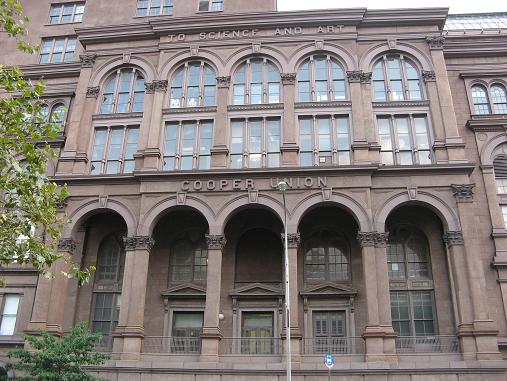
Attended my final crochet class at Cooper Union tonight. The extreme heat – three straight days of at least 100 degree temperatures at both LaGuardia and Newark airports – seemed to keep people several at home. Even Con Ed dismissed their non-essential employees early. Tonight our ranks numbered just five, plus instructor Lisa.

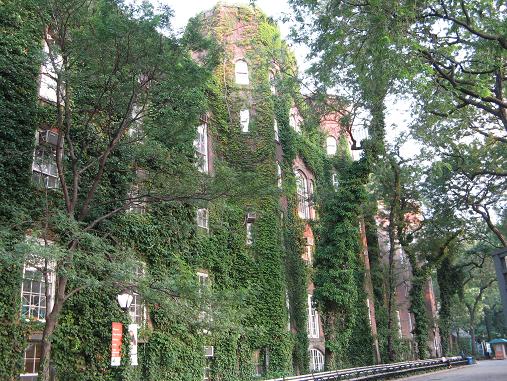
Cooper Union

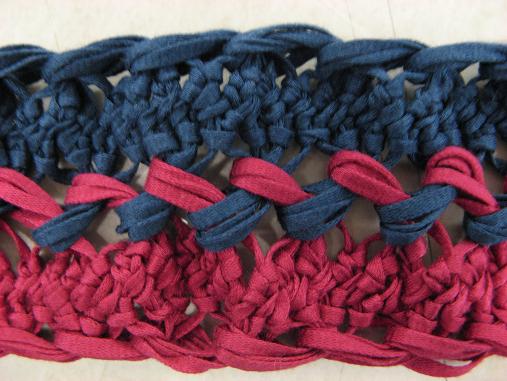
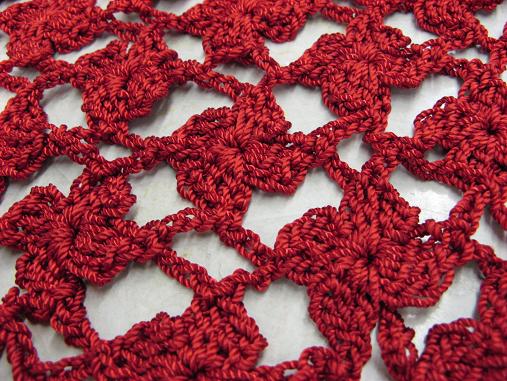
We reviewed our patterns from last week and launched into hairpin lace crochet. This technique, unlike the others we learned during the course, is worked on a small handheld loom, sometimes called a staple – actually a two-pronged fork of adjustable width – on which one makes interconnecting loops using a crochet hook. Early practitioners of this craft worked their stitches onto an actual hairpin, giving the technique its name. The result is an open, airy weave, suitable for lace and edgings, or interconnected to form a lightweight fabric. The ends can also be cut for fringe, left free-hanging as loops, or finished off.

My first attempt was pretty dismal, as usual: the tension wasn’t quite right, and my stitches, once removed from the loom, had a way of curling up into a hopeless-looking wad. Argh. But through perseverance – and some extra attention from the ever-patient instructor – I eventually ended up with two pieces that could be coaxed to lay flat. I still think it’s a somewhat old-fashioned-looking technique – even more so than standard crochet – but with more practice, and prettier yarns, this could be used to create a sweet-looking shawl. Or worked up with thin wires and interspersed beading for some funky cuffs or necklaces?

Crochet

Crochet

I’m only just getting into the possibilities. Cooper Union is offering a more advanced, craft-focused version of this class in the Fall: Purses, Pillows and Chapeaus: Exploring Shape, Structure and Design. I’m very interested in their New York City History course, but with my Russian class re-starting at NYU in September, there just don’t seem to be enough days in the week.

I bid farewell to my classmates and left Cooper Union just before 10pm. It had rained sometime during my class: the ground was still wet in spots, and the temperature had dropped some 15 degrees. Sweet relief! It was actually pleasant enough weather to walk… not the entire way home, but to the West Village, where I caught the 1 uptown.

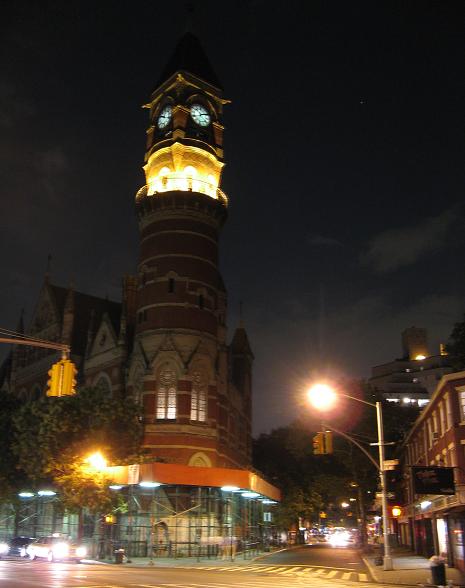
Jefferson Market at night:

Jefferson Market

Your Arsenal

The Young Friends of The New-York Historical Society arranged a private tour of the Central Park Arsenal at 64th Street, off Fifth Avenue — not to be confused with the nearby Park Avenue Armory. It is the second oldest structure in the Park (the oldest being the Blockhouse at the north end), built between 1847 and 1851 as a munitions supply depot for New York State’s National Guard, and actually predates the Park’s existence. It was designated an official New York City landmark in 1967.

Architect Martin E. Thompson designed the building, originally stuccoed, to resemble a medieval fortress. Over the past century and a half, the Arsenal has survived periods of neglect, and been employed as an armory, a museum (in fact, the precursor to the American Museum of Natural History), the Municipal Weather Bureau, the 11th Police Precinct, and a Gallery of Art. It also served as a makeshift zoo until 1871 (after which the interior cages were moved outside for safety and olfactory reasons) and is currently home to New York City Parks & Recreation, the Central Park Administrator, the City Parks Foundation, the Historic House Trust, the New York Wildlife Conservation Society, the Parks Library and the Arsenal Gallery.

Central Park Arsenal

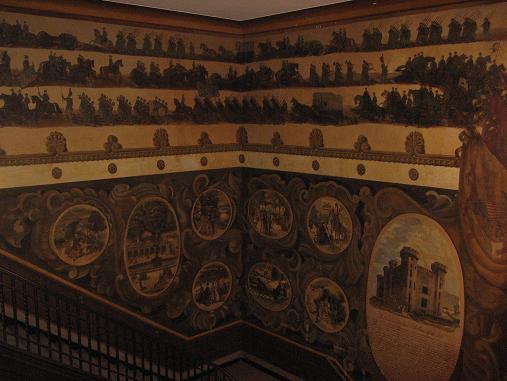
The two-story Arsenal lobby murals, depicting scenes of old New York, a montage of park scenes and troops in military formation, were painted in the mid-1930s as part of the federal works program under the direction of artist Allan Saalburg.

Murals

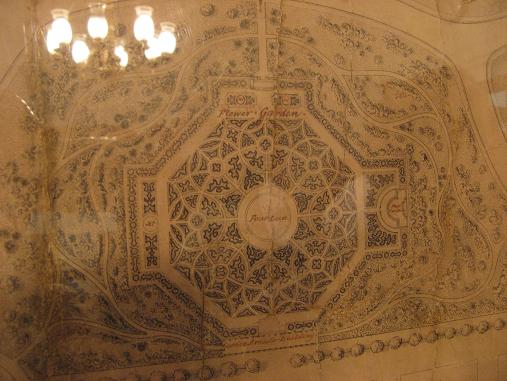
The crown jewel of the Arsenal is the “Greensward Plan” — the original blueprint for Central Park submitted by Frederick Law Olmsted and Calvert Vaux — which hangs on the wall of a third floor conference room. Interestingly, the original plan predated the Manhattan street grid system and extended only to 96th Street. This detail shows the location where Conservatory Water (better known as the Model Boat Pond) now sits. The original design proposed a conservatory (which gives the pond its name) and flower garden. Ground was broken for the project, but funding fell through, and the large, dug hole was reconfigured for its current use.

Plan detail

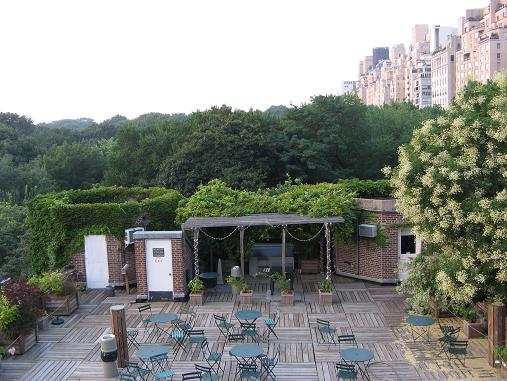
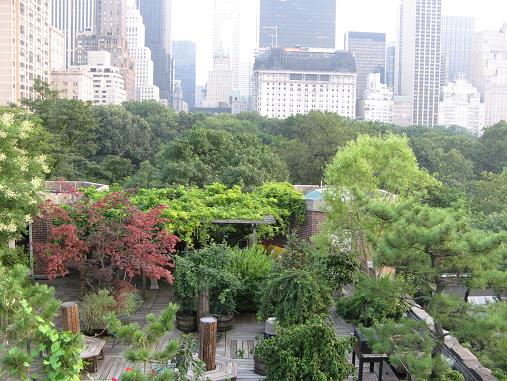
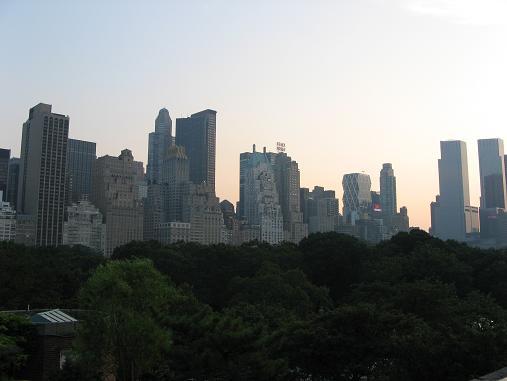
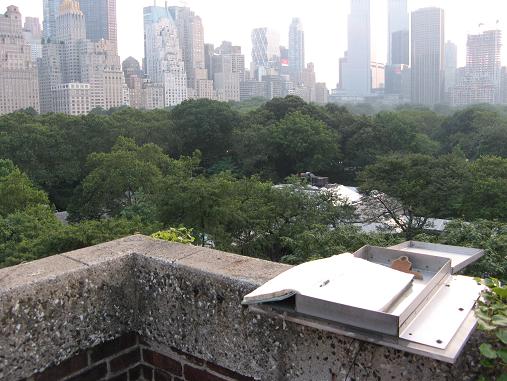
The other highlight of the tour offered access to the Arsenal rooftop and its views — generally not accessible to the public, but available for private event rental, though not advertised as such. One of the quirks of the Arsenal’s current use — and a testament to the preciousness of Manhattan commerical real estate — is the conversion of the corner turrets into individual office space. Notice the mounted silver box outside for interoffice mail delivery.

Arsenal Rooftop

Arsenal Rooftop

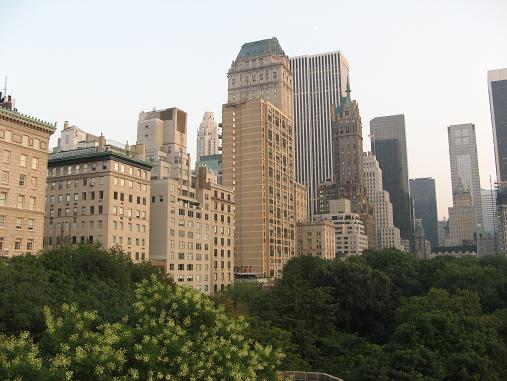
Arsenal View

Above the main rooftop, there is actually one more half level, accessible only by metal ladder. No offices there, but those few who make the trek are rewarded by spectacular views and are entitled to sign the official New York City ledger mounted on one of the edges.

Arsenal View

Ledger

Afterwards, we returned to the Arsenal Gallery for a wine and cheese reception among the photographic exhibit of New York City’s WPA pools.

Courtyard Cocktails at The New School

100 degree temperatures recorded at LGA today. Another scorcher of a day, another train delay. This time, I was stuck on the 2, inside the Fulton Street station – subway doors open, air conditioner churning ineffectually – for over twenty minutes before the conductor sent everyone off the train. Half an hour to travel three blocks from my office — thanks, MTA. In related news, the Straphangers Campaign released their 8th annual “State of the Subways” Report Card this week. This year, the 2 train tied with the C for the cleanest line (come to think of it, my car was pretty clean – just, you know, not moving ), but the group’s “MetroCard Rating” estimated the worth of a ride on the 2 at $1.00, $1.05 for the 3 and $1.10 for the 9 – yay, West Side.

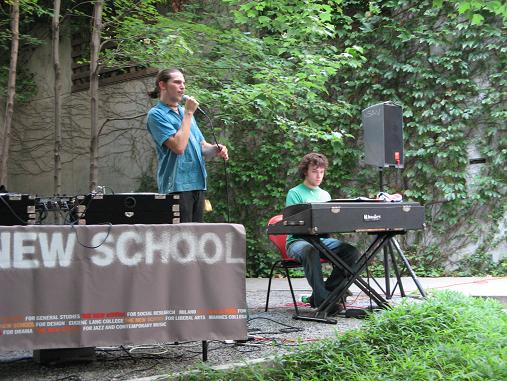
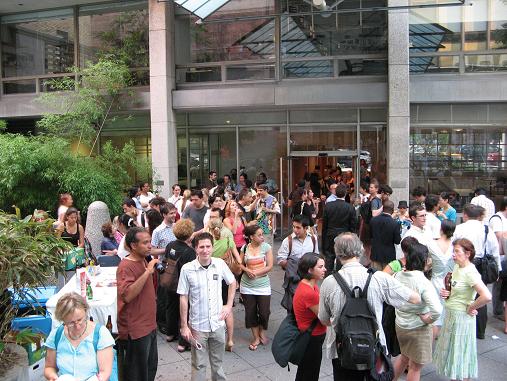
Face flushed and running late, I arranged to meet SYB (and our CSA vegetables) down the block from where The New School was hosting their Courtyard Cocktail Party. The air-conditioned lobby offered sweet relief, and we hung back a bit, drinking in the cool before powering through to the courtyard where the festivities were taking place. A singer and his accompanist were set up and performing a repertoire of standards, much to the enchantment of one young blond in particular, who was focused on the singer with an intense, laser-like stare and mouthing along with him to every lyric of Gershwin’s “Our Love Is Here to Stay.” Hmm.

Performers

New School party

The New School building at 66 West 12th Street was the last major New York City structure designed by Joseph Urban, who two years earlier had planned the International Magazine Building, out of which now emerges Norman Foster’s Hearst Tower.

Attendees were crowded around the food tables, and although the focaccia sandwiches did look good, it was just too hot to attempt jockeying for position. I satisfied myself with the chilled rosé, and managed to snag a prettily iced chocolate cupcake off one of the silver trays being whisked around.

We collected our goody bags and headed over for dinner at DoSirak on 13th Street.

In its previous incarnation, this charming, casual spot was “Hero’s Sweet Potatoes” – a Japanese fast-food snack spot with a menu entirely devoted to dishes made with a Japanese variety of yellow-fleshed sweet potato. I had gone in a few times, and gotten to know a little bit about the owner, Hirokazu Sakai. The first time I visited, Hiro (Hero), a Japanese native, explained to me the inspiration behind his restaurant’s concept: growing up, he had always admired the success of McDonald’s fast food and sought to replicate it “with a Japanese twist.” By his reckoning, “Americans love sweet and Americans love potatoes. So… sweet potatoes!” Who’s to argue? I smiled politely, and ordered another sweet potato with peanut butter to go. He seemed to need the business. Six months later, Hiro reportedly ran into visa troubles and the place was shuttered.

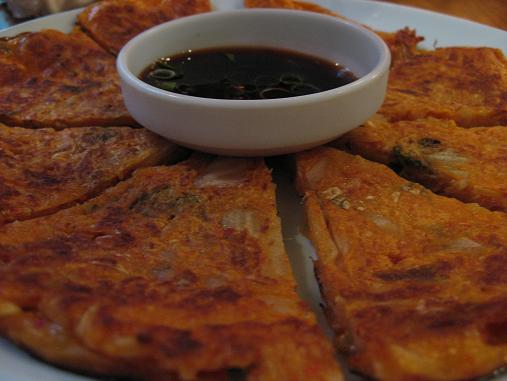
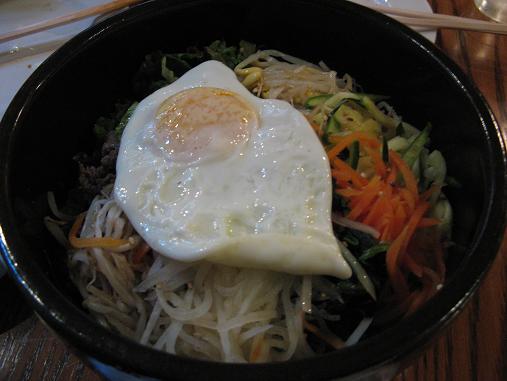
The new owner kept the Asian theme and now churns out simple, home-cooked Korean fare. I enjoyed my tasty bulgogi bibimbap topped with a poached “hand-gathered Knoll Crest egg,” but was less impressed with the kimchijeon (kimchi pancake) appetizer, which I found a bit too salty, and not as spicy and flavorful as I would have liked.

Kimchijeon

Bibimbap

Incidentally, after dinner, we passed the singer from the New School party on the street with a blonde, who was not the would-be groupie. Popular boy!

A chance meeting

I decided not to make the trek out to NJ tonight, and instead planned to attend Jie Chen‘s concert at Pace University. Chen is one of that breed of young — often Asian — piano prodigies: Chinese-born and the winner of the Young Concert Artists Auditions, the Piano-e Competition, the Washington International and the Missouri Southern International competitions. After work, with about an hour to spare, I decided to check out the summer sales at Century 21. Just east of the entrance doors, I ran into B, who was just then leaving work at the World Financial Center.

How serendipitous. He accompanied me into the store, and after gamely touring through the women’s European designers section, we left in search of a quick bite to eat before my concert. I encountered the problem I always seem to have when trying to think of a casual dinner spot in the Financial District. If time hadn’t been of the essence – and it weren’t in the opposite direction of where I needed to be – I would have considered Adrienne’s Pizza Bar on charming Stone Street, which was just ranked #76 on New York Magazine’s 2006 Cheap Eats list.

We ended up at The Soda Shop on Chambers Street, just off West Broadway, a quaint little place dishing up ice cream creations and standard light salad/sandwich fare, with hearty doses of Norman Rockwell Americana. The back is outfitted with an old timey candy bar: peppermint sticks, wax lips, plastic ruby candy rings, candy cigarettes. Kid heaven!

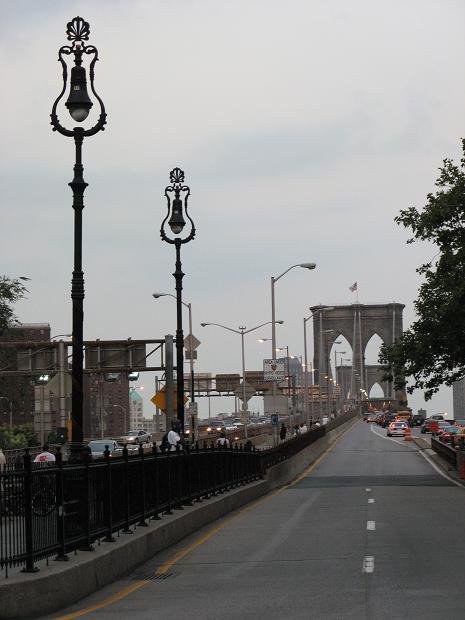
We finished our burgers next to the (fake) fireplace and walked over to the Brooklyn Bridge entrance. By that time, though, Chen’s performance had already started, so we loitered for a bit longer by the red Calder in front of City Hall Park, waiting for intermission.

Brooklyn Bridge Entrance

The concert was being held at The Michael Schimmel Center for the Arts, the principal theatre of Pace University. The 750-seat Schimmel Center is most famously home to Bravo’s Inside the Actors Studio, hosted by James Lipton. After B took his leave, I crossed over to the campus, but had difficulty locating anyone outside the auditorium. I decided to sit outside, waiting for a tell-tale stream of audience members, but when none came, I could only assume that there would be no intermission. Not wanting to burst in on the performance in progress, I headed home instead.

So I didn’t end up seeing the concert as I had planned, but I did get to catch up with a friend over an impromptu dinner. A nice evening overall.

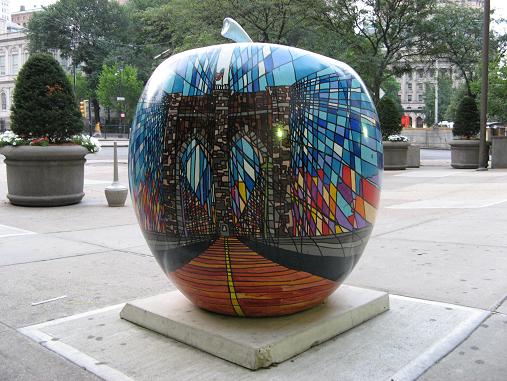
Brooklyn Bridge Apple

P.S. 1 Summer Celebration

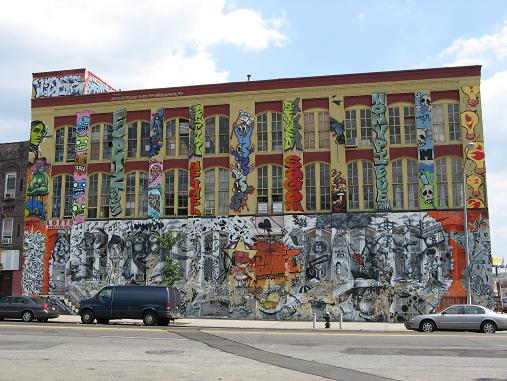
5 Pointz, down the block from P.S. 1, is the latest incarnation of the a 200,000-square space on Crane Street. The space, formerly known as Phun Factory, billed itself as the world’s largest aerosol art museum. After a landlord-tenant dispute in 2001, Pat DiLillo, the group’s founder and director, stepped down. Onetime artist Meres, ne Jonathan Cohen, took over the project, rechristening it with its new name to symbolize NYC’s five boroughs coming together as one, and continues to offer a place for graffiti artists to showcase their work. The building originated as Gimbel’s former warehouse.

On the way out on the 7, we spied three kids adding their own contributions to the rooftop, seemingly undaunted by the scorching sun.

5 Pointz

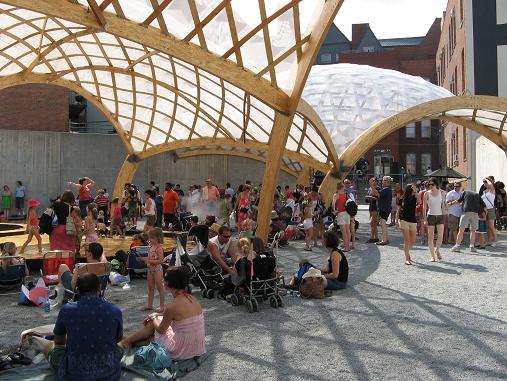
The outdoor courtyard of the P.S.1 Contemporary Art Center — where the popular Warm Up music series is held on Summer Saturdays — features the new architectural installation by this year’s winner of the annual MoMA/P.S.1 Young Architects Program.

The entry by New York City-based OBRA, a design-oriented office in New York founded by partners Pablo Castro and Jennifer Lee, was selected from a field of twenty five proposals for a building project to transform the courtyard space with projected budget of $70,000. Their design, titled BEATFUSE!, is constructed of seven curved, interconnected shells made of plywood and polypropylene mesh. The project also encompasses “wooden tidal pools, water misters, and light strainers that create constantly changing shapes in the mist.” On view through September 2006.

P.S. 1 Summer Celebration

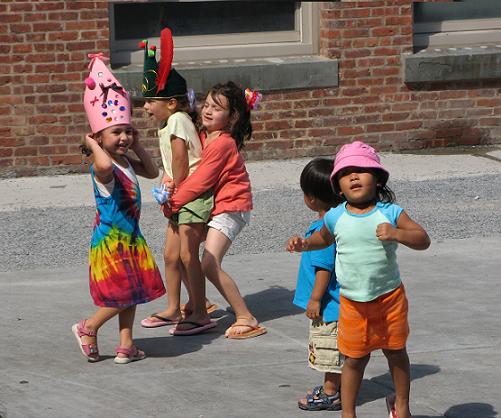
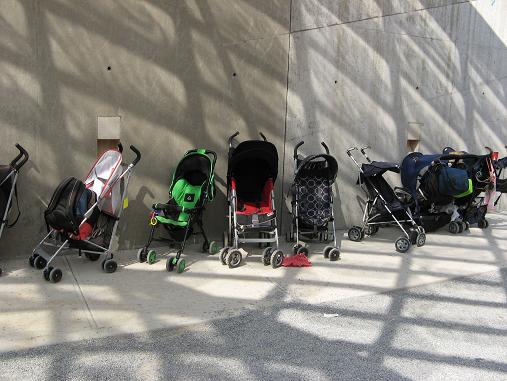
The overhead shells and cool misters provided some relief from the heat and sun, which by this point, was becoming almost unbearable. Small children and babies everywhere – in the pools, at the craft stations, in the origami tent. And on the dance floor: from our vantage point on the concrete steps in front of the DJ booth, we watched a few busting out some excellent moves to the grooves (in the heart) of Deee-Lite.

Dancers

P.S. 1 Summer Celebration

P.S. 1 Summer Celebration

At the Kevin Kinsella concert at Riverside Park South’s Pier I.

Kevin Kinsella

Kevin Kinsella

5 Star samosas in L.I.C.

Headed into Long Island City for the Summer Celebration at P.S. 1, and while in the neighborhood, I decided to check out Chowhound and taxi driver favorite, Five Star Punjabi.

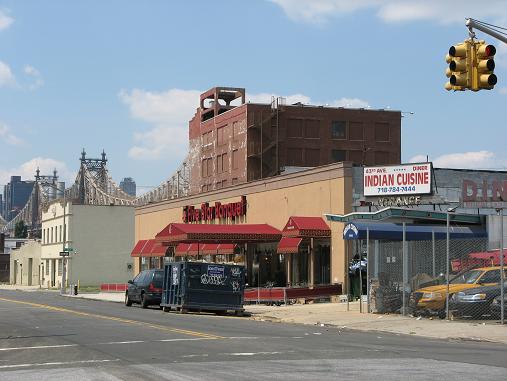
The nearest subway station was Queensborough Plaza, and from there it was a several block walk, along an eerily deserted, depressing stretch of Long Island City marked by warehouses and taxi depots. When we finally came upon the spot, though, it was unmissable:

Five Star PunjabiUpon approaching the door, we saw a sign advising us that the diner was closed for renovations — which explains the industrial dumpster out front and the piles of garbage bags in the adjacent alley… I hope. Thankfully, given the fact that we had made the trip — and there didn’t seem to be any other options in the immediate area — the diner was operating temporarily out of the fancier “banquet hall” next door.
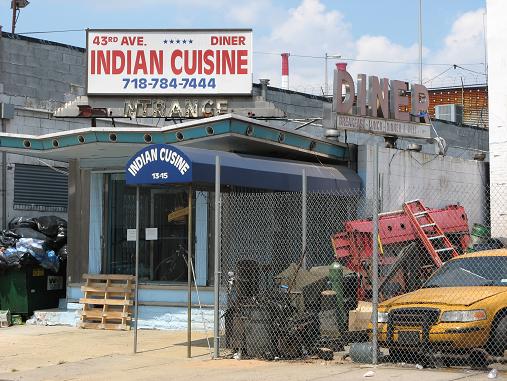
Five Star Punjabi

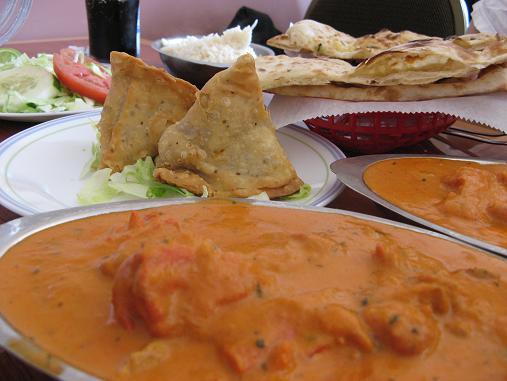
Once inside, we were seated next to the white-clothed steam tables and handed round wooden paddles on which the menus were printed. We decided upon the samosas, garlic naan and entrees of butter chicken and tikka masala, which it turned out was entirely too much food for the two of us.

The samosas arrived first: hot, crisp and remarkably ungreasy, stuffed with a tastily spiced mixture of peas and potatoes. I happily could have made a meal on those alone. The chicken entrees, despite looking disconcertingly similar, were in fact, different in texture. My chicken makhani was delicious: tender chunks of buttery meat in a wonderfully creamy, spice-flecked sauce spooned over fragrant basmati rice. And the naan was warm and pillowy, with a crunchy crust of garlic.

Great find. I’ll be back at least for those samosas — maybe after the intriguing little diner reopens in the Fall.

Butter Chicken et alJust a short stroll away, we detoured into the anachronistic block of 45th Avenue, between 21st and 23rd Streets, a.k.a. Hunters Point Historic District, or according to the National Register of Historic Places, Dominie’s Hook or Bennetts Point. This remarkably preserved row of brick and stone Italianate, French Empire, Neo-Grec and Queen Anne houses, dates from the 1870 and 1880s — 15 acres among 19 buildings.
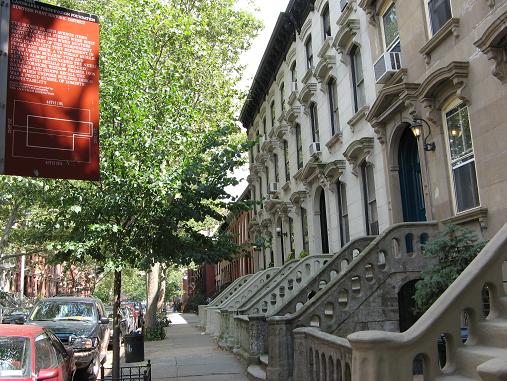
The posted sign announces the landmark status, granted in 1973:

The houses on 45th Avenue (then called Twelfth Street) were built mostly in the 1880s when Hunters Point was part of the independent Long Island City. They represent, in frame and brick, a Victorian middle-class urban building type and remain almost untouched. The nicely articulated details of Neo-Grec style cornices, window frames, iron railings and stoops recall the days when uniform building design was a proud symbol of domestic respectability.

Hunters Point Historic District

Hearst Tower

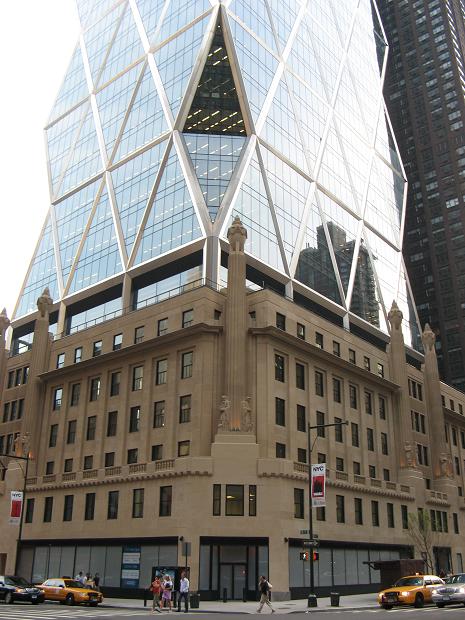
Much has been written about the new Hearst Tower, designed by Lord Norman Foster, the Pritzker Architecture Prize laureate, whose body of work includes renovation of the British Museum and the reconstruction of the Reichstag in Berlin. The distinct 46-story office tower was completed this Spring and serves as the corporation’s world headquarters.

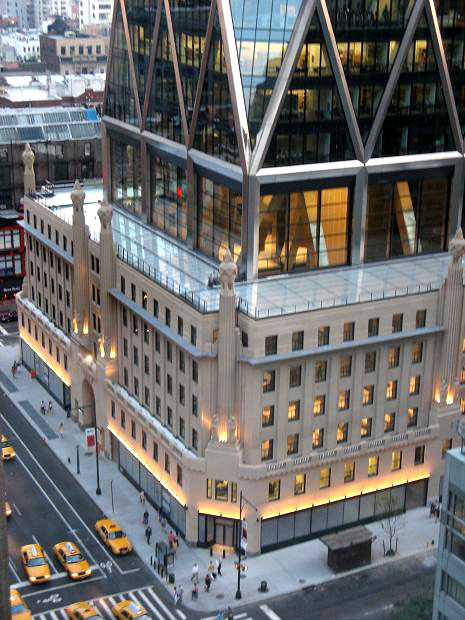
Foster’s design preserves the design of the original Hearst building, which was built in 1928 and landmarked in 1988. The addition emerges as a shaft of four-story high diamond-shaped bands of steel with no vertical columns around the perimeter frame — a design known as a diagrid, which, in addition to giving the form a dramatic and crystalline shape, uses one fifth less steel than a standard design. The views from within the cantered floor-to-ceiling windows offer a unique perspective: tipped down towards the ground, or tilted up towards the sky.

Hearst Tower

William Randolph Hearst is best known as an American publishing magnate (and one of the inspirations behind Orson Welles’ Citizen Kane.) In 1928, at his empire’s peak, he had 28 major newspapers, 18 magazines, 2 news services, several radio stations and a movie company under his ownership. Hearst was also a fledgling real estate developer, with extensive holdings in New York City and a vision for making his stamp on the city’s landscape. He acquired other properties near the Eighth Avenue and 57th Street site, eventually taking over six lots around Columbus Circle, which he envisioned transforming into his own Hearst Plaza, to supplant Times Square and Herald Square as the city’s publishing hub.

At the heart of the plan was the Art Deco limestone International Magazine Building designed by Joseph Urban, an architect also known for his Hollywood and Broadway set designs. The six-story building at 959 Eighth Avenue was designed to structurally support a larger tower to be added on. When the stock market crashed in 1929, however, Hearst’s prospects declined and plans for the intended tower fell through. The low-rise base is the only remnant of Hearst’s ambitious plan.

The yellow cast stone structure, with its pylons, pedestals and sculpted figures was dismissed by The New Yorker architecture critic as “theatric architecture.” For years, the too grand building seemed out of place in its environs, set upon what was not particularly prime Hells Kitchen commercial real estate: too far west from the elegant heart of 57th Street, and until the late 1990s gentrification, neighboring tenements and adult video shops on a somewhat seamy stretch of Eighth Avenue.

Hearst Tower Entrance

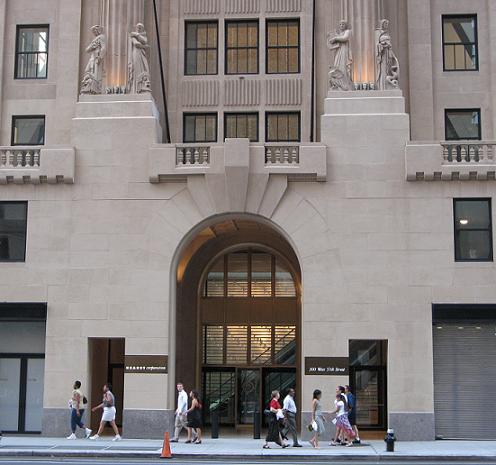
The arched main entrance is flanked by figures representing “Comedy and Tragedy” and “Music and Art.” “Sport and Industry” and “Printing and the Sciences” wrap around the other walls. In his redesign, Foster gutted the original building – interior walls, floors and all – preserving only its outer shell to enclose the glass-roofed “urban plaza.” Through the archway, you can peek a sliver of “Ice Falls,” the three-story, glass sculpted water wall, designed by James Carpenter. In addition to serving as the stunning, sparkling centerpiece of the building’s atrium, the feature serves an environmental function by humidifying and cooling the lobby as necessary. It runs entirely on recycled rainwater collected from the tower’s rooftop — water which is also used to feed into a special pumping system to irrigate plants and trees around the building. Nice!

The view from my Saturday seat:

Hearst Tower