vip in the city, page 61

Oxford Companions

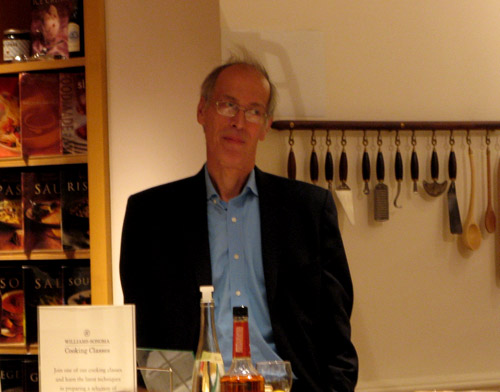
Tom Jaine, editor of The Oxford Companion to Food, and Jancis Robinson, editor of The Oxford Companion to Wine, were each giving a brief talk at the Williams-Sonoma inside the Time Warner Center. The usual assortment of foodies were gathered, including what appeared to be students from a wine tasting class, and my sometime Sunday morning cooking instructor, John.

I was a bit late to the event — work again — and walked in just as Jaine was lighting the brandy to close his Crepes Suzette cooking demonstration.

Crepes Suzette was in “invented” in 1895 at the Maitre at Monte Carlo’s Café de Paris. According to Henri Carpentier, the then 14-year old assistant waiter credited with the happy mistake, he was preparing a pancake dessert in a chafing dish for the Prince of Wales, when the cordials caught fire. Without time to start a new dessert, he decided to serve the dish as it was. The future King Edward VII of England was enamored with the sauce flavors, and insisted the new dessert be named after one of the ladies present at the dinner. The next day, the Prince sent a jeweled ring, a panama hat and a cane to young Carpentier in tribute.

Jancis Robinson OBE, Master of Wine and award-winning television host, has written extensively about wine, in books and as wine correspondent for the Financial Times. This night she was discussing the new, third edition of The Oxford Companion to Wine, and recent trends in winemaking. In between book tour events, Robinson also sat down to dinner with New York Times chief wine critic Eric Asimov at Fatty Crab.

During the brief question and answer period following the talks, the audience questions were directed exclusively at Robinson — which made me feel slightly sorry for Jaine, who was relegated to standing silently off to the side.
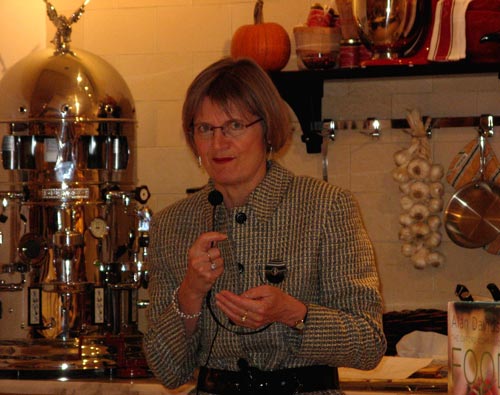
Jancis Robinson

Tom Jaine

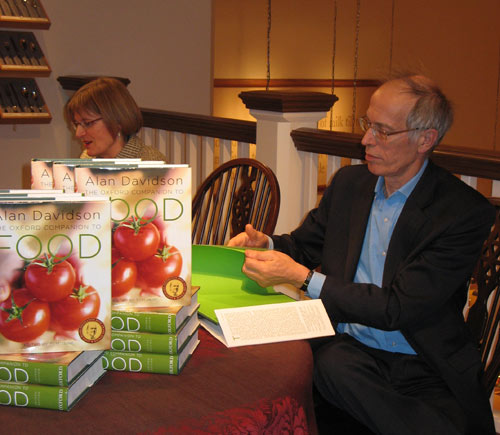
At the reception upstairs afterwards, the editors mingled among the guests briefly before settling in at their book signing tables. I was tempted to pick up one or both of the hefty books for my own reference, but decided I could always come back for them another time.

The evening’s wines were provided by Jade Mountain (2003 Syrah), Edna Valley Vineyard (2005 Chardonnay — my favorite of the night, and I’m not generally a fan of California chardonnays) and Canoe Ridge Vineyard (2002 Merlot). There was the usual mad crush of people hovering around the kitchen doors, poised to pounce on the servers as they emerged with trays of hors d’oeuvres.
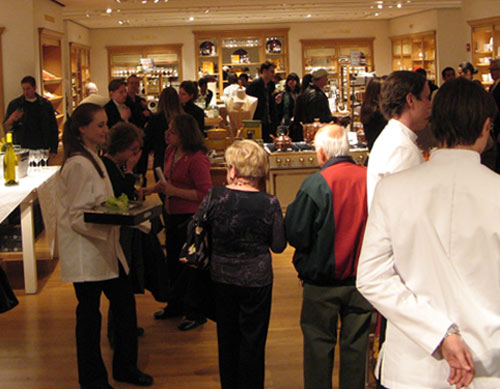
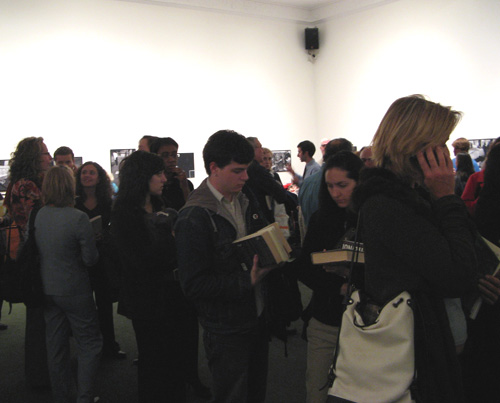
Reception

Jancis and Tom

SYB and I left soon afterwards for a real meal at the original Wondee Siam — one block south of the slightly more comfortable, yet slightly less loved spin-off Wondee Siam II. I don’t know what it is about this stretch of Ninth Avenue, but there are at least a dozen Thai places within a six block radius of the Wondees, which of course includes both Pams — Original and Encore.
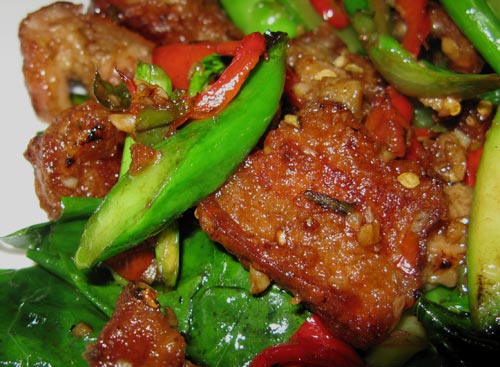
Wondee Siam

Shopping at Chelsea Market

After staying up until 3AM the night before, trying to puzzle through the Russian homework, I missed class yet again. Endlessly frustrating…. I seriously consider whether I should continue on.

It was late by the time I left the office, and I stopped in at Chelsea Market, just before closing time, on the way home.

For more than 50 years, beginning in the 1890’s, the complex that now houses the Market was part of a large factory run by Nabisco’s predecessor, the National Biscuit Company. The very first Oreo cookie was produced here in 1912, and Nabisco ran the bakery for decades before leaving New York City in 1958. Lawyer turned developer Irwin Cohen bought the old industrial building in the mid 1990s; at that time, the streets west of Ninth Avenue comprised a desolate, windy stretch with little pedestrian traffic and no cachet. With the late 1990s gentrification, the area became increasingly desirable, and today the Market is situated conveniently between the trendy shops and restaurants of the Meatpacking District and the art galleries and clubs of west Chelsea.

Above Chelsea Market, passing through the building on the 10th Avenue side, the High Line elevated railroad track will be converted into an urban oasis or greenway (and serve perhaps as the future site of a Whitney Museum of American Art expansion, now that the Dia Art Foundation has called off its plans for the space.)

The ground-level retail concourse (completed in April 1997) boasts a bustling collection of businesses, most involving food — artisanal, raw, fresh, prepared; above, office space for tenants, including media and broadcasting companies such as Oxygen Network, Food Network and the local New York City cable news station NY1.

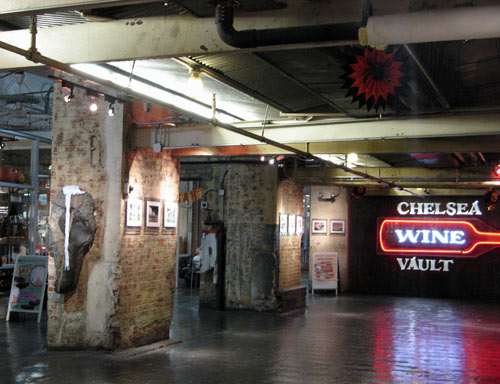
The brick walls, wood floors and exposed pipes serve as reminders of the building’s industrial past.

Chelsea Market

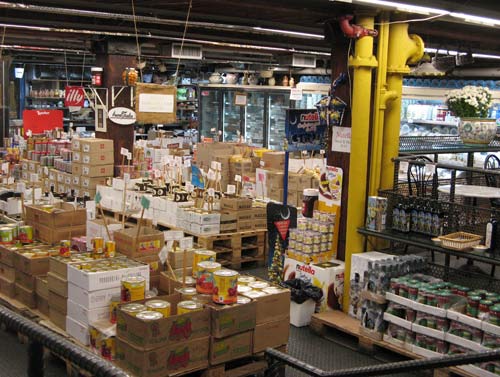
At BuonItalia, a shop specializing in imported Italian foods.

BuonItalia

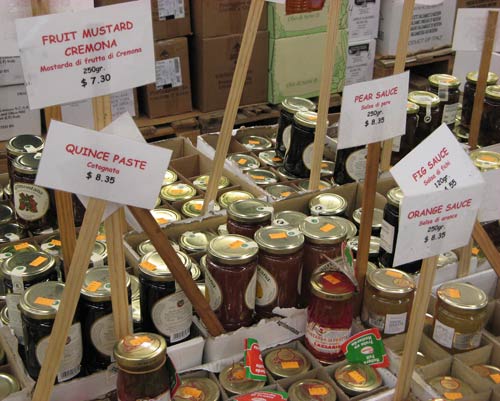
Jars

The store will be hosting a Fresh White Truffle Festival on November 13 and 14 between 6:00 and 9:00PM, serving white truffle dishes and tastings of Italian wine. What a delight this market is: stacked crates packed with olive oils, vinegars, biscuits, tinned fish, sauces, jams and pastas — fresh, frozen and dried in an endless variety of shapes. Also walls of impressively well-stocked dairy and meat cases. I had trouble deciding on my purchases, and finally settled upon some pumpkin ravioli, a hunk of pancetta and a bottle of orange-flower water (from France, not Italy.)

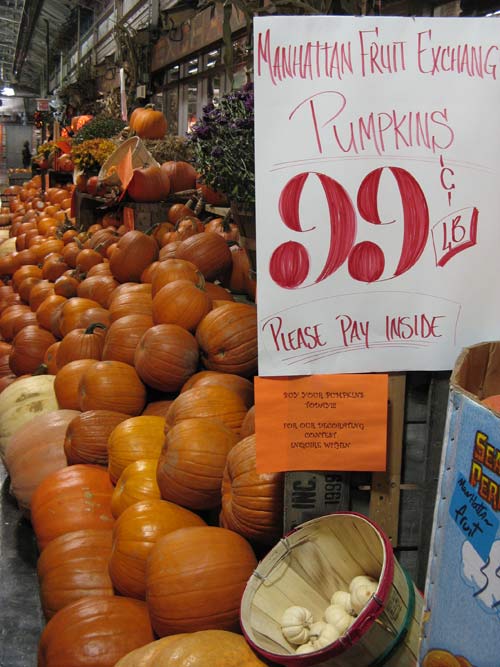
MFE Pumpkins

Marcus Samuelsson book launch

Marcus Samuelsson is executive chef and co-owner of Aquavit, AQ Café at Scandinavia House and Riingo in New York City. At the age of 25, he became the youngest chef ever to receive a three-star restaurant review from The New York Times (from Ruth Reichl in 1995), repeating the distinction with reviewer William Grimes in 2001. At 29, he was individually recognized in Crain’s New York Business’ annual “40 Under 40” and was celebrated as one of “The Great Chefs of America” by The Culinary Institute of America. The James Beard Foundation presented Samuelsson with the “Rising Star Chef” title in 1999 and the “Best Chef: New York City” award in 2003.

In addition to his impressive cooking credentials, Samuelsson was also recognized by the World Economic Forum as one of the “Global Leaders for Tomorrow.” The annual award recognizes young innovators from around the world in the arenas of business, government, civil society, the arts and media. Samuelsson dedicates his time and talent to the Careers Through Culinary Arts Program (C-CAP), a non-profit organization that promotes career opportunities in the food service industry for disadvantaged youth through culinary arts education and employment. In addition, he acts as the official spokesperson for the U.S. Fund for UNICEF. As ambassador for the cause, he supports tuberculosis control in developing countries – an issue close to his heart, having been orphaned by the disease in Ethiopia at the age of three. (He and his sister were subsequently adopted by a young couple from the West Coast of Sweden .)

Samuelsson is already the author of three critically acclaimed cookbooks, and tonight he was in Midtown promoting his fourth, The Soul of a New Cuisine: A Discovery of the Foods and Flavors of Africa which celebrates the food and culture of the African continent through recipes, personal stories and images that capture the soul of his birth home.

The recipes in the book are a departure for this chef, best known for his Scandinavian-influenced cooking. Samuelsson talked a bit about how working on this latest cookbook led him to make discoveries about his own heritage. I had hoped there would be a cooking demonstration of some kind, but the room was neither equipped nor sufficiently lit for preparing food.  There were passed appetizers and fruity drinks — no injera or tej, though.

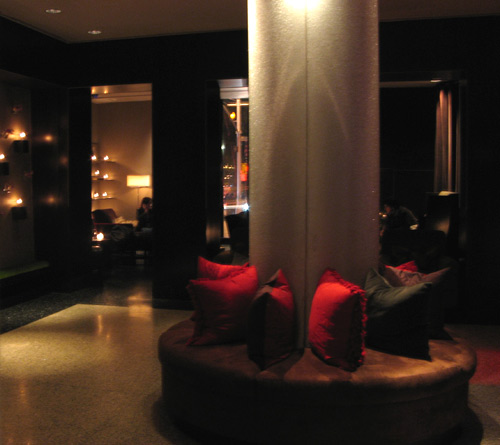
W Court

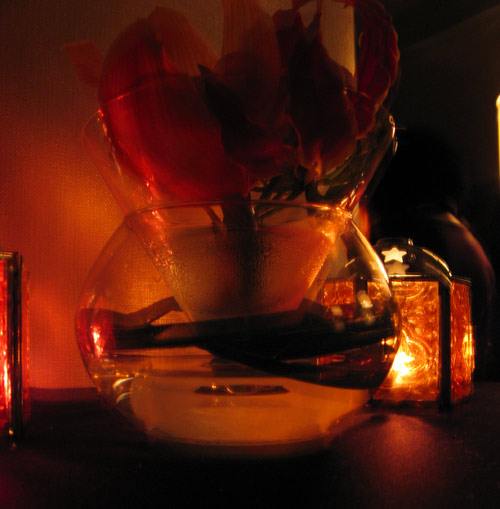
Orchids

For Ethiopian cuisine in New York, there are several options: Awash on the far Upper West Side (where SC’s birthday dinner was held a couple of years ago), Ghenet in SoHo, Meskerem and Queen of Sheba in Hells Kitchen. The best one is a matter of some debate.

Edited to add:  The New York Times spotlights a new contender: Meskel Ethiopian Restaurant in the East Village. 

Antrim and Franzen @ the 92nd Street Y

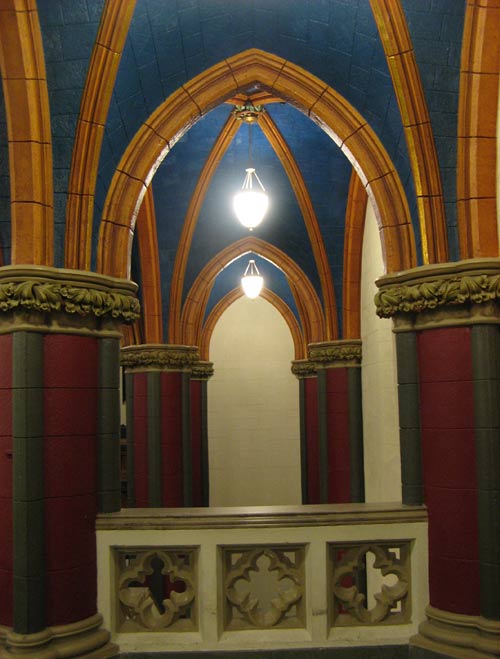
Met B at Grand Central for a dinner before the book event this evening. It had been some time since I last visited the Grand Central Dining Concourse, and there were several new additions (including the Little Pie Company shop with its tempting selection of miniature pies and cakes under glass.) Located on the lower level tracks, the concourse is part of the departure station, with brightly lit, cavernous marble arches throughout.

The most famous of the dozens of food outlets is, of course, the Oyster Bar, which has been in business since the day the Terminal opened in 1913. The “Whispering Gallery” near the Oyster Bar entrance is the stuff of city lore. Here, the acoustics of the low ceramic arches create a parabola that is said to catch and transport whispers from one corner of the gallery to the corner diagonally opposite with minimal distortion. I checked it out one day after learning about the phenomenon from my junior high school math teacher, and can report back that it does work — though not perfectly, given all the ambient noise. Still cool. According to the hostess at the Oyster Bar, the wall is a popular spot for marriage proposals, especially on Valentine’s Day.

Naan, samosas and lassi from Cafe Spice, then back up to street level to catch the bus, moving on up, to the East Side.

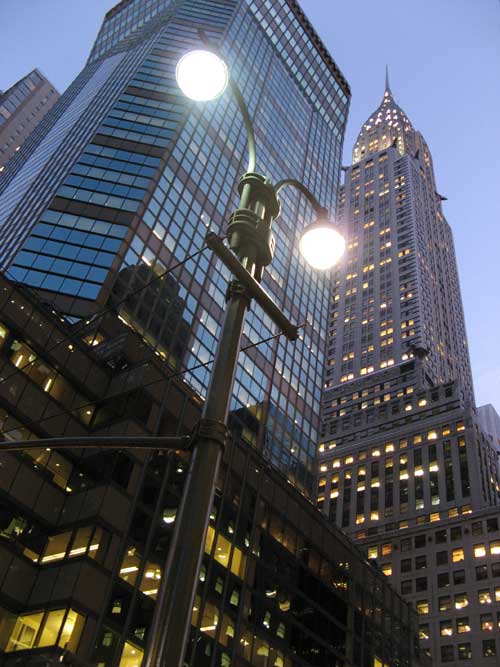
Chrysler Building

Donald Antrim and Jonathan Franzen were reading and answering questions at the 92nd Street Y, as part of the Unterberg Poetry Center Reading Series. Both authors, known for their fiction writing, recently published memoirs: in The Afterlife: A Memoir, novelist Antrim (Elect Mr. Robinson for a Better World, The Hundred Brothers, The Verificationist) expands upon the poignant and darkly humorous essays about coming to terms with his mother’s death that first appeared in The New Yorker. The Discomfort Zone, Franzen’s first foray into memoir, also begins and ends with his mother’s death. In between, he takes an intimate look at the painfully funny awkwardness of his Midwestern adolescence.

Franzen is one of my favorite writers. His previous works include How to Be Alone, a collection of essays, and The Corrections, which won the National Book Award for Fiction in 2001 (and infamously, was unceremoniously uninvited from Oprah Winfrey’s book club.)

Antrim announced that he’d be reading from a yet unpublished novel that “had been set aside” over the years. His delivery was frantic and feverish, and interspersed with dramatic pauses — a story of a man grappling to understand his deceased father. The narrative jumped backwards and forwards in time, recounting tragicomic details of his alcoholic mother and invalid sister, and hallucinations involving a blue mini-skirted former lover. Franzen’s reading was taken from the first pages of his memoir, no less funny for being less frenetic, sardonically drawing dead-on observations of human nature in his retelling of the sale of his childhood home in Illinois, following the death of his mother from cancer.

Antrim and Franzen are old friends and their easy camaraderie was evident as they jokingly jockeyed for position in front of the microphone set up for them to answer pre-screened questions from the audience. Afterwards the writers held a book signing in the adjacent gallery.

Book signing

Franzen — heck, I’ll call him Jon — has a lot of fans, me included. After picking up his new book, I waited in line for about half an hour, finally reaching the table. When my turn came, I approached.

“Thanks for waiting,” he greeted me.

I mentioned having heard him read the pages he read that night, when they were still in manuscript form, at a Hunter College event earlier in the year. “Oh?,” he asked. He seemed to consider this for a moment. Then: “Yes, I remember that reading. I don’t remember what I read, but I remember the audience. I hope it was all right.”

“It was wonderful!” I gushed. In my defense, I did NOT let slip, “You  were wonderful,” or “You’re brilliant,” or “You’re an amazing  writer,” or any of the other dorktastic comments that were ricocheting around my brain at that moment. (“I am your number one fan,” perhaps?)

“Thank you,” he smiled.

I smiled back. A shade too widely, and perhaps for just a fraction of a second too long — just enough for the look to pass from casually complimentary to borderline creepy. Jon held my gaze awkwardly and then, seemingly unsure of what to do next, gestured for my book. Oh right, the book. I could feel the blush rising on my cheeks. I handed it over and half considered lying about my name. But how ridiculous would that be?

“Uh… my name is Vanessa,” I mumbled.

He inscribed the book to me, his pen poised over the page, as if to write something more, but then seemed to abandon the idea, opting instead to just sign his name. He closed the book carefully and deliberately — no sudden movements — and delivered it back to me.

“Thanks… Vanessa.” (Now please leave before I call security.)

And that is how I met Jonathan Franzen.

You will notice that I did not include snapshots of the authors here. After such an encounter, I couldn’t very well take a photo, now could I?

War and Peace

JD and MB hosted a brunch at their new apartment in Washington Heights, near Fort Tryon Park. The Hudson View Gardens apartment complex was, at the time it was built in the mid-1920s, the largest housing cooperative in New York and one of the earliest catering to middle class households. Real estate developer Dr. Charles V. Paterno purchased the nearly 4 acres of land, across the street from his (since demolished) castle estate overlooking the Hudson River. His plan was to create a “garden community” of cooperative apartments resembling a medieval English village, to attract those who wanted the comfort and affordability of the suburbs, but still wanted to reside within the confines of New York City.

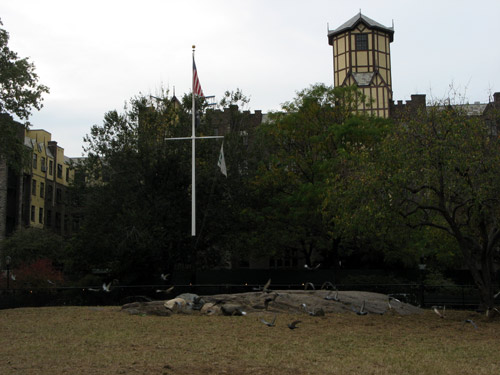
Directly across from the 181st Street subway entrance is Bennett Park, where George Washington set up his base of operations during the Revolutionary War. It was here at Fort Washington that American forces lost the decisive battle of New York on November 16, 1776 to British and Hessian soldiers. The rock outcropping of Manhattan schist in the photo is the highest natural point in Manhattan, 265 feet above sea level.

Hudson View Gardens

Brunch was a potluck affair: I brought in the loaf of pumpkin chocolate bread I baked at home the night before; SYB made cheese grits in JD and MB’s new kitchen. The Kiwi couple from Dobbs Ferry brought in mini-pancakes with whipped cream and jam, which I was informed by MB’s cousin R, are called pikelets in New Zealand. (Naturally, I didn’t catch this the first three times he said it, and had to resort to requesting the spelling before I finally understood.)

Over mimosas, we got to listen to the New Zealanders reminisce of home, recounting their tales of drunken blackouts. (“It’s the culture!”) I was both highly amused and slightly disturbed.

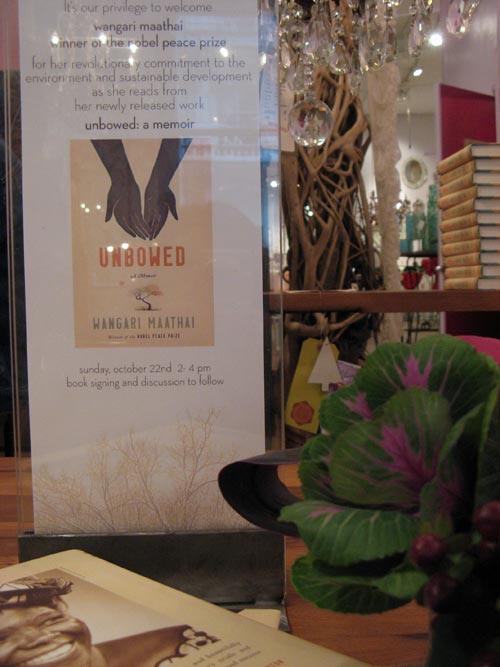
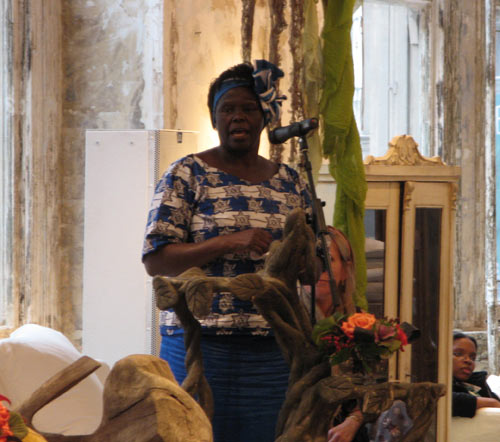
Later, I attended a book launch and reading for The Green Belt Movement founder and 2004 Nobel Peace Prize winner Wangari Muta Maathai. Matthai was promoting her memoir, Unbowed, in which she recounts her remarkable journey from a farm in the highlands of Mount Kenya to becoming the first woman in Eastern and Central Africa to earn a doctoral degree, the first woman in the region to chair a university department, and the first African woman to receive a Nobel prize.

Unbowed

In the mid-1970s, Maathai left academia and founded the Green Belt Movement, Kenya’s most famous environmental and human rights-campaigning group. At its height, the GBM mobilized more than 100,000 women to form tree-nursery groups; the women earned $1 for every fifteen trees they planted, which was, in many cases, their only income. As a result of these efforts, 30 million trees were planted across the country for fuel, building, shade, food, and soil protection on both private land and degraded forests. Women were taught how to plant drought-resistant indigenous crops to feed their families; the transfer of technology from experts to the people turned small-scale farmers into agro-foresters, and raised awareness related to environment and development. The GBM both reduced the effects of deforestation and provided an empowering forum for African women to become creative and effective leaders.

Wangari Maathai

Later still: SYB’s potluck dinner. There was a delicious cassoulet in the Le Creuset, and other tasty dishes from Southern France to supplement. JD and MB (from this morning’s housewarming) brought in crackers and brie.  I baked a clafoutis aux cerises to serve with French vanilla ice cream.

Although the love connections were ultimately missed that night, the fine food and wine (and friends) more than compensated for their absence. And CS, AC and AH did discover a new television series, gradually getting sucked in — hour, after NBC marathon hour. Save the cheerleader, save the world.

There's always next year

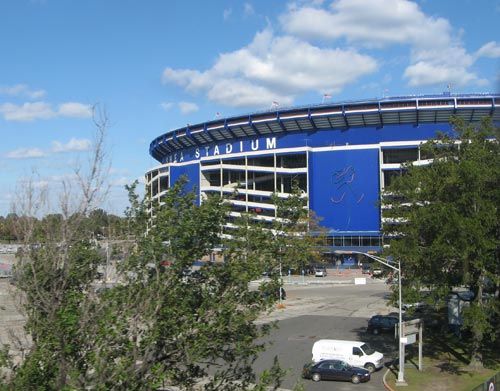
On the way out to Queens this morning, the normally sleepy crowd on the 7 train roused as we passed Shea Stadium, and audible grumbles over the Mets’ thwarted World Series dreams filled the car. Ah, disappointment is a bitter, bitter pill. Would be nice to bring home one more title before the New Mets Ballpark opens in 2009. 1986 feels like a very long time ago.

Shea Stadium

The Cardinals, who eliminated the Mets, ended up taking the Series in five games.

Design Week @ the Cooper-Hewitt

Met J in Chinatown after work for some quality sister time – high speed edition. After coffee and dumplings, we parted ways, and I headed uptown to meet the B brothers at the Cooper Hewitt National Design Museum. The museum — the only one in the nation devoted exclusively to historic and contemporary design — launched its first ever National Design Week October 15th through the 21st. The event is a new initiative to draw national attention to the ways in which design enriches everyday life. Design Week was organized around the National Design Awards, honoring the best in American design.

The Museum is housed in the stunning former home of steel magnate Andrew Carnegie. Carnegie’s sixty-four-room mansion, built by the architectural firm of Babb, Cook & Willard from 1899 to 1902, pioneered elite uptown development along what became known as Millionaire’s Row. Today, the mansion gives the neighborhood its name: Carnegie Hill. Near the turn of the century, the area on Upper Fifth Avenue was considered the frontier of the city. Carnegie opted for this location to escape the bustle of downtown; the relatively open space also allowed him to build a large private garden — one of the only ones in Manhattan.

The light-filled mansion was built in the solidly comfortable style of a Georgian country house to accommodate personal living quarters (for Andrew Carnegie, his wife Louise Whitfield Carnegie and their daughter, Margaret), servants’ quarters and offices for Carnegie’s philanthropic efforts. It was the first private residence in the United States to have a structural steel frame (used in the skyscrapers) and one of the first in New York to be outfitted with a residential Otis passenger elevator. As with his mills, Carnegie spared no expense for state-of-the-art equipment; his home included sophisticated plumbing and a central heating and cooling system. In the cellar, enormous boilers ran by coal transferred from storage bin to furnace by a coal car that traveled over a miniature railroad track. It is reported that on a typical winter day, it took two tons of coal to heat the house’s five floors.

The mansion and adjacent townhouses were given by the Carnegie family to the Smithsonian Institution, and in 1976, the former residence was re-opened as the Cooper-Hewitt, National Design Museum, Smithsonian Institution. Its bedrooms, libraries, gymnasiums, billiard rooms, and sitting areas were transformed into exhibition galleries, curatorial offices, and conservation laboratories.

The design museum was originally founded in 1897 by Amy, Eleanor, and Sarah Hewitt — granddaughters of industrialist Peter Cooper — as part of The Cooper Union for the Advancement of Science and Art. It became a branch of the Smithsonian Institution in 1967.

SYB and HYB were waiting under the Louis Comfort Tiffany-style bronze and glass canopy entrance when I arrived.

CH Entry

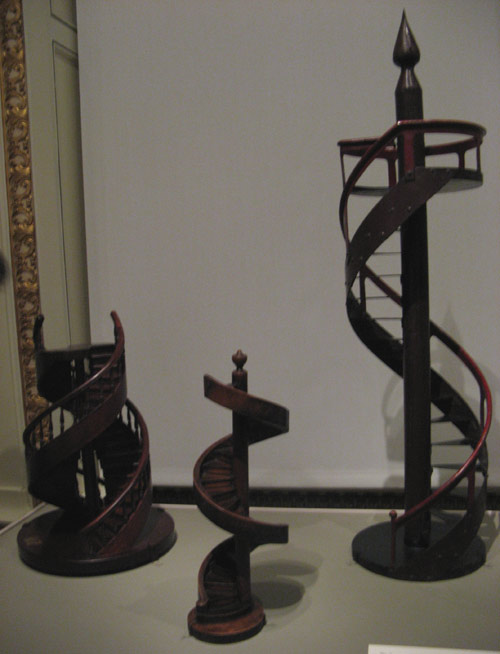
On display: the newly opened Made to Scale: Staircase Masterpieces exhibit — the largest known collection of staircase models outside of France. The majority of the miniatures are from 19th-century France, made by members of a French guild system called compagnonnage, which existed from the Middle Ages and reached its peak from the seventeenth through the nineteenth centuries.

CH Staircases

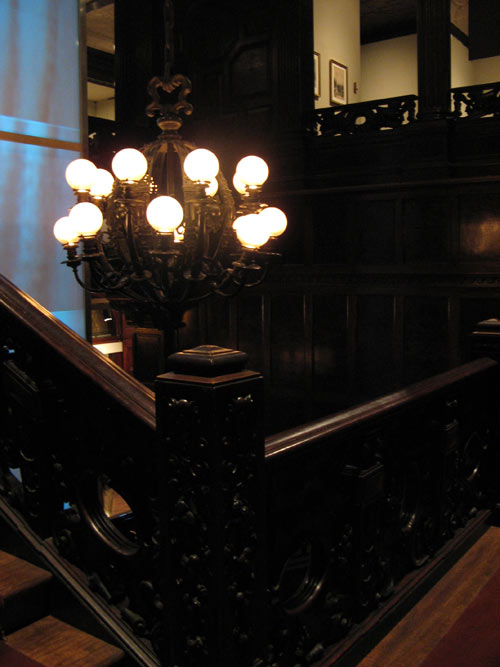
Actual size two-tiered oak staircase of the Carnegie Mansion, which led to the somewhat less interesting upstairs galleries:

CH Staircase

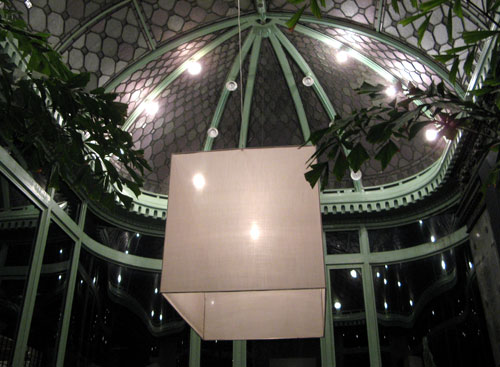
The Barbara Riley Levin Conservatory, which in daytime, features prime views of Carnegie’s private garden. The glass domed room is used sometimes as an exhibition space. It is currently part of Feeding Desire: Design and the Tools of the Table, 1500–2005. This exhibit featured Western dining objects from the Renaissance to the present, and included one very serious-looking silver “ice cream hatchet,” dating to the era when Thomas Jefferson first popularized ice cream in the United States, after his service as minister to France.

Conservatory

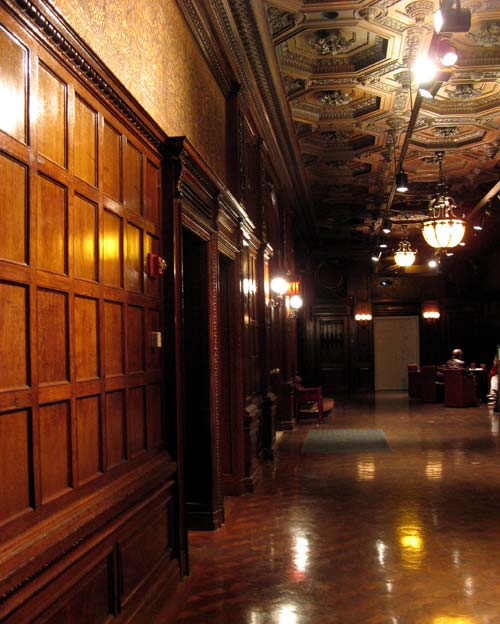
The Great Hall serves as the main entry to the Museum and boasts wonderful architectural detail, including Scottish oak panels and a stone fireplace.

CH Foyer

After the museum, SYB, HYB and I met up with SC and JG for a late dinner at Han Bat. The restaurant is located on 35th Street, three blocks away from the neon-lit epicenter of New York’s Koreatown. We let the Korean boys do the ordering this night: Binde Duk  (Korean green bean pancakes, mixed with pork), Man Doo Gui  (pan-fried Korean dumplings), Bul Go Ki  (thin-sliced tender beef), and two of my favorites: Jap Chae  (stir-fried glass noodles with vegetables) and Soon Doo Boo Chi Gae  (soft tofu stew with hot and spicy sauce and seafood.) Perfect comfort food for this chilly Autumn night.

Senator Dorgan @ Columbia

It had been a while since I was up on campus, and I was sad to see The West End – a.k.a. the ‘Stend — gone, and in its place a not-yet opened bar/restaurant: “Havana Central at The West End” (part of the Havana Central chain of Cuban restaurants.) Ginsberg and Kerouac‘s old haunt had been a popular gathering spot for Columbia undergrads — in part because of its notoriously lax ID-checking policies — since 1911. End of an era.

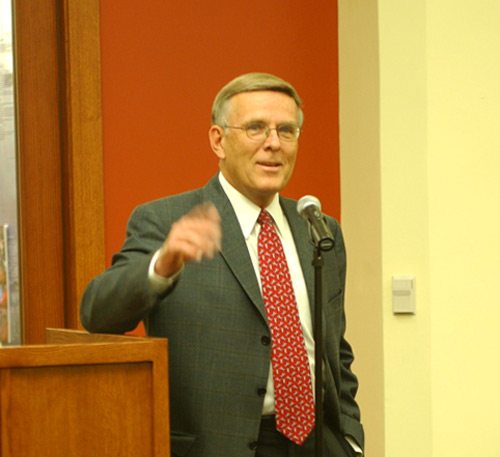
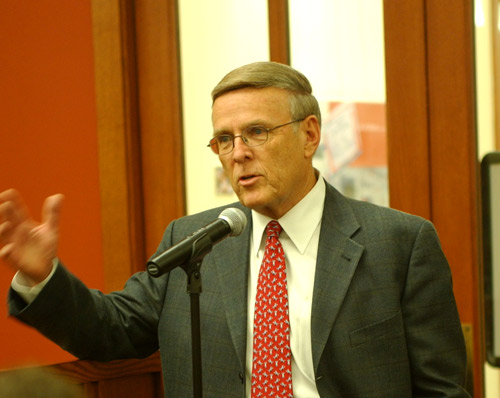
Up at the Teachers College, Senator Byron L. Dorgan (D-ND) was giving a talk on how the current economic policies and “free trade” agreements have worked against the interests of America’s middle class.

Dorgan was reelected to the U.S. Senate in 2004 after serving two terms in the U.S. Senate and six terms in the U.S. House of Representatives. His public service career began at age 26, and he was the youngest constitutional officer in North Dakota’s history when he was appointed State Tax Commissioner by the Governor. He is the Ranking Member of the Senate Trade Subcommittee and in recent years has been a vocal opponent of most bills “liberalizing” trade policies between the USA and other countries.

His recently published book, Take This Job and Ship It: How Corporate Greed and Brain-Dead Politics Are Selling Out America features such chapter titles as “Exporting Misery” and “A Star-Spangled Rut.” In it, he draws attention to America’s $2 billion a day trade deficit and argues that “free trade” agreements primarily create conditions favorable to shipping American jobs overseas. Current economic policy caters to the greed of corporations at the expense of American jobs, and in the long run, the United States’s economic health. Dorgan cited the number of American companies whose primary manufacturing jobs have moved to other continents — primarily: Asia — at a rate of three million over the past five years. As a result, no Fruit of the Loom underwear, Huffy bikes or Etch-a-Sketches are made in America any more. The companies that eliminate the American jobs benefit their bottom line by exploiting cheap, unorganized labor pools elsewhere, and receive additional tax breaks for doing so. Additionally, tax loopholes exist such as the ones that allow for companies nominally headquartered in the Cayman Islands to avoid income tax, corporate tax, capital gains tax, withholding tax or estate duty. Dorgan mentions in his book the infamous Ugland House, an unassuming five-story, white office building on the George Town waterfront that serves as the official address to 12,748 corporations.

Dorgan

Dorgan

Dorgan’s views conflict contrast most obviously with Thomas L. Friedman, the foreign affairs columnist for the New York Times, who argues in his bestseller The World Is Flat: A Brief History of the Twenty-first Century, that the forces of globalization are inevitable, and all societies must either adapt or be left behind. The unplanned cascade of technological and social shifts effectively leveled the economic world, allowing India, China and other countries to become part of the global supply chain for services and manufacturing. On this new playing field, misplaced focus on protecting domestic jobs is short-sighted: as the country’s scientific and engineering base erodes and American politicians peddle protectionist myths, the global economy is being “shaped less by the ponderous deliberations of finance ministers and more by the spontaneous explosion of energy” from eager Indian and Chinese entrepreneurs. Competing with low-skilled workers overseas should not be this country’s goal; rather governments should devote resources to assist workers in developing a skills base to succeed in this new “flattened” economy.

The authors argued their points on a recent PBS News Hour.

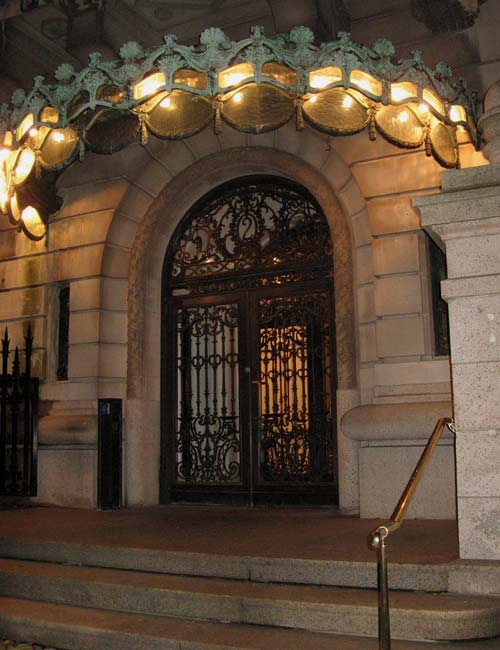
TC Arches

I slipped out of the book signing and after-reception to meet SC, JB, a few others in the Stern crew, CS and MB at Japonais. SYB kept me updated with periodic text messages from Shea where he was watching Game 7 of the National League Championship Series. Would our Mets be going to the World Series this year?

Alas, no.

Russian Film Week

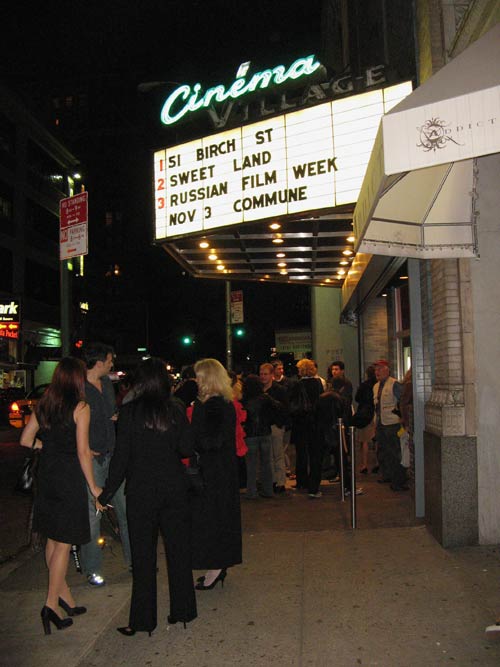
Our professor was off in Pittsburgh, so Russian class was canceled this Wednesday. Appropriately enough, SN and I made plans to attend the 6th Annual Russian Film Week that night instead, which was being held October 13-19 at Cinema Village, highlighting current films by Russian directors. The dozen films were selected for their favorable reviews by critics and audiences from among the films released in Russia this year. The week-long event was presented by Interfest, organizers of the Moscow International Film Festival and Globe PR Group, under the support of The Russian Federation Federal Agency for Culture and Cinema.

That night, the featured film was Polumgla, by Russian director Artyom Antonov. Last Fall, Antonov won the “Iris of Tomorrow” for best debut feature at the closing ceremony of the first — and sadly: only — Festival International de Films de Montréal for this Russian-German co-production.

The film, set during World War II, tells the story of a young Soviet lieutenant sent to the far Northern reaches of the snow-covered taiga to supervise the construction of a strategic military radio tower. As he departs on his train journey, he learns that his construction team is made up entirely of German prisoners of war. The team arrives in the eponymous village, ill-prepared and under-supplied. The locals are primarily women whose men have gone to war, and whose fates they learn through an eerily cheerful sailor who travels by belled dogsled to deliver them tragic telegrams from the front. Their reception towards the POWs is at first strongly hostile, but over time, despite no common language, common human bonds are forged among the townfolk and the men, challenging their entrenched views of the enemy. This being a Russian film — and a war film — you don’t expect a fairy-tale ending, do you?

War! Germans! You knew that SYB would want in on this, too. SN and I met him for a quick pre-film bite at Cafetasia, the newish Pan-Asian (mostly Thai) eatery on 8th Street, down the block from the new Broadway Panhandler location.

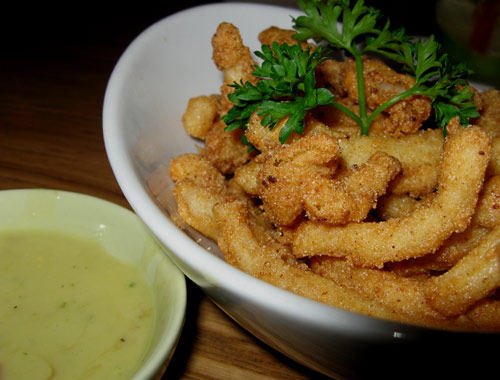
The decor was slick and the food gently-priced if not particularly noteworthy — all as expected, given the NYU-centric location and provenance: the restaurant was started up by a former employee of the Spice mini-chain (not to be confused with the Cafe Spice mini-chain.) SYB and I took advantage of the 2-for-1 happy hour caipirinhas, which made it even more complicated to extricate ourselves from the immovable, too tightly-arranged communal bench seating. I did like these calamari fritters with light-spicy ginger-avocado dipping sauce.

Cafetasia Calamari

After dinner, SN had to drop out of the movie at the last minute to tend to his ill wife back home in Jersey, so SYB and I were charged with unloading his ticket. I was concerned at first, but finding a buyer was not a problem at all: the film was sold out by the time we arrived at Cinema Village, and there were scads of Russian-speakers milling about on the sidewalk in front, presumably waiting for people like us to come along. We sold SN’s seat to the first women who tentatively approached. She thanked us after the exchange, and I responded: pah-ZHALu-stah! (You’re welcome!) I think she may have even understood me.

But her smile could have been one of amusement.

Cinema Village

Maja Ferme fashion

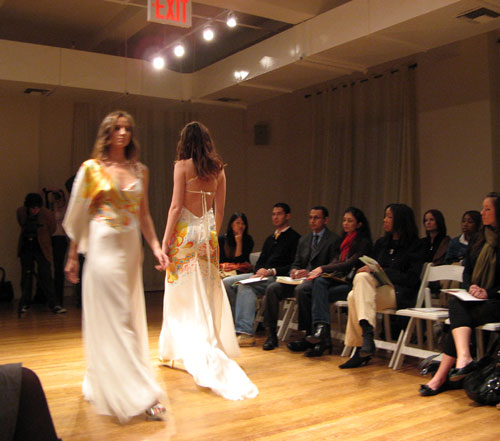
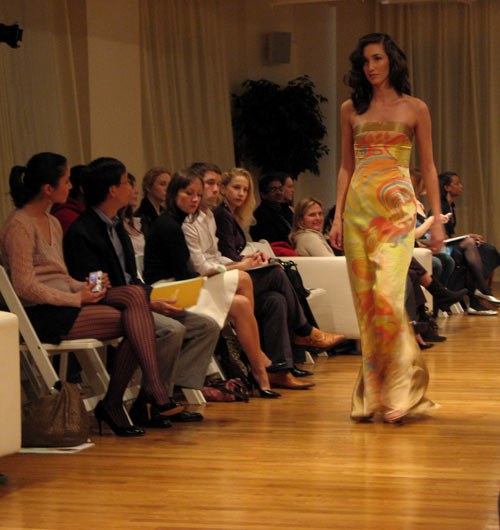
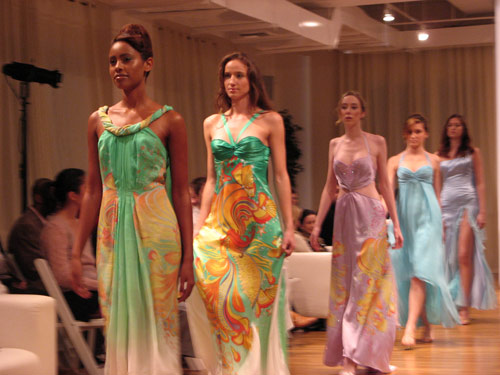
I met up with M after work for the Maja FermeNymph” fashion show. Ferme, a young Slovenian fashion designer, was presenting her Spring/Summer 2007 collection to the public at this independent fashion show, taking place at Midtown Loft. The event space was just a couple of doors down from the P.S. 260 penthouse loft I visited during openhousenewyork weekend, with windows on three sides offering similar views.

Lots of prettily flowing dresses in chiffon, silk satin, and silk shantung. As expected, the models were very tall and very thin… and at least one was noticeably high. As she teetered precariously past us on her four-inch stilettos, M and I kept expecting her to pitch forward on the runway like so much fashion roadkill.

Models

Model

Catwalk

Afterwards, M gave me a lift home in the Libby, where I had a few boxes waiting for her — souvenirs from her recent trip to the Sonoma Valley.

The laws governing whether consumers can purchase, and have wine shipped directly from wineries and retailers, are complex and vary widely by state. The fractured system of alcohol regulation dates to the repeal of Prohibition in the 1930’s. New Jersey, where M now lives, is one of the states that prohibits direct shipment of wine. The recent ban on liquids brought on airplanes meant she couldn’t hand carry any bottles back either.

The New York State laws on direct shipment are complicated (wineries must obtain 3 types of permits and file 3 types of returns), but do allow for consumers to receive shipped wine — up to 36 cases annually. Since it’s already October, the chances of my exceeding that allotment for the year are pretty slim, so I agreed to accept M’s Rubicon on her behalf. To my amusement, the boxes were marked “FRAGILE,” and had bright fluorescent warning labels not to deliver to anyone under the age of 21 or who appeared visibly intoxicated.  I’m not necessarily arguing against the second restriction; I just want to understand the reasoning behind it. You can accept wine to get  drunk in your home, but cannot already be drunk  when accepting it? It’s not the same as a bartender cutting off someone who has obviously over-imbibed. Bar owners have a responsibility, or at least an awareness of our society’s litigiousness, warranting that they do what they can to ensure that their patrons don’t pose a hazard to themselves or to others. But in the privacy of one’s home…?

As these packages tend to arrive in the early morning, or afternoon, I wonder how often the carriers are asked to enforce this “no drunk deliveries” rule.