vip in the city, page 55

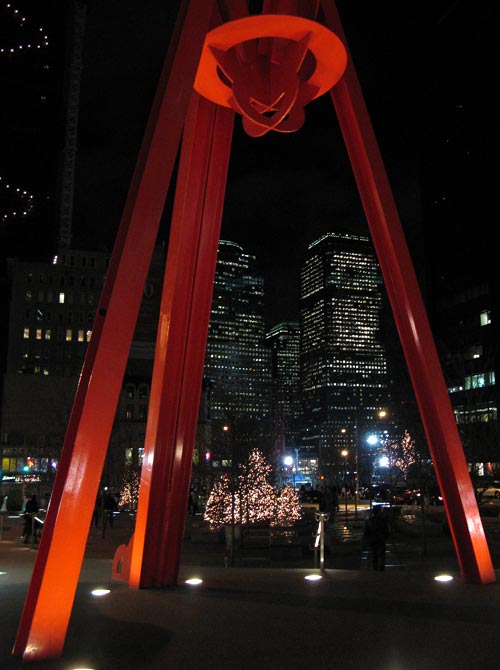
Wall Street reunion

Back to work. Despite the generous shots of morning caffeine, about midway through the afternoon I was sorely wishing I had extended my holiday weekend as half the staff in the office had. But then: a surprise call from DH, in town visiting from Boynton Beach, made my day. Would I have time to come out and play after work? Would I?

As soon as was seemly possible, I met DH and GP outside my building. It had been years since I’d seen them both together, and we immediately began chattering away as if no time had passed, and we were just convening over treats in front of DH’s desk.

But time had passed, so there was some catching up to do. GP graciously opened up her home to us for the evening, and our trio made the short stroll to the triangle at Wall Street and Hanover Place. Since I’d last seen her, GP had passed the Bar (congrats!), started a new job and moved into one of those pre-war office conversions that are part of the Financial District’s luxury residential boomlet. Her building had served for over seven decades as the former headquarters for Brown Brothers Harriman, the oldest privately owned bank in the United States. (They’ve since relocated to more modern-looking digs.) In 2004, the 1929 neo-classical building was rechristened as The Crest – a name inspired by the decorative architectural elements over the original entrance. Other building embellishments include ornamental gargoyles and a coin-façade, so good choice of moniker there.

I just love those grand Old New York lobbies. GP took us on a tour of some of the building’s common areas: the second floor mezzanine — presumably at one time lined with bank teller windows — was transformed into a 10,000-square-foot “Great Room” with leather lounge seating, WiFi, billiards tables and flat panel television. The conversion preserved and restored the original marble finishes and column work – and indeed, the interior BBH signage was kept intact. The entire building project cost a reported $50 million, and incorporated other enviable touches like a residential gym and screening room.

M joined us at the apartment soon afterwards, and over bottles(!) of Beaujolais Nouveau, homemade Christmas cookies and grandma slices of the best pizza in the district, we reminisced about old times and toasted to long overdue reunions.

DiSuvero Zucotti Lights

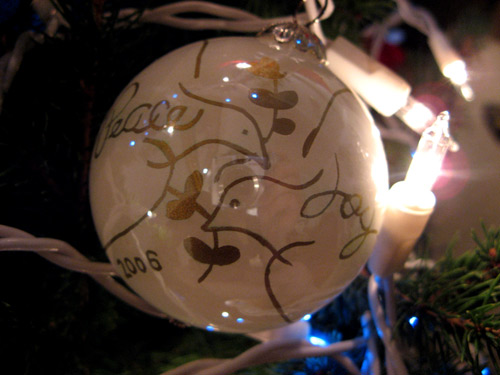
Peace Joy 2006

Christmas 2006

It may have been the cold medication — still nursing this nagging cough, ugh — but I ended up sleeping in on Christmas morning. The day was something of an anti-climax — isn’t it always? — as we had dispensed with most of the gift opening/exchanging and familial revelry the night before.

I did, however, eventually make it out to Queens for a late lunch. En route to the subway, I walked along quiet streets, on sidewalks that were suddenly clear of Christmas tree vendors.

Inside the lobby of the Sheraton LaGuardia East Hotel: a Poinsettia “Tree”, constructed of dozens of tiered pots. The red-leafed plant is native to Mexico and Central America, and named for Joel Roberts Poinsett, who introduced it to American floriculture during his tenure as the first United States ambassador to Mexico in the 1820s. The plant’s name is one often plagued by beastly mispronunciations. I’ve heard “poyn-setta” and (inexplicably) “point setter,” which sounds like it should be a piece of fencing equipment or some kind of hunting dog. The latter malapropism is so common that if you plug “point setter” into Google, the search will return “Did you mean: poinsettia”?

Yes. Yes, you did. And it’s pronounced “poyn-SET-ee-uh.”
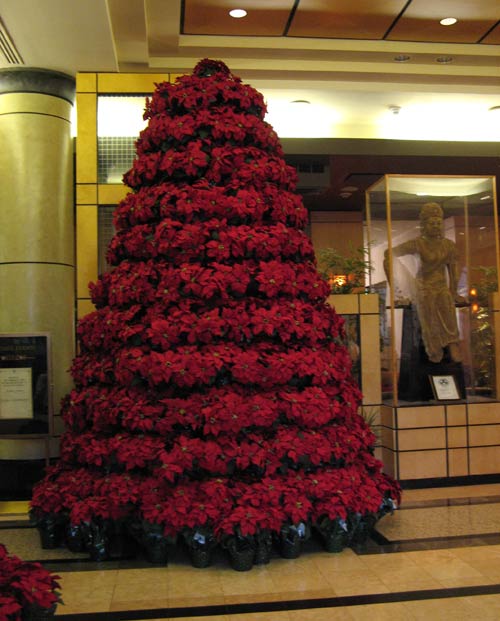
Sheraton Tree

On to dimsum at East Manor in Flushing (sister restaurant of the one in Elmhurst), where we feasted on the usual small plates of dumplings, rice noodle rolls, tripe, mini-ribs… In addition, the restaurant had set up long tables lined with large, steaming pots from which we could order servings of specialty dishes. I noticed one pot, bursting with dark viscous liquid, emitting warm aromas of sweet and sour, anise and cinnamon. I’d recognize it anywhere: the Cantonese pig’s feet stew, traditionally served to new mothers during their postpartum “sitting month” of reclusion. The brew consists primarily of thick, sweetened black vinegar, rice wine, copious amounts of ginger, hard boiled eggs, and hulking chunks of pig’s feet, which unfortunately look exactly like what they are. (We passed.)
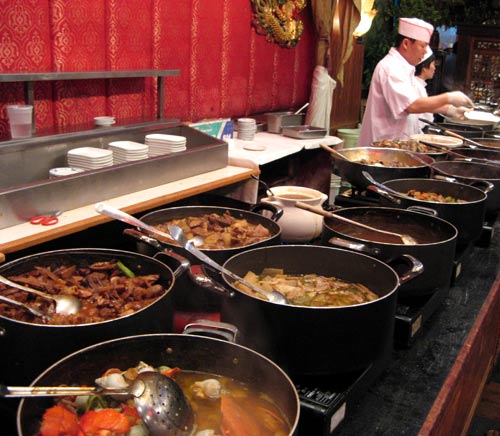
East Manor Pots

Also: a griddle station with shrimp paste-stuffed japalenos (much hotter than I expected!), turnip, taro and sweet water-chestnut cakes, and chive dumplings.
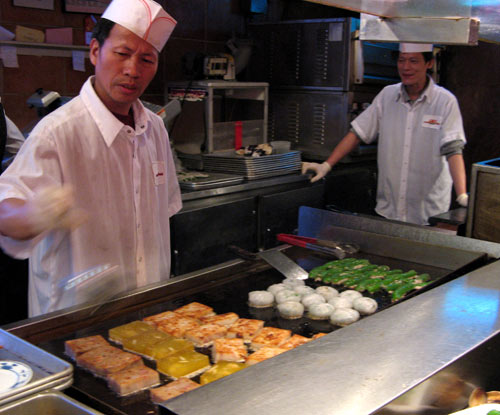
East Manor Dimsum

Mom and Dad swung by Sunnyside so I could drop off SYB’s Christmas present on the way back into the city. Christmas Day is always a big movie day, and judging from the crowds at the theatre, it was going to be me, B and about half the population of the Upper West Side. Almost all of the shows were selling out, but we managed tickets to the 8:15PM screening of Apocalypto.

As usual, there were way too many previews, including an unpromising looking one for Nic Cage’s Ghost Rider (not Ghost Writer, as I initially thought it was titled. Apparently that’s an entirely different movie.) The studio describes Apocalypto as “a heart stopping mythic action-adventure set against the turbulent end times of the once great Mayan civilization.” Though several of the sets were impressive in their design, my general impression was more stomach churning than heart stopping… there is raping and pillaging, impaling, a mauling, a poisoning, pox, brain-bashing, spurting blood vessels, threats of skin flaying, and of course, the much talked about human sacrifice/ritual decapitation set piece that features hearts gouged bleeding from live chests. None of which was unexpected: as a filmmaker, Mel Gibson is known to traffic heavily in gore. Apocalypto is probably no gorier than the more disturbing parts of Oscar-winning Braveheart, and reportedly (because I didn’t see it) significantly less gory than 2004’s The Passion of the Christ.

During a couple of the film scenes, I was reminded of Indiana Jones and the Temple of Doom (which also featured a graphic heart removal and one gross-out banquet sequence.) Many have balked at Apocalypto‘s glaring historical conflations and archaeological misrepresentations, but I was focused more on the message Gibson attempted to convey through his film. The decline of the great civilization is never fully expositioned, though the story opens with what is intended as an elucidating quote from historian Will Durant about the fall of Rome: “A great civilization is not conquered from without until it has destroyed itself from within.” Are we to understand then, that the Mayans are doomed to be destroyed, having corrupted themselves through decadent immorality, by brutally asserting their will on the noble savages of the forest? What to make, then, of the deux ex machina arrival of the Spanish conquistadors? Some have lambasted the suggestion of “salvation” by the Christian Europeans, but I actually read this final scene as a great irony: the barbaric oppressors standing on the precipice of become the oppressed, destined to fall to the invading colonialists who will forcefully assert their will on the natives. (Contemporary comparisons abound…) It’s ambiguous, though, and perhaps I am giving Gibson more credit than he deserves?

Imperialist commentary notwithstanding, there’s not much of a story — after the ravaging, imprisonment and some timely astronomy, the final third of the film plays out like one long, extended cat and mouse chase, picturesque as it may be.

After such non-traditional Christmas Day fare, it was time to head home and mull on matters more sweet than vicious. What I would have given for chestnuts and an open fire.
Christmas Eve 2006

Christmas Eve began with a leisurely brunch in the neighborhood, albeit one sans Bloody Marys, thanks to New York’s Alcoholic Beverage Control Law, which prohibits the sale of alcohol between 4AM and noon on Sundays.

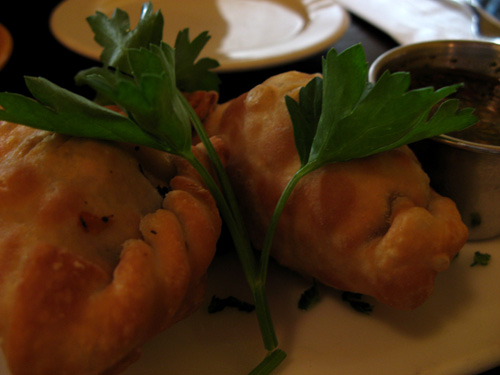
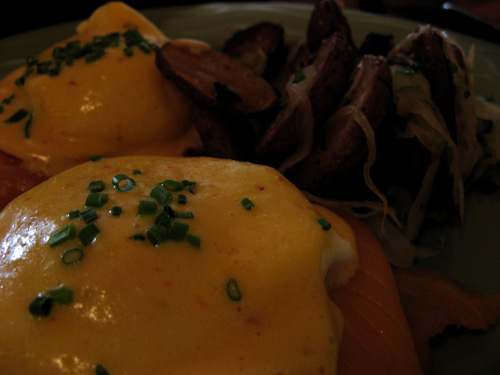
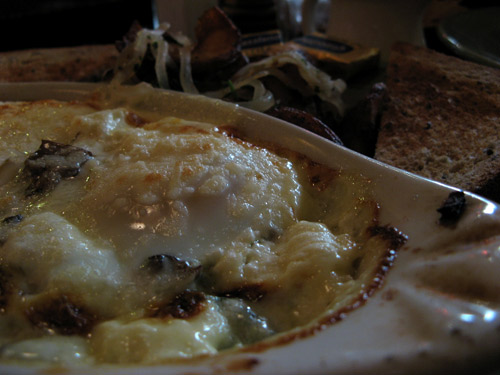
So we ordered hot coffees from the apologetic server to accompany our Basil-Mozzarella Empanadas with Chimchurri Sauce, Norwegian Eggs, and Porcini, Spinach and Goat Cheese Baked Eggs. All delicious, and a fine way to start off Christmas Eve.

What is it about the holidays that makes us yearn for the warm and familiar?

Cafe Ronda Empanadas

Norwegian Eggs

Cafe Ronda Baked Eggs

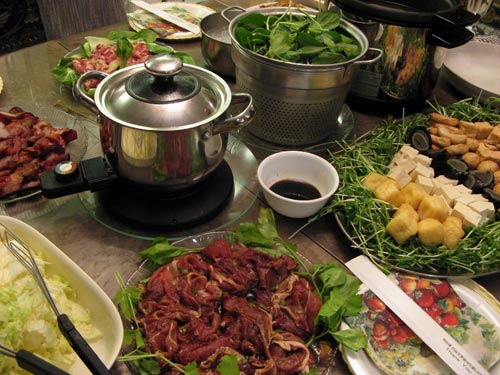
Later in the afternoon, I met the family with my freshly-made Thomas Keller marshmallows after their fancy tea at Fauchon. For our Christmas Eve dinner in Whitestone, Mom had forgone the usual ham and prepared a spread for Chinese Hot Pot (a.k.a. Fire Pot) — the East Asian hybrid of soup and fondue. Hot pot pairs a shared kettle of bubbling broth with raw ingredients that are simmered, boiled, blanched or dipped as part of a communal dining experience. For our dinner, there were thin slices of marinated beef and pork, shrimp and cuttlefish balls, whole shrimp, spinach leaves, pea shoots, two kinds of tofu, Chinese cabbage and bean thread noodles.

The meal is sometimes eaten as part of the traditional Chinese New Year feast, and is especially welcome during the winter weeks, even unseasonably warm ones. The entire endeavor is a leisurely, interactive event; the roundness of the pot symbolizes unity, as family and friends gather around to cook and to share. After the meal, what remains is the broth, richly flavored with all the ingredients of the dinner. And in our case: lots and lots of leftovers to be distributed and packaged for the “kids” to take to their respective homes.

Restaurants offering the hot pot abound in Flushing’s Chinatown. In Manhattan, I like Grand Sichuan on Canal near the Manhattan Bridge entrance, and the cheerfully-monikered Happy Shabu Shabu, farther East on Canal, whose website offers the following helpful tips for the hot pot novice:

Don’t feel intimidated if you’ve never done this before: 99 out of 99 people get it right on the first try. Just make sure your pot of liquid is hot — it doesn’t have to be boiling away, but hot enough to see some steam and a few bubbles. We don’t recommend putting your hand in the pot to test the temperature.

Sage advice there.

Christmas Hot Pot

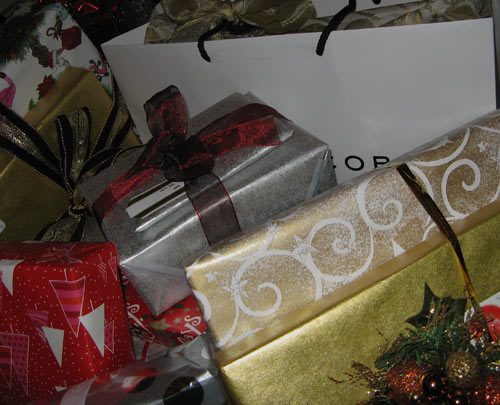
The gift exchange was its typical flurry of wrapping paper, tissue and ribbon. In 2007, I will be improving my cooking skills in high style. Oh, and appreciating fine food, tunes and laughs. I’m a lucky girl.

Thanks and Merry Christmas to all!

Christmas Gifts

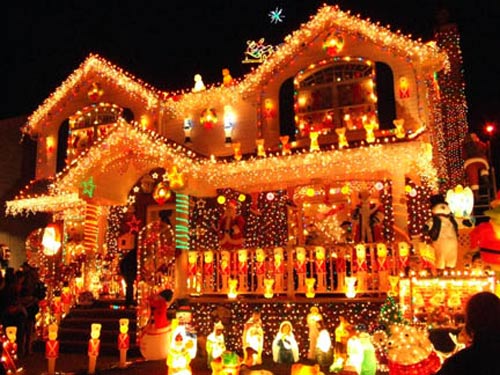
I am awed by this family’s deep commitment to the holidays, if slightly perplexed by the one, two, three, four  Santa Clauses (that I could see) and Frosty the Snowman’s insertion into the Nativity scene on the front lawn. There’s always one in the neighborhood, no?

Christmas Lights

Tomorrow, tomorrow

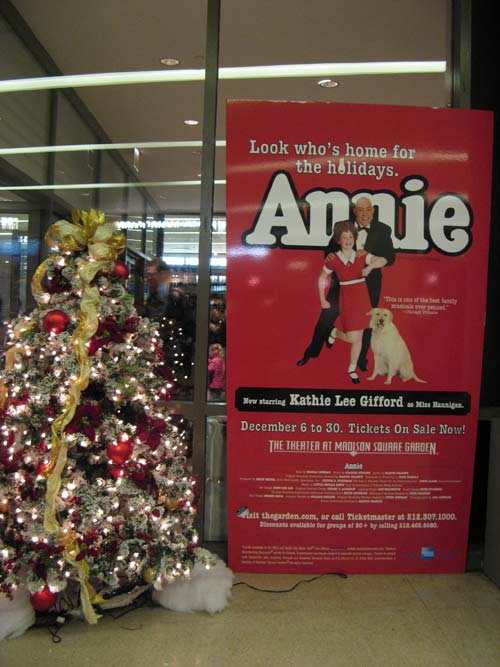
Jug and the Entertainer treated the family to see Annie at the Theater at Madison Square Garden. The musical — or more accurately, the 1982 film version — was one of the first movies I remember all of us seeing together as a family, so this particular production had some sentimental value. My parents bought us the soundtrack (on cassette tape, of course), which the three kids would play over and over on the portable stereo in the family kitchen.

This three-week limited engagement, part of the 30th anniversary touring revival, stars erstwhile Regis Philbin co-host Kathie Lee Gifford mugging mightily as boozy floozy Miss Agatha Hannigan (memorably inhabited by Carol Burnett in the movie.) J and I snickered at the unintended irony of Gifford ordering young orphans to work after (in)famously becoming embroiled in the Wal-Mart/Honduran sweatshop controversy.

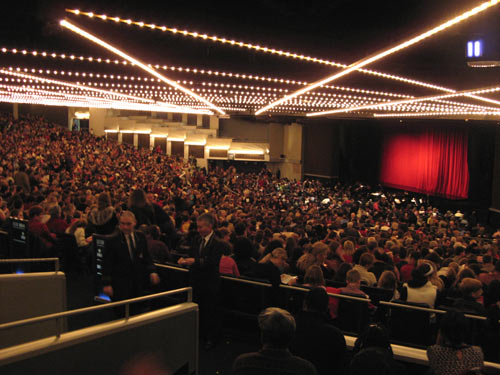
Critics were split over the quality of the show — the Times gave generally favorable marks; the Post liked it somewhat less — which was staged by Martin Charnin, who wrote the show’s lyrics and directed its 1977 Broadway production to seven Tony awards. As holiday fare, though, the quality hardly mattered: every seat in the cavernous Theater was sold, most to families with very small children. I wonder how Mom and Dad felt about accompanying their three decidedly not-so-small children, and two of their spouses. The Charles Strouse-composed tunes were as catchy as ever — “Tomorrow”, “It’s the Hard-Knock Life” — and we could not help but be charmed by the sheer enthusiasm of the able and often adorable orphan cast.

Annie at MSG

MSG Theater

JE missed the four songs composed for the movie that were not in this stage production: “Dumb Dog”, “Let’s Go to the Movies”, “Sign” and “We Got Annie“. In their place: “We’d Like to Thank You Herbert Hoover”, “Why Should I Change a Thing?”,”You Won’t be an Orphan for Long”, “Something was Missing”, “New Deal for Christmas” and Strouse and Charnin’s valentine to New York City, “N.Y.C”. Columbia Pictures purchased the rights to the stage production in 1978 for a then-record $9 million, no doubt prompted by the enormous popularity of Grease, which proved that movie musicals could still generate big box office. In a summer movie field crowded by the likes of E.T., Rocky III, Star Trek II (WOK) and Poltergeist, Annie took in a respectable $57 million, but at a reported cost of $50 million, the film was considered a disappointment for the studio.

The film was directed by John Huston(!), his first and only attempt at a film musical. (Reminds me that I’ve yet to see Huston’s final film, The Dead, which is often cited as one of the best holiday films of all time.)

To be fair, Annie is not one of the finest examples of American musical theatre. Although the tunes are peppy and memorable enough to be recognizable, the songs have not entered the popular music canon — Jay-Z’s Hard Knock Life (Ghetto Anthem) notwithstanding. Yet the show continues to be beloved and popular, especially with touring, local and community productions. Why? Kids and dogs, either of which has enormous power to win over an audience. The biggest cheers in this afternoon’s matinee were reserved not for Gifford, but for the shaggy mutt playing Sandy.

The show — which ran for 2,377 performances and is ranked as one of the 20 longest running shows in Broadway history — did have a major cultural impact in inspiring a new generation of young actors, serving as the proving ground for scores of stage and screen child actresses (Sarah Jessica Parker, Alyssa Milano and Molly Ringwald among them.) The phenomenon is the subject of a new documentary, Life After Tomorrow, which follows up on many of the orphans who appeared in the show during its original Broadway run (1977-1983).

After the show, some holiday shopping with PL, ML and their son, M. Later still, over mushroom pizza, we all sat exhausted and in marvel over the boundless energy of two year olds.

You crowd
You cramp
You’re still
The champ
Amen
For NYC

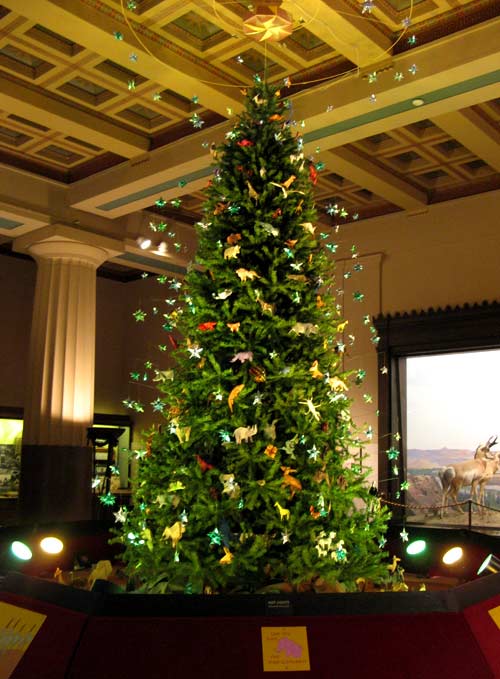
Origami Safari Tree @ AMNH

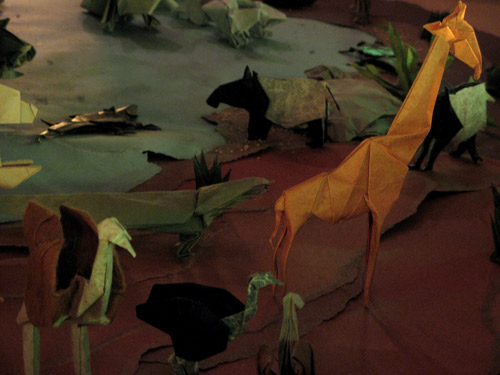
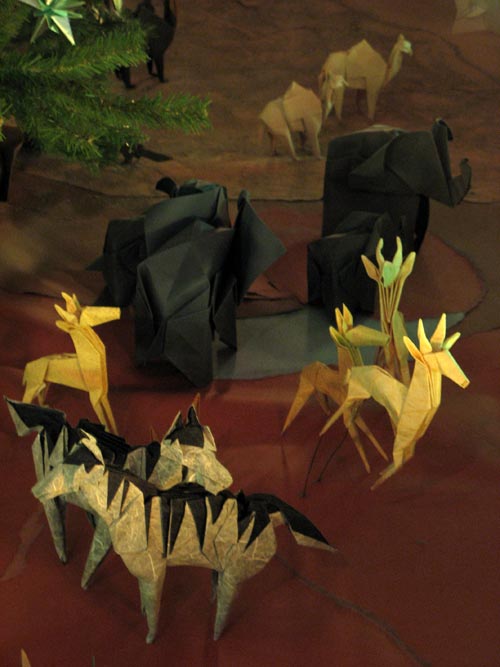
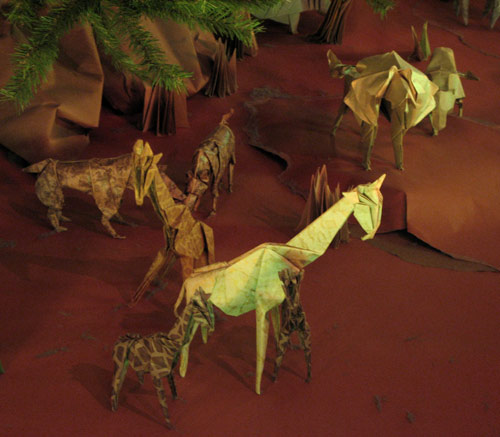
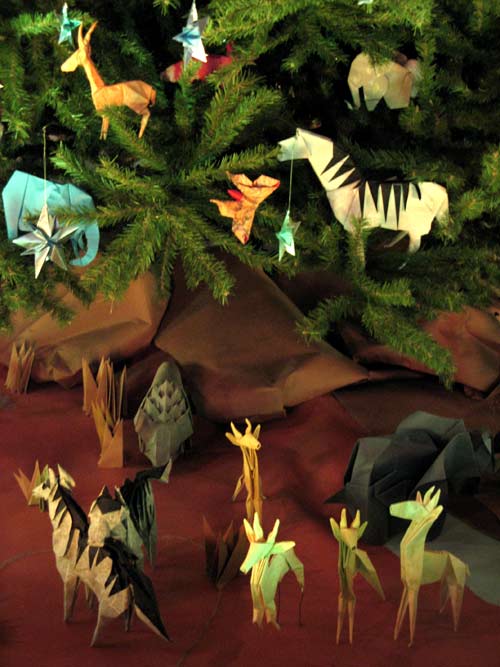
The 34th annual Origami Holiday Tree at the American Museum of Natural History, which will be on display through January 1 on the first floor Theodore Roosevelt Memorial Hall. This year’s theme, “Origami Safari,” showcases a teeming jungle of paper lions and tigers and bears… zebras, rhinos, giraffes and one pink elephant.

The pieces were crafted by members of Origami USA, whose volunteers began folding in July to complete the approximately 500 creations displayed on the tree, and arranged around the base.

Origami Safari Tree

Origami Safari

Origami Safari

Origami Safari

Origami Safari

Uptown at the Cathedral Church of St. John the Divine, the Peace Tree is decorated annually with one thousand white paper cranes.

And too late for this year, but I love Well Dressed Home’s porcelain origami crane ornaments — though my usual tree would probably collapse under the weight of more than a dozen.

Bergdorf's Art of Celebrating

200th post!

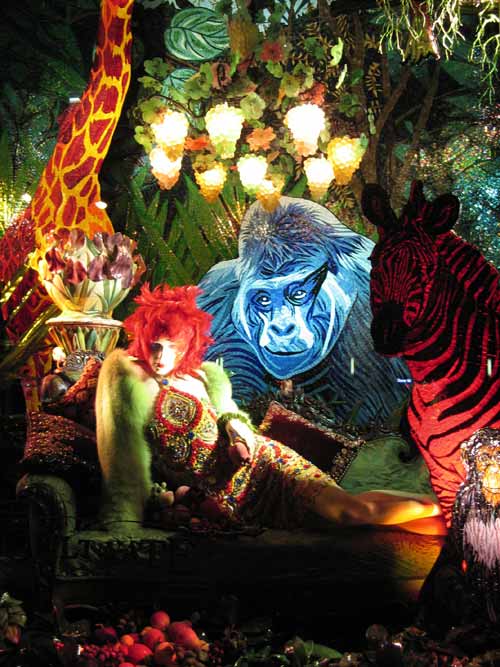
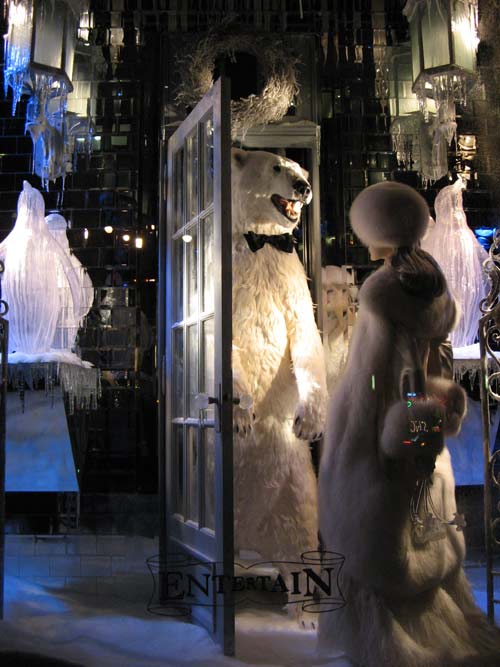
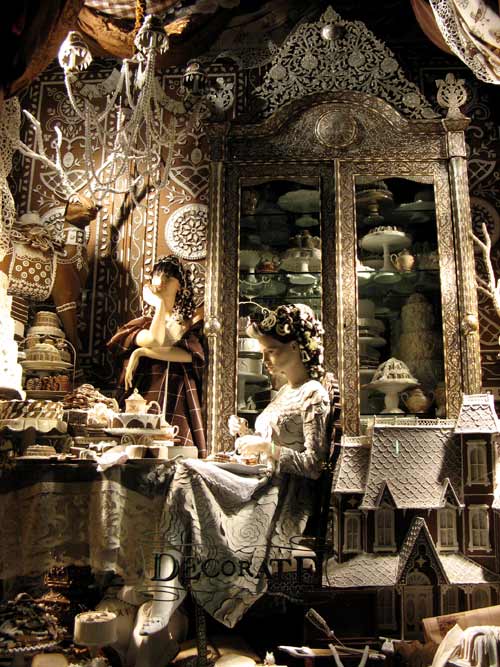
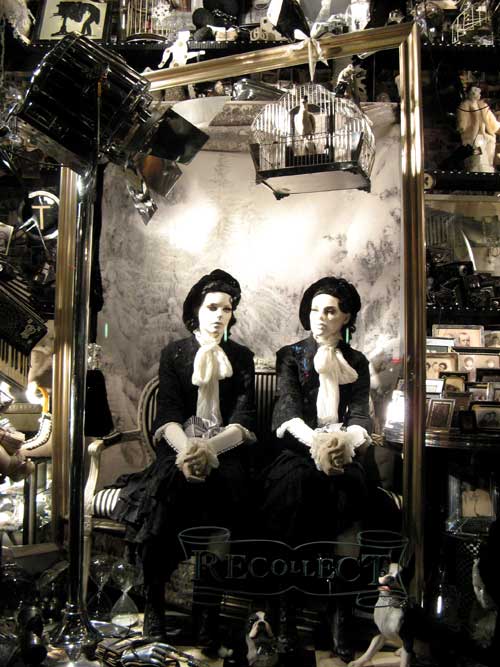
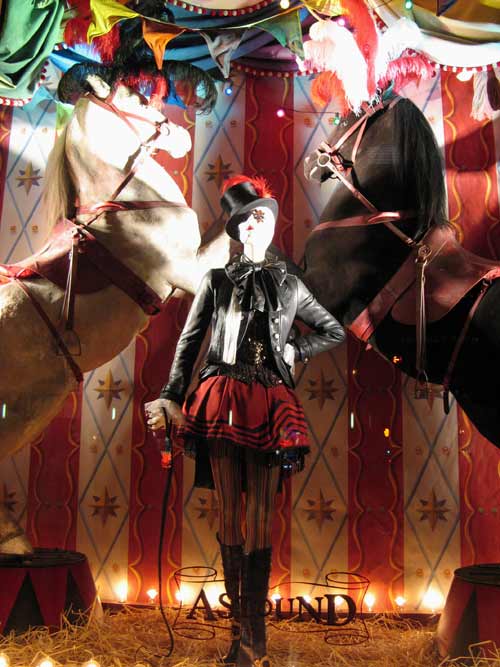
Bergdorf Goodman’s gorgeous, highly stylized windows. For sheer richness and attention to detail, these are probably my favorite of all. The displays are each titled with a one-word caption, evoking themes of the holiday season.

“Recollect” is a cool study in black and white, with twin mannequins, posed amidst an eye-popping assortment of vintage objects: silver-framed photographs, porcelain terriers, typewriters, cameras, and antique memorabilia. “Decorate” is an intricately ornate brown and white tableau, crammed impossibly full of iced gingerbread houses, layered cakes and candied confections. The most whimsical: “Entertain,” features a white fur clad woman opening the door to a black-bowtied polar bear suitor as ice penguins glitter among the faux icicles.

Bergdorfs Window

Bergdorfs Window

Bergdorfs Window

Bergdorfs Window

Bergdorfs Window

New York magazine gave Bergdorf’s display high marks for “childlike wonder” and set design, but gave the slight overall edge to the Saks windows for more effectively evoking holiday cheer.

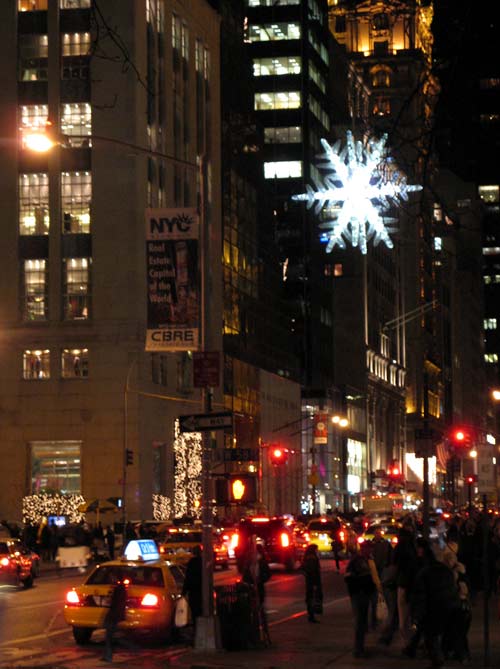
The UNICEF Snowflake, sparkling at the intersection of Fifth Avenue and 57th Street. Its twin hangs at the corner of Rodeo Drive and Wilshire Boulevard in Beverly Hills. Ingo Maurer and his German design team handcrafted the 3,300 pound chandelier out of 16,000 Baccarat crystal prisms.

UNICEF Snowflake

O Christmas Tree

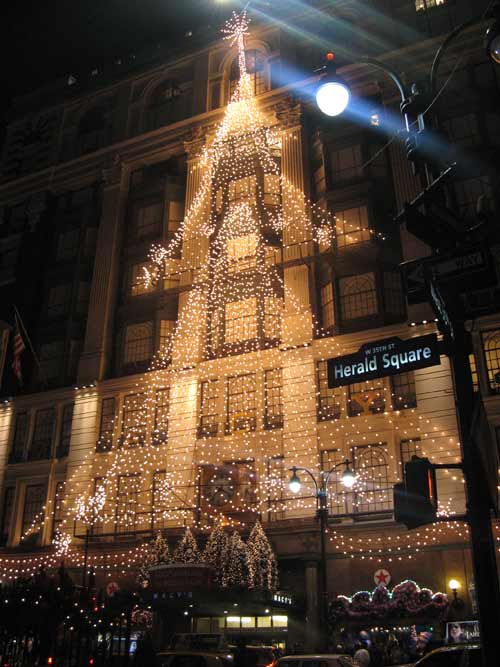
Macys Tree

Five days before Christmas, I descended upon Herald Square like all of the other increasingly frantic shoppers.

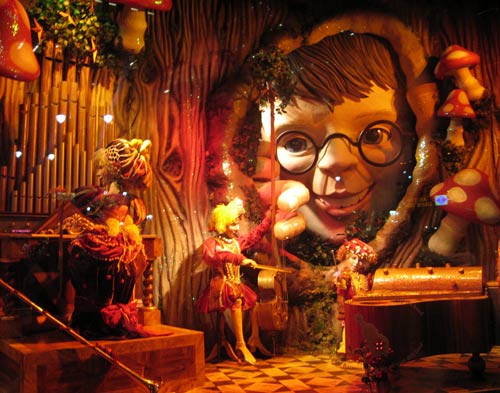
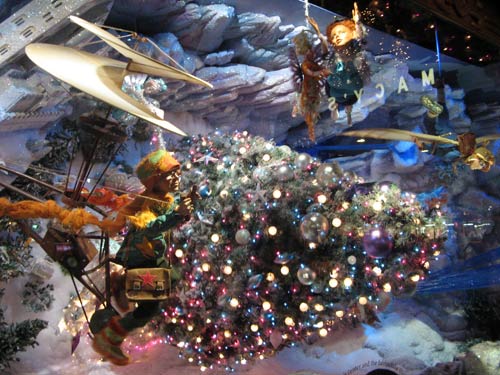
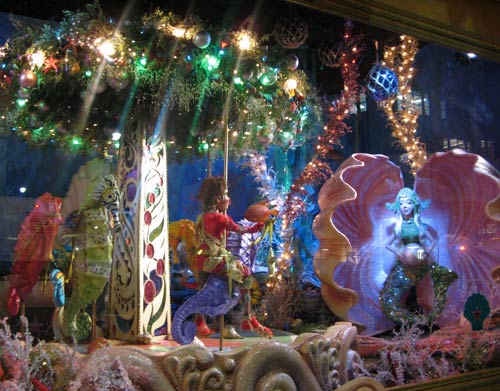
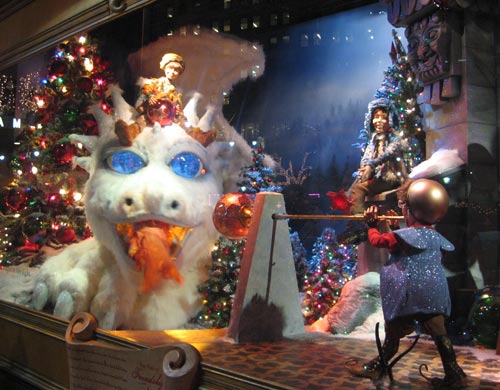
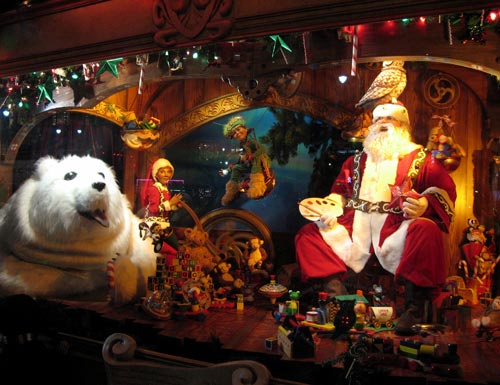
Macy’s has been delighting spectators with their famed holiday displays since 1862. Always a spectacle, their windows are impossible to miss this year: seven trippy dioramas tell the story of elf travelers Sparkle and Twinkle as they make their enchanted way through the “Trees of Wonder” to meet Santa Claus at the North Pole. Along the way, they journey by land, sea and air through fantastical landscapes inhabited by magic mushrooms, flying trees, purple octopi, and other mythical creatures.

The unique joy one derives from watching gaudy automated figures repeat a single arc of motion over and over was further enhanced this year by the “interactive” push-button displays, whereby spectators could direct additional special effects — a clam shell opening and closing to reveal a mermaid, for example — by pushing a star on the glass.

Each window was equipped with its own soundtrack, which in theory, probably seemed like a good idea. Someone needs to check the volume levels, though, because instead of subtly accompanying the holiday display, the speakers blare music and sounds with alarming intensity. The overall effect along Broadway is one of eardrum-bursting cacophony, interspersed with jolting roars from the lion and fire-breathing Snow Dragon (who bears an eerie resemblance to Falcor from The Neverending Story.)

I fondly recall Macy’s 2003 windows, commemorating the 20th Anniversary (and gazillionth TBS airing) of A Christmas Story. The house in Cleveland where the movie was filmed opened as a museum this November.

Macys Christmas Window

Macys Christmas Window

Macys Christmas Window

Macys Christmas Window

Macys Christmas Window

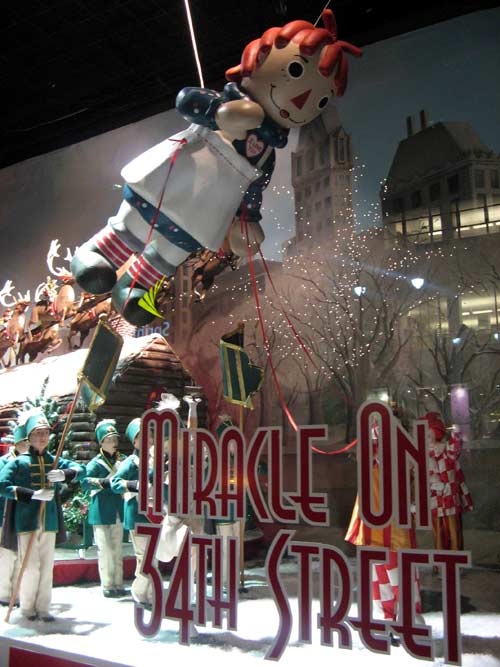
And along 34th Street: the less flashy Miracle on 34th Street-themed windows. In 2006, the American Film Institute’s “100 Years…100 Cheers” named the film #9 on its most inspiring films of all time survey. Topping the list was Frank Capra’s Christmas classic It’s a Wonderful Life (1946).

Macys Christmas Window

Holiday lights 2006

Note: If I am to entertain any hope of sharing these Christmas-themed photos before Christmas, then I will have to post these entries out of sequence. Please check back for the prior dates…

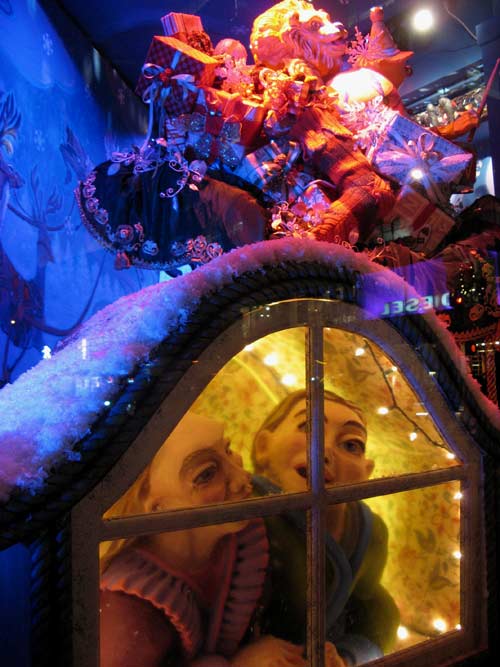
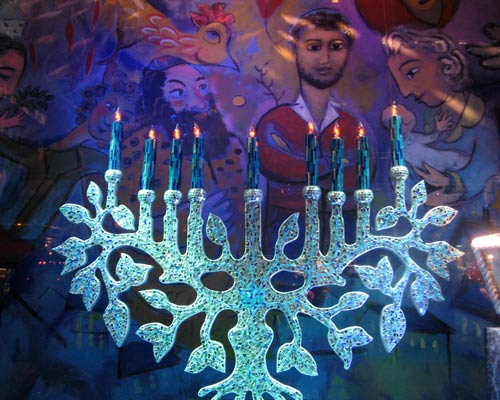
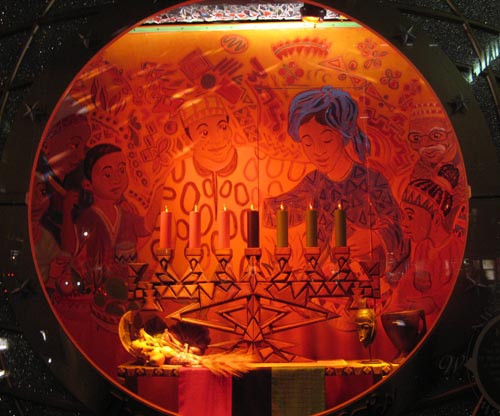
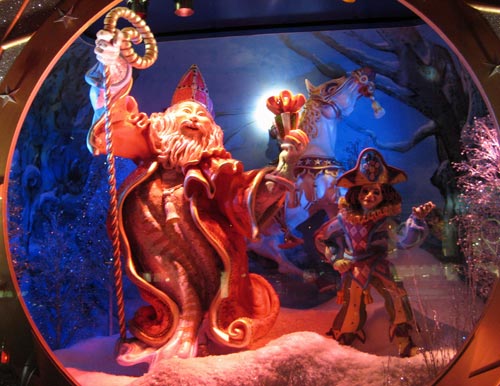
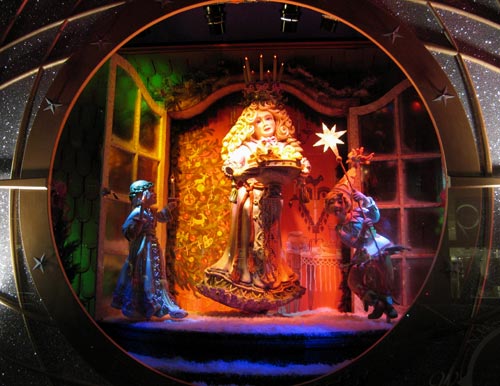
Bloomingdale’s holiday windows: a multi-culti celebration of holiday traditions around the world. The ten windows display tableaux from different-themed winter festivities. Bonus points to Bloomie’s for including Hanukkah and the elusive Kwanzaa… but I found some of their waxen, animated figures just a little creepy-looking.

Bloomies Xmas Window

Bloomies Xmas Window

Bloomies Xmas Window

Bloomies Xmas Window

Bloomies Xmas Window

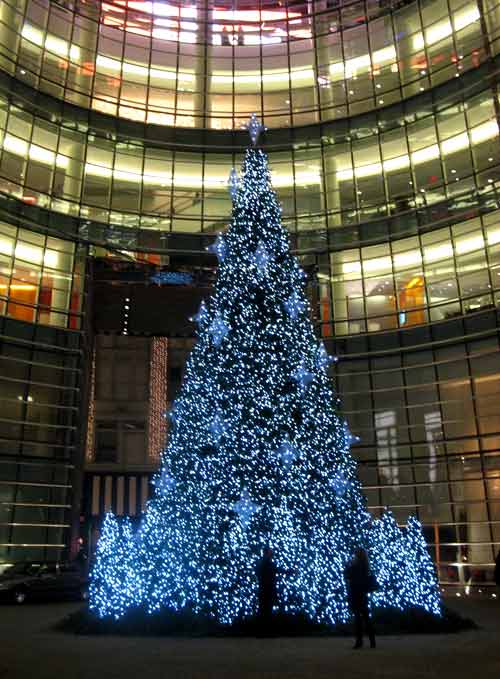
Christmas tree inside the central glass-coned courtyard of the Bloomberg Building at 731 Lexington-One Beacon Court. The mixed-use 53-story tower was completed for $630 million in 2004 on the site of the former Alexander’s department store. It was designed by Cesar Pelli & Associates, the architect behind the Petronas Twin Towers in Kuala Lumpur, and in New York City, the World Financial Center, the Carnegie Hall Tower and the Museum Tower condominiums adjacent to the MoMA.

Bloomberg Tree