A native New Yorker's adventures from 2006–2010 in the city and around the world — including a little history and a lot of food.
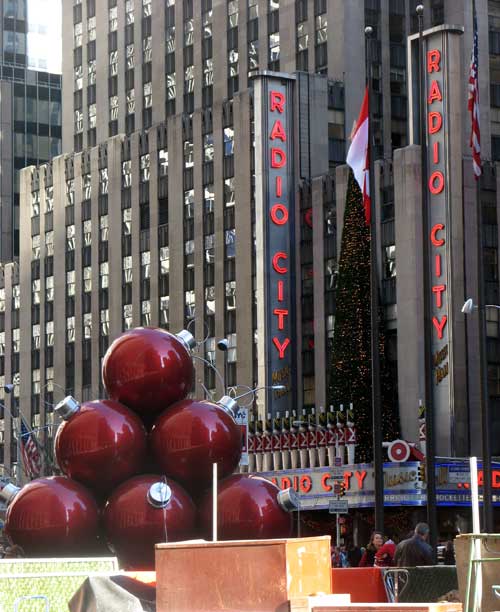
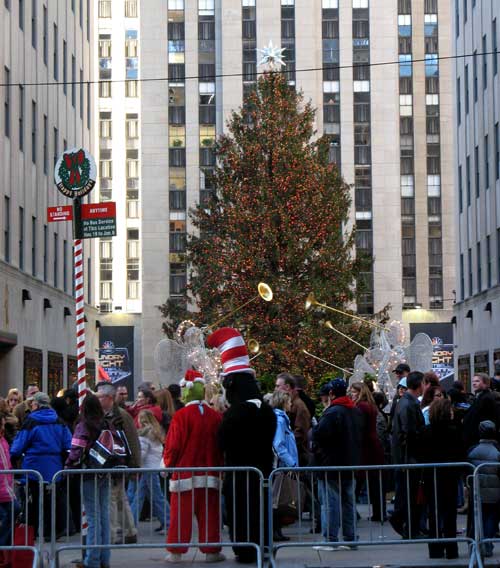
The Rockefeller Center Tree (and two special guests) — NYC holiday tradition since 1931:
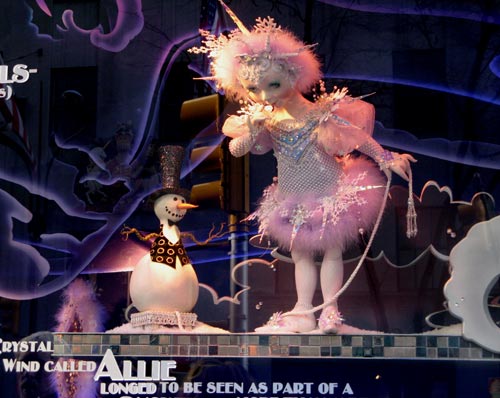
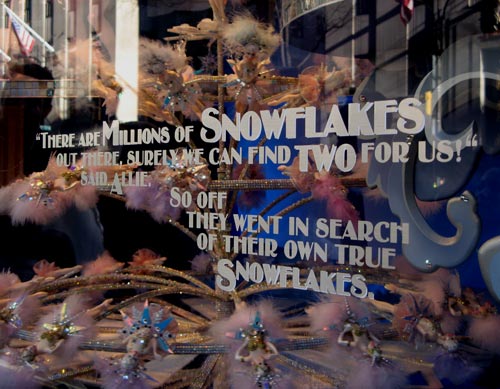
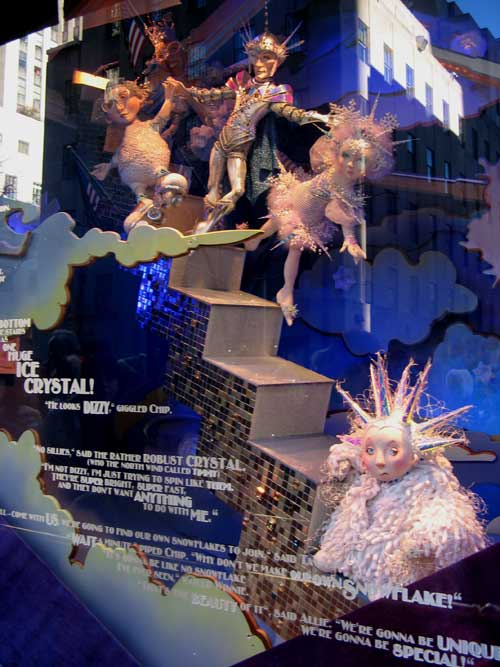
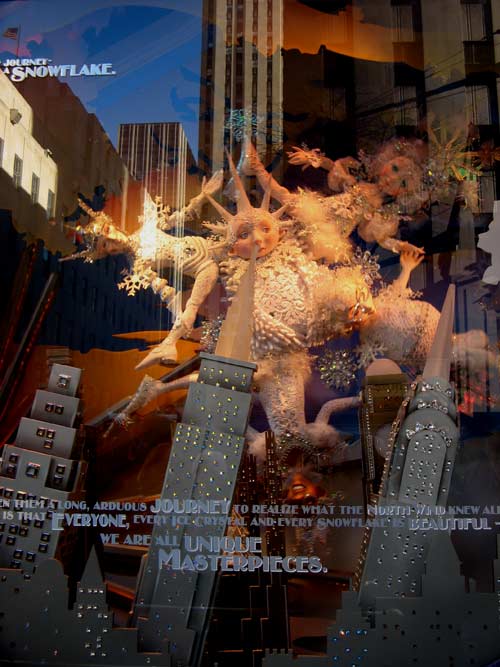
Across the street, velvet-roped crowds admired the Saks holiday windows. This year’s six-frame display tells the story of five misfit ice crystals (Allie, Tay-Tay, Chip, Winnie and Timmy) as they journey and dream of becoming part of the perfect snowflake. The Art Deco-inspired windows glitter with thousands of Swarovski crystals against shades of white, silver and pastels. The final tableau shows the five new friends merging into one snowflake, over animated, sparkling replicas of the Rockefeller Center, Empire State and Chrysler buildings — the whole greater than the sum of its parts.
Walter Mirisch produced six decades of Hollywood films which combined have earned eighty-four Academy Award nominations and twenty-eight Oscars. For the month of December, the MoMA is screening a selection of Mirisch’s productions, including Some Like It Hot (1959), The Magnificent Seven (1960), The Great Escape (1963), and the Best Picture Oscar winners The Apartment (1960), In the Heat of the Night (1967) and this afternoon’s feature West Side Story (1961).
West Side Story is one of my favorite musicals. My parents have the 1957 Original Broadway Cast recording — with the original, uncensored Stephen Sondheim stage lyrics — on vinyl. As a girl, I listened to that record over and over, eventually committing all the songs to memory.
I had picked up three tickets to the MoMA screening, so after Mom and Dad dropped out that morning, SYB stepped in for the matinee.
Director Robert Wise opens the movie with that famous establishing overhead shot of Manhattan, a helicopter effect he would repeat over the Alps for the opening of The Sound of Music (“The Hills are alive….”) The elaborate opening dance numbers, with their snort-inducing depiction of street gang tensions (“Sharks!” “Jets!”) were filmed on location among the dilapidated tenements that once stood over the current site of Lincoln Center. The demolition of those buildings was delayed to accommodate the filming of the musical, which went on to win an almost-record 10 Academy Awards. (The Broadway show lost all the major Tony awards to the lighter and far more traditional The Music Man.)
The familiar Romeo and Juliet story, the athletic Jerome Robbins choreography, the eminently singable score by Leonard Bernstein — it all came flooding back. Most know that Natalie Wood’s singing was actually dubbed by Marni Nixon, who also recorded the songs for Audrey Hepburn in My Fair Lady (1964) and years earlier, for Deborah Kerr in The King and I (1956). As a singer, Nixon was famous in Hollywood for being invisible, earning herself the nickname “Ghostess with the Mostess.” She did not begin to be fully credited or widely acknowledged until the movies’ subsequent release for home viewing audiences decades later.
In addition to dubbing Wood’s singing, Nixon stepped in to dub Rita Moreno’s high-register part in the “Tonight” quintet, effectively dueting with herself in the two female roles. That dubbing assignment prompted Nixon to request payment of film royalties. When the movie and record producers refused, Bernstein generously ceded one quarter of one per cent of his own royalties to her.
Fun trivia fact (for SC): Nixon’s son, Andrew Gold, wrote “Thank You for Being a Friend,” perhaps best known as the theme song to The Golden Girls.
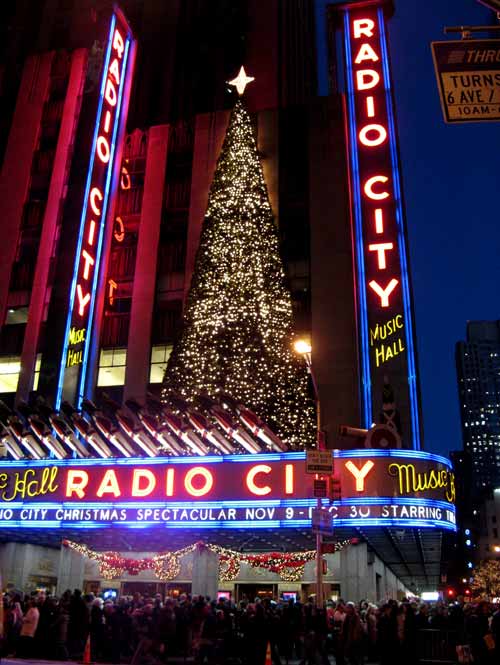
Two weeks before Christmas. The photos speak for themselves, I think.
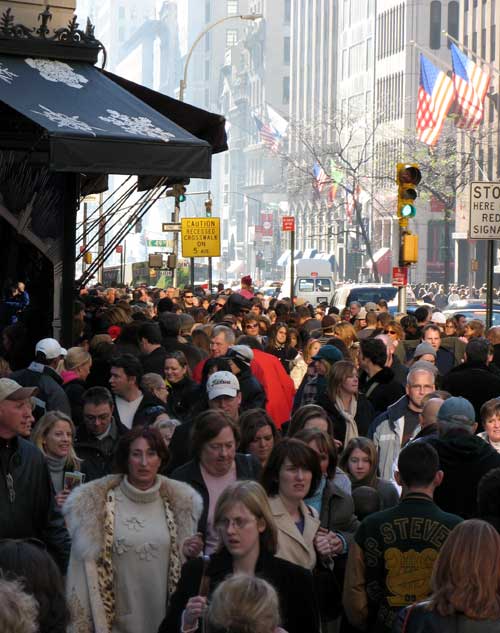
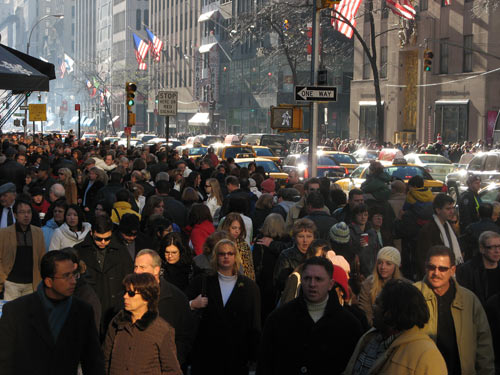
Should I give up trying to be original? Or should I just try to be more timely with my posts?
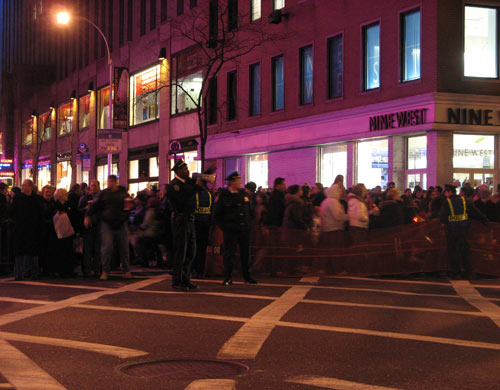
This year the NYPD began employing these bright-orange mesh banners for better crowd control at the busy Midtown intersections, similar to those used for rounding up demonstrators during the Republican National Convention in 2004.
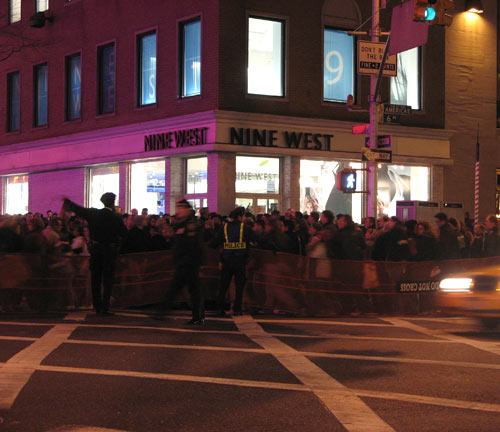
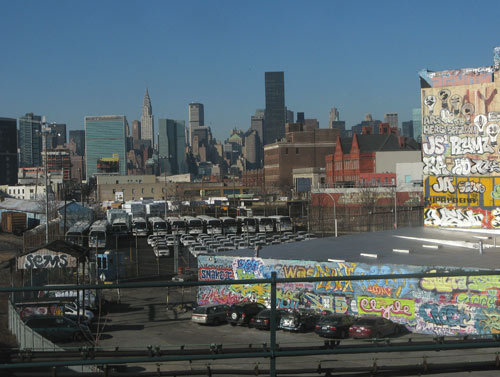
On the 7 out to Queens, and an alternate view of Midtown and the 5 Pointz “Institute of Higher Burnin” in Long Island City.
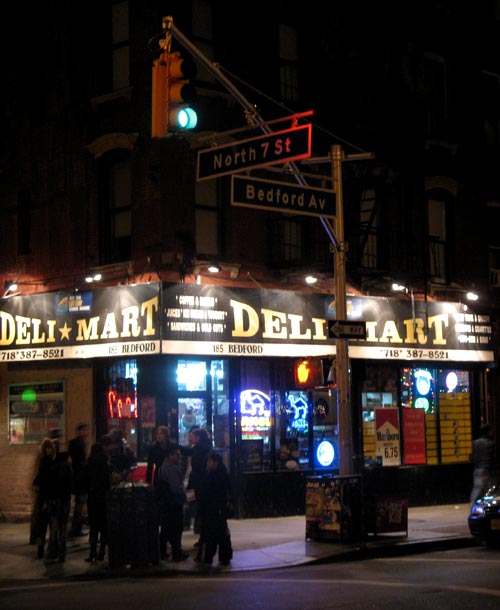
I headed back home in the late afternoon — ah, so this is what it feels like! — to throw together Bobby Flay’s Smoky Red Pepper and White Bean Dip before dashing off to meet SYB for the ride to MC’s holiday party. We hopped off the L at Bedford and emerged at the epicenter of hipster Williamsburg.
Despite getting to MC’s about 45 minutes after the appointed party start time, we were among the first guests to arrive. Her loft was welcoming and warm with the scent of mulled wine, a.k.a German Glühwein, French vin chaud, Scandinavian Glögg… whatever you call it, the brew is one of my favorite wintertime drinks.
Mulled wine takes about as much effort to make well as to make poorly. At its worst, the taste can be reminiscent of Robitussin: sickeningly sweet, over-spiced — those supermarket spice bags are best left for potpourri — with a harsh sting of alcohol. At its finest, the wine is warm (not boiling), modestly sweet, lightly spiced and faintly fruity. A splash of brandy, port, or cassis liqueur finishes things off nicely. No need to break out the most expensive bottles either; as with sangria, the cheap stuff will do just fine.
The guests began rolling in, adding their contributions to the groaning buffet table. ‘Tis the season to reunite with old friends and to re-introduce myself to not-so-new friends (whoops). Also to make some new acquaintances, while bonding over mutual love of 5-star samosas and Chelsea galleries.
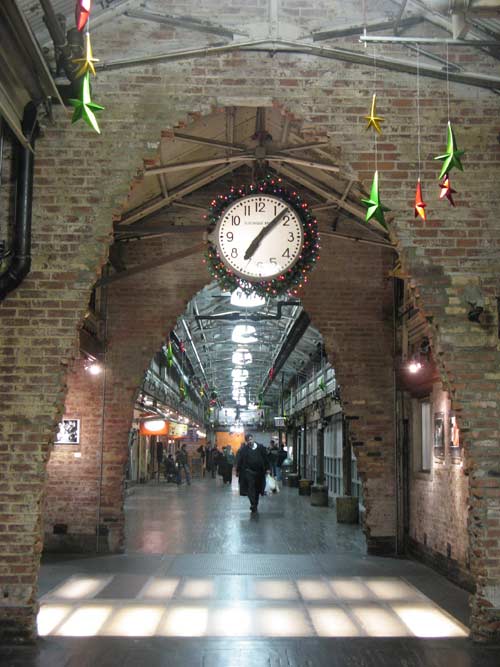
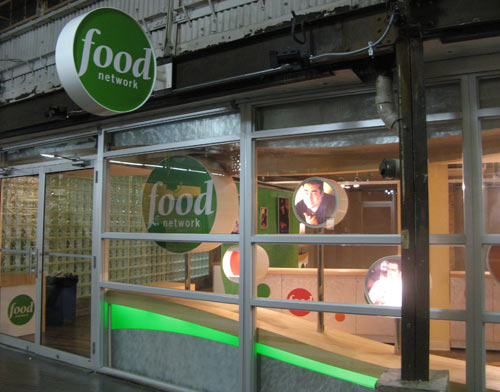
Back at Chelsea Market for dinner before Asian Cinevisions 2006 at the MoMA.
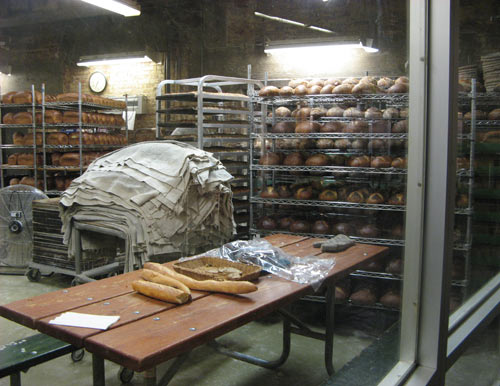
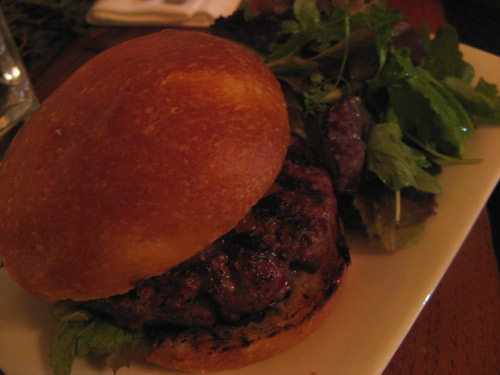
The Green Table‘s wonderful hamburger, made with Lewis Waite grass-fed beef on an Amy’s roll (natch — see bakery photo above), served with housemade tomato relish and pickled onions:
Lelaki Komunis Terakhir (The Last Communist) is the latest film by Amir Muhammad, one of Malaysia’s leading independent filmmakers. He has described the unconventional work as a “semi-musical road movie documentary,” based on the life of onetime leader of the outlawed Malayan Communist Party Chin Peng, tracing the towns in which he lived from birth until national independence in 1957. The Last Communist was to have been the first local documentary slated for theatrical release in Malaysia. Instead, two weeks before its May 2006 opening, after conservative Malay-language daily Berita Harian published a series of articles denouncing the film as a glorification of Communism, it became the first Malaysian film to be banned by the Malaysian Home Ministry.
Previous bans had earned the censorship board a reputation for being overzealous: Daredevil was banned for its satanic-sounding title; Mighty Morphin’ Power Rangers for seeming to promote an illicit (if naturally occuring) drug. (Never mind that both were wretched films anyway.) Episodes of Friends have been censored for portraying “casual sex, promiscuity amongst youth, pregnancy outside the institution of marriage and prostitution.”
Three months earlier, the Malaysian Film Censorship Board had passed The Last Communist without cuts, despite the potentially problematic title; the subject of communism is taboo in Malaysia, a legacy of the Malayan Emergency (1948-1960), when British, British Commonwealth and Malay forces battled the army of the Malayan Communist Party. One Malaysian government minister defended the ban, claiming the film was not violent enough and therefore, a misleading representation of both Chin Peng and the period. The saga was the subject of much media coverage, including the New York Times feature story, “Your Film Is Banned. There’s Not Enough Violence.”
Amir published a long and detailed defense of his film, including a summary of the campaign that was launched against him, on the film’s blog. While local production company Red Films and the filmmaker have attempted to appeal the Home Ministry’s decision, the ban remains enforced in Malaysia, where possession of the film constitutes a criminal offense.
Lost in all of the controversy is whether The Last Communist is actually any good. Certainly as a “multilingual documentary that explores the diversity and plurality of contemporary Malaysia” (Amir’s words), it shows a facet of the country that few get to see in the KL-centric media. The specially-composed cheery songs about such topics as malarial renal failure and government issued identification cards are an amusing parody of popular propaganda anthems. Chin Peng himself is conspicuously absent — never appearing in film or photograph, and mentioned by name only once. What remains behind is a quirky (and until the end, not particularly political) record, offering a slice-of-life portrait of how ordinary people live in modern-day Malaysia.
First late-night Thursday. But before heading uptown, I stopped in for the grand opening of the Crumbs Bake Shop flagship store on 8th Street, between Broadway and University — deep in the heart of NYU territory.
The new shop is touted as more of a café than its other three NYC locations — there’s a fourth in East Hampton — with ample seating, late night hours, Wi-Fi access and a tapas dessert menu.
After a writeup in everyone’s favorite NYC blog touting “Free Cupcakes!” on opening day, I was half-expecting a mob scene among the baked goods. The atmosphere inside, though, was remarkably civilized — perhaps due in part to the late-ish hour, or the very mini nature of the mini-cupcake samples.
I recognized some of the offerings from the shop on the Upper West Side, including the elusive Red Velvet cupcake.
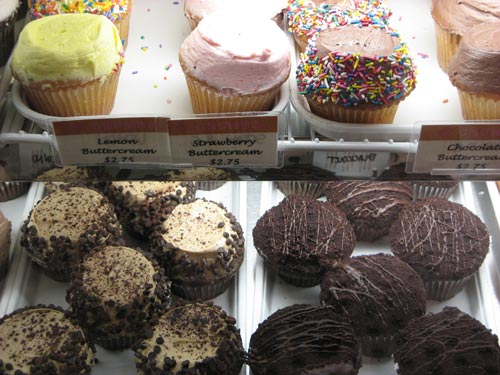
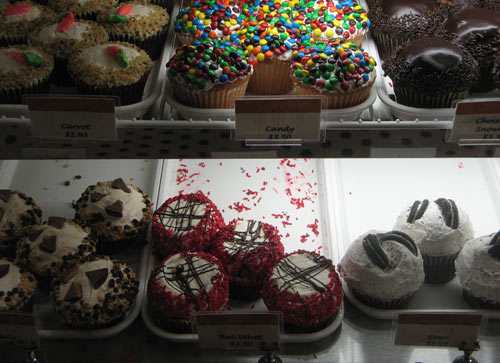
The proliferation of cupcake shops around town predates the New York Times feature from 2003, the year Crumbs hit the scene. Thank (or blame) Sex and the City for the renaissance.
And although Crumbs was not a player, all this calls to mind the New York Magazine piece on the “Cupcake Wars” that came out a year later, focusing on the lawsuit between Jennifer Appel, owner of Buttercup Bakeshop (and former co-owner of West Village bane Magnolia Bakery) and her former Buttercup manager, Mark Libertini, over the opening of his copycat Little Cupcake Bakeshop in Bay Ridge. Oh the drama!
One of my favorite things is Doufu fa, which translates literally (if somewhat inexplicably) to “tofu flower” or less poetically, to “bean curd dessert.” The silken soy-based dessert — similar in texture to a very soft, creamy gelatin — spooned fresh from a deep, steaming steel or wooden pot and served with a slick of sweet ginger syrup seems to me one of life’s great, simple pleasures. Of late, I’ve been getting my fix from the Tofu Man — for lack of a better descriptor — who sets up shop(ping cart) on the West side of Centre Street, just South of Canal. Tofu Woman runs a similar operation at Chrystie and Grand Streets, in front of the B/D subway entrance.
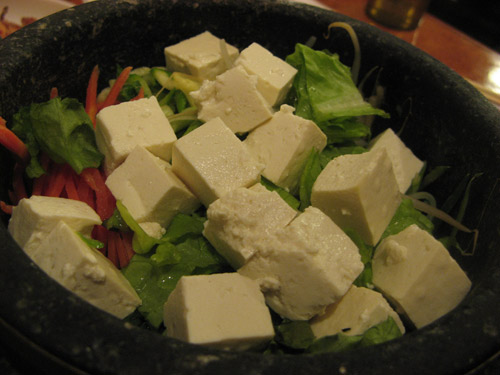
On the savory front, I like the quintessential Sichuan dish Mapo Doufu — silky chunks of creamy tofu with a scattering of ground pork in a spicy, peppercorn sauce. (When are we going back to Spicy & Tasty?) The New York Times ran a piece on fresh tofu last year in which Julia Moskin described what struck me as a Korean iteration of this dish in soupier form: the Soon Dubu. Since then, I’ve been a bit obsessed with sampling the different versions from the Koreatown purveyors along 32nd and 35th Streets.After spending the day holed up in the apartment, a big bowl of steaming spiciness sounded like a perfect remedy on this chilly day. I met the B brothers at Seoul Garden, a 24-hour restaurant whose signature dish, “natural tofu” soup (on the menu as Soon Tofu ) is available in 4 levels of spiciness.
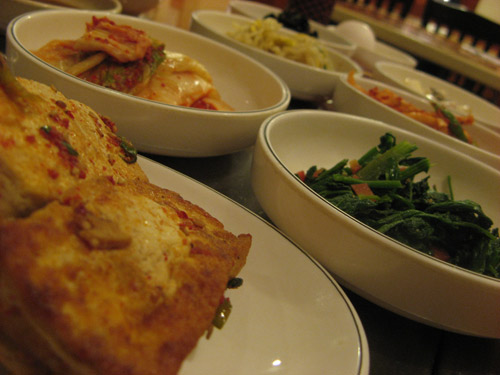
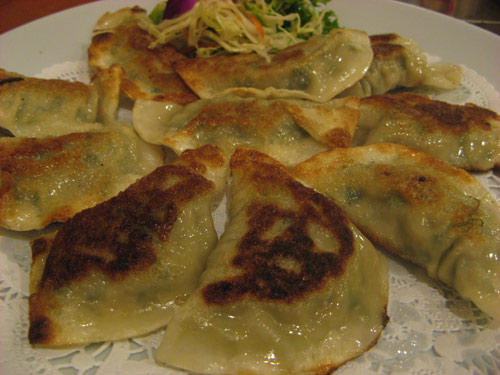
Kun Mandoo (Fried Beef dumplings):
Tofu Dol Sot BiBimBap:
Seoul Garden’s pride: the Soon Tofu — which arrived bubbling and bursting with steam in its stone pot (dol sot).
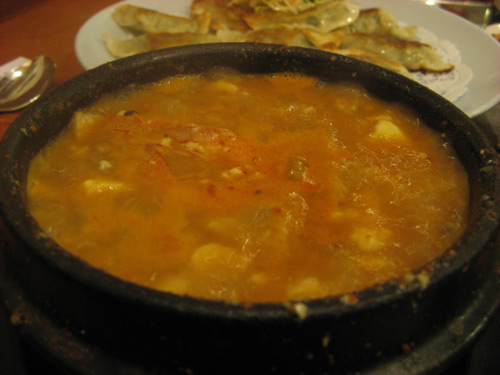
Stomach-warming and sinus-clearing, if not cancer-preventing. Thanks, HYB!
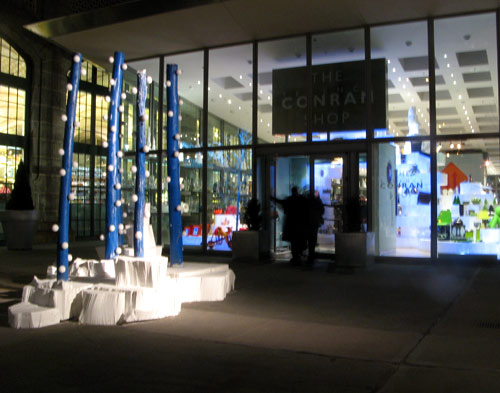
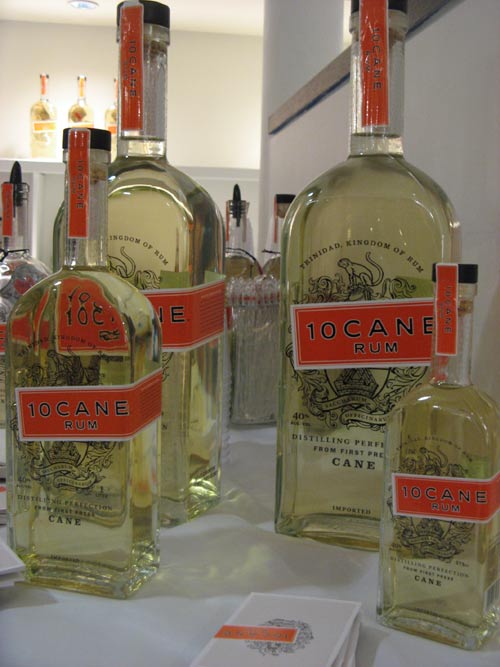
Pre-concert shopping event at The Conran Shop — all decked out for the holiday season. MarieBelle Chocolates and 10 Cane Rum concoctions added to the festive feel in the air.
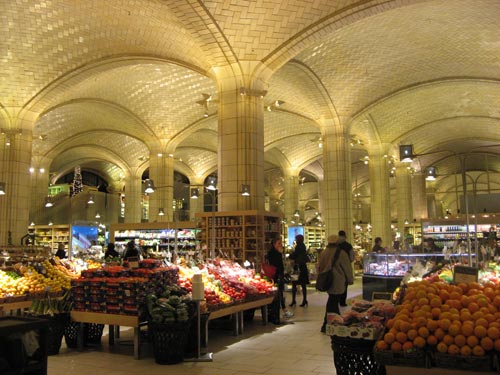
A quick stop at the adjacent Bridgemarket — the cathedral-like space beneath the Queensboro Bridge adorned with a canopy of Guastavino tile vaults — so named for Barcelona architect Rafael Guastavino, who pioneered the adaptation of a centuries-old building technology in which long flat tiles are laid and mortared together with a special mixture of cement and sand. Guastavino vaults can be found in several impressive interiors, including the eponymous Guastavino’s restaurant, the Oyster Bar at Grand Central Terminal, the U.S. Customs House and the Registry Room at Ellis Island.
And then to Carnegie Hall to see Joshua Bell, who would be performing the Brahms Violin Concerto that night. The ride on the crosstown bus was typically interminable, but we arrived with spare minutes to scarf down our dinner wraps in a vestibule across the street.
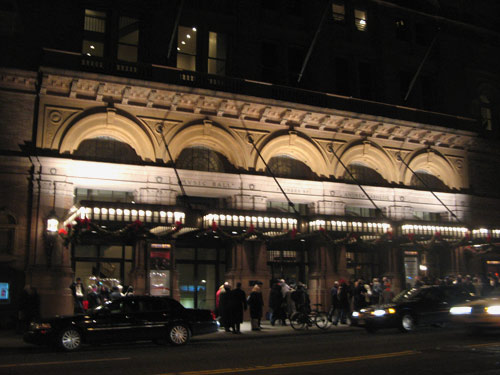
From our seats in the Dress Circle:
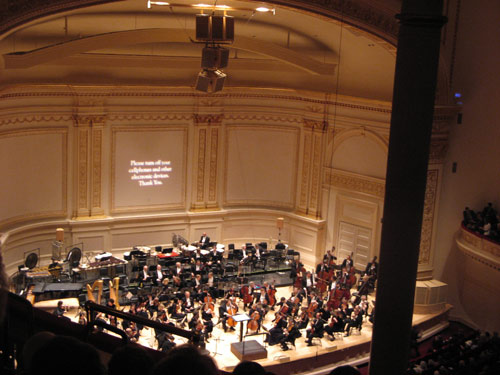
The concert began with Beethoven’s Coriolan Overture, Op. 62 and the New York premiere of Russian composer Sofia Gubaidulina’s Feast During a Plague — a work co-commissioned by the Philadelphia Orchestra and the Pittsburgh Symphony Orchestra (the latter of which was performing tonight.) SYB made a new friend with his droll commentary on the immense ensemble, and its large arsenal of percussion.
In his introduction, Sir Andrew Davis — no relation to conductor Sir Colin Davis — described the piece as “cataclysmic,” with its horn fanfares, growling brass, shrill bells and wailing strings. About halfway through the piece, a pre-recorded sound was introduced; a startled murmur rippled through the Carnegie Hall audience as the speakers blasted a completely unexpected techno beat — as if a convertible full of rowdy clubgoers had rolled in through the middle of the performance, blaring their tunes, stopping briefly before driving on. The beats reappeared in short bursts a number of times, as the orchestra continued on its path, before ultimately wrestling the rude intruder into submission.
After the intermission, the evening’s highlight: Josh Bell, performing one of the most important and technically demanding works in the violin repertoire. The Carnegie Hall program notes explained how Brahms, being a pianist and not a violinist, consulted his friend, violin virtuoso Joseph Joachim on the score in progress, asking him to “mark those parts which are difficult, awkward, or impossible to play.” (Ultimately, though, Brahms ignored some of Joachim’s suggestions for simplifying the violin part.)
Bell entered the stage like a rock star — clad all in black, with an open fronted shirt — and attacked the piece with great dexterity and passion. Always a joy to see and hear.
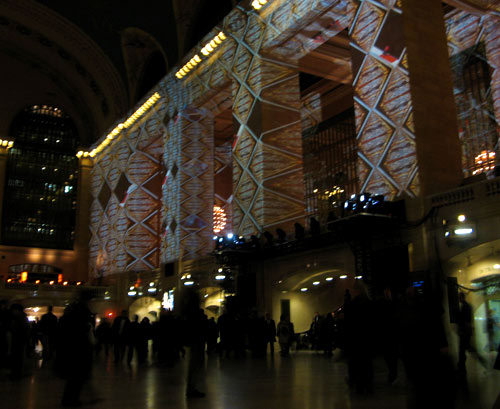
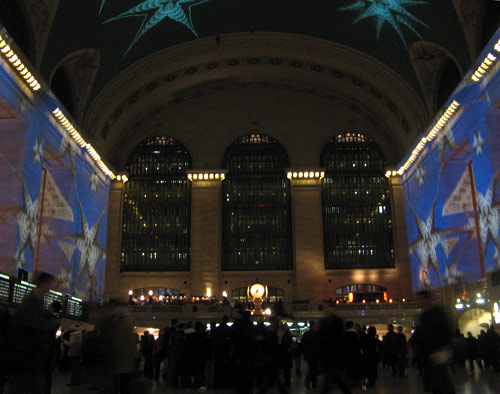
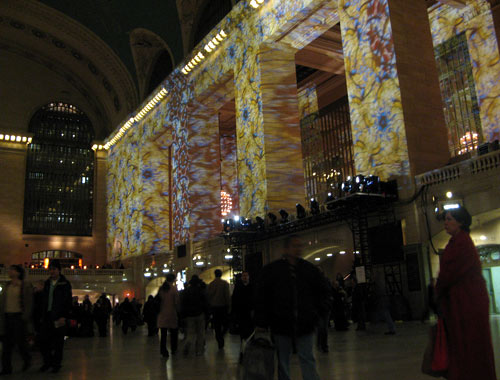
On my way to this evening’s event, I stopped in to view The Grand Central Kaleidoscope light show. Every half hour from 11:00AM to 9:00PM, a seven-minute show accompanied by synchronized music illuminates the walls and pillars of the main concourse in a huge kaleidoscope of color and light.
As if there weren’t excuse enough for visitors to Grand Central to look anywhere but where they’re going — and to hold up traffic by snapping photographs! The brilliant, shifting display nonetheless offsets some of the frustration of late trains and crowded platforms.
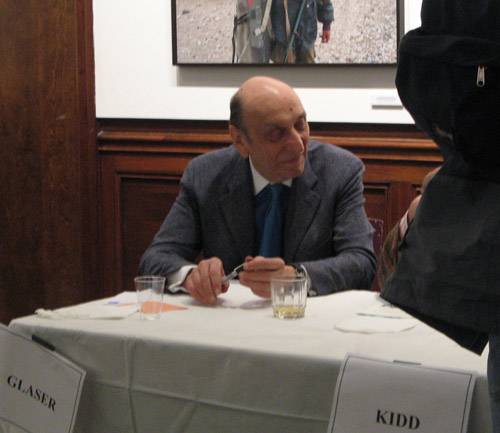
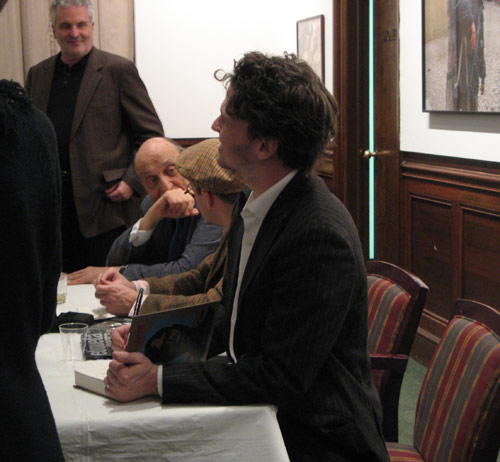
Back at the 92nd Street Y for “The Art of the Book: Behind the Covers with Dave Eggers, Chip Kidd and Milton Glaser,” part of the Unterberg Poetry Center Reading Series. The night was organized around three presentations focusing on cover jacket design by luminaries Milton Glaser, Chip Kidd and Dave Eggers, with introductions by Michael Bierut of Pentagram.
A capacity crowd filled the Y auditorium that night, to the surprise of each of the presenters. Who knew graphic designers could be such a draw?
And so funny? Glaser — best known outside the design industry as the founder of New York magazine and the man behind the “I (heart) NY” logo — was dryly witty and low-key, presenting highlights from his decades-long career. The prolific Kidd, longtime art director at Alfred A. Knopf, presented his covers from the past year. He was deliciously bitchy in his description of the design process: slaying the audience with his comments, at times made at the expense of the authors with which he was tasked to work: John Updike apparently — and distressingly — “studied typography briefly in college”; Cormac McCarthy suggested that his name be left off on the cover of The Road. Eggers, the last presenter of the evening, received the loudest applause, as the speaker whose name recognition furthest extends beyond the design world: as novelist, editor, publisher, and teacher at the writing workshop 826 Valencia. His talk was less about covers than about the process of designing and making books: selecting layouts, binding, materials, etc. One run of McSweeney’s Quarterly Concern was printed in three different colored versions (blue, brown, yellow) when a printing deadline loomed and the Icelandic printer didn’t have enough yardage of one cloth for an entire run of covers. For Issue #7, the rubber band binding the story pamphlets had to be run through a home washing machine before shipping to eliminate any powdery residue after the post 9/11 Anthrax scare. The youngest presenter of the evening, Eggers is apparently also the most technology-averse, claiming he relies almost exclusively on the Garamond font because he can’t quite master the type feature in his circa-1999 version of QuarkXPress.
Wonder what the assembled group would think about the DIY My Penguin series: six classic novels published with blank fronts, for readers to design their own covers.
I would have blogged further about Glaser’s misguided feminism during the post-presentation panel, but Gothamist beat me to it. Again — I guess that what comes of being a couple weeks behind in your entries. The mood of the crowd shifted tangibly, and there were a few muted hisses, after Glaser stepped into the thicket by attempting to answer one audience member’s query about whether a glass ceiling exists for women in graphic design. Glaser was clearly foundering when Chip Kidd attempted to lighten the mood by interjecting, “As Larry Summers once said…” referring to remarks made in 2005 by the then-president of Harvard, suggesting that women are handicapped as scientists because as a group they are innately deficient in mathematics, compared to men.
At the post-event reception, Eggers’s line was the longest by far, but half an hour later, I got my copy of What is the What signed by the friendly author. This week, I started reading the riveting “autobiography” of Sudanese “Lost Boy” Valentino Achak Deng, who recounts stories of the journey from his destroyed village in Africa to a sort of refuge in Atlanta, Georgia.