vip in the city, page 52

A Beautiful View

Attended the Public Theater’s Under the Radar Festival, a showcase for cutting-edge theater.  Now in its third year, the ten-day festival stages experimental works from across the country and around the world in the Public’s own spaces, and at their partner theaters downtown and in DUMBO.

I stopped in at the box office during lunchtime to pick up tickets for a couple of the offerings this week.  Despite a fair amount of coverage in the usual media outlets, seats were still available for that night’s show, and sure enough, when I returned later that night to the main floor Newman Theater, I had my pick of general admission seats.  I settled in, second row center, to enjoy A Beautiful View.
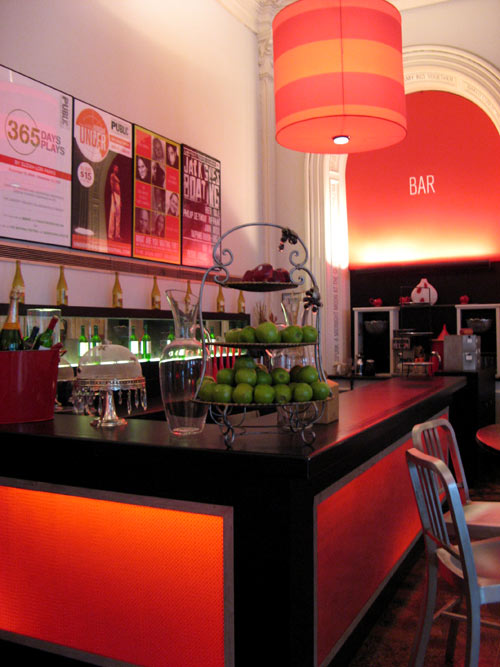
Public Theater Bar 

The thing about experimental theater is that it carries with it the potential for both the sublime and the unwatchable.  Tonight’s piece was written and directed by Daniel MacIvor, a Canadian actor, playwright, film director, and theater director (of the Toronto company Da Da Kamera) — a provenance which seemed to bode well for the quality of the production.  But really, there was no way to be assured of it in advance.

The darkened stage stood barren of all accoutrements except for a tent and a couple of folding chairs.  A boombox emitted loud cricket sounds as two unidentified, unremarkably dressed, 40-ish women entered the stage separately and just… sat there.  For what felt like an eternity, they sat facing each other, immobile, staring, not staring.  At last, one spoke.  Their clipped exchange was heavy with pauses and carried the tense undertones of estranged lovers.  Which we couldn’t entirely be sure they were.  My heart sank just a little as I braced myself for a lo-o-o-ong night.
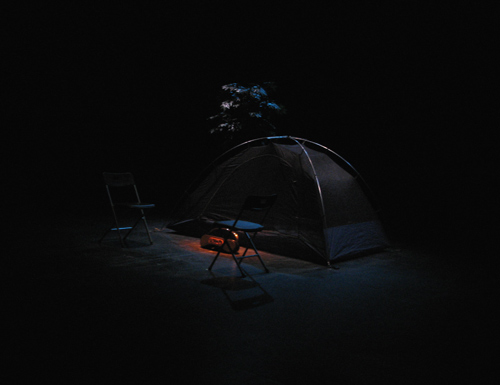
A Beautiful View Stage 

But then, their story began to unspool in a series of flashbacks, interspersed with quick asides to the audience. Each brief episode advanced the complicated relationship between these two women, from their initial, fib-filled, random meeting at a sporting goods store in their 20’s, to their subsequent less random meetings over the next couple of decades, which — like so much of human interaction — were littered with romantic entanglements, miscommunications and missed opportunities. The play’s structure easily moved the protagonists back and forth through important moments in their on-and-off friendship, muddled by a sexual tension that each, in her own ways, was ill-equipped to understand. One of the most compelling aspects of A Beautiful View  was the way it played with relationship labels and the women’s fixed notions of identity, exploring the inadequacy of easy categorizations; at one point, each of the ostensibly heterosexual women (brilliantly captured by actors Caroline Gillis and Tracy Wright) observed to herself of the other, “Oh…she’s a lesbian.”

Filled with sly humor, quick-witted dialogue and occasional moments of heartbreak, A Beautiful View  was a wonderful bit of theater that dared to take on the weighty issues of love and relationships, and the emotional dynamics between two people forced to face their greatest fears and insecurities.

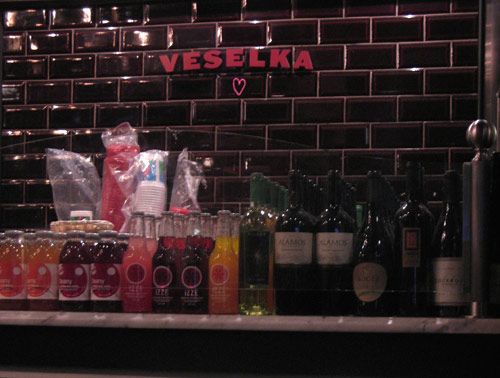
Afterwards, a post-show dinner of steamed pierogis at Veselka for their touted “Ukrainian soul food in the heart of the East Village.”  The sign posted outside advised diners that the 24-hour restaurant would be closing that night at 11PM for its monthly cleaning.

Maybe it’s because I have sanitation standards on the brain, but I interpreted the announcement to mean that just then, the restaurant was dirtier than it would be for the next few weeks.  Does that make me a glass-half-empty kind of person?
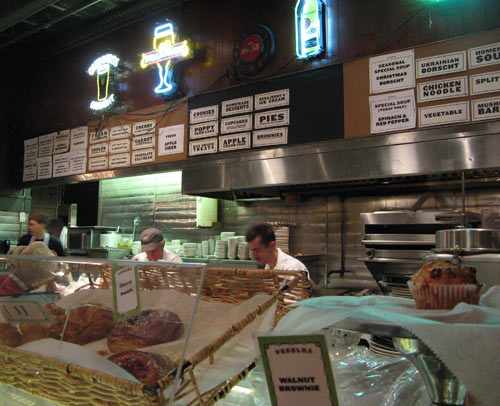
Veselka

Veselka

The God of Hell

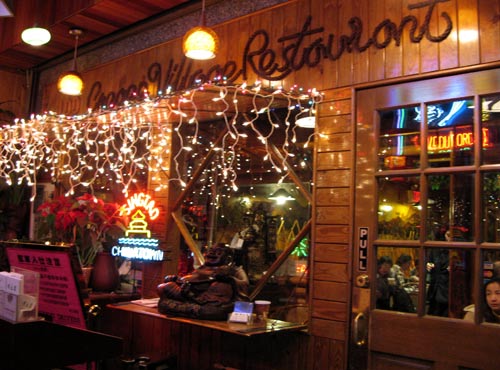
Back at Congee Village for a some pre-play dining. PD and I were waiting in the bar area when SC & JG raced in from their busy day of home hunting. With our entire party accounted for, the hostess seated us in the mezzanine dining room: all exposed brick and bamboo.

Our dinner was tasty and, as usual, an amazingly good value: our meal of Scallion Pancakes, Sauteed Snow Peas Leaf with Garlic, Seafood with Fish Maw Soup (accompanied by a dish of red rice vinegar — one of my favorites!) and Sliced Beef with Black Bean Sauce Chow Fun Noodles, set us back less than $15 apiece.

Congee Village

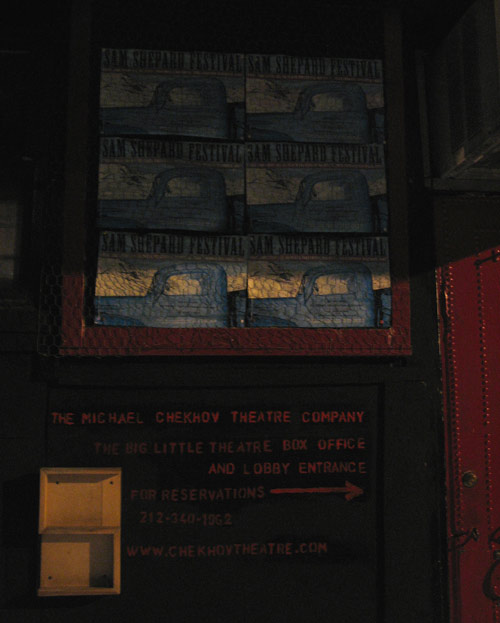
We braced for the cold walk east to a pocket of the Lower East Side I rarely explore: just north of the Williamsburg Bridge, south of Houston. SC observed that we could be in another city entirely, with the lack of recognizable landmarks; earlier, I had to map the address of the Big Little Theatre on Ridge Street to know where exactly we were headed. “Google maps is the best!” But there it was: nestled among the brick tenements, marked by a vintage sign alluding to the space’s former incarnation as “Arthur’s Dress Shop” (with a missing “R” replaced by a crude plywood cutout.)

The quiet street has not (yet) been overrun by the trendy bars and clubs that have made the Lower Eastpacking District and particularly, nearby Clinton Street, a dining destination in recent years with new restaurants cropping up every few months.

JS, whom I met for the first time this night, was directing tonight’s production of The God of Hell  as part of the Michael Chekhov Theatre Company’s Sam Shepard Festival. The company is presenting every one of the Pulitzer Prize-winning playwright’s (45+!) works in this 20-month festival, which runs through December 2007.

The farcical political comedy was written by Shepard as a response to the post-September 11 political climate. Clearly intended as a criticism of the Bush-Cheney administration, the play debuted in previews barely a week before the 2004 presidential elections — probably too late to have deep impact on the voters’ minds. It was first produced at The Actors Studio Drama School by a cast that included Tim Roth and Randy Quaid. The work has since played in London, DC, San Francisco and Los Angeles (where it was directed by Seinfeld alum Jason Alexander.)

The three-scene story revolves around a rural Wisconsin dairy farmer and his wife, and how their peaceful middle-American life is tranformed into an Orwellian nightmare by a mysterious, ultra-patriotic government employee who descends on their farmhouse unannounced and in pursuit of the couple’s visiting guest. Along the way, there are sly, euphemistic references to military secrets and torture (i.e., “aggressive interrogation”) and covert medical experimentation; the title itself is a coded reference to plutonium.

JS made some savvy modifications to the play for this NYC production (running through February 11), which PD had keyed me into before dinner. Notably, he opted to cast the farming couple as dark-skinned South Asians with distinct non-native accents. Without making any other adjustments to the plot or script, the shift underscored the current culture of suspicion that surrounds non-whites in this country, rendering the already aggressive scenes far more tense and disturbing.

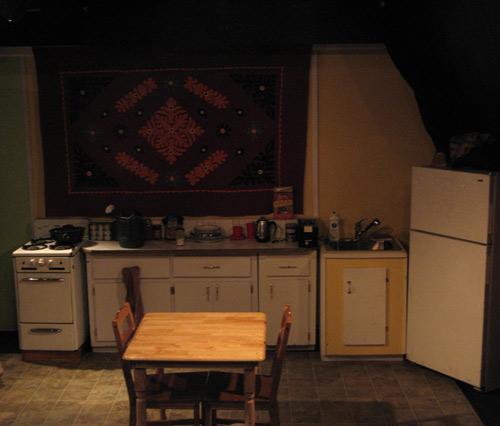
God of Hell Stage

Big Little Theatre

Say cheese

Oh, MePa… how you once drew me. But no longer.

This once-cool, gritty Manhattan industrial neighborhood — ruined, ruined! There was a time when underground clubs shared the warehouse-lined streets with bloody-aproned butchers and long-legged transvestite prostitutes, but those eventually ceded way to hipper-than-thou hotels, trendy restaurants and wispy fashionistas tottering around the cobblestones on their Christian Louboutin stilettos. Not to mention the cheesy, overplucked, overglittered tourists that descend en masse Thursday through Sunday nights. The void remains. What’s left?

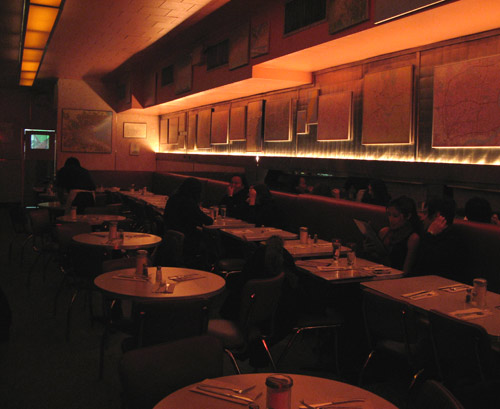
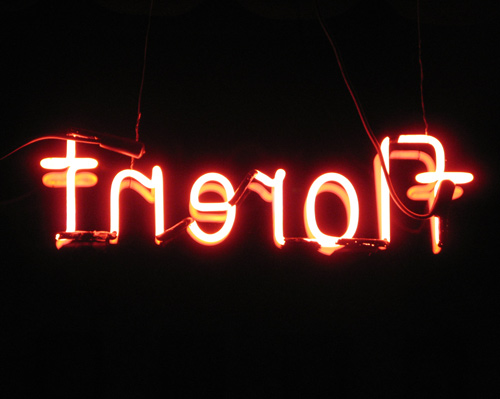
Florent — the stalwart beacon of pink neon on Gansevoort, from which the last of the packing plants have all but disappeared. Owner Florent Morellet opened the small bistro in an American diner space back in August 1985, which makes Florent older than the average club kid.  This late-night haunt, above which the original vintage diner signage still hangs, planted its roots long before the district was ready for prime time. Though the clientele has shifted over the years — in 2003, Morellet began employing a late-night doorman to screen out the most drunken customers — the place remains for the most part, unchanged. And among the trendsetters, i-bankers and fashion editors, you’ll still spy the occasional drag queen scarfing down omelettes, burgers, lentil salads, steak frites, mussels and escargots at all hours of the night.

The place is not without its quirks, but after abandoning the too-chaotic birthday party at G2, it seemed the perfect place to wind down our night. We hit before the post-last call rush and had the dimly-lit eatery mostly to ourselves. Since it was after midnight, we were able to order a round of grilled cheese sandwiches. The buttery, cheddary goodness and hot, crispy fries served as the ideal accompaniment to our musings on the vagaries of love.

Florent

Florent

Nick knows

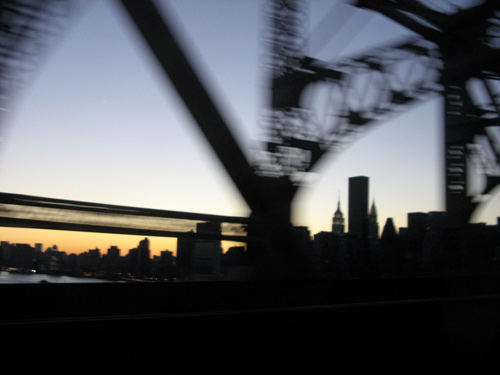
The city seen from the Queensboro Bridge is always the city seen for the first time, in its first wild promise of all the mystery and the beauty in the world… “Anything can happen now that we’ve slid over this bridge,” I thought; “anything at all…”

The Great Gatsby, F. Scott Fitzgerald

Queensboro Bridge

First Snow

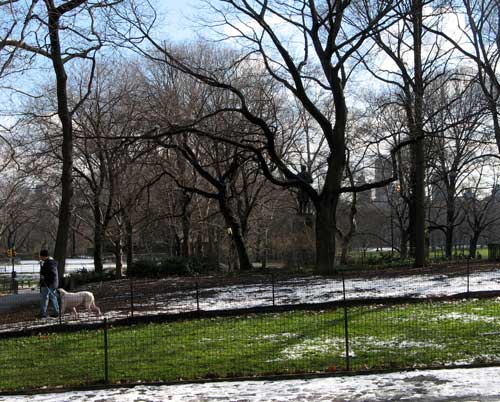
New York City officially recorded its first flurries on January 10, the latest-arriving city snow in 129 years. The flakes blew in on a blustery morning, just days after temperatures hit an absurdly high 72 degrees one sunny Saturday. That first snow came and went, lasting less than 15 minutes, with negligible accumulation. This morning’s dusting lasted just a bit longer, long enough for me to snap these photos in Central Park on the way to work.

Central Park First Snow

Central Park First Snow

By afternoon, the three-tenths of an inch that had managed to accumulate was just a memory.

Later, an orange-themed pot-luck dinner party at the B home. (Can other colors be far behind?) Contributions included RV’s ginger-carrot soup, JS’s vegetarian chili, AC’s corn soufflé, JK’s kimchi pancakes, JL’s clementines, BC’s passion fruit mousse, AH’s carrot cake and HYB’s screwdrivers. After work, I picked up an order of appropriately-hued sweet and sour chicken in Chinatown. Can’t remember the last time I had this quintessential Chinese takeout food.

Sweet and sour meat dishes first became popular in the United States after World War II when Asian cuisines (notably Chinese, Japanese and Polynesian) first piqued the interest of mainstream America. Back then, the dishes — heavily sweetened with the addition of pineapple — were served in the “Polynesian-style” restaurants that were in vogue at the time, think: tiki lounges and pu pu platters. In actuality, such menus were based largely on Cantonese cuisine: egg rolls, chicken wings, beef skewers, fried wontons, spare ribs. From the time when Chinese food was first introduced to the United States in the 19th century (imported by the Chinese immigrants from Canton who began settling in California), Asian dishes intended for American diners were adapted to suit exotic expectations. The emphasis was on basic (often fried) meats and vegetables, with a heavy reliance on standard sauces (soy, sweet and sour). The effect is generally referred to as the “Chop Suey syndrome” — named for the prototypical “Chinese” dish that was entirely invented in America.

Authenticity aside, who doesn’t enjoy a steaming platter of sweet and sour chicken (or pork) every once in a while? Chunks of canned pineapple and battered, deep-fried meat, swimming in thick, gloppy sauce of that day-glo color not found anywhere in nature… Okay, maybe every once in a long  while.

But the true highlight of the evening was the premiere of the B family home movies (circa 1985), recently transferred from Betamax to DVD by JL. Who knew that HYB was such an adorable ham back in the day?

Bullet dodging on Baxter

Burned out by the Financial District lunch offerings, I embarked on an impromptu midday jaunt to Chinatown for some Vietnamese food. SYB met me in the lobby of my building and we hopped on the subway for the minutes ride to Canal Street.

I’d had a couple of good meals at Pho Viet Huong on Mulberry (though not the seven-course beef dinner… yet!) but the intense cold was not conducive to far wanderings, so we decided to hit the Baxter Street restaurants, a couple of blocks from the subway station. This one short stretch is home to a trio of some of the best, no frills Vietnamese restaurants in the city. I always have difficulty deciding upon my favorite of the three, though many Chowhounds seem to like Nha Trangi.e., the one in the middle — best.

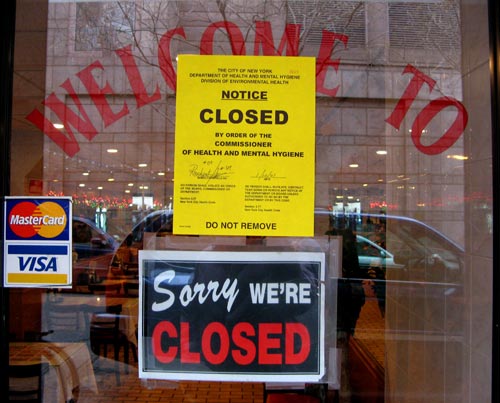
We approached the normally busy lunchtime spot — so popular with the jury duty crowds — to find it eerily quiet. Uh-oh…

No Nha Trang

Well, that settled it: Thái So’n it was. Usually, I prefer New Pasteur just a couple of doors south, but rendered cautious by the imposing bright yellow “Closed by Order of the Commission of Health and Mental Hygiene” notice next door, I opted this time for the ever-so-slightly cleaner and brighter (appearing) venue.

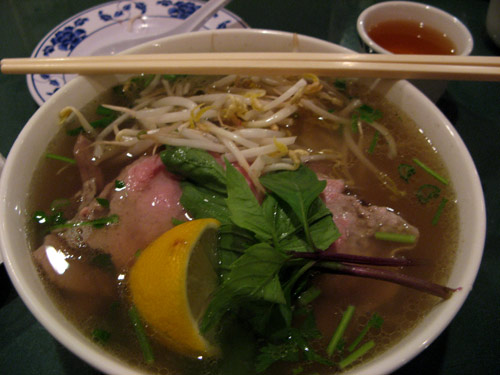
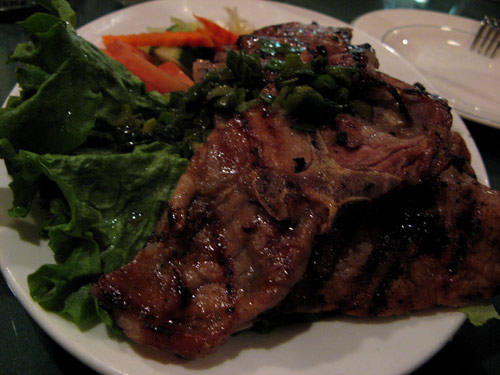
Some warming pho for me; tasty grilled pork chops for SYB. And I’m happy to report: no ill effects for either of us.

Thai Son Pho

Thai Son Pork Chops

For future reference, restaurant inspection information is available on the NYC Dept of Health and Mental Hygiene website. Check up on your favorite restaurant: you’ll be glad you did. (Or maybe you won’t.)

Seraphim Falls

Tonight, an advance screening of Seraphim Falls. First-time feature film director David von Ancken is an alumni of the Gen Art Film Festival, where his digital short Bullet in the Brain had its New York premiere in 2002. The film captures the moment of a bullet piercing a bank robber’s skull while a former teacher revisits poignant episodes in his life. Hypnotic, a global distributor of short films, had streamed the film as original content on its website as part of the company sponsored Million Dollar Film Festival. Von Ancken’s was one of five films selected for the contest’s final round by web voters. A five-member jury awarded Bullet in the Brain the “Most Hypnotic Film” title by considering not only the short but the filmmaker’s feature film proposal. At a special ceremony during the 2001 Sundance Film Festival, von Ancken was presented with a $1 million production deal with Universal Pictures for his first full-length feature.

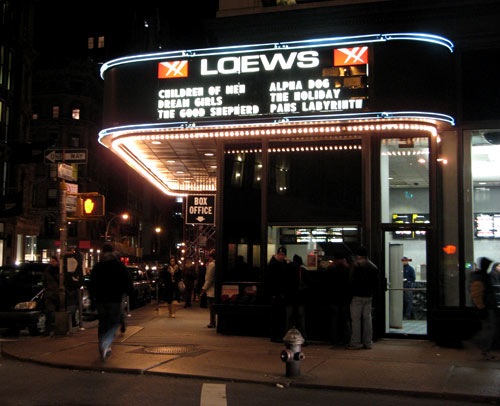
Loews 19th Street

The result is this metaphorical revenge western, starring Liam Neeson and Pierce Brosnan. Brosnan emerges on the screen like a hero from a Jack London novel: fur-clad, feral, and all but indifferent to the fine art of speaking – essentially the antithesis of James Bond. The opening, dialogueless opening sequence shows him shot in the arm like an animal (necessitating some howl-inducing DIY surgery), chased through snowy mountain forests and down a waterfall by Neeson and his hired-gun posse. Over the next couple of hours, in an escalating spiral of bloody violence, you just know the ranks will be thinned until all that remains is a final climactic showdown between the two men. Along the way, there are encounters with the usual cast of Civil War era characters: a hardscrabble pioneer family, Chinese railroad workers (and their brutal Irish overseers), religious missionaries, a trio of fugitive bankrobbers… all shot in a beautifully-shifting scenic backdrop of snow-dusted rocky valleys, icy rivers, woods and scrub and desert, garden and frontier. The cinematography, for me, was the best part of the film. My sense is that the filmmaker intended to build intrigue in this rather rote drama by leaving it mostly ambiguous as to which side of good and evil the protagonists fall. The reason for the vendetta (a war atrocity tied to the titular location) is expositioned through a series of very brief flashbacks and is not fully revealed until about two-thirds the way through the film.

By then, at least among this screening audience, very few cared, having already sat through a lot of intense, squinty-eyed gazing, but precious little dialogue. By the time a heavily made-up Anjelica Huston appears as a snake-oil peddling vision in the desert, those that lasted through to the end had descended into snickers and groans.

Having bid adieu to my partner for the evening in pile-up of popcorn, I passed on the afterparty festivities at new club Ultra, known for its raised 30-person VIP “Tree House” overlooking the main tree-pillared floor. The 3,500 square foot space, which once housed world music venue Satalla, has been tricked out with scent-generating machines and an 80-foot-wide projection wall. Ultra indeed.

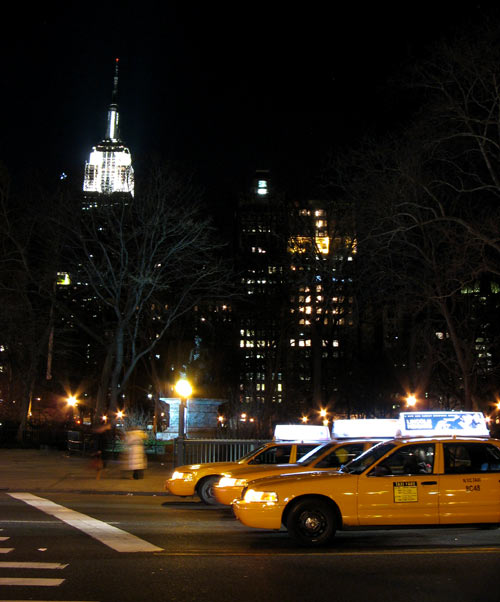
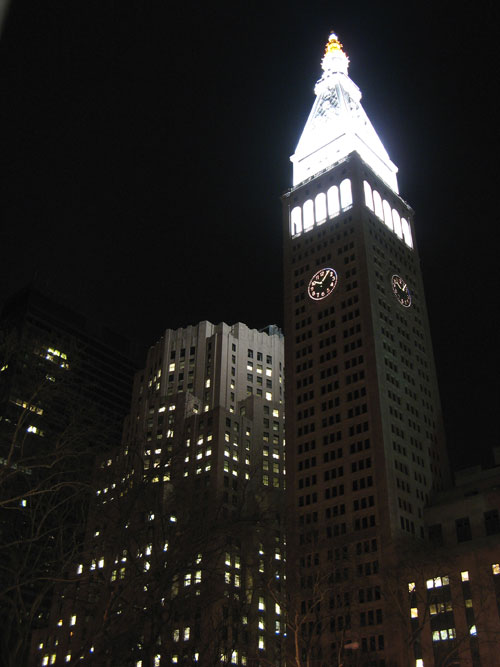
On the way to the subway, past Madison Square Park on a chilly night:

Madison Square Park

Metropolitan Life Building

Balls and berries

At the Bix Beiderbecke building for a home-cooked meal. SYB had meatballs on the brain, so he invited me and JL to his home for an intimate dinner party, a redux of the very first of these gatherings, back in 2004.

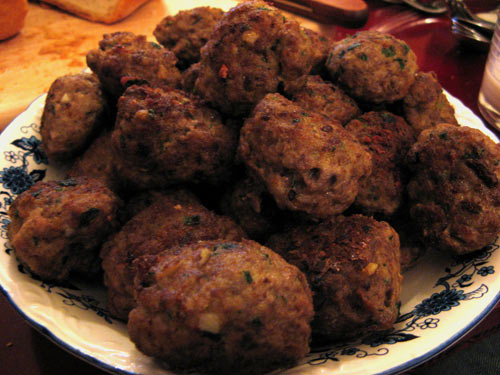
Per my own latest obsession, I whipped us up a round of honeyed nut milks and settled in on the new black leather couches (very bachelor pad!) to catch up on my shows. SYB toiled away in the kitchen, rolling out meatballs inspired by the Bon Appétit recipe: a combination of meats, eggs, parmesan, parsley and garlic. When making meatballs, as with pancake and muffin batter, it’s important not to overwork the mixture, which will result in a tough and dense final product. The balls should be gently shaped, so that they just hold together — not packed hard like a snowball.

SYB Meatballs

SYB did a fine job; he need not have worried about the last minute omission of breadcrumbs. His meatballs were crispy and browned on the outside, juicy on the inside — just as meatballs should be. There’s something to be said about not slavishly following cooking directions anyway. I remember a recipe for meatballs that appeared in The New York Times around this time last year. Writer Julia Moskin had profiled cookbook author and restaurant owner Rick Bayless in a piece about Mexican-inspired alternatives to the traditional nachos and wings for Super Bowl Sunday: “Quick Cowboy Beans,” “Crusty Black Bean-Chorizo Subs” and those “Chipotle Meatballs.” It all sounded pretty tasty. But then, the following Wednesday, the correction:

[A] recipe last Wednesday for meatballs with an article about foods to serve during the Super Bowl misstated the amount of chipotle chilies in adobo to be used. It is one or two canned chilies, not one or two cans. [emphasis mine]

¡Ay carumba! As the correction was printed a full week after the original piece, post-Super Bowl, I wondered if anyone had prepared those meatballs for a party as written. Perhaps that was even how the Times was alerted to the error. Worst meatballs ever!

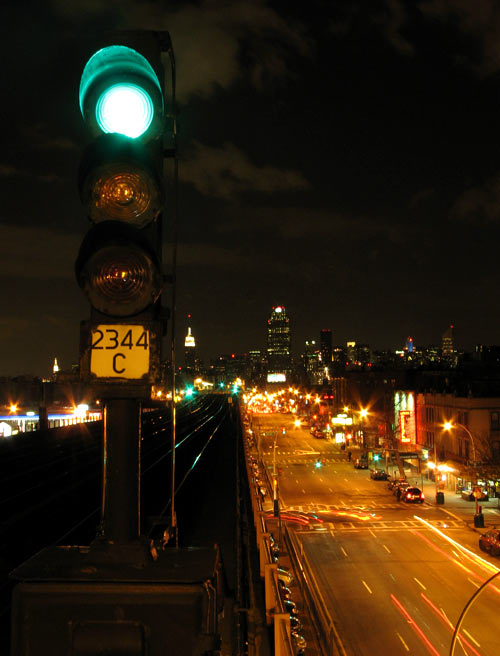
Bliss Street Station

Children of Men

I didn’t have to be in the office today, so I finally had the chance to check out Alfonso Cuarón’s film adaptation of P.D. James‘s dystopian novel Children of Men. I’d come across so many raves of the film that by the time I made it to the theater almost a month after it was released in New York City, my expectations were revving pretty high… which unfortunately, is almost always a set-up for disappointment. But I’m getting a little ahead of myself.

The thought-provoking premise is set in near future London as the human race teeters on the brink of extinction. In a world without hope, city after city devolves into chaos; in the words of one news report, “The rest of the world has collapsed: only Britain soldiers on!” Cuarón has made a richly imagined and stunningly detailed film: from the moving ads on the sides of the double-decker buses, to the disintegrating “London 2012” Olympics logo on Clive Owen’s fleece, to the television ads for suicide drug, Quietus (“You decide when it’s time.”) The bleak mood of the times is brilliantly captured in a fleeting glimpse of crumbling graffito: “Last one to die turn out the lights.”

Without going into too much spoiler detail, the plot essentially distills into a long chase… but what an excellently paced and beautifully shot chase it was. The desaturated colors and high contrast effectively evoke the societal depression of a world gone mad. There are oblique references to contemporary abuses (Homeland Security, Abu Ghraib, Guantanamo-esque internment camps.) Also, a couple of truly astounding tracking shots: one filmed from the vantage point of a speeding car interior involved a special two-axis camera rig and a custom vehicle with a removable windshield; even more impressively, the sequence was filmed entirely without using any composite or greenscreen components. The masterpiece is one extended steadicam shot that serves as the film’s climax. In it, the camera transports the audience along on a relentless nine-minute trek, through a hyper-violent ambush in a crumbling, war-torn refugee camp. Even if you’re not one to notice such things ordinarily, the choreography of these shots is simply astounding.

Every article I’ve read remarks on Cuarón’s technical mastery. Likewise, I would recommend the film on the strength of the filmmaking alone. For all the dazzle onscreen, though, the weakest aspect of the film was the less-than-expository script. Despite the generally solid acting by Owen and Julianne Moore, the characters were too sketchy for the political metaphors. I would have liked to see some of the overarching themes (faith vs. chance; salvation and redemption) fleshed out more. I realize I’m in the distinct minority with these criticisms, but perhaps I wanted, or expected, to be blown away by Children of Men, and I just… wasn’t. The key elements were there: an intriguing backdrop, two of my favorite actors, an exciting director whose work I admire (despite on occasion confusing him with his Mexican compatriots)…. but somehow, I left the theatre feeling ever-so-slightly disappointed.

Lincoln Center Trees

Later, lying in bed, I was left with a nagging feeling of emptiness… but that may have had nothing at all to do with the movie.

On the boardwalk

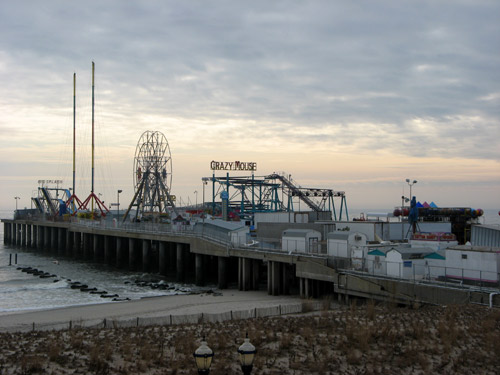
An unseasonably warm Sunday in Atlantic City, on the longest boardwalk in the world:

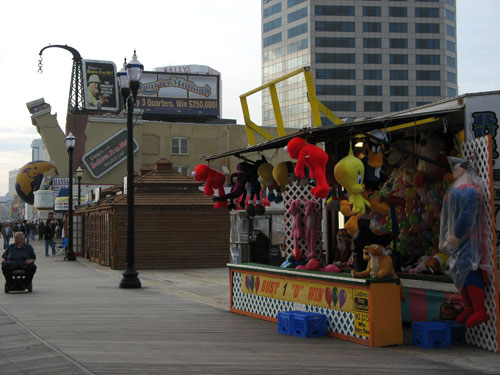
Steel Pier

Steel Pier

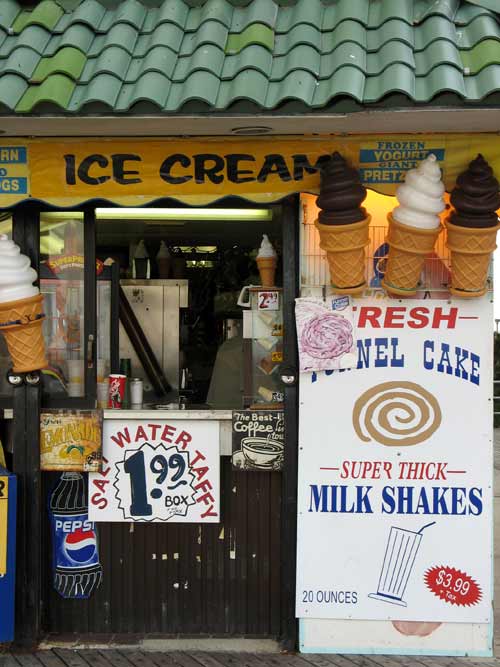
Atlantic City Stand

Atlantic City Stand

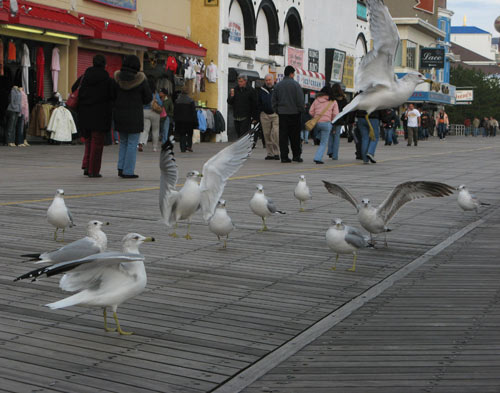
Boardwalk Seagulls

Atlantic City Boardwalk

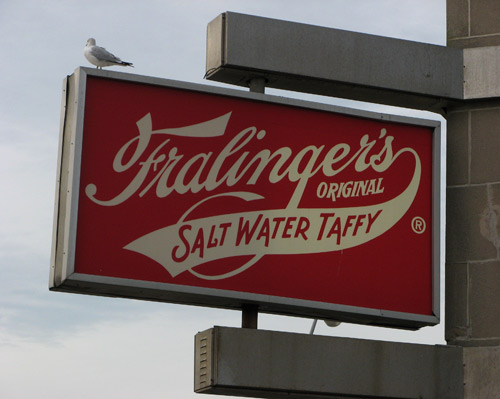
Fralingers

Atlantic City Boardwalk

From New York City, Baltimore, Philadelphia and Washington, D.C., Greyhound offers Lucky Streak service to various Atlantic City casinos with fare reimbursement incentives. The refund amounts differ by casino (AC Hilton, Bally’s, Caesars, Resorts, Sands, Showboat, Taj Mahal, Tropicana, Trump Plaza or Trump Marina), and by the time and day of the trip. In NYC, riders pay the full price of the roundtrip ticket (about $30) and receive a casino coupon for some portion of the Greyhound bus fare. Upon arrival, casino representatives distribute coupons for gaming credits (or cash exchange).

Gambling has a long history in China, with some evidence suggesting that wagering on games of chance originated there over 3,000 years ago. Today, social gambling in the form of mahjong playing is common in China and among Chinese overseas. Government-approved lottery games are available to 95% of China’s cities and counties.

Gambling addiction is widely recognized as a major problem in the Chinese and Chinese-American communities. Statistics are difficult to come by, but by some estimates, 2 to 6 percent of the mainstream population are problem gamblers; among Chinese, where gambling is often an accepted practice at home and at social events (even among the young), the numbers are considerably higher. For an immigrant community, gambling offers a form of cross-cultural entertainment with no language barrier.

Many casinos recognize the Chinese love of gambling and market aggressively to that sector. Chinese-language newspapers offer their Asian patrons even better deals than the ones available through Greyhound. Several Atlantic City casinos work with Chinese bus companies to charge their patrons a discounted price for the roundtrip fare, and offer more significant rider reimbursements in chips, meal discounts, or in our case: cold, hard cash. The roundtrip bus fare from Chinatown was $15; upon disembarking at the Showboat Casino at boardwalk’s end, we each were handed envelopes with $25 in cash. So yes, even after discounting the mandatory tips to the bus driver, we still made money on the trip.

That is, before factoring in our buffet lunch at the Taj Majal‘s “Sultan’s Feast.” Ah well. When in Agra…