vip in the city, page 51

Poor Little It Girl

Dinner and a movie in TriBeCa 10013, which this past spring, Forbes magazine named as the most expensive zip code in Manhattan — the twelfth most expensive in the nation — far eclipsing the Upper East Side’s 10021, which for generations was home to old money New York. As recently as 1990, before the dot-com and telecom booms, George and Weezy’s nabe was the wealthiest zip code in the country; by 2006, the national rank had dropped to number 255.
Tribeca Statue

Bubby’s opened in TriBeCa in 1990 as a pie company. The menu has since expanded to cover casual homestyle breakfasts, lunches and dinners; on weekends, Bubby’s serves brunch to crowds of trendy families (and the occasional celebrity.) Even at this after-work dinner hour, M and I felt out of place without a stroller in tow.
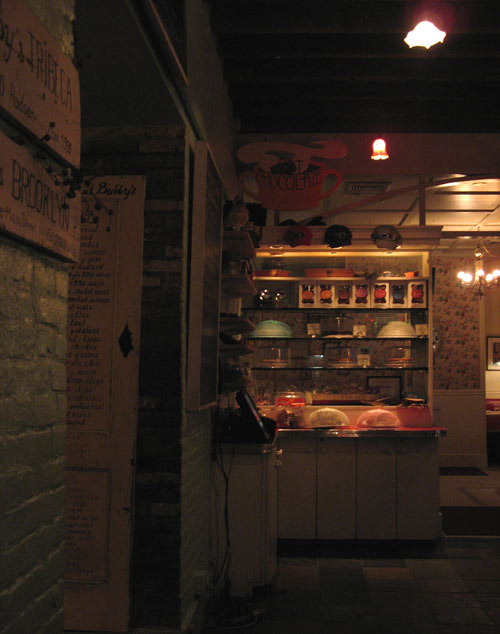
Bubbys

We forewent the famous pie to make our way to the Tribeca Grand for tonight’s preview screening of Factory Girl.
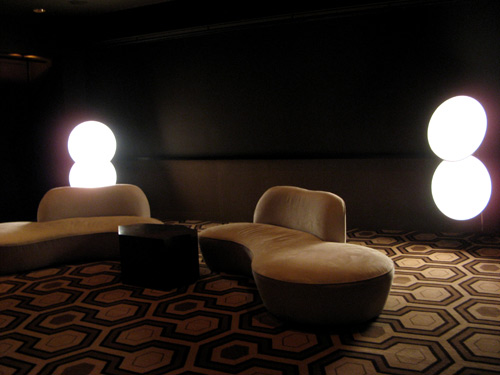
Tribeca Grand

The film chronicles the rise and fall of heiress, fashion icon and Andy Warhol muse Edie Sedgwick (Sienna Miller). The story of Sedgwick’s tragic life — she died in 1971 of a painkiller overdose at the age of 28, a year after leaving rehab — has taken on the proportions of a cult myth, as do most true tales of brief, intense lives. This most recent rendering of Sedgwick’s story does better as a slice of pop-culture history than as a biopic; probably the best that can be said about the film is that the costumes are fabulous and Miller is very pretty.

Screenwriter Captain Mauzner (a.k.a. Josh Klausner — I wonder how he got his friends to start addressing him as “Cap’n”?) was at the event to discuss making the movie. Mauzner’s first movie, a ten-minute short titled Atomic Tabasco, received an honorable mention at Sundance in 1999; in 2003, he was an associate producer and screenwriter for Wonderland, about porn star John Holmes’ involvement in the 1981 Laurel Canyon murders. Mauzner offered some insights into the journey from concept to finished film. Factory Girl was a three year process, which involved extensive revisions — over a dozen by Mauzner’s count. It was interesting to hear how casting considerations shaped the screenplay; the role of Warhol (an unnerving Guy Pearce) had to be expanded significantly so it would appeal to a higher profile actor, since Miller alone was not considered a big enough box office draw. Mauzner did not mention — nor did anyone dare ask — about the other rewrites prompted by rumored threats of litigation.
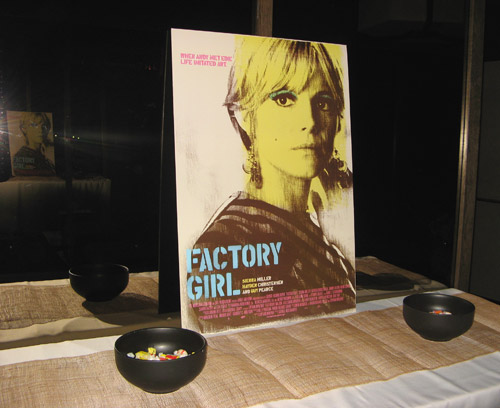
Factory Girl

During the Q&A, one audience member used the word “biopic” to describe the film… except that she pronounced it “bi-AH-pik” (rhyming with myopic) instead of what I thought was the standard “BI-oh-pik.” I’ve actually now heard the former pronunciation from several different sources (including television), so when I got home that night, I did some research to find out whether that was an alternate, but correct, pronunciation of the word. It isn’t.
Franklin Street Station

Cav & Pag at the Met

A newly LASIK-ed SK joined us at the Pound & Pence after work to toast KG’s recent success. I slipped out after the first congratulatory round to make the early curtain at the Met. Tonight: the double-bill of Pietro Mascagni’s Cavalleria Rusticana (Rustic Chivalry) and Ruggero Leoncavallo’s Pagliacci (Clowns), a combo commonly referred to as “Cav and Pag.”

This tragic pair of Italian one-acts are more often than not grouped together in performance, due to their similarities in time-frame, style and themes (infidelity, betrayal, bloody retribution.) The premiere of Cavalleria  in Milan in 1890 was a formidable debut for the 26 year old Mascagni — a staggering success he was unable to replicate for the rest of his career (though Mascagni did go on to compose 15 operas, an operetta, and several orchestral, piano and vocal works.) Fascinated and inspired by the success of his contemporary’s short, realistic opera, Leoncavallo set out to compose his own. Pagliacci  triumphantly premiered two years later in 1892, launching Leoncavallo into instant celebrity. And as in Mascagni’s case, the opera was to serve as the high point of his career; today it is the only work by Leoncavallo in the standard operatic repertory.

Cavalleria Rusticana and Pagliacci  are quintessentially of the Italian verismo  or naturalist style: dramatic, poignant, lyrical and swirling with emotion. Together they made a powerful combination of tragic opera.

As on the night of The New York Times  review, tenor Salvatore Licitra, who had been scheduled to sing Canio in Pagliacci, while Frank Porretta sang Turiddu in Cavalleria Rusticana, ended up covering the roles in both operas after Porretta was unable to appear due to illness — a feat The Times  likened to pitching 18 innings in one night. The audience at this performance was similarly impressed, brought to their feet by the opera double-header’s end.

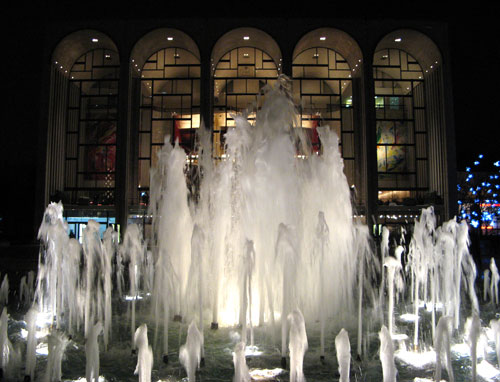
Lincoln Center Fountain

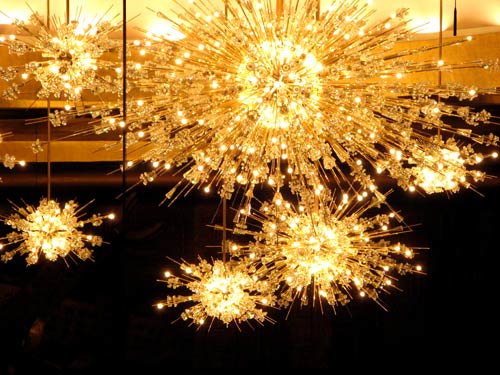
Met Chandelier

Cav and Pag have remained firmly ensconced in the public imagination for over a century, in no small part due to two of the most recognizable musical themes in opera. Tenor Enrico Caruso‘s 1902 recording of Leoncallo’s “Vesti la giubba” was the world’s first gramophone record to sell a million copies (though it wasn’t until 1942 that the first record was formally certified as a million seller: Glen Miller‘s “Chattanooga Choo Choo.”) The aria was also included in The Untouchables  film, and a Seinfeld  episode, featuring one Crazy Joe Divola.

Mascagni’s “Intermezzo” is familiar to even non-opera buffs who will recognize the lush, lyrical instrumental theme from both Raging Bull and The Godfather: Part III  films and an endless stream of pasta commercials — ranking high in red sauce recognition along with such ad classics as Verdi’s “La donna è mobile.”

Design in Grand Central

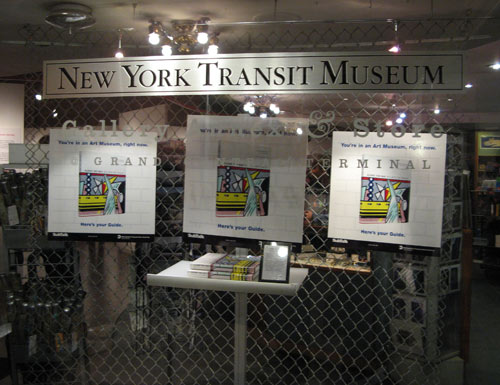
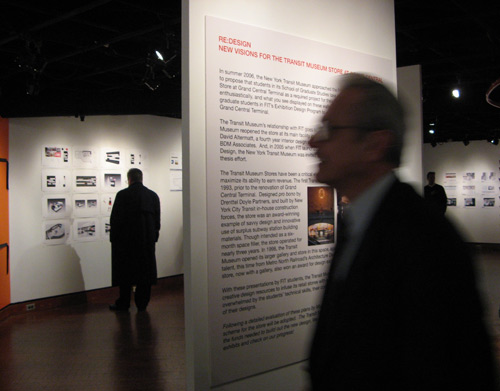
The New York Transit Museum operates a gallery annex and store at Grand Central Terminal, just off the Main Concourse, in the Shuttle Passage next to the Station Master’s Office. Tonight, I was there for the opening reception of the new exhibit, Re:Design — New Visions for the Transit Museum Store at Grand Central.  On display through February 19 are eleven proposals to revitalize the Transit Museum’s store developed by graduate students in the Exhibition Design department of the Fashion Institute of Technology. The exhibit features the students’ visions, including new floor plans, models, revamped fixtures, storage concepts, displays, redesigned sales associate uniforms and new graphics identities. The proposals all had to work within the current footprint of the store, with a limited budget, and with little, or minimal alteration to the existing store’s ceiling and floor plans. The winning proposal, or selected aspects of various proposals, will be used by the Museum to refurbish the store.

New York Transit Museum

Transit Museum ReDesign

The store, which remained open for the reception, is chock full of items emblazoned with MTA logos, for proudly displaying your subway line or station pride. Also for sale are memorabilia and collectibles, such as old tokens, vintage enamel signs, and even parts of decommissioned trains, like the hinged, teardrop-shaped grab holds from the recently retired “Redbird” subway car fleet; the cars themselves are now serving as artificial ocean reefs in Georgia, South Carolina, Virginia, Delaware and New Jersey.

I vividly remember how excited I was the first time I was able to curl my fingers around those cold steel grab holds, toes barely touching the detritus-strewn floor, gazing out on the Midtown skyline through the grimy windows of the 7 Local. I’m almost tempted to buy a couple for myself — $20.00 apiece seems a small price to pay for a tangible piece of my childhood… though what ever would I do with them?

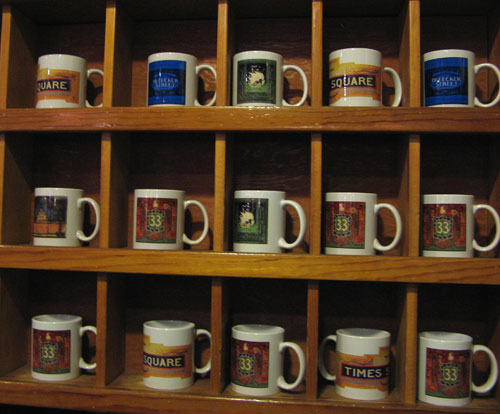
Transit Museum Mugs

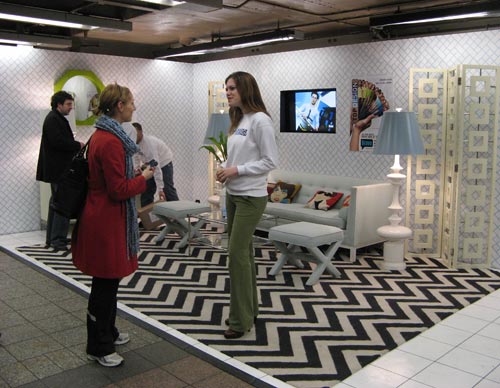
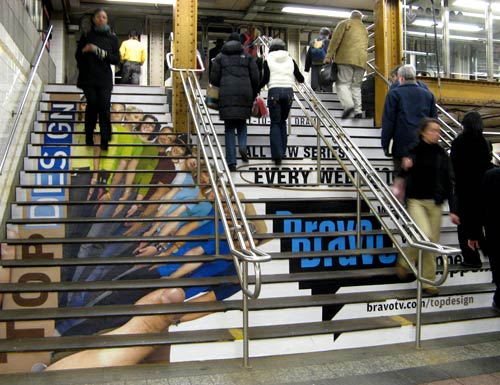
Elsewhere in the station, Bravo’s latest reality show Top Design had taken over, installing several interior vignettes on Grand Central’s Shuttle platform — designed by and featuring lead judge Jonathan Adler‘s line of products.

I’ll probably watch, assuming that Frank Bruni won’t be covering this series, ruining the finale for me, as he did with Top Chef, less than ten hours after the show aired. Gah!

Top Design in Grand Central

Top Design Stairs

Hell's Kitchen Flea Market

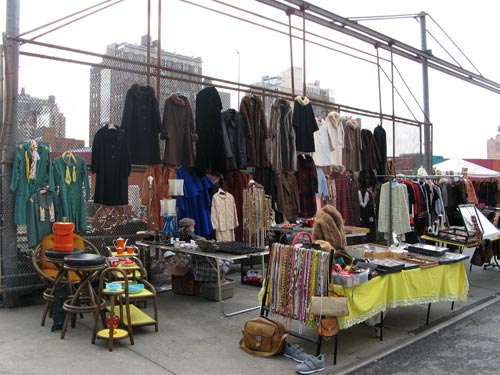
After 29 years in Chelsea, The Annex Antiques Fair & Flea Market, which had been located on a parking lot on Sixth Avenue between 25th and 26th Streets, relocated to 39th Street between 9th and 10th Avenues in Hell’s Kitchen — another victim of displacement by real estate developers. Flea market founder Alan Boss was not entirely happy about the move, remarking in an interview with The Village Voice that: “We as Americans, having little or no culture, we figure that if you can build on two feet by four feet, you should have a building there, and screw anything that came before it.”

Tell me about it: longtime Lincoln Square merchant Lincoln Stationers shuttered in January 2006, after thirty years of supplying the neighborhood with fine pens, stationery, photo albums, leather journals, gift wrap and greeting cards. I suppose this type of business is a dying breed… but did they have to replace it this month with another Upper West Side Starbucks? Apparently yes, because “people won’t cross the street to get coffee.

Hells Kitchen Devil

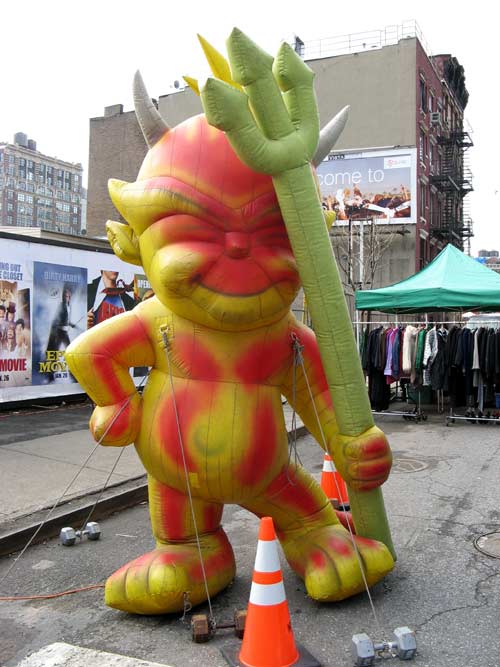
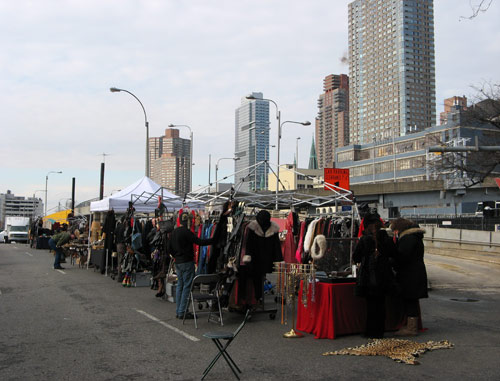
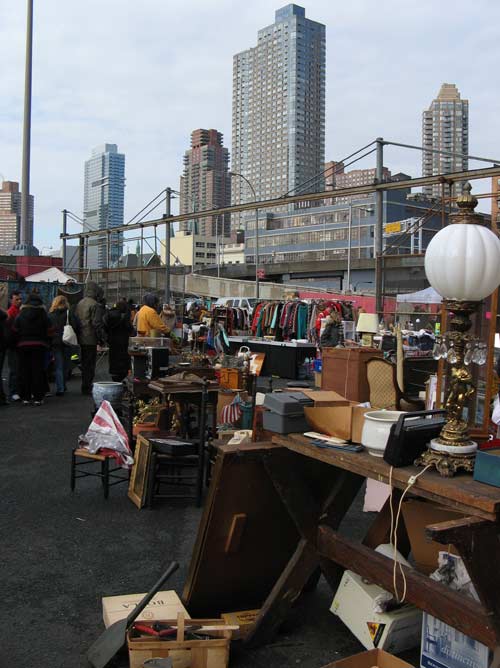
The Hell’s Kitchen Flea Market launched the first weekend of August 2005, in the still sketchy shadow of the Port Authority, at the mouth of the Lincoln Tunnel. In warmer weather, the Annex features up to 170 vendors, and a $1 shuttle service runs between here and the other flea markets in Chelsea every Saturday and Sunday from 10 am to 6 pm; in the grey chill of late January, the number of stands is far lower, and the surroundings more desolate.

Flea Market Stands

Flea Market Furs

Flea Market Stands

Welcome to SoHell.

In the Heights

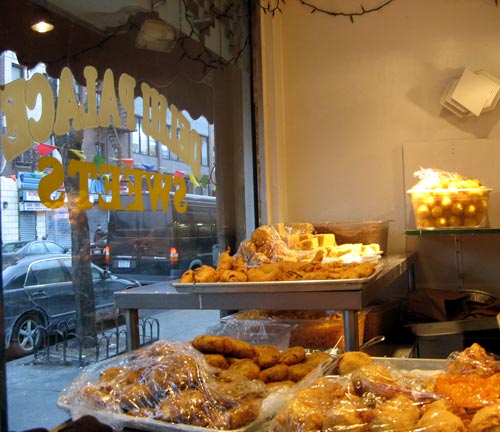
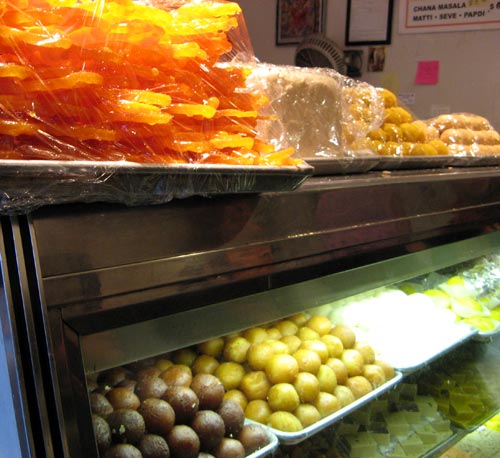
Several recent articles spotlighting Jackson Heights as an ethnic food destination prompted me to hop off the 7 at 74th Street-Roosevelt Avenue. Just steps from the elevated station, in the heart of Little India, and doors down from the famed Jackson Diner, I happened upon the window for Delhi Palace Sweets, a tiny, fragrant offshoot of the restaurant next door. A steady stream of customers piled inside for samosas and pakoras hot from the fryer, pastries and Indian sweets by the pound. Although a price list was posted on the wall, I couldn’t match most of the names to the items. And since none of the trays of multi-hued pudding wedges and laddus were labeled, next time (and there will be a next time) I’ll willingly take my chances and point.

Delhi Palace Sweets

Delhi Palace Sweets

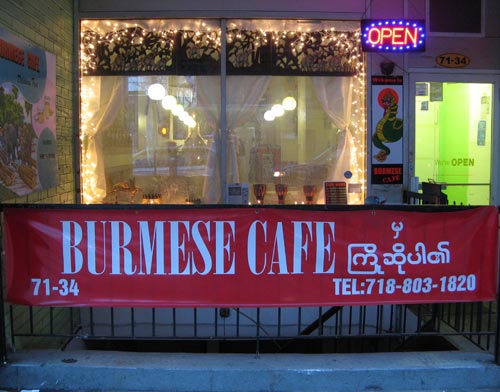
This afternoon, though, we were in Jackson Heights to hit the Burmese Diner. Chowhounds first keyed into this new addition to the neighborhood last November; Sietsema followed up with his review in the Voice a month later, using words like “awesome,” “delicious” and “irresistible.”

Prior to this, I’d had little – actually: no – experience with Burmese food; it’s not all that common in New York, and I would have been hard-pressed even to describe what the cuisine (a mixture of Chinese, Indian, Thai and local Myanmar influences) would be. After locating the unassuming storefront with relative ease — down the block from critically-acclaimed Isaan, i.e., northeast Thai, restaurant Zabb — we were about to find out.

Burmese Cafe

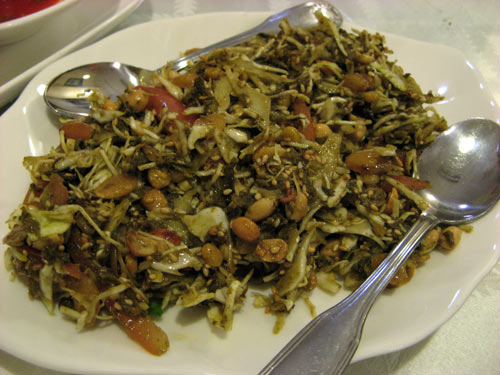
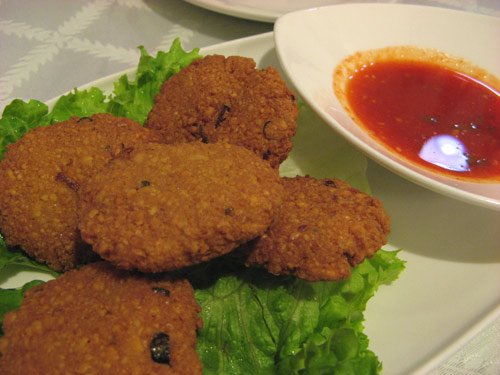
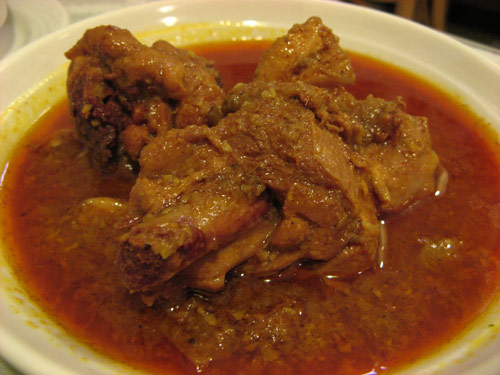
The menu was a mix of familiar and unfamiliar. We started off with one of the house specialties: the Lephet Thoke, or tea leaf salad — a brightly seasoned plate of shredded cabbage and thin-sliced tomatoes, studded with fermented, crunchy green tea leaves, bean sprouts, garlic, sesame seeds and peanuts, tossed with dried shrimp and fish sauce, two other flavor staples of Burmese cuisine. It smelled and tasted unlike anything I’d ever had before. The tea aroma was strong and pungent, and the texture was crunchy and smooth, dry and oily all at once – in truth, probably something of an acquired taste, though I did find myself relishing it more after that first surprise bite. We followed up with crispy gram fritters: crusty outside/moist inside, yellow lentil, ginger and garlic pucks, accompanied by a bright-red tomato cilantro sauce. The menu offered “Burmese-style Chinese” (kung pao chicken?), but we stuck to the Burmese curries: a tamarind-laced version, in which swam several chunks of skin-on, bone-in chicken. It was delicious.

Tea Leaf Salad

Gram Fritters

Chicken Curry

The décor was utilitarian, with a few special touches: costumed Burmese marionettes hung along one wall, and a Buddhist shrine stood in the corner, next to the big screen television. At one point, the friendly staff treated us to a rousing karaoke rendition of Burmese pop songs.

You most likely know it as Myanmar, but it will always be Burma to me.

Later still, a reading at the Rattlestick Playwrights Theater on logic-defying Waverly Place, for a new play by Andy Bragen titled, appropriately enough, Food Porn.

Cross on the green, not in between

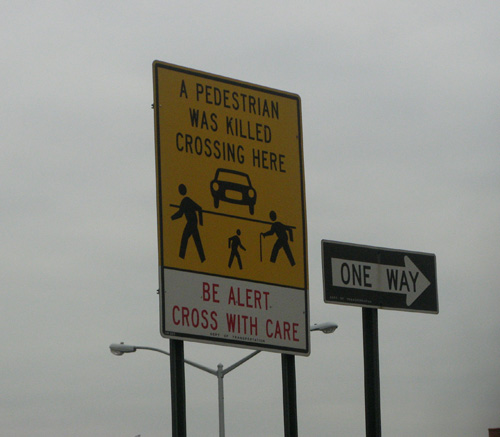
In the 1990s, Queens Boulevard was nicknamed the “Boulevard of Death,” a reference to the many people who were struck and killed by cars while trying to cross the 10+ lane thoroughfare. Between 1993 and 2000, there were 72 recorded pedestrian deaths. Citizens groups like Transportation Alternatives have covered the situation avidly, prompting a “Pedestrian Safety Study” by the Department of Transportation, after which the city instituted a series of initatives: (slightly) lowering the boulevard speed limits, installing red light cameras and closing one lane to traffic on the service road. The Department also erected fences along the road to reduce jaywalking, increased pedestrian crossing times and posted warning signs like this one in Elmhurst:

Pedestrian Killed

A more vivid graphic would feature a person flying off the hood of a speeding car, but that probably would be considered poor taste.

Pedestrian fatalities on Queens Boulevard have decreased significantly since the DOT’s re-engineering, dropping to 4 in the last three years, 11 since 2001.

Not to shift the blame to pedestrians, but at least once a week I witness some crazed fool make a mad sprint against the light, leaving the squeal of tires or the blare of indignant car horns in his — yes, usually: his — wake. Or perhaps worse: the oblivious ones who wander into traffic as they gab into their cell phones, rock out on their iPods or send messages on their Blackberries. Why, people? Have we become a society that proposes laws to enforce the lessons we should have learned in elementary school?

Travel Notes

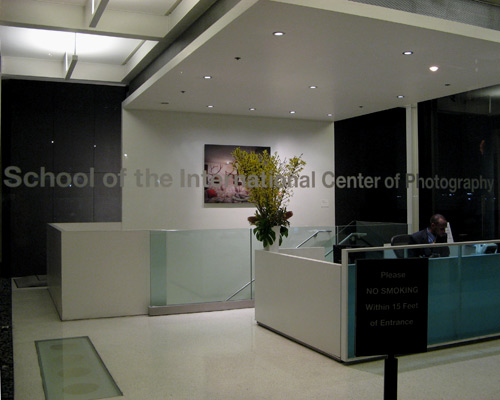
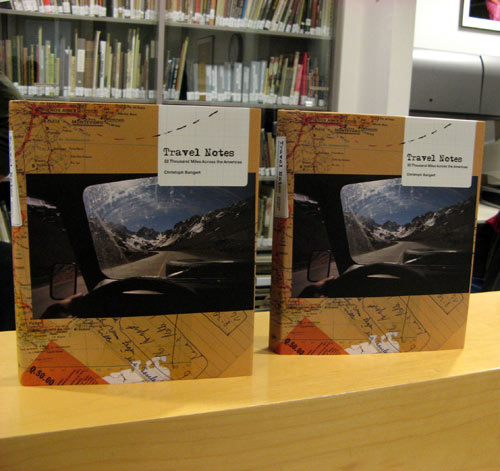
Photographer Christoph Bangert made an appearance at the International Center of Photography for a book signing to celebrate the launch of his new book, Travel Notes: 22 Thousand Miles Across the Americas. The book chronicles Bangert’s 2002 journey by Land Rover from the southernmost tip of South America to the urban landscapes of New York City, where he was set to begin studies at ICP. Bangert, now an ICP graduate, recently spent five months on assignment in Iraq as a contributing photojournalist for The New York Times.

School of the ICP

Travel Notes serves as a breathtaking diary of the photographer’s 22,000-mile journey, beginning in Buenos Aires, over two continents, across the borders of fourteen countries, through mountain ranges and over countless bodies of water, to his new home in Brooklyn. Along the way, Bangert describes his adventures: a frigid night on Tierra del Fuego, a scorching day in the Atacama Desert along the coast of Chile (the driest desert on Earth), stranded for two days in the deep mud of a Bolivian salt flat, making a precarious crossing over Lake Titicaca, along the Pan-American Highway, through every country in Central America, into Mexico, crossing one final border into the United States towards his final, triumphant arrival in New York City.

Travel Notes

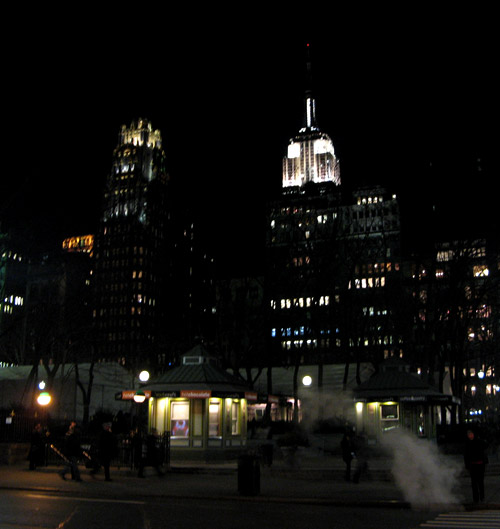
Bryant Park Skyline

What an amazing, life-changing experience. Puts me in the mood to plan my next big trip…

Later that night, at SK’s housewarming, I talked some more travel with fellow party guests DJ and RK, swapping notes on Japan, Thailand, Vietnam and Costa Rica. The apartment was located inside a pretty prewar on West End Avenue with an elevator operator, steps from the private enclave Pomander Walk, which reminded me that even if it’s a little while before the next far-flung adventure, there’s still so much left to explore right here at home.

Another day, another play, Another You

A full night, full of both low and highbrow entertainment, with some tasty eats in between.

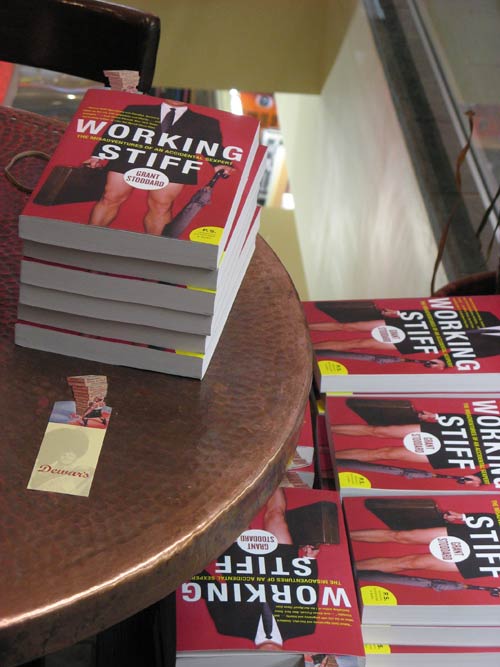
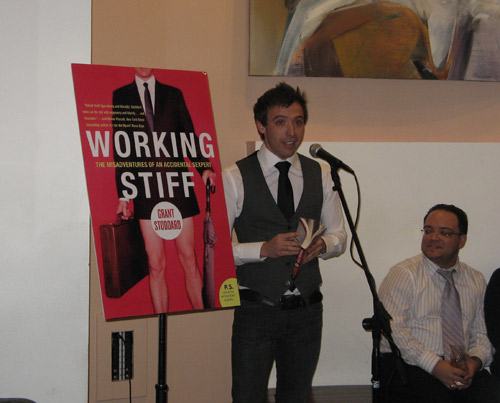
First stop: a cocktail party and book reading for Grant Stoddard‘s new book, Working Stiff: The Misadventures of an Accidental Sexpert. The event was being held at the McNally Robinson Bookstore in NoLIta, one of the few independent bookstores in the city — R.I.P., Coliseum — owned and run by Sarah McNally, a daughter of Holly and Paul McNally, who founded the Canadian McNally Robinson chain.

Plied with cocktails by Dewar’s (ginger beer fortified by Scotch whisky), the crowd settled in to listen to the puckish Brit read excerpts from his new book, the stories of which grew out of his formidable arsenal of material, most gathered through his experiences as a popular onetime sex columnist for Nerve.com. Stoddard’s “I Did It for Science” column was a pseudo-scientific examination of his sordid, mind-bending (but often hilarious) tales of sex in the city — laden with catchphrases, euphemisms and double-entendre. His self-deprecating, humor-laden style suited the subject matter well; clearly, he still views his unorthodox career trajectory since arriving in the States at age 21 with some bemusement and more than a little abashedness.

The question and answer period was as you would expect, given the topic at hand, during which Stoddard doled out some practical tips and advice, culled from his years of [s]experience… and none of which I will repeat here.

Working Stiff

Grant Stoddard

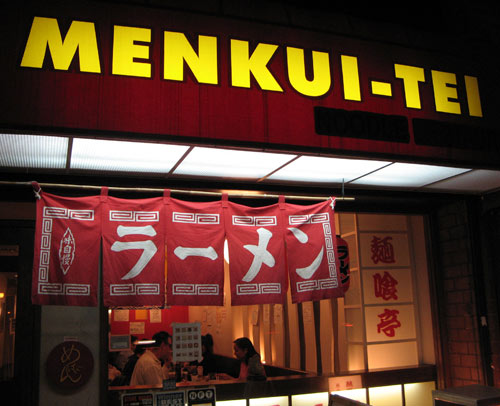
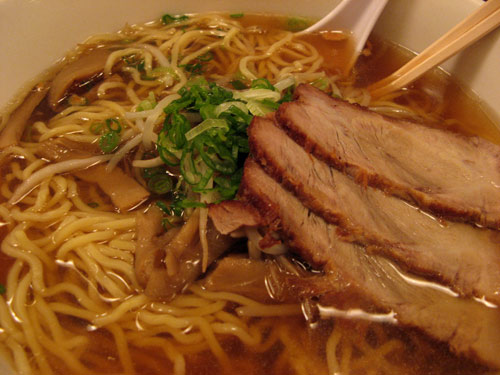
In honor of the recent death of Momofuku Ando, inventor of instant ramen, a trip to Menkui Tei in Cooper Square for a steaming bowl of the real deal. The Village Voice dubbed them the “Best Star Wars Noodles” for their “Jar Jar” Ramen (cold wheat noodles heaped with spicy ground pork in thick soy sauce), but on this chilly night, I went for the “Menkui” Ramen (seaweed broth flavored house special noodle soup) and was not disappointed.

Don’t know if it’s the best in the city; personally, I prefer the Momofuku version, though at almost twice the price for the house-named version, Momofuku is not exactly “Cheap Eats.”

Menkui Tei

Menkui Tei Ramen

Back at The Public Theater’s Under the Radar Festival for Another You, the stark, mercilessly autobiographical solo show by Allen Johnson. His string of vignettes dealt with themes mostly outside the comfort zone: incest and booze, brutality and bonding, the dull ache of loneliness and finding (or keeping) faith among the filth. Johnson recounted scenes in alternately raging and almost-detached tones, limiting most of his monologue to a box of light on the floor in which stood nothing but a white porcelain commode. All raw, sometimes funny, often ugly… and as riveting as anything I’d seen on the stage in a long time.

Prayers for Peace

At Marble Collegiate Church for a “State of Our Union” dialogue hosted by Generation Engage and Demos. The evening was a special event, consisting of a 75-minute discussion with New York Times Pulitzer Prize-winnning columnist William Safire and former Kennedy speechwriter Theodore Sorensen, followed by a live screening of the president’s annual State of the Union address. I was heartened to see the church’s wooden pews filled to capacity by a number of young adults, mixed in with the usual assortment of old-line activists and policy wonks.

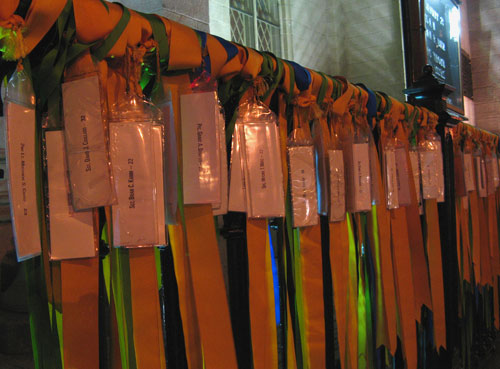
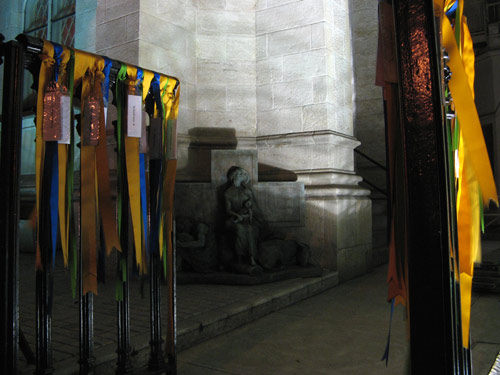
Interesting choice of venue. Since last March 19, the third anniversary of the start of war in Iraq, the congregation has hung thousands of gold, blue and green streamers on the iron fence around the perimeter of the mid-19th century church at Fifth Avenue and 29th Street, as a physical representation of prayers and a plea for peace.

The installation is titled Prayers for Peace. The gold ribbons display the names, ranks and ages of members of the armed forces who have lost their lives in Iraq, and represent prayers for their families. The blue are prayers for Iraqi dead and wounded with their names and ages (some just a few months old), and the green ribbons represent prayers for peace in the Middle East. During each Sunday service, the names of new servicepeople who have died are read aloud, and their ribbons are added to to the gates with the others. The number of gold ribbons, around 2300 when the project first began last year, now total over 3000.

Prayers for Peace

Prayers for Peace

On Sunday, March 18, 2007, the Church will hold a memorial to coincide with the war’s fourth anniversary. That afternoon, the names of the dead will scroll across the same big screen Bush appeared on that night.