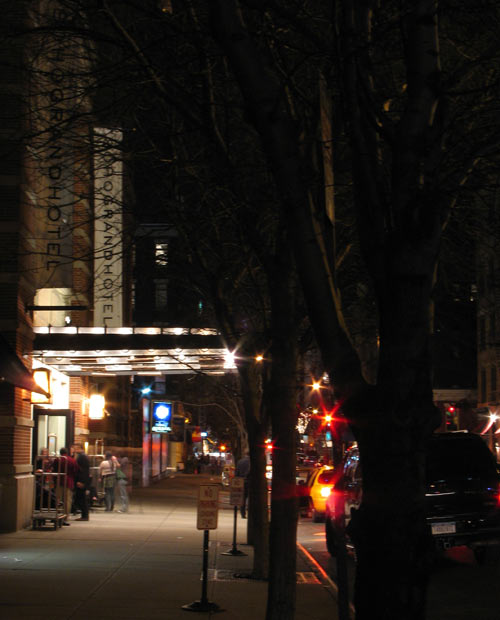
vip in the city, page 44

Keep it moving

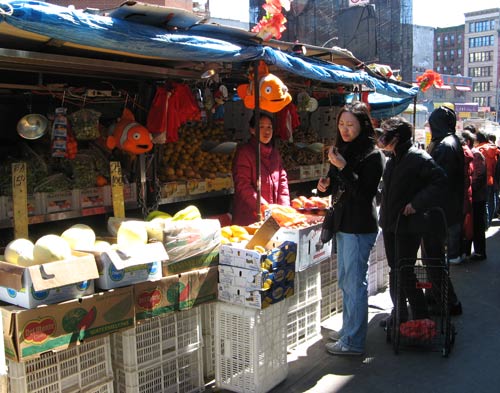
On a sunny, but slightly chilly Spring day, I came across this busy vegetable market on Forsyth Street in Chinatown, literally in the shadow of the Manhattan Bridge.

Terrific selection and perfectly ripe produce, at a fraction of the price it would command just a couple of subway stops uptown. Earlier this year, SYB clued me into a fascinating NPR feature investigating how it is that Chinatowns around the country are able to offer produce at prices so much lower than mainstream outlets – and in some cases, lower even than wholesale sources. The conclusion: shoppers in these areas typically buy produce more frequently, and primarily for use the same day, so only buy when the fruits and vegetables are at the point of ripeness, i.e., the very point at which the distributors are most desperate to unload their supply, and are therefore most willing to offer deep discounts. By contrast, larger-volume urban/suburban outlets (e.g., chain supermarkets) want produce with shelf life to allow for the largest window of salability. In addition, the larger chains need to maintain a more or less constant supply and variety of stock; smaller makeshift outlets like the street vendors are able to absorb last minute items and in smaller quantities, since they are generally not expected to maintain the same stock supply from day-to-day. Shopping this way requires more flexibility from the buyer, but the trade-off can be tremendous value.
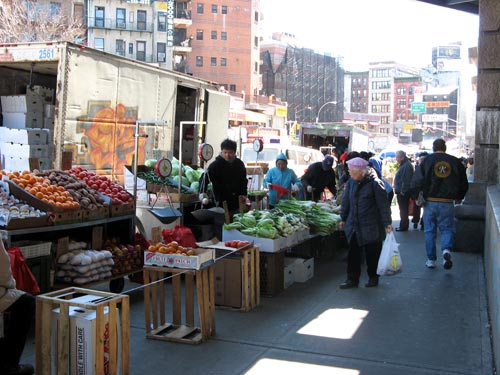
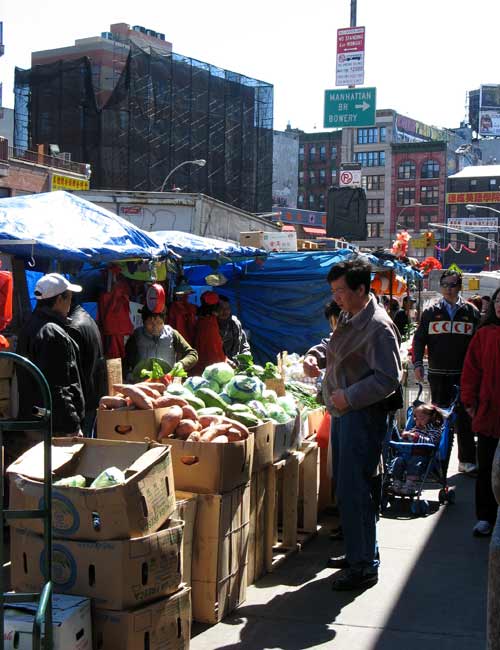
Forsyth Street

Forsyth Street

Forsyth Street

It’s a tough way to earn a buck, though. A 2002 New York Times article offered a glimpse into the vendors’ lifestyle: rising before dawn to spend hours scavenging for leftover produce at places like the Bronx’s Hunts Point Terminal Market. One vendor interviewed for the article described standing in the cold all day, to earn a pitiable $30.00. Meanwhile, city officials pressure the often-unlicensed workers for clogging the streets and attracting vermin in their wake.

And sure enough, by the time I walked by this street just an hour later, all these vendors were packing up their crates (and any hopes for a profitable day) under the glaring, watchful eye of the NYPD.
Kick up your heels

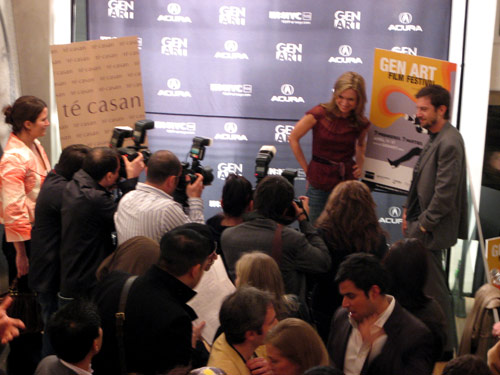
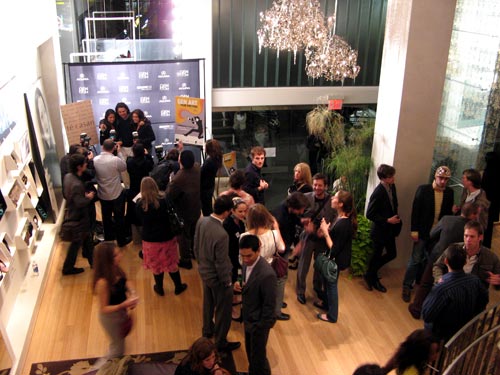
The launch party for the 12th Annual Gen Art Film Festival was being held tonight at té casan — inexplicably, a couple of weeks in advance of the actual festival, which runs April 11 through 17, 2007.

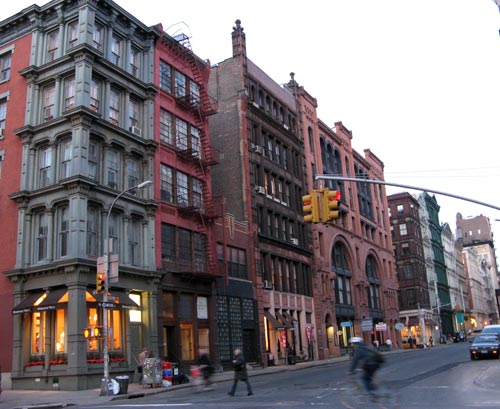
Broome Street

The SoHo shoe emporium opened its flagship store on West Broadway to some fanfare in November 2006. On paper it seemed an odd choice for a party venue, but once we arrived, it was clear that all was not just about the shoes.

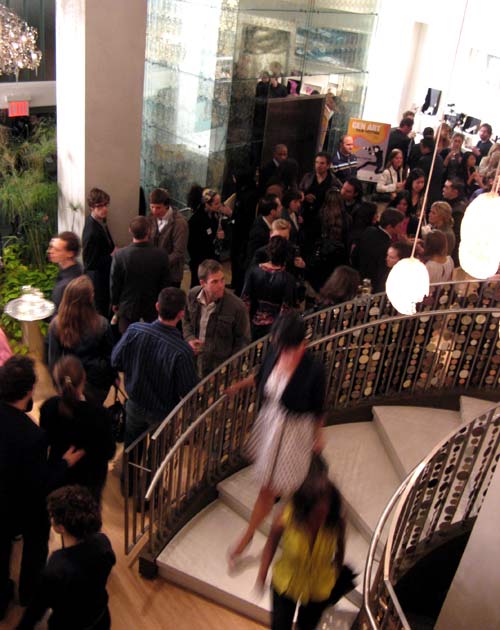
M met me on the sidewalk outside, where the Gen Art gatekeepers had set up a table amid the red carpet and floodlights. The sleek, tri-level space was designed by Ron Pompei — and emitted a vibe more gallery than store. Against the mirrors and blank white canvas of walls, and beneath the elaborate chandeliers, the wares stood out like pieces of art: careful stagings of ballet flats, metallic chainlink stilettos, patchwork leather and suede boots, fancy kicks, crystal-studded sandals…

Which in its way is apropos. The idea behind té casan — Gaelic for “a woman’s path” — is to introduce limited-edition footwear collections, of artisan quality: handcrafted materials and signature detailing at “attainable” luxury price points. The company’s creative director, Asil Attar, interviewed 55 emerging designers before settling on the final team of seven, most recruited from the respected fashion houses of Alexander McQueen, Versace, Vivienne Westwood and the like. According to the company literature, the single-run editions are limited by state, with the pieces numbered individually on the soles, adding to the couture cachet. As the té casan brand evolves, new designers will be introduced, and none of the collections will remain in the store longer than three years. With most pairs in the $200-$300 range, the price tags are higher than Nine West, but much lower than say, Manolo Blahniks or red-soled Christian Louboutins, which run in the $500-$700 (and up) range. As we wandered among the increasingly crowded floors, we noticed several pairs marked half-price, which almost make the shoes a fashion-forward bargain.

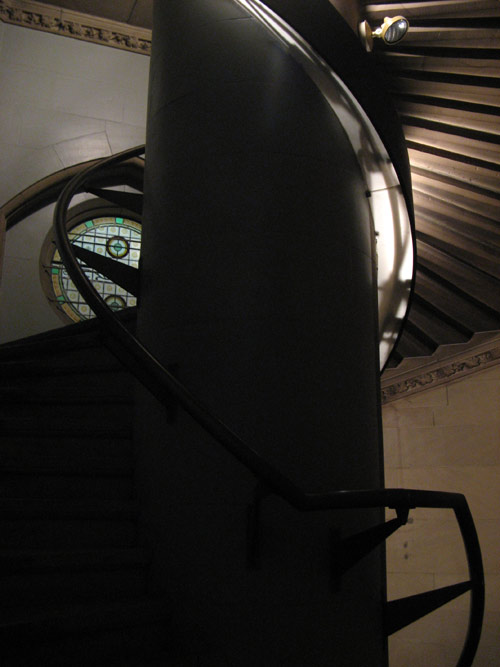
The store’s central curving glass staircase is edged with mirrored disks; the lower level features a built-in bar station (which functions as a tea salon during regular shopping hours) and throughout the space are domed dressing areas outfitted with bench seating for trying on the wares (or mingling with other party guests) in semi-privacy.

Gen Art Film Fest party

Gen Art Film Fest party

Actress Nicole Forester with Gen Art president, Adam Walden:

Gen Art Film Fest party

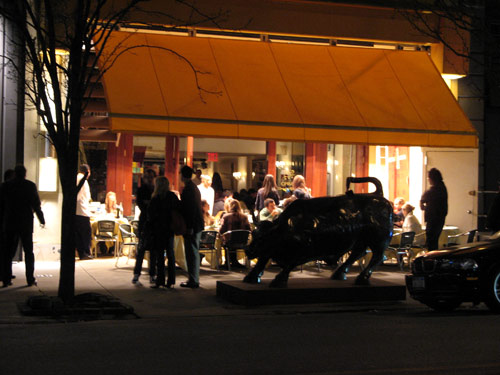
Afterwards, we continued our evening over dinner next door at Cipriani, where the food was pricy, but almost besides the point. We entertained ourselves by attempting to decipher the relationships of our dining companions — father and daughter? grandfather and granddaughter? hmm… – all while trying not to gawk at the most orange woman either of us had ever seen in our entire lives.

Cipriani

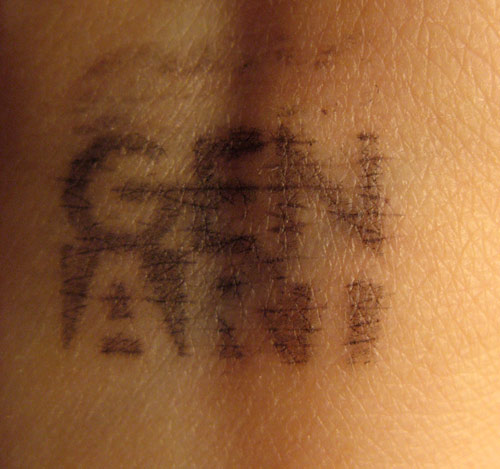
Gen Art Stamp

Napalm & Cheerios

The terraNOVA Collective is comprised of writers, actors, directors, designers, musicians, poets, dancers and visual artists, whose mission it is to support and develop original theatrical works. The collective hosts a weekly developmental lab where writers submit scripts of plays or solo shows in progress for a readthrough to solicit feedback from terraNOVA members. Scripts are chosen to advance to the next level of development: a ten day rehearsal period and public staged reading. One play from the selected readings receives a full-fledged stage production. In fact, every production terraNOVA mounts emerges from these so-titled Groundbreakers Sessions, as do many of the solo shows presented in terraNOVA’s annual Solo Arts Festival — now in its fourth year.

Tonight, the final developmental staged reading of a Napalm & Cheerios, a new work by R.A. Carlsen. Carlsen lives in New York City and works for the NYC Board of Education as an elementary school special education teacher. His first play, Patpong Street, about a father-teenage son trip to Bangkok, won the John Golden Playwriting Award from Hunter College, and as did his second, The Word of God, about a retired missionary who moves in with her brother and sister. This latest play arose from his Theater Arts master’s thesis at Hunter.

The story follows three generations of women (a hippie heroin addict, her God-fearing, suburban mother, and her love child), in two segments; the first half of the story is set a quarter-century after the second. I liked the unconventional, reversed framing of time, which offered a perspective one almost never gets in real life: What combination of decisions, large and small, brings us to where we are today? Is it impossible to escape the influence of our mothers — for better or worse?

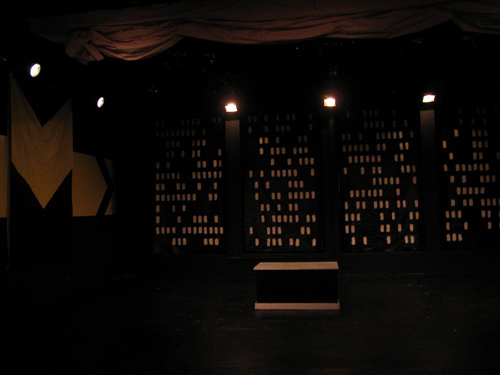
Terranova Collective

Center Stage is located on the fourth floor of a mixed use building on West 21st Street that also houses Gotham City Improv, the school and sister company of the famed Los Angeles-based comedy improv troupe, The Groundlings. Perhaps conveniently, given the unfortunate compulsions of some comedians, the building also houses the New York offices of Cocaine Anonymous.

On the second floor, the Natural Gourmet School hosts a weekly dinner where chef instructors and students of the Chef’s Training Program prepare a prix fixe four-course vegetarian dinner on Friday nights — $34.00 per person, BYOB. (Similar, I suppose, to the set-up at The French Culinary Institute’s L’Ecole.)

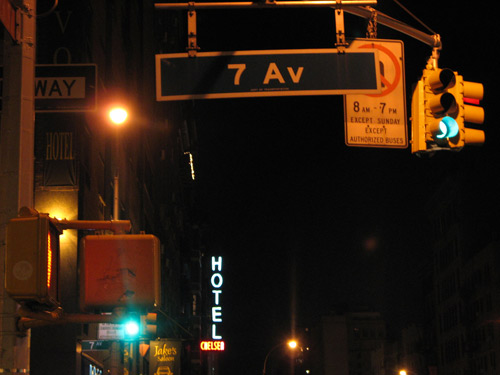
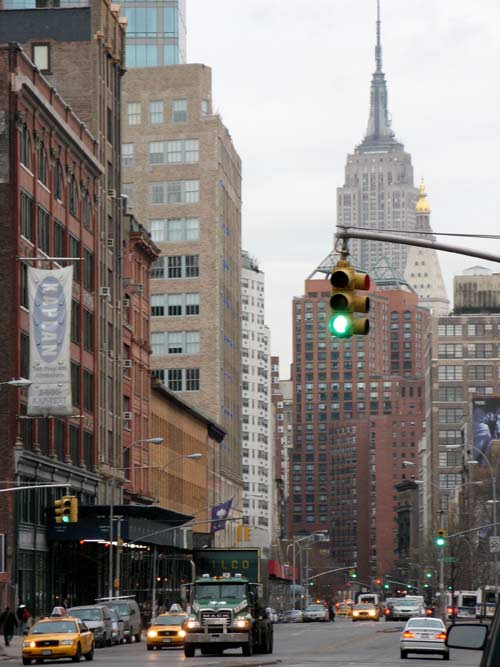
7th Avenue

Breathing uneasy

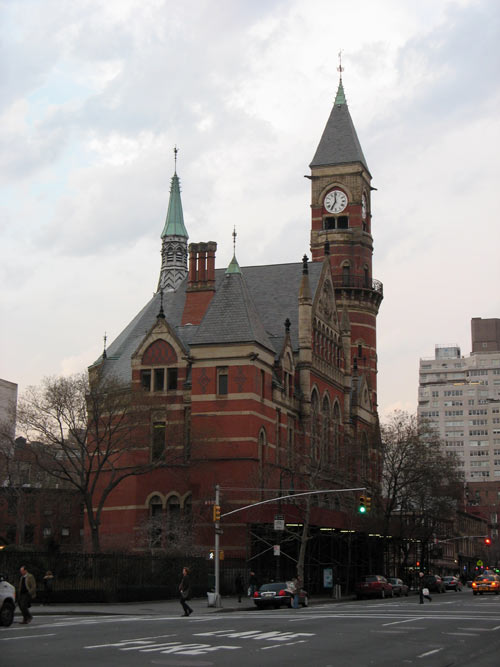
Back at the castle-like Jefferson Market Branch of the New York Public Library for a book club discussion of Noxious New York: The Racial Politics of Urban Health and Environmental Justice.

Jefferson Market

Jefferson Market

Julie Sze’s book studies how racial minority and low-income communities often disproportionately suffer the adverse effects of urban environmental problems. The Environmental Justice Movement, rooted in both the civil rights and environmental movements, endeavors to bring and sustain environmental quality to these neighborhoods, which often lack the political clout to effect change on their own.

Cecil Corbin-Mark, the first and current Program Director of the West Harlem Environmental Action (WE ACT) led the talk. In addition to his work with WE ACT, Corbin-Mark is an active board member of a number of environmental justice, parks and planning organizations. WE ACT is dedicated to protecting environmental quality, improving environmental health and combatting “environmental racism.” The organization was founded in March 1988 to address ongoing community struggles around the poor management of the North River Sewer (or “Wastewater”) Treatment Plant and the Manhattanville Bus Depot in Harlem.

According to WE ACT, the 7.5 mile area that comprises Harlem is densely populated by half a million residents, yet carries a disproportionate number of the city’s environmental burdens. Above 96th Street (which shares what’s known as an “air corridor” with the South Bronx), there are six of the seven bus depots in Manhattan, the city’s largest sewage treatment plant, and miles of truck-trafficked expressways. Each of these sites is a source of diesel fuel combustion; the toxic emissions are a known health hazard: possibly carcinogenic, according to a 2002 Environmental Protection Agency report, and an asthma irritant.

The diesel particulates have long contributed to increased rates of respiratory illness among neighborhood children, degrading the public health and quality of life in that area. According to Corbin-Mark, Harlem is in the midst of an asthma epidemic; a study conducted in 2003 cited that one in four children in central Harlem has tested positive for asthma — four times the national average of one in sixteen children. The air pollution has also been linked to lower birth weights in Upper Manhattan and South Bronx.

Author Sze, who received her doctorate in American Studies from NYU’s Graduate School of Arts and Science, will talk about her new book at the school on Wednesday evening April 11 in an event co-presented by Transportation Alternatives and UPROSE.

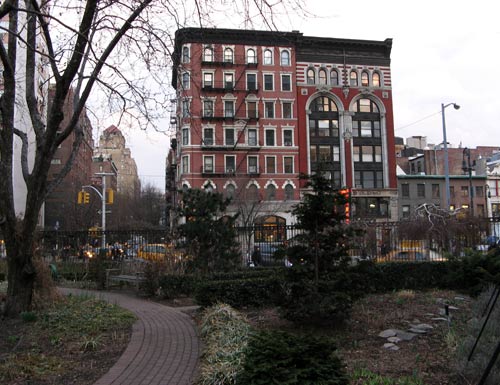
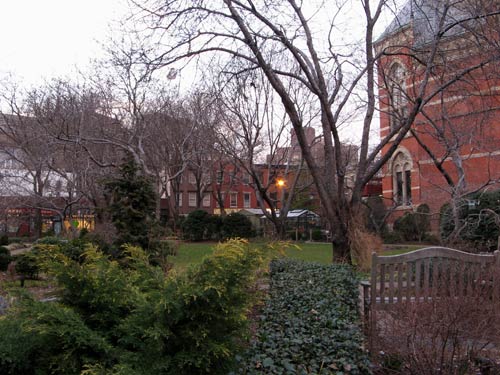
The Jefferson Market Garden, to the south of the library:

Jefferson Greening

Jefferson Greening

I am not a trekkie

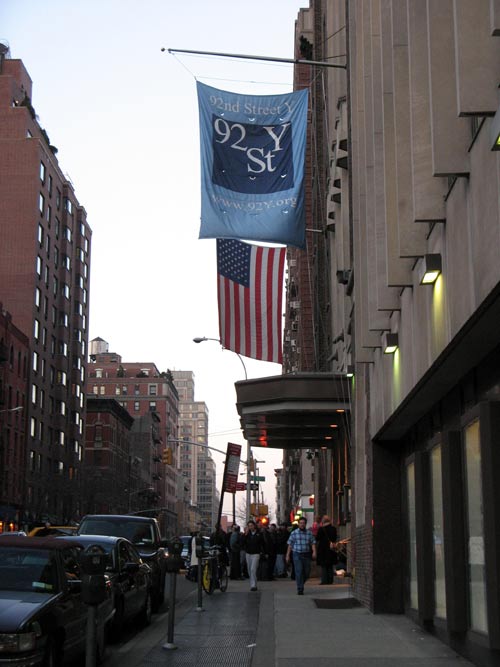
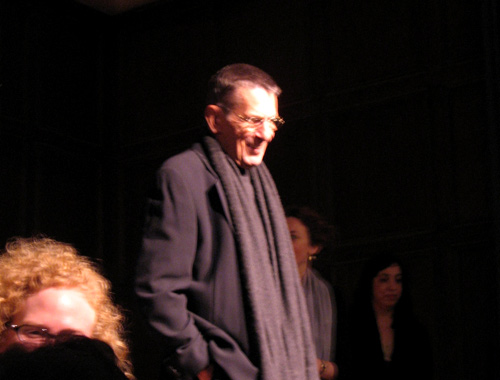
At the 92nd Street Y (not just for New Yorkers) for a talk on art collecting by Leonard and Susan Bay-Nimoy (not just for trekkies/trekkers). The conversation was moderated by writer and Parsons School of Design professor Anastasia Aukeman.

92nd Street Y

Busy night at the Y: on my way in, I passed by Gene Wilder who would be appearing across the hall to talk about his debut novel.

Nimoy and his wife spoke about how they came to become avid art collectors — their interaction was sweetly and sincerely affectionate, underscoring their shared passion and hands-on approach to their acquisitions. The two spend hours personally touring artists’ galleries, selecting and compiling pieces for their private collection (presented in slideshow photos of their home) guided primarily by how the work resonates with them, rather than by adhering to any specific trends, style or genre.

The couple are longtime supporters of the arts: Bay-Nimoy is on the MASS MoCA Director’s Advisory Council. Nimoy is an emerging art photographer himself, and the experience inspired him and his wife to think about the difficulties new artists usually have in getting their work recognized by the public and in museums. In 2002, the couple set up a $1 million endowment fund for young artists at the Museum of Contemporary Art in Los Angeles. In 2003, Nimoy and his wife established the Nimoy Foundation as president and vice president, respectively, to fund and encourage the work of artists who thrive in residency programs throughout the United States. Since
its inception in 2003 the Nimoy Foundation has distributed over $1.7 million. The Nimoys are also major financial supporters of the recent renovation and expansion of the Griffith Observatory in Los Angeles, and of Symphony Space in New York, where the Leonard Nimoy Thalia reopened in 2002 after years of neglect.

But of course, Nimoy is best known as the man/humanoid behind the Vulcan Salute, so inevitably there were a few men in the audience who seemed suspiciously uninterested in either art or collecting. Nimoy seemed to notice, but took it all in good stride; no doubt he’s used to such a following by now.

For the fan boys — and I think there are at least a couple of you reading this — a blurry photo of Spock:

Leonard Nimoy

The post-discussion dessert reception was a rather elaborate spread, featuring two of my favorite treats: Linzer Tortes and Crème Brûlée. And dark chocolate-dipped strawberries… so make that three of my favorites. Those chocolate brownies looked tempting, too.

I probably should have eaten dinner first.

BBQ for 13

When I was about 4 years old, my parents bought me the Caldecott Honored book, It Could Always Be Worse illustrated by Margot Zemach. The story is described as “A Yiddish Folk Tale” and tells of a man frustrated with the cramped conditions of his humble hut: he, his mother, his wife and six children all under one roof. He seeks counsel from his rabbi, who much to the man’s confusion, keeps suggesting he move a growing number of farm animals into his house: first chickens, geese, and a rooster, then a goat, and finally, a cow. The noise and crowding reach progressively intolerable levels when all at once, the rabbi advises the man to remove all the animals. And after he does, the man comes to appreciate his original home situation as pure bliss compared to a house full of animals.

Why do I bring this up — other than to mention my first exposure to the words “Yiddish” and “rabbi”? As this two month period of 7 line construction hits week #6, I look forward to Easter weekend, when that uninterrupted ride from Manhattan will never feel swifter.

7 Construction

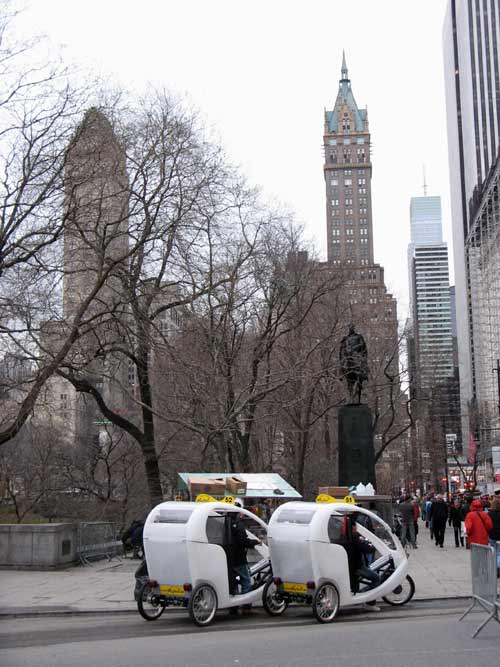
The detour home sent me through the park once more where I spied this pair of pedicab drivers taking a dirty water dog break against a backdrop of two of the most luxurious hotels in New York City.

Hot dog stop

S and J had organized a trip to 32nd Street (a.k.a “Korea Way”) for some K-town barbecue. We had a reservation for 13 at Seoul Garden which the restaurant seemed to have some difficulty accommodating on that busy Saturday night. Things got off to a shaky start with the seating logistics and ordering delays, but once the panchan began arriving, most was forgiven.

The MSKCC crew, a few of whom were getting their first introduction to Korean cuisine that night, seemed to enjoy the meal. We all did. In addition to the “greatest hits,” there was a seafood surprise, and heaping piles of meats, which we cooked ourselves over the smoking table grills — what’s not to like? Despite the valiant efforts by everyone, we were ultimately unable to finish all the food. (The soju and hite, however, were another story.)

Koreatown

Afterwards, someone suggested Ginger Man for post-dinner drinks, a venue which sent me and SC down memory lane. Ah, good times. The bar was closed for a private party, though, so our group ended up across the street at Under the Volcano, which boasts the same owners as Ginger Man, but a lower key, less meat-markety vibe, and an impressive selection of tequila and mezcal. The bar is named for the semi-autobiographical novel by English writer (and lush) Malcolm Lowry, which was named the 11th best novel of the 20th century by the Modern Library.

“It’s sexy time!”

In bloom

Daffodils, those cheery harbingers of Spring! A couple of days ago, on impulse, I plucked this bunch from a black plastic pail in front of the florist/dry cleaner in my neighborhood. (Yes, it really is both a florist and a dry cleaner.) The stems were just budding stalks then, but the cashier assured me that they would open up in time, and sure enough…

Daffodils

It feels frivolous, but I adore having fresh cut flowers at home. These days, alas, I just buy them for myself. But the little bit of luxury makes all the difference.

(New) Big Wong (King)

What is the name of this restaurant at 67 Mott? Back in the 1980s when I was being marched to the chinese school across the street, it was known as Big Wong. A couple of years ago, the signage changed without fanfare to New Big Wong (cf. New Chao Chow.) And continuing the name-changing tradition (cf. Great N.Y. Noodletown) it’s now called Big Wong King.

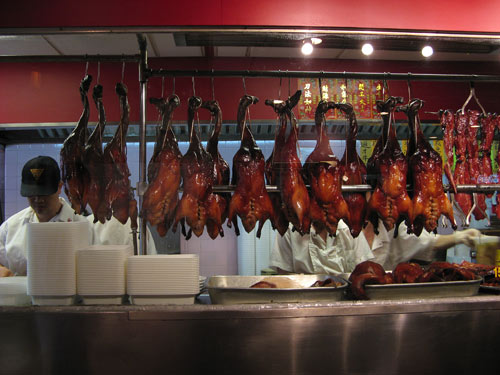
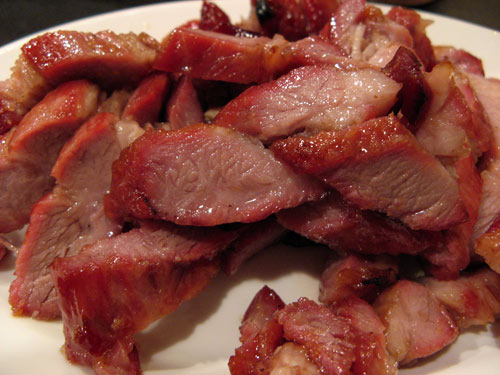
One thing that hasn’t changed with the times: the restaurant’s excellent roasted meats — among the best in Chinatown. Ducks, chickens, and my favorite: the char siu.

Big Wong ducks

(New) Big Wong (King)’s version is deeply smoky and mouth-meltingly tender beneath the slightly crispy and sweet outer glaze — not greasy, sticky or cloyingly sweet as some inferior versions tend to be. The name char siu  literally translates to “fork roasted,” after the technique of suspending the meat on prongs during oven-roasting, which allows the fat and excess marinade to drip off, and the glaze to form evenly all around. Fattier meat is generally juicier and is therefore preferred; customers will actually specially request a fatty cut.

Big Wong char siu

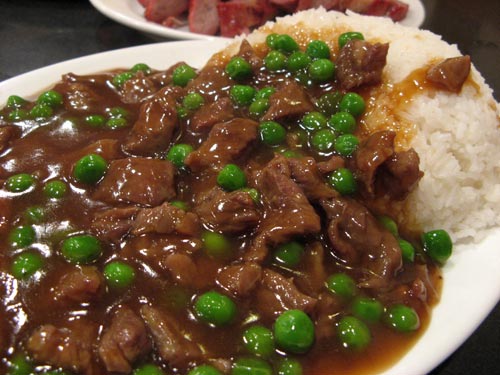
The “on rice” dishes are a terrific lunch bargain, starting at $4.25. Here, the beef with peas, which for some reason, is not on the menu.

Big Wong beef and peas

To air is human

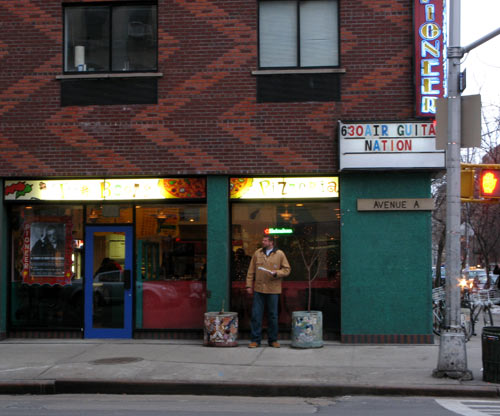
My dinner plans got canceled, so SYB invited me along to attend a preview screening of Air Guitar Nation  at the Two Boots Pioneer Theater in the East Village.

Bowery

Air Guitar Nation

Alexandra Lipsitz, who was a producer for Bravo’s “Project Runway,” directed this documentary chronicling the birth of the United States Air Guitar Championships and the road to the 2003 World Championships in Oulu, Finland. Drawing inspiration from a 2001 Wall Street Journal article about the Sixth Annual Air Guitar World Championships, the producers filmed competitions in New York City and Los Angeles, eventually accompanying the American finalists to Finland. The footage was originally intended to form the basis of a new reality television show for VH1, but when plans for the series got shelved, this documentary was the result.

The story is framed around a pair of colorful characters: musician/freelance writer Dan Crane, aka Björn Türoque — love the heavy metal umlauts — and his chief rival for air supremacy, David “C-Diddy” Jung, a charismatic actor/comedian who performs in a flowing red kimono and Hello Kitty breastplate. (For real.)

The international competition was begun by Finnish students in 1996 to promote world peace, a fact worth noting as the Americans entered the contest for the first time in 2003, shortly after the outbreak of the Iraq war. Crane, the underdog of the two, declares himself an “ambassador of air,” at one point taking the stage bare-chested with the words “Make Air Not War!” scrawled across his torso in black marker. Still, one can sense the wariness towards the Americans from the European contingent. During the obligatory trash-talking, one Austrian acidly quipped that Björn Türoque should change his monikor and represent the French as Björn Toulouse. (thought that was funny, but I probably have a higher tolerance for puns than most.)

Eventually, we see the international contestants bonding over a shared love of power shredding, slashing riffs and windmilling… and one suspects, a mutual admiration for arena rock and Bill & Ted. In fact, SYB recognized the winning performance music — which I think I’ve identified as Play With Me” by Extreme — from the chaotic mall scene in Excellent Adventure.

It’s all pretty charming, and I found the proceedings far more entertaining than I thought I would. One of the film’s most touching moments shows Jung’s Korean immigrant parents, who had wanted their son to become a doctor, cheering him on in the Finland final and throwing up the “metal horns.”

Crane, whom SYB knew back when he was an educational software producer, attended tonight’s screening along with producers Dan Cutforth and Anna Barber, promoting his new book, aptly titled: To Air is Human.

Afterwards, having hit my rock and roll quota for the night, I skipped out on the Rolling Stone party to add yet another notch on the ramen belt. At 5th and B, Minca is the farthest off the beaten path of the city’s top ramen joints, but clearly well on the radar of the Japanese expats that filled the dozen or so tables and bar stools.

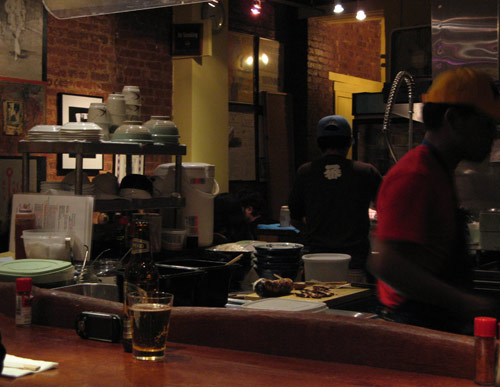
Minca kitchen

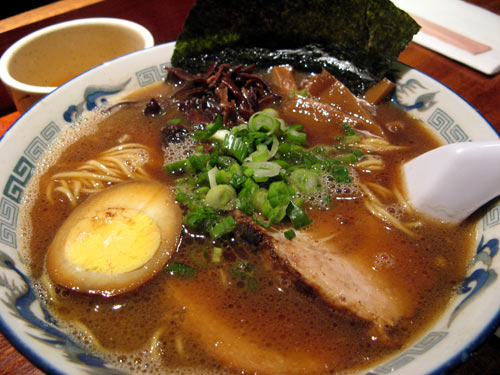
I ordered the Minca ramen, which centers around an earthy broth made with pork, chicken and dried seafood. According to the Times  (in which Minca got the “$25 and Under” treatment), the chef-owner boils a combination of 80% pork bones/20% chicken bones for hours to prepare the thick and porky brew; the dried noodles are delivered directly from Japan. That kind of care for ingredients is carried over into the dish preparations; from where we sat at the front window, I could watch the chefs carefully assembling each bowl, pouring the steaming broth over the noodles, thin-slicing the fatty, pork belly chunks, layering on the mahogany-colored soy sauce egg, tangle of scallions, bamboo and mushrooms, until finally, finishing things off with a leaf of dried seaweed.

Minca ramen

This may be the best one yet.

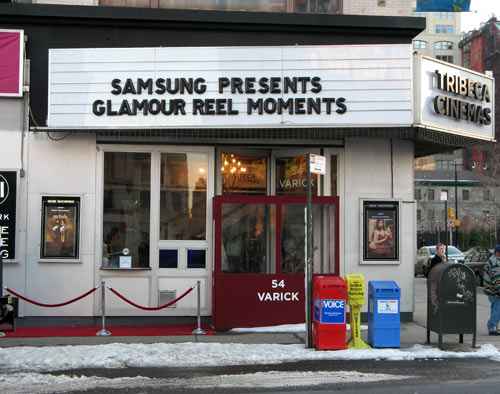
Reel Moments

In yet another foray into magazine brand extension (see: the Time Out New York lounge at New World Stages and Miss Seventeen on MTV) Condé Nast’s Glamour brought back “Reel Moments,” a series of short films directed by women celebrities of varying levels of fame. This year, Bryce Dallas Howard (“Orchids”), Carol Leifer (“Blinders”) and Jennifer Aniston (“Room 10”) stepped behind the camera to adapt the three winning stories selected from among the thousands submitted by the magazine’s readers based on their own real/reel-life moments. Last October, the shorts had their premiere in Los Angeles to kick off a 10-city screening tour. Proceeds benefit FilmAid International, an organization whose mission is “to use the power of film to promote health, strengthen communities, and enrich the lives of the world’s vulnerable and uprooted.” (Well… okay.)

The films — united by a “self-discovery” theme — are promoted by Glamour  as an exercise in female empowerment: written, directed and acted almost entirely by women, and produced by Francesca Silvestri, Head of Motion Picture and Television for Moxie Pictures. (All a bit ironic considering some of the beauty magazine’s content.) Previous Reel Moments participants have included Lauren Graham, Piper Perabo, Rosario Dawson, Kerry Washington, Debi Mazar, Trudie Styler, and Gwyneth Paltrow. This year’s films featured the donated acting talents of Robin Wright Penn and Jamie-Lynn Sigler.

Reel Moments

Two of 2006’s projects made the film festival circuit rounds: “Dealbreakers” — co-directed by Paltrow and Mary Wigmore — at Sundance, and at the Berlin Film Festival, “Gnome,” which was written and directed by “Sex and the City” Emmy-award winner, Jenny Bicks. Continuing the tradition, all three of this year’s short films were accepted into the Santa Barbara Film Festival, qualifying them for the 2008 Academy Award nominations.

Producer Silvestri, who answered audience questions after the screening, said she hoped that the projects would have the effect of opening even more doors for women in Hollywood. I’m a tad skeptical about just how closed off from opportunity this particular trio of women really are: Emmy-winner Aniston co-founded production company Plan B Entertainment with ex-husband Brad Pitt and Brad Grey; Howard is the daughter of 2-time Academy Award winning director and co-founder/co-chairman of Imagine Entertainment, Ron Howard. Only “Seinfeld” writer Leifer (the real Elaine Benes!) seems like she may have genuinely benefited from this opportunity created by Glamour magazine.

Aniston’s “Room 10” is available for viewing on sponsor Samsung Mobile’s website.

Afterwards, a syrah for me, a gin buck for M at the pet-friendly SoHo Grand. (Ah, that explains the dog statues in the lobby and the dog trough at the door.)

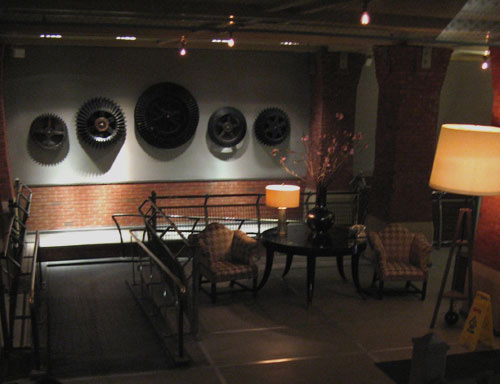
SoHo Grand Lobby

SoHo Grand

From the hotel’s FAQ:

We allow domesticated pets that are trained and well-behaved. If travelers cannot bring their pets, we offer a goldfish companion for the duration of their stay.