vip in the city, page 45

Subway architects: Part I

At the opening reception for the Transit Museum’s newest exhibition: “Architects of the New York City Subway Part I: Heins & LaFarge and the Tradition of Great Public Work” — on view at the New York Transit Museum Gallery Annex in Grand Central through July 8, 2007.

Between 1901 and 1908, New York-based Heins & LaFarge — the architects behind the Cathedral Church of St. John the Divine and the original six buildings of the Bronx Zoo — beautified the stations of the city’s first subway system: the Interborough Rapid Transit Company. The team designed underground and elevated stations, entry kiosks, and control houses; some of their handiwork remains familiar to current riders, including the subway station entrances at Sherman Square (Broadway/72nd Street) and at Astor Place (both 1904), Brooklyn’s Borough Hall station at Joralemon and Court Streets (1908), and the original IRT City Hall station (1904), closed since 1945.

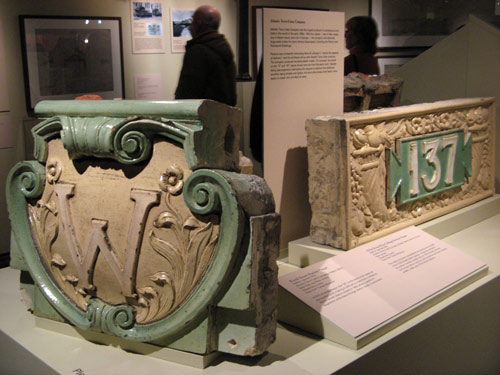
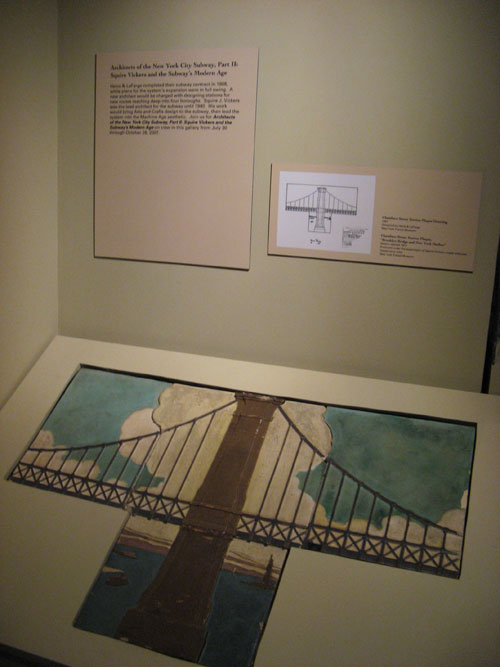
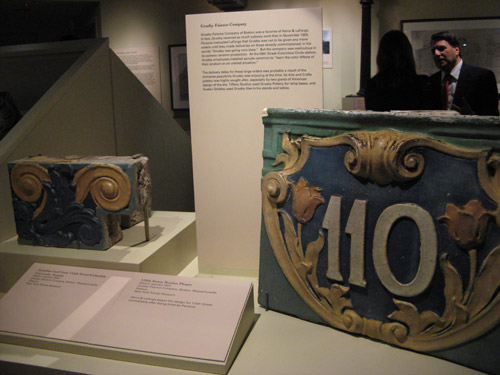
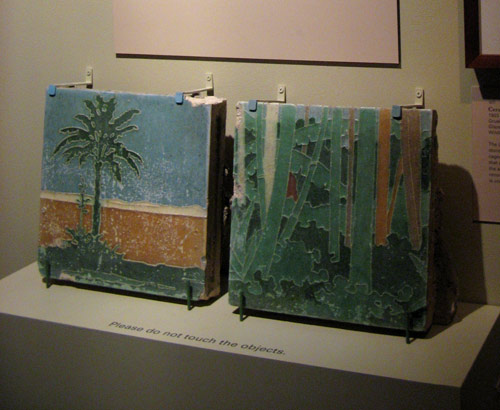
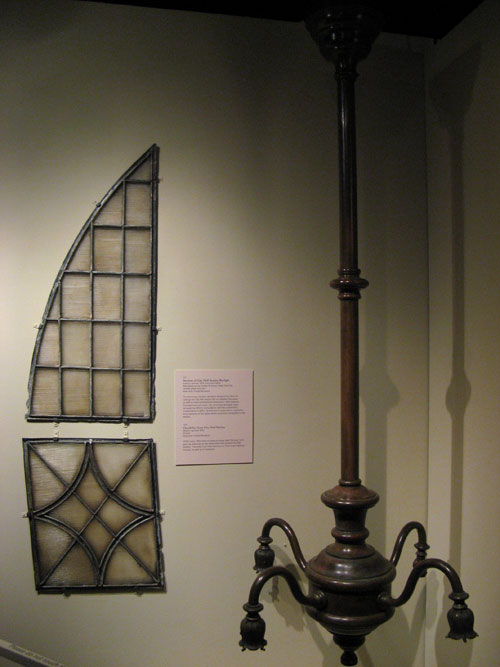
Relics from that most legendary of the city’s subway stations were on display, as were original architectural drawings (on paper and linen), station objects, archival images, and contemporary photographs.  Most interestingly, a good portion of the (admittedly, cramped) space was devoted to the ceramic firms that supplied the architects’ stations, showcasing examples of early subway plaques, some of which can still be found in stations today.

Bronx Zoo Tiles

City Hall Station relics

Transit Museum Tiles

Transit Museum Tiles

Transit Museum Tiles

The second part of the exhibit, “Squire Vickers and the Subway’s Modern Age,” will go on view at the Annex July 30 through October 28, 2007.

Russian and Greek

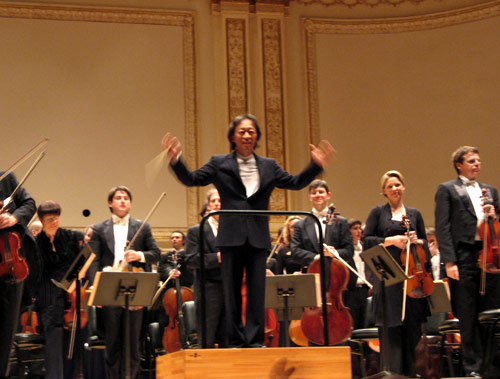
SYB’s cousin was unable to use her tickets to this afternoon’s Carnegie Hall program by the Orchestre Philharmonique de Radio France, so she generously gave SYB her tickets, and we ended up attending in her stead. The pre-concert lecture began an hour earlier, and afforded us the opportunity to put some of the music we were about to hear into context. The highlight of today’s performance: Igor Stravinsky’s Le Sacre du Printemps (The Rite of Spring, though Stravinsky would later write that the work’s Russian title would have been better translated into English as “The Coronation of Spring.”)

I always love hearing the story about how at the May 29, 1913 premiere at the Théâtre des Champs- Elysées, the outraged audience degenerated into a riot, causing one of the most notorious scandals in classical music history. The premiere is one of the dates historians cite as the birth of the Modern Age, similarly 1922: the publication of James Joyce’s seminal work, Ulysses, which was the Modern Library’s pick for best novel of the 20th century. In the retelling, the infamy of that night has always overshadowed the fact that at subsequent stagings during its six performance run, The Rite of Spring didn’t experience any disruption. Most reports of that opening night also omit the fact that, despite the revolutionary nature of Stravinsky’s work, it was in fact Vaslav Nijinsky’s choreography with its radical, almost barbaric, departure from classical ballet that provoked the audience. Furthermore, the “scandalous” riot was perhaps as much a manifestation of pre-World War I tensions as it was a reaction to the music or staging.

None of which detracts from the bold musical innovation of Stravinsky’s composition, the most audacious of which is rhythmic. A single massive chord repeats like a fast pulse, a thumping, off-kilter eighth-note motif of irregularly spaced, unpredictable accents — distilling the essence of the music to its most primitive and abstract form. The opening theme is played unconventionally on a bassoon with notes at the very top of its register, almost unrecognizably out of range; the lecturer retold an anecdote I hadn’t heard before, of how composer Camille Saint-Saëns stormed out during the Paris premiere, allegedly infuriated over the misuse of the instrument.

It’s impossible to imagine the shock of any musical score inspiring such outrage today.
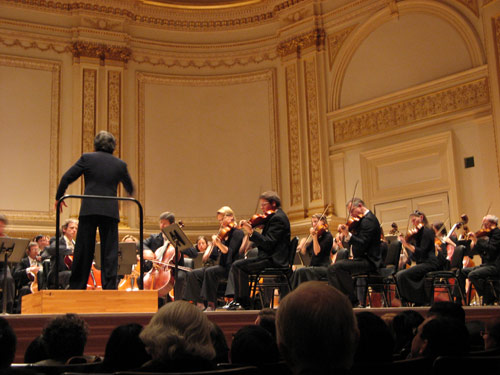
OP de Radio France

OP de Radio France

After the concert, we headed farther up the West Side to check out Kefi on 79th Street, the reinvention of the well-loved, but oft-overlooked Greek restaurant, Onera.
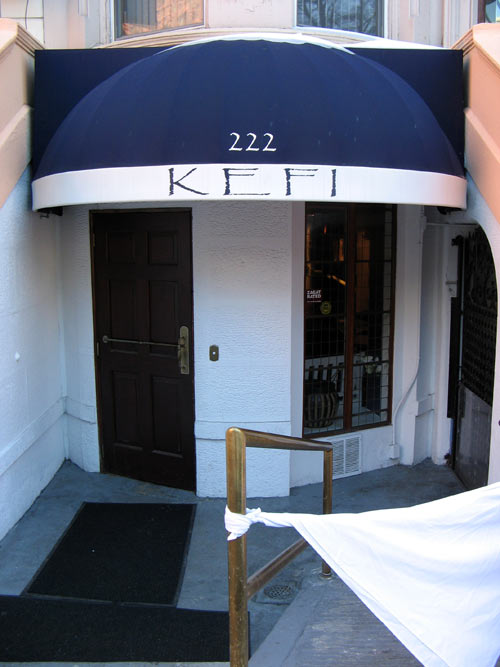
Kefi entrance

Rustic Greek cuisine is the specialty of chef-owner Michael Psilakis. For Kefi, the lower-level townhouse space has been made under to accommodate the more casual vibe (and lower prices): butcher-block tabletops replace the white linens and swaths of alternating blue and white fabric (suggestive of the Greek flag) float in place of the crystal chandeliers.
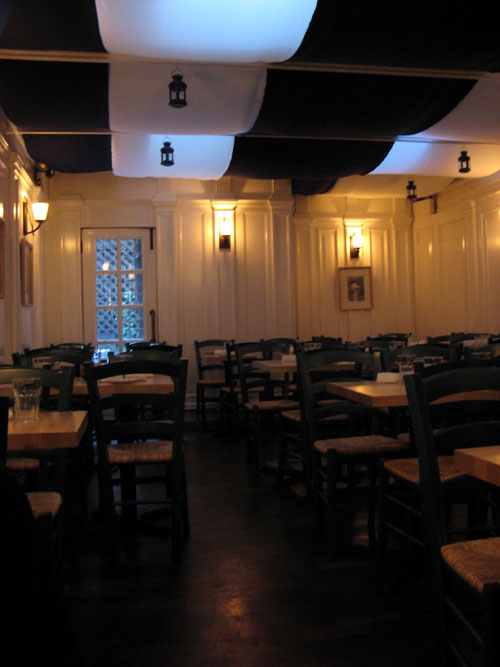
Kefi dining room

Instead of individual entrees, we opted for family-style meze: Spanakopita (spinach pie) is open-topped, a tangle of shredded cheese and spinach leaves in a warm, creamy sauce, sitting atop sheets of crispy phyllo dough.
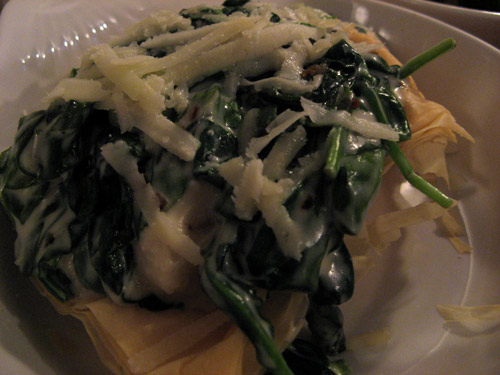
Kefi spinach pie

The shareable array of spreads included flavorful takes on tzatziki (yogurt), melintzanosalata (smoky eggplant purée), taramosalata (Greek-style “caviar” made from tarama, salted and cured carp roe) and sun-dried tomato/fava hummus — all impeccably fresh and served with wedges of warm, addictive pita.
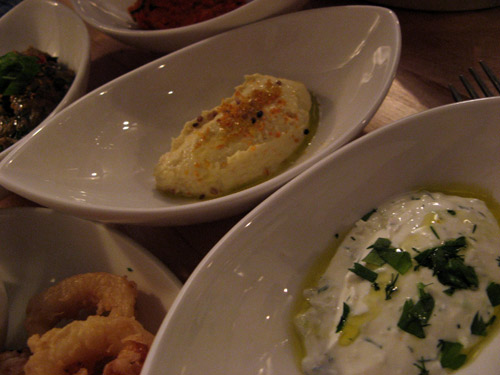
Kefi spreads

Tender, homestyle meatballs come smothered in a rich tomato sauce thick with fresh herbs, garlic, onions and olives. New York magazine just named these the best meatballs in the city.
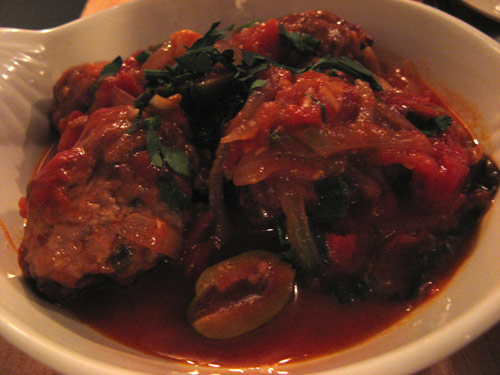
Kefi meatballs

To rounds things out, a hearty helping of crisp calamari, and for dessert: the moist, crumbly walnut cake alongside a scoop of walnut ice cream. Delicious!
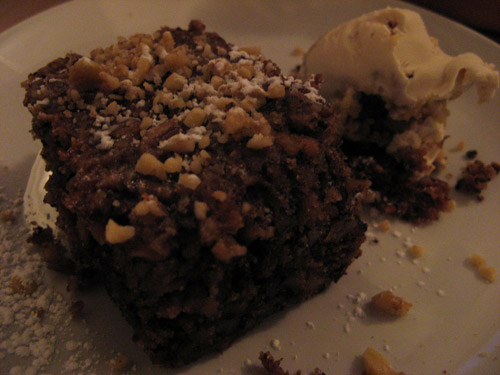
Kefi walnut cake

We arrived in time for the first seating at 5:00PM, which seemed a bit early at the time, but within half an hour, every table was filled and the entrance bar could hardly contain the spillover of waiting patrons. It seems we’re not the only ones who saw those rave reviews.

For those who miss the more formal Greek cuisine of Onera, Psilakis just teamed with Donatella Arpaia to open ambitious new restaurant, Anthos, in the old Acqua Pazza space on 52nd Street.
Away from Her

This week, MoMA presents “Canadian Front 2007“: eight New York premieres of new and recent features made in Canada, organized by the museum’s Department of Film, and presented in cooperation with Telefilm Canada.

This afternoon, I attended a screening of Away From Her, the feature-length directorial debut of Canadian actress Sarah Polley. Polley directed a short film, Don’t Think Twice, in 1999, which premiered at the Toronto International Film Festival; her second short, I Shout Love, won the Best Live Action Short Genie in 2002.

Polley is as well known for her political activism as for her acting talent; on hiatus from acting in the mid-1990s, she was involved with the Democratic Socialist Party, the Ontario Coalition Against Poverty, and the anti-nuclear group Canadian Peace Alliance, losing two back teeth in a scuffle with police during an anti-Conservative rally at Toronto’s Queen’s Park in 1995.

Away from Her is based on award-winning Canadian writer Alice Munro’s short story “The Bear Came Over the Mountain” from her 2001 collection Hateship, Friendship, Courtship, Loveship, Marriage. The film is produced by Jennifer Weiss (who also produced In Between Days), Simone Urdl, Daniel Iron and Victoria Hirst; Atom Egoyan, who directed Polley in Exotica (1994) and The Sweet Hereafter (1997), served as Executive Producer.

Polley’s debut is a tender exploration of the obligations and pain of marriage. Gordon Pinsent and the eternally lovely Julie Christie star as Grant and Fiona, a couple whose 44-year marriage is tested when Fiona begins to suffer from Alzheimer’s and decides to move into a nursing home. Over the course of her first month’s stay, during which new residents are forbidden visitors, Fiona loses virtually all memory of her husband and begins to develop a romance with a fellow nursing home resident. Heartache ensues.

The film is a low-key, intelligent, and sensitive study of Alzheimer’s and its ramifications. Guilt and shame come to color Grant’s efforts to care for his wife – their seemingly perfect marriage has had its history of romantic betrayals – and through these trials, he eventually grasps the true meaning of selfless love. His self-discovery, which comes as his wife retreats into her own hazy world, is at turns poignant and harsh, funny and ironic.

The audience members – among them, Lili Taylor with whom I stood on line outside the theater — seemed to respond well to the film; towards the end, the theater was filled with the sounds of their sniffles and sighs. Variety  named Polley one of their 10 Directors to Watch.

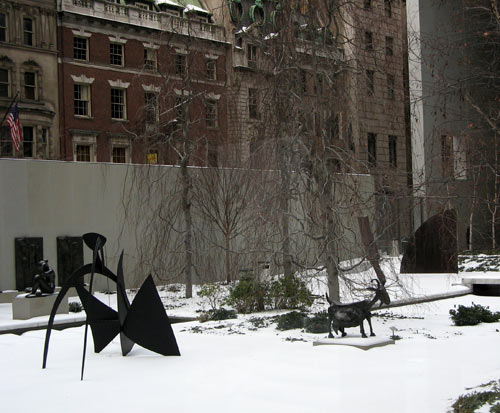
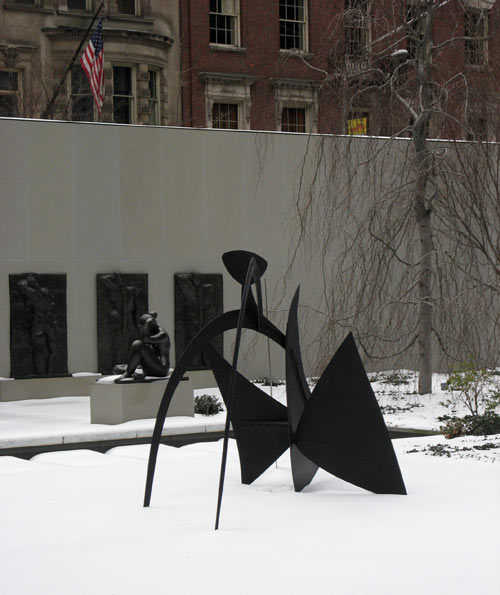
The MoMA Sculpture Garden under snow:

MoMA Sculpture Garden

MoMA Sculpture Garden

MoMA Sculpture Garden

Luck o' the Irish

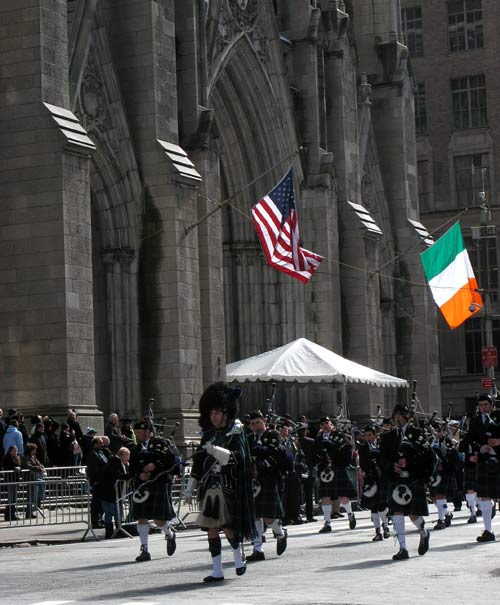
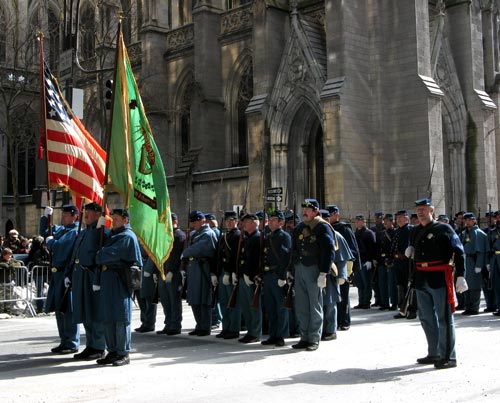
Yesterday’s storm with its 5 inches of snow wiped away the green stripe traditionally painted along Fifth Avenue for the St. Patrick’s Day parade — the oldest and most popular parade in New York City.

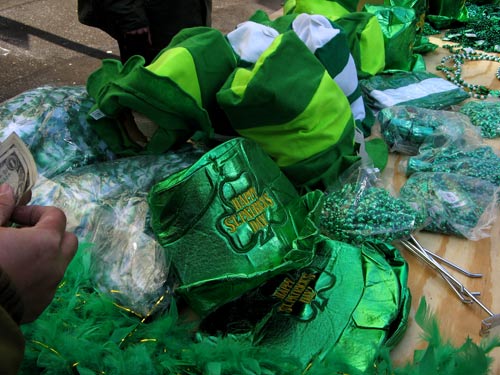
St Pats Vendor

According to the information website, the city’s first St. Patrick’s Day parade was organized in 1762 by Irish soldiers serving in the British army. The early marchers would form up at their parish churches or their organizations’ meeting places and march to the Old St. Patrick’s Cathedral — the oldest Roman Catholic church building in the city, still at Mott and Prince Streets. As the City and the Cathedral moved uptown so did the parade.

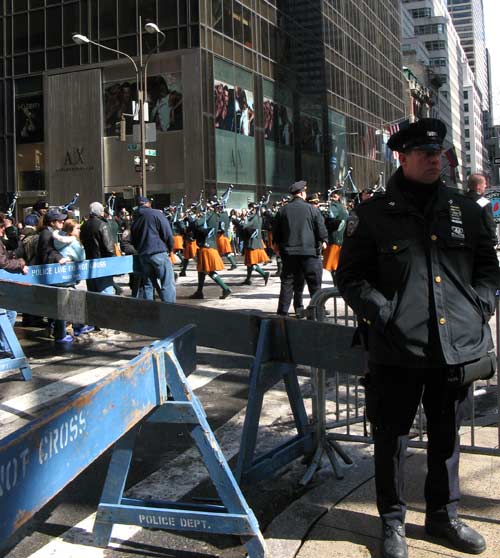
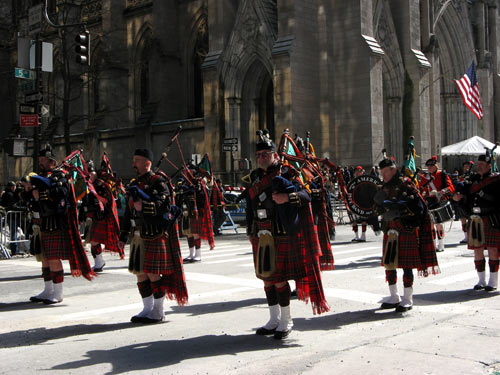
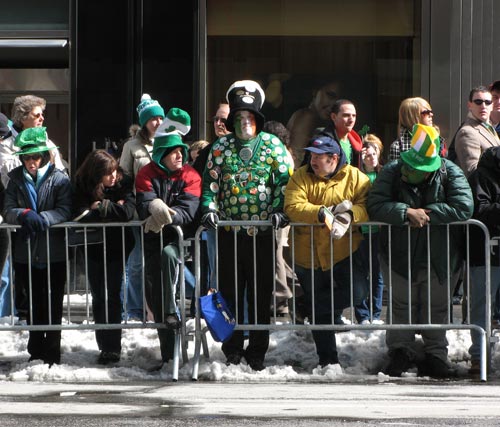
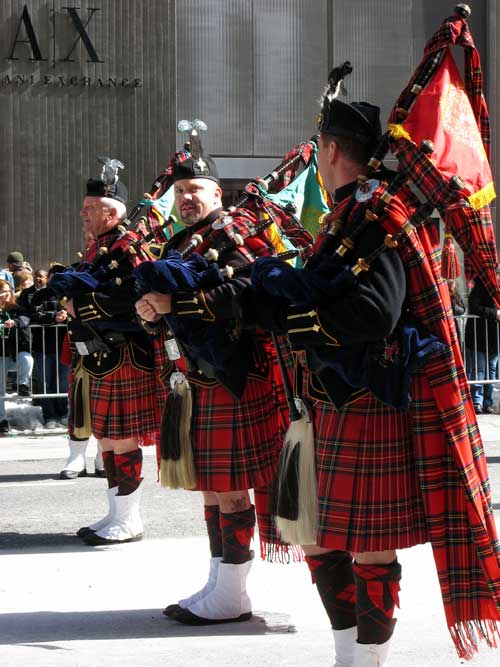
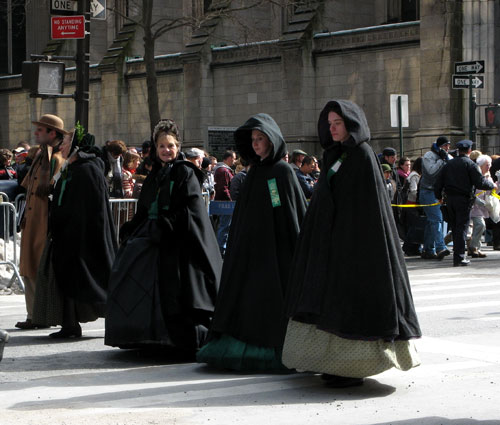
Anticipated attendance hovers around 2 million, converting the streets uptown into a sea of green, white and orange, as the echo of endless bagpipes played through the air. Spectators lined the streets tricked out in green hats, green boas, flashing green necklaces, green braids, and in some cases, green face paint. My new boots proved their waterproofability as I stood behind the police barriers in four inches of icy slush — so really, they were entirely worth it. Really.

St Pats Parade

St Pats Parade

St Pats Parade

St Pats Parade

St Pats Parade

St Pats Parade

St Pats Parade

St Pats Parade

St Pats Parade

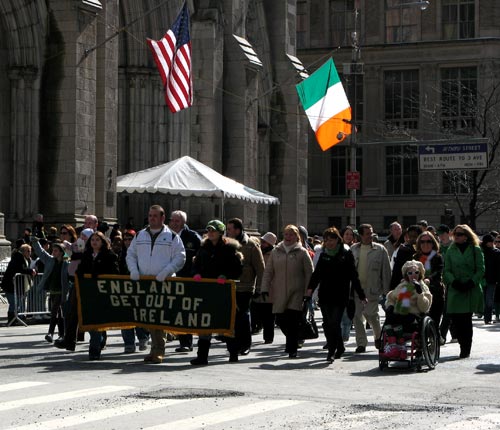
The St. Patrick’s Day parade is one of the few remaining where no cars, floats, buses, trucks or other vehicles are allowed. And controversially, a gay presence has been banned since 1991 — which ironically, makes the New York City parade more conservative than the one in Dublin.

Queens has hosted a more inclusive “St. Pat’s for All” in early March since 2000.

Wintry Mix

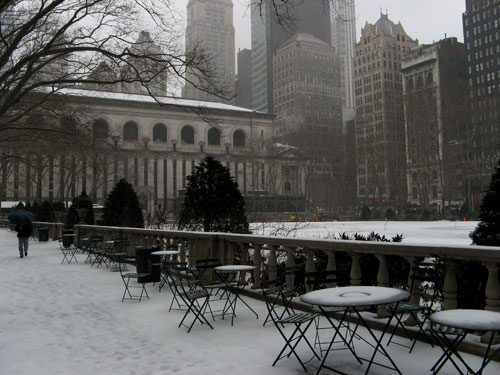
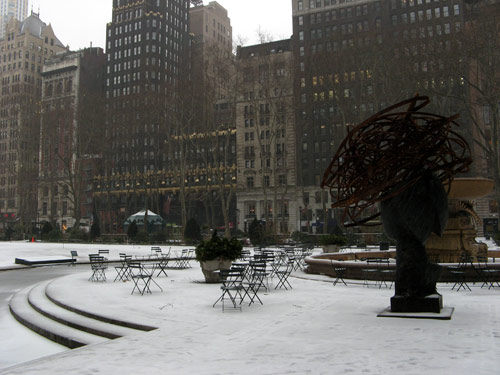
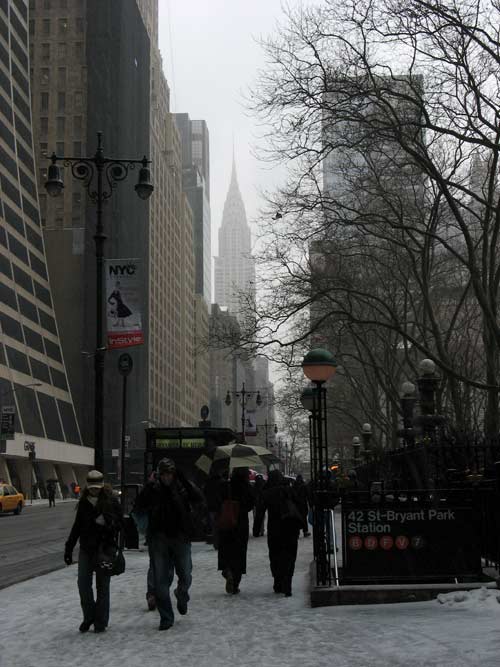
Where did this snow come from? Just two days ago, the temperatures neared 70.

I had picked this of all days to start using up my rolled-over vacation time – and it quickly became apparent that my slate of errands was not going to get done as planned. But lunch downtown with LN (and C) went on as scheduled – after which I took the scenic route home.

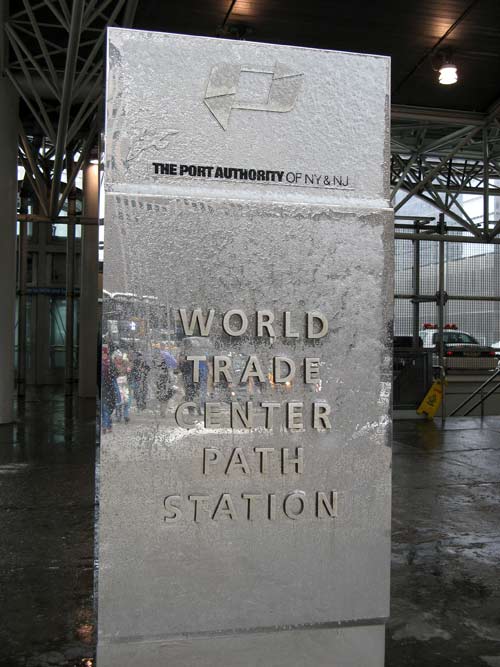
Snowy WTC PATH

Bryant Park Snow

Bryant Park Snow

Bryant Park Snow

“Wintry mix” sounds much more poetic than “freezing, sleety wet mess.”

Cantoon Garden

This week, we hit Elizabeth Street this afternoon for lunch at Cantoon Garden ne Pearl River Restaurant ne New Pearl River Restaurant – just a block east of busy Mott Street, but somehow much quieter.

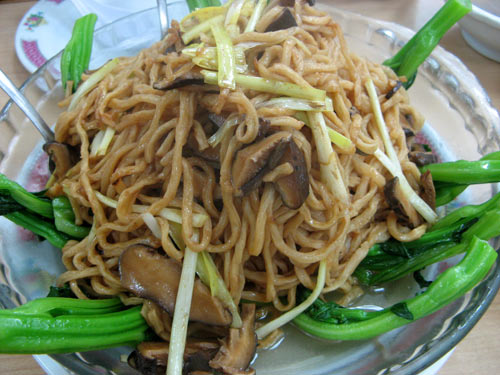
Right at the top of the menu, one of the dishes caught my interest: the Braised E-Fu Noodle with Black Mushroom. E-Fu noodles, or yi mien, are flat wheat and egg noodles. After a process of boiling and cooling, the long strands are formed into flattened patties, fried and dried, which is how they are sold in Asian markets. As a result of this double-cooking process the noodles can be prepared very quickly, making them a staple in many Chinese restaurants: braised, stir-fried, or in soups.

Because of their generous length — no cutting, please! — the noodles are considered a symbol of longevity, hence their popularity at birthdays, family celebrations and Chinese New Year banquets.

We knew the dishes were going to be very generous when we spied this little girl at another table, tackling a rice dish almost as large as her head.

Cantoon Garden diners

And sure enough…

E-Fu Noodles

Great dish: chewy noodles, tossed with shiitake mushrooms and yellow chives and ringed with choy sum stalks — in fact, it’s the one recommended by the Village Voice, though we didn’t know it at the time.

The ICE offers a “Master Class in Chinese Noodles” which features a variation of this dish. And I still have that gift certificate at home…

It's pretty, but is it Art?

After work, I crossed the West Side Highway to the World Financial Center where Riverhouse and the Sheldrake Organization were presenting an installment of their Contemporary Art and Design Series. The series is being curated by Brett Littman, Deputy Director of the P.S.1 Contemporary Art Center.

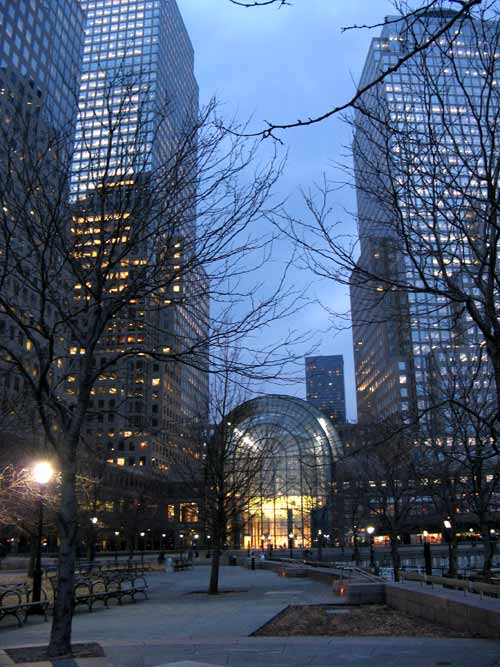
The Cesar Pelli-designed Winter Garden at dusk — a 120-foot-high vaulted room of steel and glass overlooking the Hudson River:

Wintergarden

WFC Sculpture

WFC Harbor

Tonight’s feature speaker was freelance writer and author Aric Chen. Chen is currently a contributing editor for *surface, I.D., and Interior Design magazines, contributing writer for Metropolis, GQ, Art & Auction, The Architect’s Newspaper  and The New York Times, and a reporter for the “Intelligencer” column of New York magazine.

Chen led a discussion about the emerging market for limited edition design objects, and how the marketplace has responded to the blurring line between art and design. One inspiration for the talk was the Cooper Hewitt National Design Museum’s 2004-2005 exhibition, boldly titled “Design ≠ Art,” which featured objects representing the work of 18 artists from the late 1960s to the present. The trend of “furniture-as-sculpture,” and an overall increased interest in design is evidenced by the proliferation of stores such as Design Within Reach, and even more accessibly, the “design democracy” of Target’s Michael Graves and Philippe Starck lines.

This fetishization of ordinary objects can trace its nascent beginnings to the World War I-era with Marcel Duchamp’s famously displaced urinal, Fountain (1917) , which in 2004, was heralded as the most significant work of modern art in history.

Certainly one can celebrate the formal beauty in even the most utilitarian objects; Oscar Wilde once stated that “all beautiful things are made by those who strive to make something useful.” (Though he also famously wrote in The Picture of Dorian Gray: “All art is quite useless!”)

With the increased awareness of good design comes increased marketability and potential for commercialization — at both ends of the spectrum. The masses get their Graves Alessi tea kettles and on the high-end, there is a suddenly emerging market for limited edition design showpieces. Chen expressed reservations about these items, which have a value based almost solely on their artificially imposed scarcity — an entire market based on superexclusive limited runs and rapid-fire turnover. Hmm…sounds familiar.

Artists like Tobias Wong have taken the aesthetic to the extreme with his whimsical faux-crystal McDonald’s cups and solid gold McDonald’s coffee stirrers, mocking branding, conspicuous consumption, celebrity and class culture.

Incidentally, those original spoon-tipped plastic stirrers that Wong used as a model were withdrawn from use by the fast-food chain in 1980, after it became widely known that cocaine users were using them for unintended purposes. It’s a helluva drug.

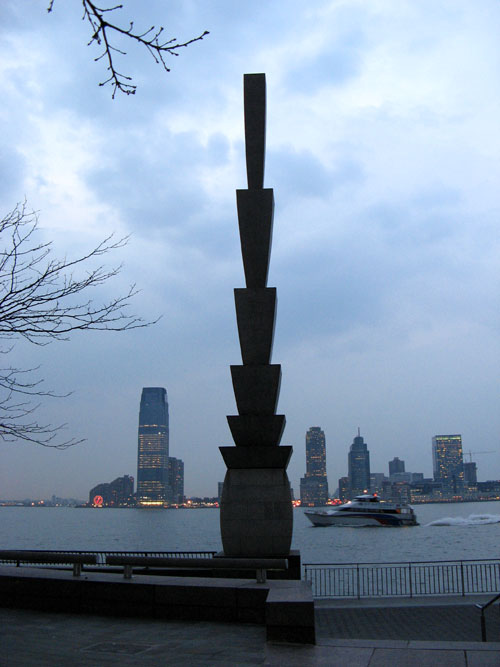
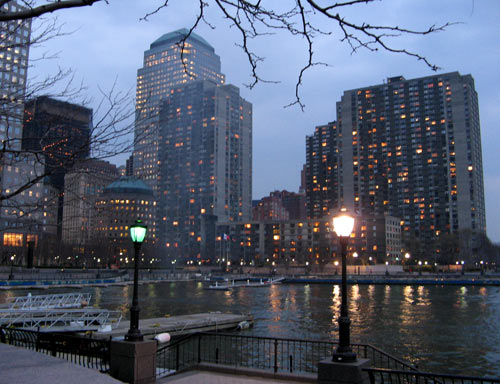
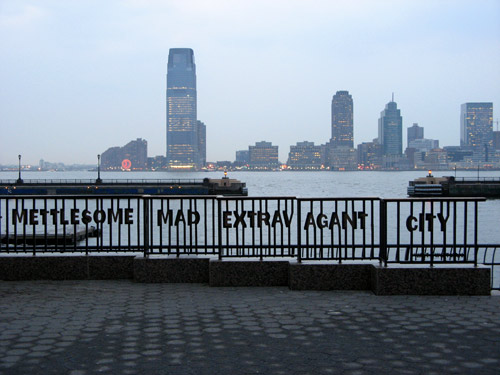
The World Financial Center’s waterfront esplanade, excerpting Walt Whitman’s “City of Ships“:

City of the world! (for all races are here;
All the lands of the earth make contributions here;)
City of the sea! city of hurried and glittering tides!
City whose gleeful tides continually rush or recede, whirling in and out, with eddies and foam!
City of wharves and stores! city of tall façades of marble and iron!
Proud and passionate city! mettlesome, mad, extravagant city!

Mettlesome Mad Extravagant

Let's Get Comfortable launch

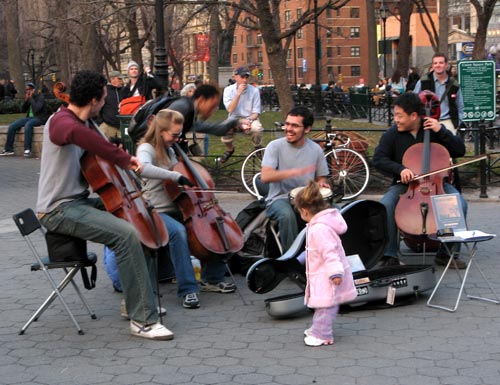
Another beautiful almost-Spring day. Union Square was filled with New Yorkers, and the musicians were out in full force, entertaining the crowds and making new fans in the park.

Passing through the dog run, I spied AC and M sitting on a bench, keeping watch over AC’s frolicking dogs, and exuding cozy contentment. What a sweet scene! I called out to her, and said a brief hello, before continuing on my way up Broadway.

Union Square Musicians

Tonight, a launch party for Mitchell Gold and Bob Williams’ first book, Let’s Get Comfortable: How to Furnish and Decorate a Welcoming Home.

Gold and Williams founded the Taylorsville, North Carolina-based home furnishings design company Mitchell Gold + Bob Williams in 1989. The $100-million-a-year company supplies chains like the troubled Pottery Barn, Crate & Barrel, Williams Sonoma Home and Restoration Hardware, and has 13 and Mitchell Gold + Bob Williams Signature stores (with 5 more to come, including a New York City location at Andre Balazs’ undulating glass-and-brick Kenmare Square.)

The book, written with Mindy Drucker and published by Meredith Books, promotes the MG+BW “relaxed design” aesthetic, based on mixing, not matching – with comfort and livability as chief considerations. The design philosophy is reflected in the authors’ homes; photos of their residences are included in the 216-page book.

The duo was in New York City to kick off their book tour with an appearance on NBC’s “Today Show” that morning.

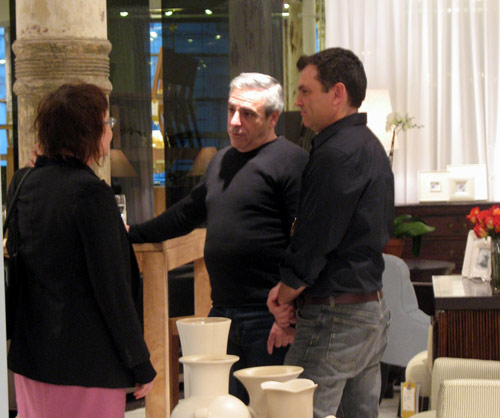
Gold and Williams

Inc. magazine named the team among their list of 26 most fascinating entrepreneurs. The openly gay business partners are well known for their active philanthropic efforts, on behalf of such organizations as the Human Rights Campaign (HRC), the Empire State Pride Agenda, The National Black Justice Coalition, the Design Industries Foundation for AIDS (DIFFA), and Gold-founded Faith In America, which fights religion-based bigotry. Other causes include the Juvenile Diabetes Research Foundation, the Ovarian Cancer Research Fund, and the Leukemia & Lymphoma Society.

Related: Tips on charitable giving from the Better Business Bureau Wise Giving Alliance.

Righteous Urban Grilling

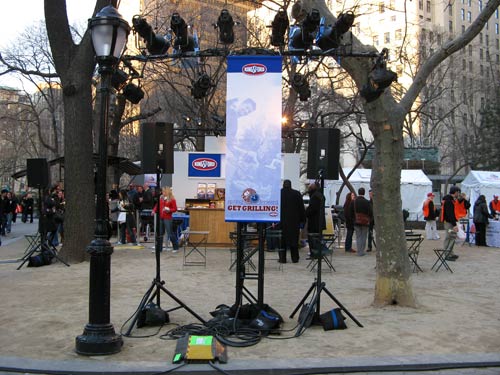
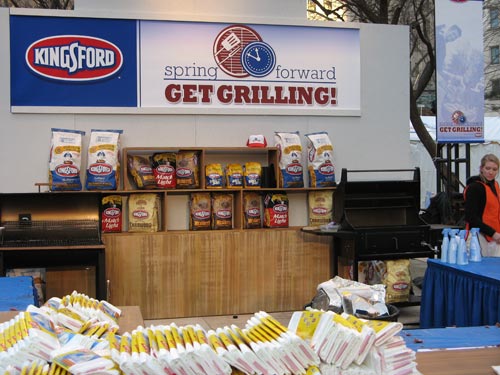
To celebrate the early start of Daylight Savings Time, Kingsford Charcoal hosted a “Spring Forward, Get Grilling” dawn-to-dusk cookout in Madison Square Park.

The public was invited to attend charcoal grilling and barbecue smoking demonstrations by four-time Memphis in May world titlist Chris Lilly, barbecue expert Rick Rodgers, and Latin grilling authority (and owner of Paladar) Aaron Sanchez. But most enticing of all: pitmasters would be firing the smokers and grills from 7AM until 7PM, dispensing free barbecue to all passerbys.

Hmm, barbecue for breakfast?

It was shaping up to be one of those wildly unpredictable weeks of early-March weather: freezing and overcast one day, warm and sunny the next. Today was one of the latter, so I decided to swing by the park after work. I was about a block away when SYB sent a text message informing me that the last of the brisket had been doled out. Alas.

Mark your calendars: The Fifth Annual Big Apple Barbecue Block Party — the Woodstock of New York barbecue — will take place here in Madison Square Park on June 9 and 10, 2007. Fast Passes go on sale beginning Sunday, April 1.

Get Grilling

Get Grilling

The waft of phantom barbecue still hung tantalizingly in the air as the crowds gradually dispersed. All this whetted SYB’s lately dormant taste for meat, so he suggested dinner at R.U.B. a couple of blocks west of the park.

Madison Square Park

Grrr. Still stinging from Sunday’s disappointments, I grudgingly agreed to give the place another shot. Once there, I ordered the pulled pork sandwich, which arrived in a moist, lukewarm heap on a wax paper-covered metal pie plate. Presentation (or lack thereof) aside, it actually was  very good (as yesterday’s server had promised)… but probably not 45-minutes  good, which unfortunately, is how long it took to be delivered to the table. (What sandwich is?) Good thing we had the hush puppies to tide us over.

Does R.U.B. serve the best barbecue on the city? New York  magazine declared this ‘cue joint supreme in 2006 and 2007; USA Today  listed it among the best in the nation. (The folks at AOL named Virgil’s Real BBQ New York City’s #1.) To be sure, the field of contenders has heated up considerably in the past couple of years — thanks to the likes of Daisy May’s BBQ U.S.A., Blue Smoke, and Dinosaur BBQ.

R.U.B.’s menu calls out for broad sampling: the popular “Taste of the Baron,” offers a tasting of smoked meats (turkey, ham, pastrami, beef brisket, pulled pork), chicken and sausage, piled on slices of fluffy white bread and topped with a quarter rack of dry-rub ribs, plus a choice of 2 large sides — all for $45.75. That’s a lotta meat! For those who’d like a little bubbly with their barbecue, there’s “The Empire,” i.e., the “Taste of the Baron,” and a bottle of Dom Perignon for $275. (Intriguing…!) If that seems a bit too precious, there’s always Abita or Blue Moon on draft.

Live laughs

I just wasn’t having good luck with the restaurants this weekend.

R.U.B. BBQ co-owner Paul Kirk, the Kansas City “Baron of Barbecue,” is something of a legend in smoking and grilling circles, with over 475 cooking awards to his name, including seven “World Championship of BBQ” titles. On Sunday, B and I had our hearts (and stomachs) set on some of that Righteous Urban Barbecue, conveniently located next door to the Gotham Comedy Club on West 23rd Street where we would be attending our television taping that evening.

After taking our seats in one of the backroom booths, we ordered a bourbon and coke, eagerly perusing the menu as the glorious scent of smoky barbecued meats wafted through the air. The troubles began early: right away, B was disappointed by the menu’s exclusion of mac n’ cheese. No matter: it was an irksome, but rather minor, infraction. But as we commiserated over which of the rib varieties to sample this afternoon, our server set down the drink and coolly informed us that R.U.B. was sold out of ribs. And not just one kind, but all: the Pork Spare Ribs St. Louis Style, the Short Ends, the Long Ends, the Rib Tips, and  the Baby Back/Loin Back Ribs(!) Also, the restaurant was clean out of Brisket(!!) And  Burnt Ends(!!!)

We sat speechless for a bit, taking in how such a thing could be possible, and then tried another tack.

Okay, what do you have?

“Uh… the pulled pork is very good.”

B asked for few minutes to consider that. In the meantime, could we get an order of the BBQ Chicken Wings?

No doubt sensing the mood, our server hesitated before delivering the bad news. Actually, they were sold out of Chicken Wings. And Chili — hence, no Chili Cheese Fries… and lest we even thought to ask, Fried Green Tomatoes, too.

That was the final straw. Check, please.

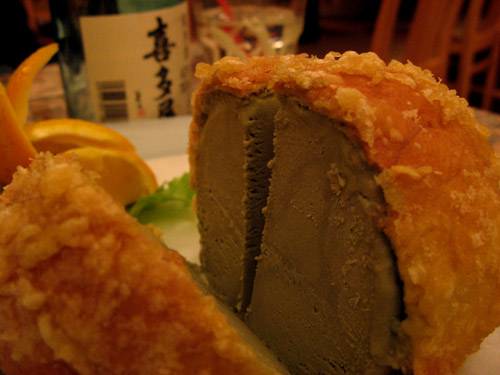
We decamped for nearby Monster Sushi, where nothing was sold out, and happily devoured a meal of sushi, sake and tempura green tea ice cream.

Ice Cream Tempura

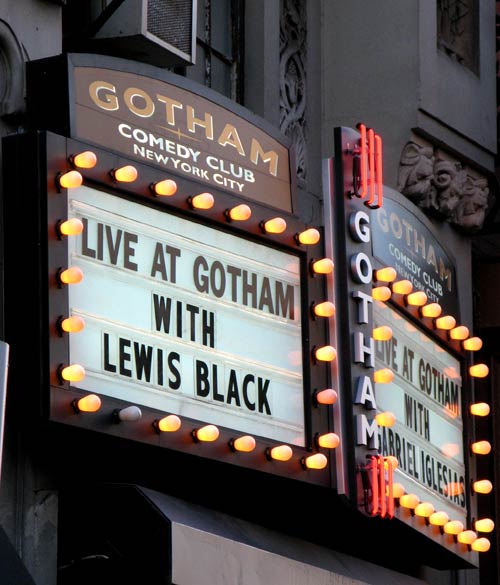
After a chilly wait outside the Gotham, we were ushered inside the comedy club. Tonight we were there to tape an installment of Comedy Central’s Live at Gotham, hosted by “America’s foremost commentator on everything,” Lewis Black. Black is a stand-up comedian, playwright, and author, but is probably best recognized for his regular “Back in Black” commentary segment on The Daily Show.  After delivering his own performance, Black introduced a slate of half a dozen solidly fine and fiercely funny stand-up acts. It was good to laugh, and laugh we did.

Live at Gotham

We were seated in the first row, right in front of the stage — the perfect vantage point for seeing and being seen. I’d like to attribute the optimal placement to our good looks, but more likely it was just good timing. We shared our table with a pair of young lovelies, and the ethnic/gender makeup of our fourtop did not escape the notice of the first comedian — an acid-tongued Buddy Holly lookalike — who seized upon it as fodder for his act. Ah, Mom will be so proud when this one airs on Comedy Central sometime this summer.