vip in the city, page 4

...and we're back!

Back in the city after nearly two weeks in Hawaii, and back to the business of blogging. I spent the better part of this day fighting jet lag from the six hour time difference and uploading vacation photos on flickr.

So where was I?

At the Kailua Village Farmer’s Market, we found a gorgeous assortment of tropical flowers…

…and piles of luscious fruit. Hawaii is notoriously expensive, but the one thing that we found to be absurdly cheap were the papayas. Fruits that would cost upwards of $3 apiece at the Upper West Side Fairway were offered 3 for $1 for the “premium” Hawaiian variety or a staggering 5 for $1 for the “solo” type.

I like papayas, but well… one can only eat so much.

At the opposite end of the spectrum, bananas were 65-70 cents apiece at most places around town.

After a breakfast of Spam and eggs (When in Kona…) and local specialty Loco Moco at Big Island Grill, we hit the beaches.

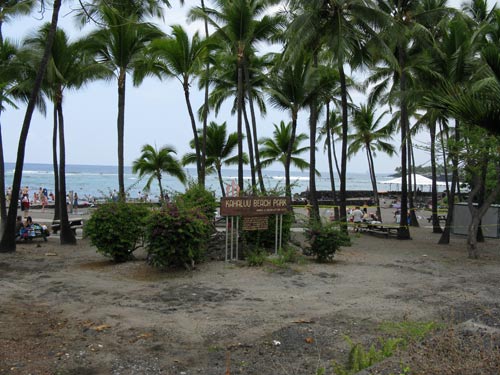
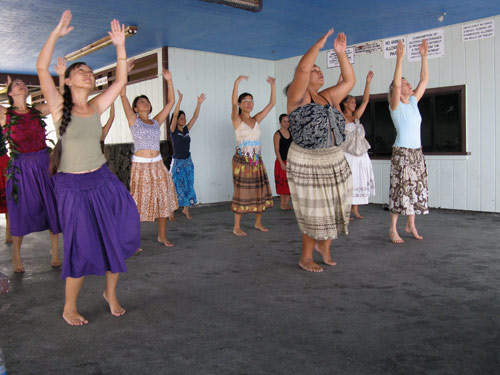
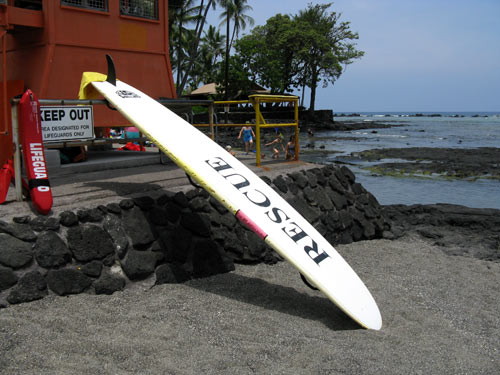
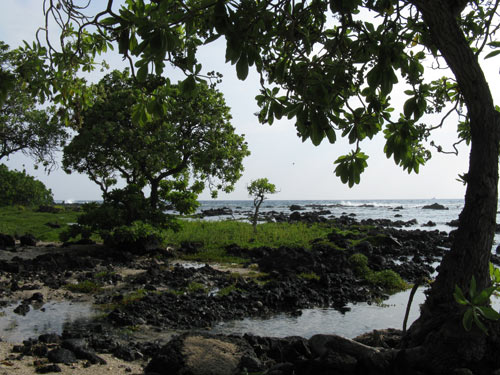
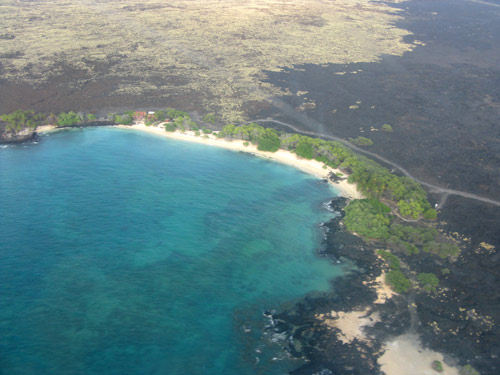
At Kahalu’u Beach Park, we came across a hula lesson in progress, dozens of colorful fish and one curious honu (Hawaiian green sea turtle).

The long road to Kona

18 hours after my 4AM shuttle pick-up to Newark, a change of planes at O’Hare (my first time in Chicago!), one long meal-less flight and a mad dash through the Honolulu airport, I missed my inter-island flight to Kona… by five minutes.

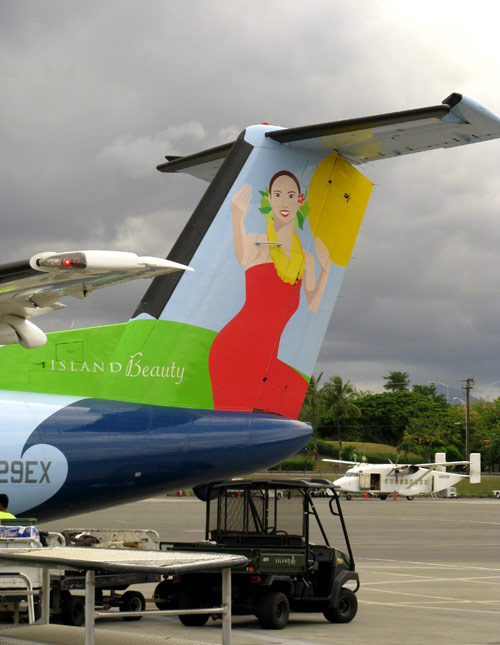
The missed connection set me back another two hours, but gave me ample opportunity to consider whether $4 was an exorbitant price for a bottle of water. (I decided: Yes.)  And also to snap a few photos of the  tarmac with the misty-topped Hawaiian mountains in the distance.

Despite my aversion to small planes, the flight itself was brief and uneventful. Half an hour later: The Big Island at last!

A peek at the A-List

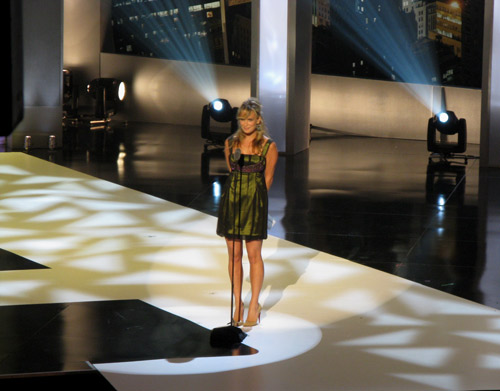
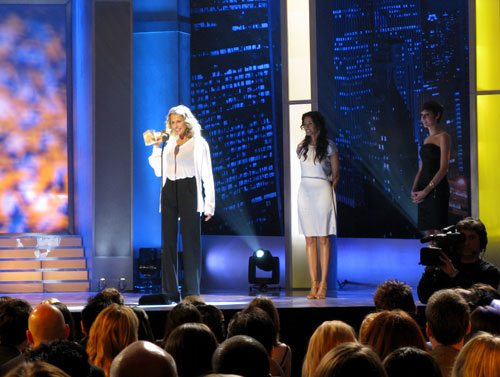
Just returned from Bravo’s “A-List Awards” show at the Hammerstein Ballroom. I will reserve most of my commentary for after the show’s airing next Thursday, June 12, but in the meantime, here are a few of our photos from the evening. Red carpet arrivals here.

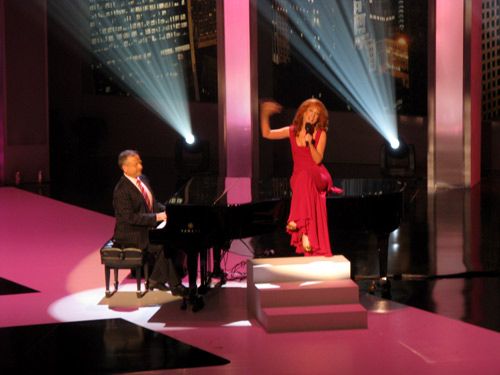
Host Kathy Griffin, channeling Michelle Pfeiffer in The Fabulous Baker Boys. (Check out a brief clip of her show opening performance here.)

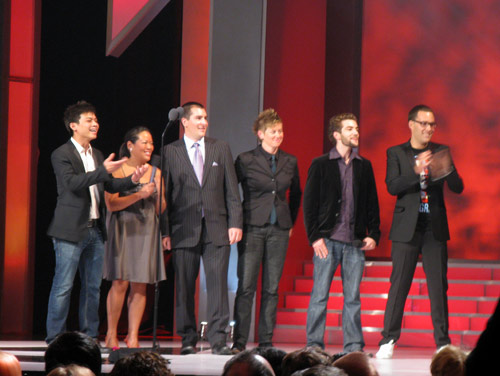
Top Chef contingent (+ Project Runway Season 1 winner Jay McCarroll):

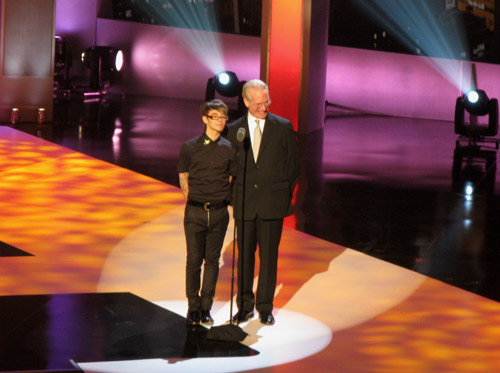
Project Runway Season 4 winner (and new Brooklynite) Christian Siriano and Tim Gunn. So we meet again!:

Molly Sims:

A bizarrely loopy Lauren Hutton (more on this later — wow) and Top Chef‘s Padma Lakshmi:

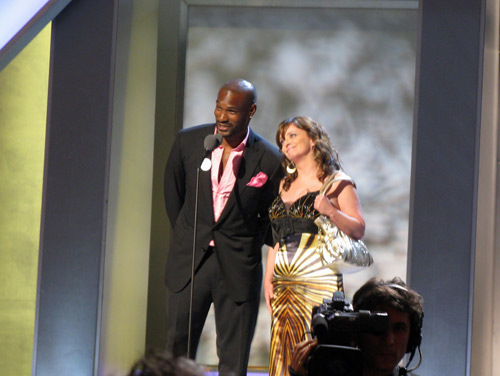
Tyson Beckford and Saturday Night Live alum Rachel Dratch:

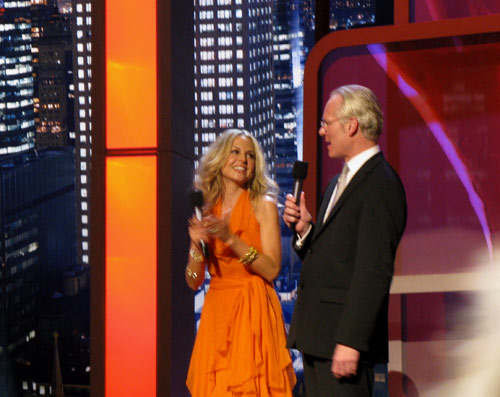
Stylist and future Bravo reality star Rachel Zoe and Tim Gunn:

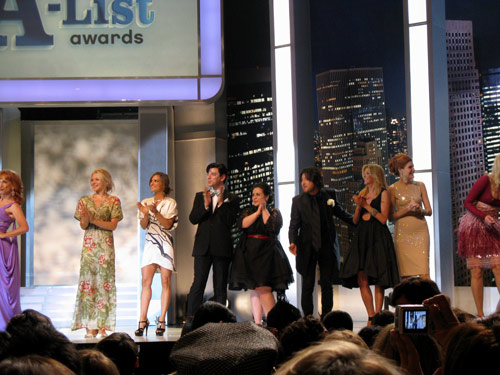
Bravo A-List Awards

More from the Bravo A-List Awards, celebrating “the best in food, fashion, design, beauty, and pop culture.”

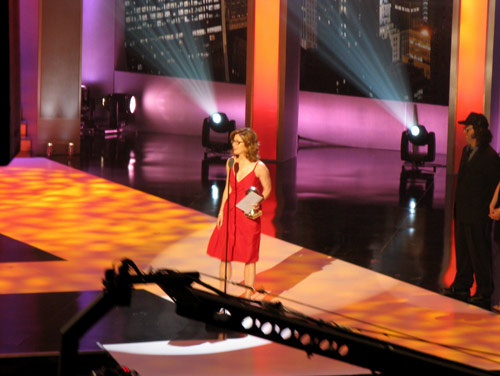
A-List Actor (Female) winner, Dana Delaney (Desperate Housewives):

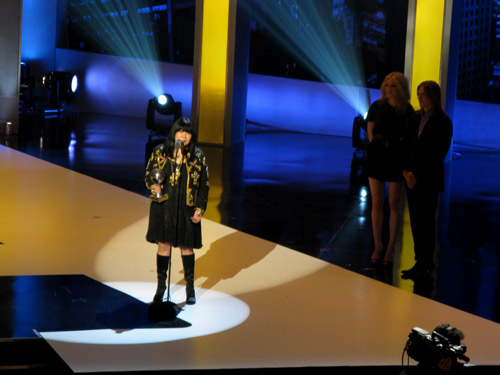
Anna Sui, winner for “A-List Fashion,” presented to a fashion designer who has proven to be a tried and true trendsetter and tastemaker. Sui beat out Tory Burch, Zac Posen and Proenza Schouler(!)

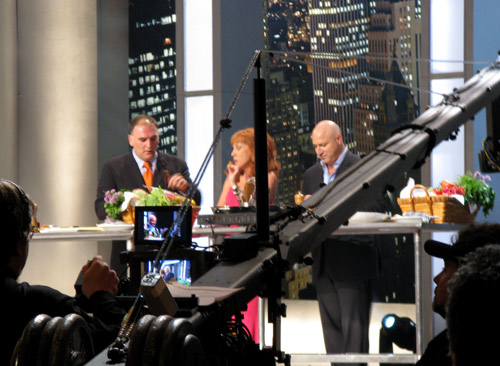
Despite the clunkiness of the execution, this was probably my favorite segment: the Quick Fire competition between Top Chef judge Tom Colicchio and “A-List Chef” winner Jose Andres. They each whipped up two dishes — on stage — which host Kathy Griffin “dropped” before reaching the panel of TC alum judges.

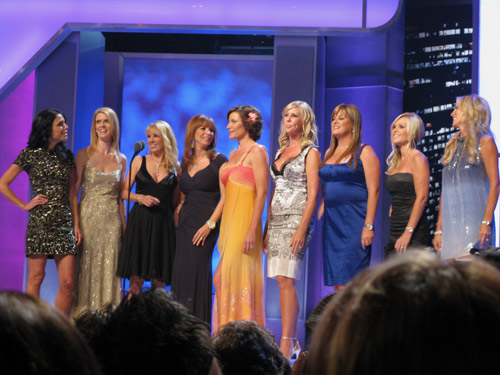
Real Housewives face off!

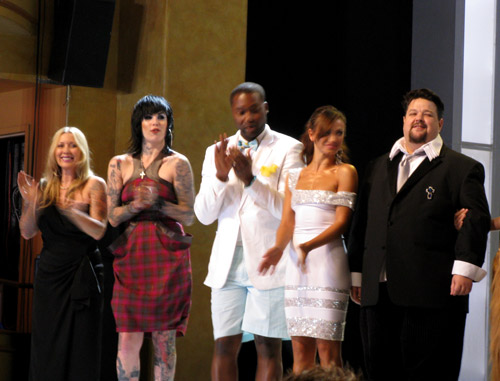
To close out the awards ceremony, there was a charity fashion show (benefiting UNICEF) featuring “celebrities” strutting outfits designed for them by Project Runway alums: Candace Bushnell and season 2 designer Daniel Franco, Holly Kiser and season 4 finalist Chris March, Kathy Griffin and season 2 designer Nick Verreos, Katrina Smirnoff and season 3 finalist and “Fan Favorite” Michael Knight, Kat Von D and season 4 finalist Sweet P, Niki Taylor and season 3 finalist Laura Bennett, Nikki Blonsky and season 3 designer Malan Breton, Rebecca Budig and season 3 designer Alison Kelly.

What a piece of work is a man

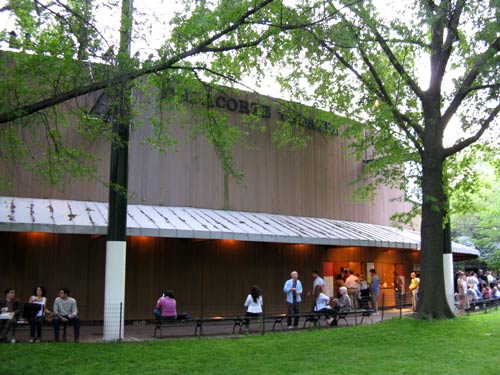
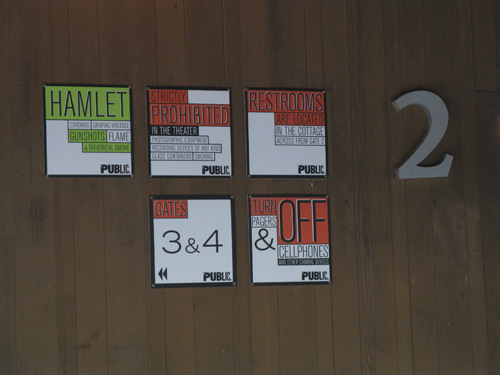
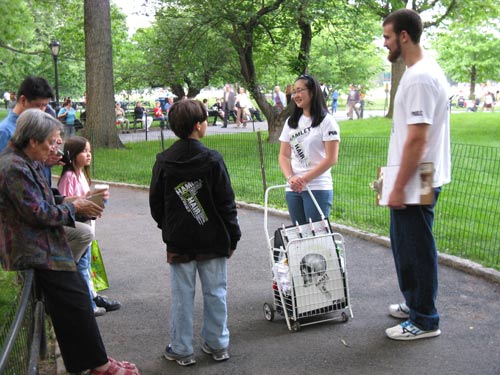
Our summer tradition: The Public Theater’s Shakespeare in the Park productions. In 2007, we enjoyed Romeo and Juliet and A Midsummer Night’s Dream.  This year brings Hamlet and Hair… and a change to the ticket distribution system. Reserving a seat to these free productions used to involve camping out — sometimes overnight — on the line in front of the Delacorte or Public Theaters for the 1PM ticket distribution, or making a “summer supporter” donation to the Public Theater.  This summer, for the first time, the theater also offered guests the option of joining a “virtual line” — actually, more a lottery — by registering at the Public Theater reservations website and submitting requests for up to two tickets on each performance day.

Online reservations?  That, I can do.  That, in fact, is how we found ourselves at the Delacorte, the first week of the run.

This production marked the SITP’s first Hamlet since 1975, when Sam Waterston held the title role.  33 years later, Waterston settles impressively into an almost sweetly buffoonish Polonius.  Somewhat less successful was Michael Stuhlbarg, who received a Drama Desk Award and a Tony nomination for 2005’s The Pillowman, as the melancholy (and sometimes manic) Dane.  Rounding out the familiar television faces: Lauren Ambrose (last year’s Juliet) as Ophelia; Emmy winner André Braugher as Claudius; and Margaret Colin (lately of Gossip Girl) as Gertrude.

Of note: an unexpected ending, some amusing costuming (especially in the swapped top/bottom suits of Rosencratz and Guildensten) and the wonderfully creative of play-within-a play, which featured dancing lifesized marionettes.

Reviews were mixed, but this Hamlet at least fared better than the 2000 production at The Public, with Liev Schreiber in the title role, which received one of the most brutal reviews I’ve ever read in New York magazine.

A piece of Ireland

It feels good to be home.

To kick off the summer’s River to River Festival, soprano Leah Partridge and tenor Norman Reinhardt performed an evening of operatic arias and duets in Battery Park City’s South Cove.

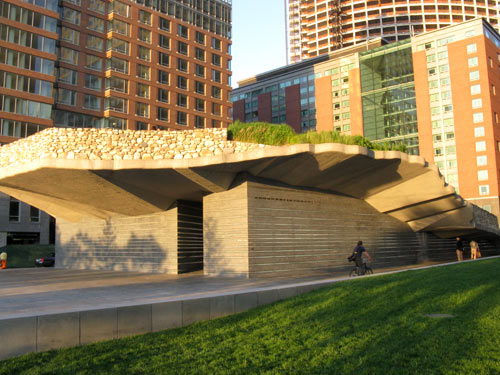
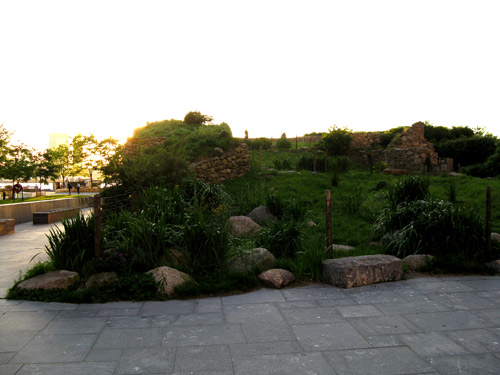
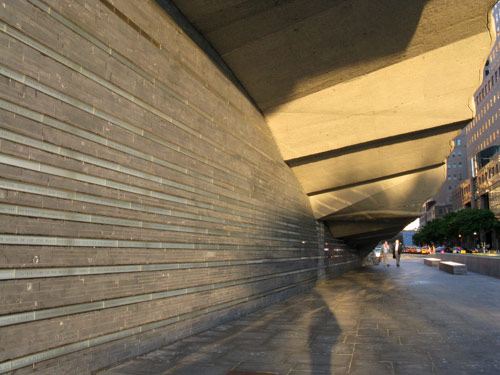
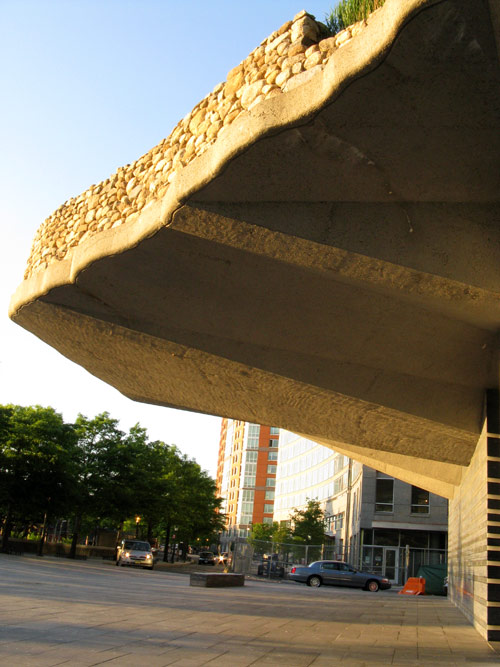
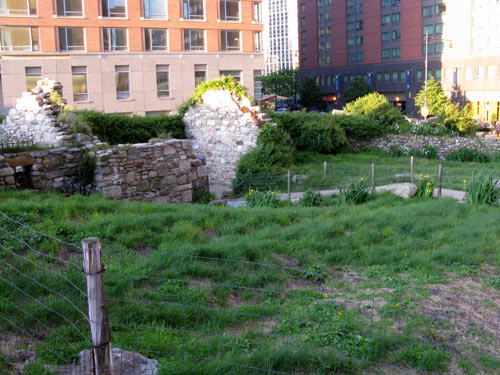
On my way to the outdoor music recital, I walked by the Irish Hunger Memorial — a striking 1/4 acre plot of land nestled anachronistically among the lower Manhattan skyscrapers, jutting out from the sidewalk at Vesey Street and North End Avenue. The memorial was designed collaboratively by artist Brian Tolle, in association with 1100 Architect and landscape architect Gail Wittwer-Laird. (Factsheet .pdf) Theirs was the winning entry in a 2000 design competition for the site, which was donated by the Battery Park City Authority.

The sloping field looks out over the Hudson from a twenty-five foot pedestal of fossilized Kilkenny limestone and glass, and is dedicated to raising awareness of An Gorta Mór (The Great Hunger), a.k.a. the Great Irish Famine of 1845-1852 that left one million dead and another million and a half uprooted, sparking the first major wave of Irish emigration to the United States. (Hello, Sunnyside.)

Ground broke on the $4.7 million memorial on March 15, 2001; it was dedicated by Governor George Pataki and Governor and President Mary McAleese of the Republic of Ireland in a ceremony on July 16, 2002 — several months late due to the area’s limited access following September 11. The neighborhood is now so crowded with memorials (World War II, The Museum of Jewish Heritage, Ground Zero) that after the Irish Hunger Memorial dedication, columnist Jimmy Breslin dubbed it “Misery Mile” to contrast with Museum Mile uptown.

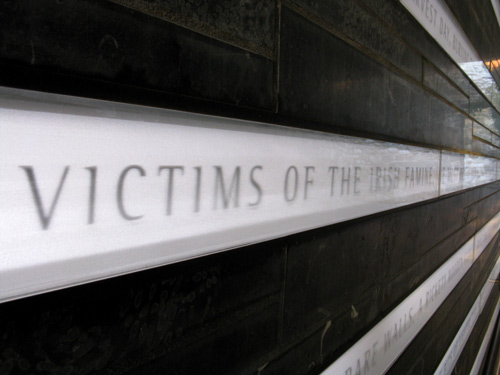
The exterior wall of the memorial and its interior passageway are lined with almost two miles of text, etched onto illuminated glass and Plexiglas panels: excerpts of bills, notes, letters, statements, songs and reports, recipes, quotations, proverbs and statistics, intended to provoke debate or inspire reflection. The memorial’s 1/4-acre lot represents the maximum-sized plot one could own to still be eligible for any form of government relief under the infamous Gregory Clause that was added to the Poor Law of 1847 — a British land policy which effectively cleared estates for landlords and exacerbated the famine by destroying a way of life for an entire class of small farm laborers in Ireland. Thousands died of starvation rather than relinquish what little they still had.

Wittwer-Laird’s landscape utilizes stones, soil, and some 62 varieties of grasses and wildflowers from fallow potato fields all brought in from the western coast of Ireland. Most strikingly, the memorial incorporates an actual ruined Famine-era stone cottage, donated by distant relatives of the artist, dismantled in County Mayo, and reassembled in downtown New York, minus its modern tin roof.

Ironically, the transplanted ancient materials actually withstood their first New York winter far better than the modern materials used to bind them. After being open for less than a year, the memorial had to be closed for several months in 2003 for emergency repairs.

Flickr preview: a Jazz Age Lawn Party on Governors Island (Sunday, June 8, 2008)

Rock and robots

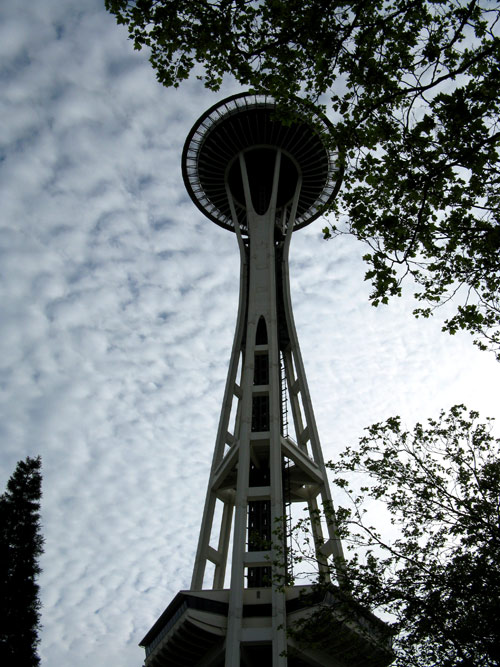
From the Olympic Sculpture Park, we found our way to Seattle Center by following Broad Street up the hill toward the skyline-dominating Space Needle.

The 74-acre Seattle Center complex was built for The Century 21 Exposition of the 1962 World’s Fair, and serves as the cultural heart of the city: home to the Seattle Opera and the Pacific Northwest Ballet, i.e., the newly transformed Marion Oliver McCaw Hall, numerous theater companies, the Pacific Science Center, The Children’s Museum, and the Experience Music Project|Science Fiction Museum and Hall of Fame.

The centerpiece, of course, is the 605-foot Space Needle. On a rare, clear day — today was not one, alas — the observation deck offers panoramic views of the city, its surrounding mountains and Puget Sound from 520 feet above ground.

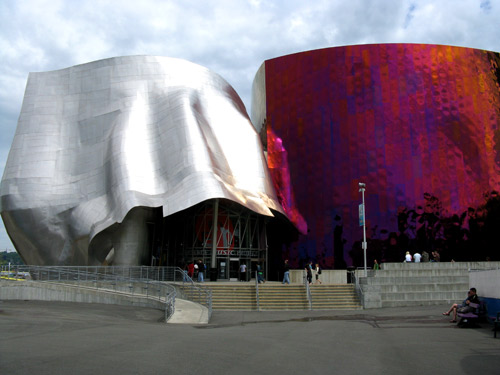
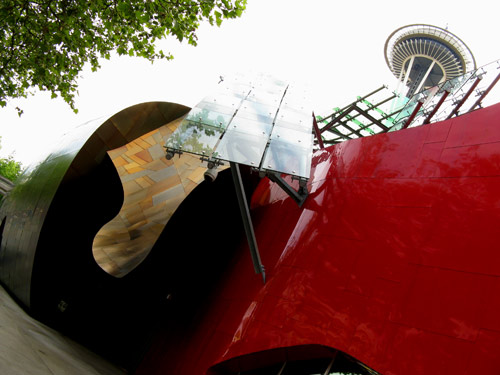
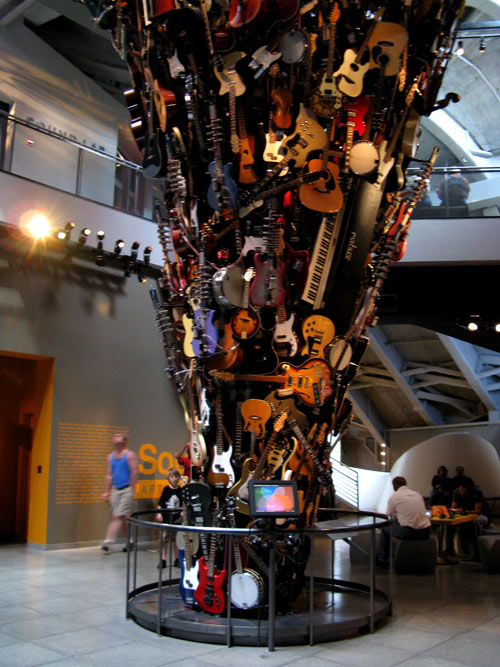
JM among others had recommended a visit to the Frank O. Gehry-designed Experience Music Project|Science Fiction Museum and Hall of Fame. CF and MT had visited this garish, multi-colored building a few years ago, back before the SFM replaced the “Funk Blast” wing with its much-missed ride. (Incidentally, I thought I was only one for whom the connection between rock and science fiction was lost, but apparently not.)

We toured through the permanent exhibitions, which included the excellent “Sound and Vision: Artists Tell Their Stories” — EMP|SFM’s collection of videotaped oral history interviews. I could have spent a couple of hours in that room of monitors and headsets alone, but at least I got to watch the clip of Nichelle Nichols telling the terrific anecdote of television’s first interracial kiss, which occured on the “Plato’s Stepchildren” episode of Star Trek TOS. Not that I’d know anything about thatnope.

The interactive stations offered the chance to simulate keyboard, drum or guitar riffs, or to tool around with amplifier effects at the “Jimi Hendrix: An Evolution of Sound” exhibit. (Reminded me a bit of Rock Band… and we know how I feel about that.) The “Northwest Passage” traced the development of the Northwest music scene, which apparently owes a lot — much more than I ever would have guessed — to The Presidents of the United States of America. (Them again?) The original handwritten lyrics to “Lump” are enshrined here. Oh, and some band named Nirvana had a few hits, too. On display: Kurt Cobain’s Lake Placid blue Fender Mustang from the “Smells Like Teen Spirit” video — pretty cool.

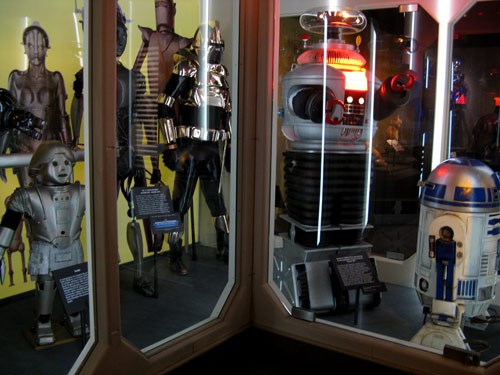
The SFM wing of the EMP|SFM was a cool, if random collection of science fiction memorabilia — robot toys, Star Wars action figures, a T-800 from Terminator 2: Judgment Day, the original model for the Death Star and a few other familiar characters.

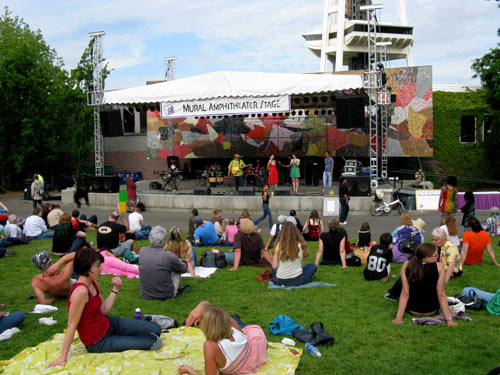
Outside the museum, the annual Northwest Folklife Festival was taking place. Impromptu performances, the waft of incense, stalls selling hemp goods and holistic medicines… if I had been asked to guess at which of the two area festivals there would be a shoot-out this weekend, this would not have been my choice.

And live music… because we just can’t get enough. From the stage-facing beer garden, we sipped on cold beer and wine (organic, of course) as Little Big Man commanded the stage with his reggae sounds, wiling away the final hour before I hopped the Monorail (…Monorail …Monorail!) back downtown for the airport shuttle home.

Not that’s a full six hours. Once more: full Seattle flickr set.

On the waterfront

I’ve always enjoyed The New York Times’ “36 hours” travel series — even if it hasn’t always been entirely original. I’ve referred to it as a guide for planning weekend itineraries both very close to home and very far away. It’s not that I believe that 36 hours is sufficient to explore most places — I expect I’ll still be discovering things about New York after 36 years — but I appreciate how the day-and-a-half constraint compels prioritizing and efficient use of time. For my visit to Seattle, though, the difficulty of that challenge was increased sixfold.

We rolled into downtown, past the Rem Koolhaas-designed central branch of the Seattle Public Library — next time, I’ll take a tour — to CF and MT’s swanky hotel. I hung back in the lobby as they checked in, sipping the hotel’s lovely lavender lemonade, and put the question to the friendly desk clerk: six hours in Seattle — how should I spend it?

Out came the handy tourist map: it turns out that many of the city’s major sights are within walking distance of downtown, which gave me just enough time to take a brief tour before heading to the airport.

Our first stop: Seattle’s famed Pike Place Market, which claims to be the nation’s oldest continuously operating farmers market, having celebrated its centennial in August 2007. I’m skeptical, by the way, that the oldest market in America would be located in northwest Washington State; Reading Terminal Market in downtown Philadelphia claims the same distinction, and more believably.
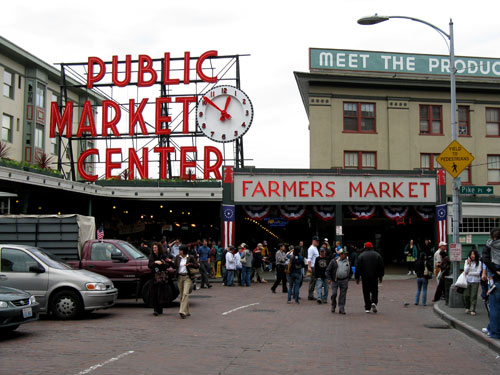
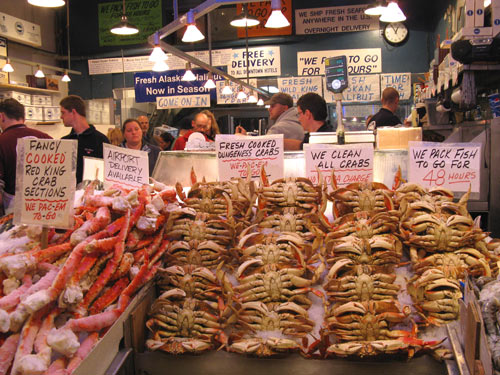
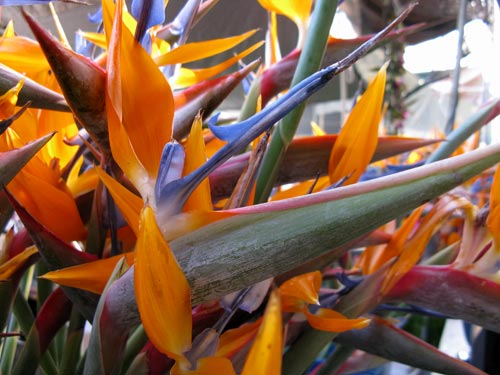
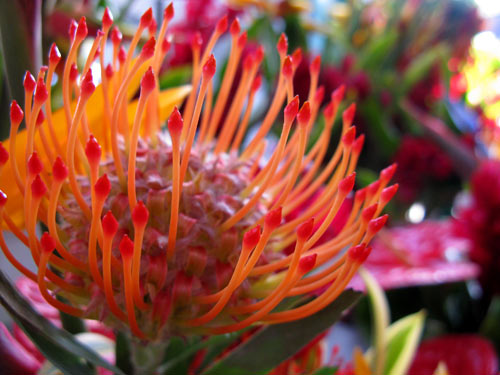
We did a quick walk-through of the seafood stands where feisty fishmongers tossed and waved their wares before crowds of gawping tourists and locals. I was just as impressed with the flower stands with their kaleidoscopic array of fresh-cut blooms… and at prices far lower that any I’d ever encountered in New York. Local and exotic produce stands, pasta makers, specialty food purveyors with a few craft vendors rounded out the rest of the stalls.

Lunch was a quick and serendipitous stop at The Market Grill — an unassuming U-shaped lunch counter inside the market where I had one of my best fish sandwiches in recent memory. Nothing fancy: just impeccably seasoned and grilled halibut on a baguette, with grilled onions and homemade tartar sauce, served with a side of homemade slaw. At $12, the sandwich had seemed pricy initially — this coming from one accustomed to pricy sandwiches — but after that first bite, I felt it was worth every penny. Good find!

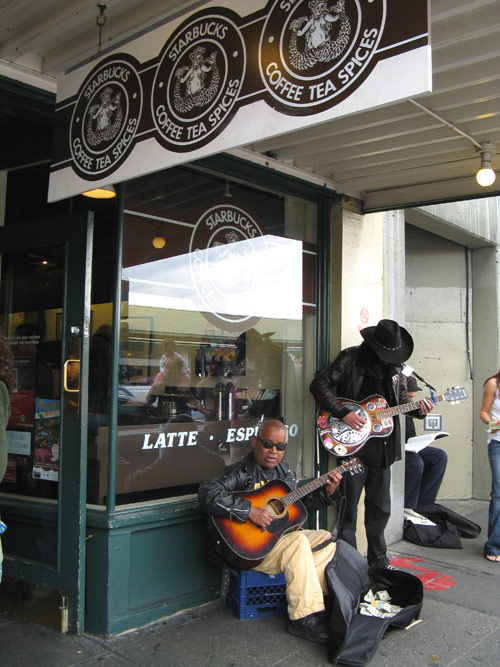
On the way out, we passed by the original Starbucks; that first cafe opened in April 1971 with an initial investment of about $10,000. (Note the original brown siren logo.) Running a cafe can be a tough business, but things seemed to have worked out for this chain with 171 stores in Manhattan alone, and a two story store set to open inside the Empire State Building next week. If only they made more of an effort to serve Fair Trade coffee

The line of caffeine addicts stretched down the block to enter this Starbucks, despite the fact that there was no shortage of places to grab the same cup of coffee elsewhere.

Is this a sculpture of a badminton birdie? Upon closer examination, we recognized the inverted umbrella, no doubt a whimsical reference to Seattle’s reputation for rainfall. (Despite the near-constant cover of clouds, we lucked out, weatherwise, this afternoon.) “Angie’s Umbrella” (Jim Pridgeon and Benson Shaw) is located on a corner in Belltown, an artificially flattened 63-square-block neighborhood, dubbed “Seattle’s Soho” for its bohemian feel and newly trendy shops and restaurants.
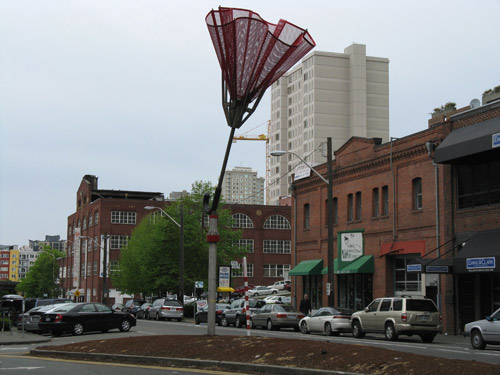
At the Bell Street Pier Cruise Terminal at Pier 66, also the site of the Odyssey Maritime Discovery Center, dedicated to the history of shipping and fishing in Puget Sound.
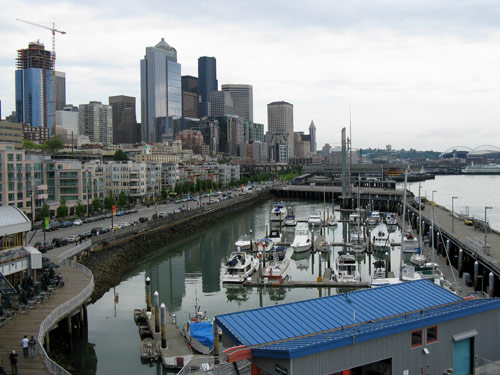
One of our favorite sights was the Olympic Sculpture Park, a 9-acre waterfront, former industrial site that was converted into a green space for art by the Seattle Art Museum. (I do so appreciate this movement of transforming urban waterfronts into public spaces.) The $85 million park opened with a two-day celebration back in February.

From the quirkily leaning “Typewriter Eraser, Scale X” (Claes Oldenburg and Coosje van Bruggen) to the monumental sculptures by artists such as Alexander Calder (whose orange “Eagle” is the centerpiece), the park offers stunning views of art and nature.

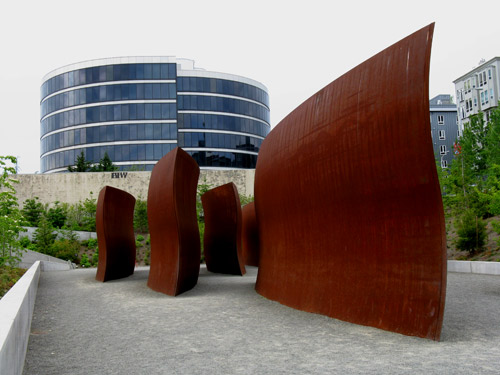
Here, on the lower level, are the five swooping, asymmetrical COR-TEN monoliths that comprise “Wake” by Richard Serra, whose work we recognized from the MoMA exhibition last summer. Elsewhere, the 6’ by 19’ fan-shaped steel cut-out of New Yorker Ellsworth Kelly’s “Curve XXIV” looked like it could have been fashioned from Serra’s studio surplus.
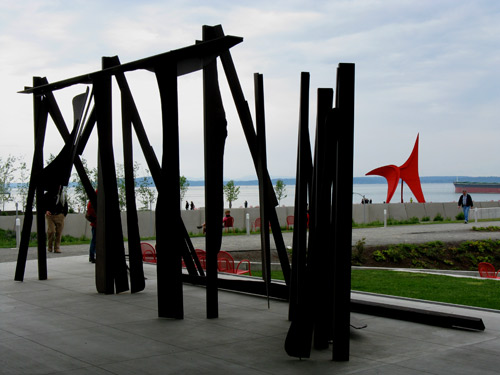
And in front of the Bill and Melinda Gates Amphitheater, framing a view of the Seattle waterfront, Sir Anthony Caro’s “Riviera.”
Check out the full Seattle photo set — all six hours worth — on flickr.
Through the Cascades

After last night’s marathon Cure set – MT joked over breakfast coffee that Robert Smith was still on stage – there was an executive decision to be made. Although the Memorial Day lineup looked promising — including Jamie Lidell, Ghostland Observatory, The Hives, Rodrigo Y Gabriela, Flight of the Conchords (of the HBO show), The Mars Volta and The Flaming Lips — ultimately we decided that for this, my first visit to the Pacific Northwest, it would be a pity to miss Seattle entirely.
Josh Bis (Science vs Romance) dutifully recaps Day 3 of Sasquatch on the KEXP blog. (More photo highlights of the festival here.) The talk of the final day was The Flaming Lips finale — a jolting spectacle which featured five fully nude women, U.F.O.s, Teletubbies, flashing lights, smoke machines, balloons, confetti and streamers. (Um, fully nude women. Link NSFW, obviously.)

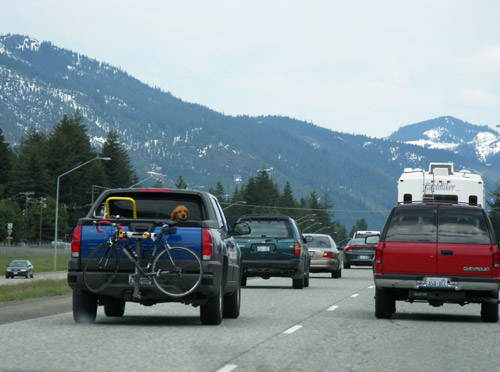
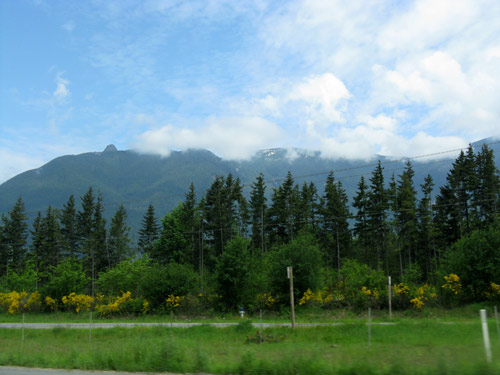
So with most of the day left before I had to board the redeye home, we headed into the city. From Ellensburg, it was to be a two-hour drive east on Interstate 90, over Snoqualmie Pass (population: 201) and through the snow-crusted Cascade Mountains.

Emerald City, here we come!