After fighting our way through the parade crowds, we finally made it to the MoMA for the “Richard Serra Sculpture: Forty Years” exhibit which opened on June 3. New York media has gone wild over this much-anticipated show, which features 27 of the sculptor’s pieces, including three massive new works from 2006.
No photos allowed inside the museum. On the sixth floor: 22 of Serra’s early works made between 1966 and 1986. The pieces ranged from artfully hung discarded rubber belts (inspired by Jackson Pollock’s “non-compositional all-overness”) to entire room installations of rectangular steel plates. On the cavernous, reinforced second floor galleries, Serra’s three pieces from last year: “Torqued Torus Inversion,” “Band,” and the 65-foot-long “Sequence”. As the artist intended, we walked the length of these fortress-like sculptures, which drew us in through winding, sloping, folding plates of smooth, rust-colored Cor-Ten® steel, altering our perceptions of space, and conflating our sense of interior and exterior.
These three most recent works weigh in at a collective 550 tons, and just getting them into the museum gallery was an impressive feat of engineering.
We finished our tour at the Abby Aldrich Rockefeller Sculpture Garden where the two weathered steel behemoths from the 1990s were installed: “Intersection II” (1992-93) and “Torqued Ellipse IV” (1998).
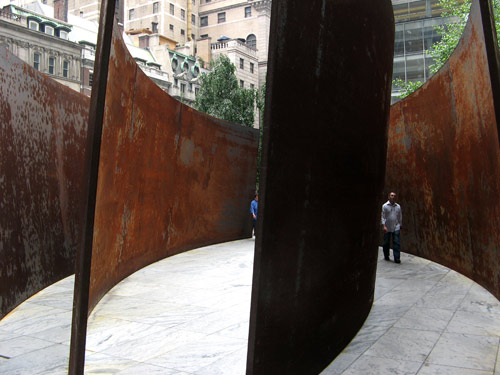
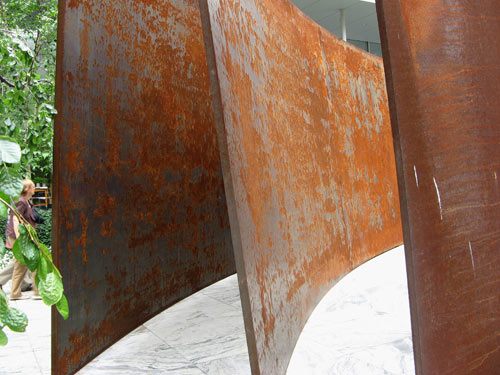
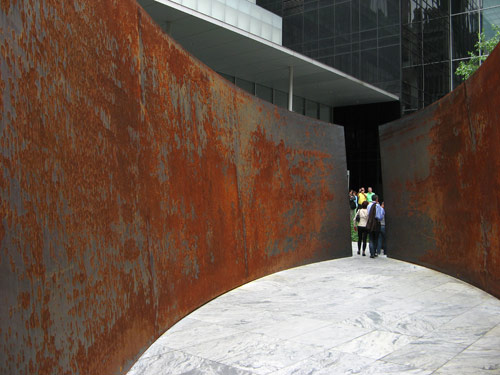
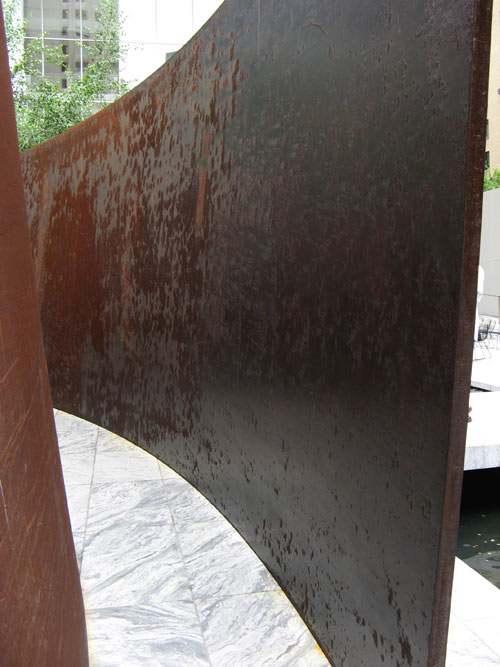
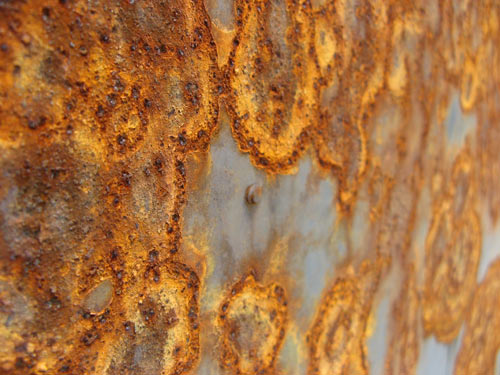
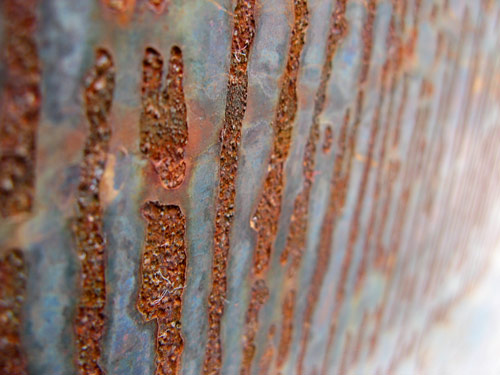
In years past, there have been casualties in preparing these pieces for public view: in 1971, a rigger at the Walker Art Center in Minneapolis was killed when a 2-ton plate fell on him; in 1988, a worker lost his leg while dismantling a 16-ton Serra sculpture at the Leo Castelli Gallery. Thankfully, there were no such mishaps this time around. YouTube has a fascinating time-lapse video, showing riggers and cranes carefully choreographing the hunks of metal into place on the MoMA sculpture garden’s marble floor.
7 comments
Qsoz on
vipnyc on
Jomama on
vipnyc on
En Why See on
vipnyc on
Qsoz on