vip in the city, page 32

127 Corridor Sale eats

Of course, I couldn’t cover the sale without covering the food. Not the meals we ate, mind you, but the snack options available to us in the midst of all the actual shopping. And there were plenty.

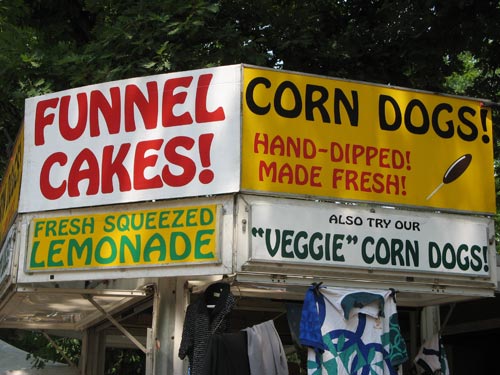
Typical fair food: funnel cakes and corn dogs. I especially like the quote-veggie-unquote version touted here… probably because I’d seen “vegetable” interpreted rather broadly elsewhere.
Highway 127 eats

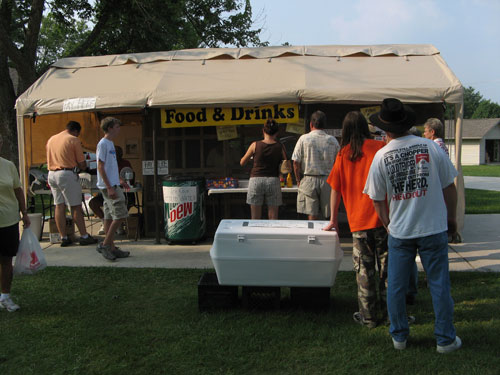
Gallons of fresh-brewed sweetened and unsweetened tea — or “sweet” and “un” in local parlance. Tons of barbecue, of course. This was one of the more elaborate food service stands. At some sales, there was just a giant smoking grill, with mystery meats piled on top.
Highway 127 eats

Local dining establishments did brisk business on ice cream (and fried balogna sandwiches):
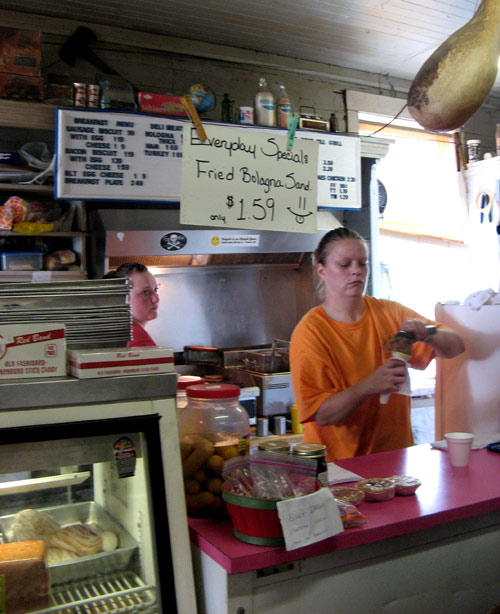
Highway 127 eats

Ooh, I love kettle corn. And even in this almost unbearable heat — so hot that the first day’s flash thundershowers actually caused clouds of steam to rise up from the ground — the savory-sweet scent was irresistible.
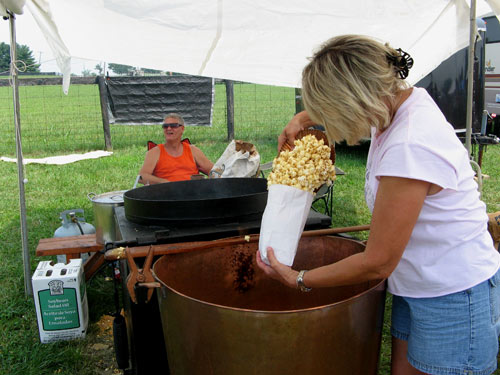
Highway 127 eats

I will posit that one can only pass by about a dozen of these signs before giving in to sheer curiosity. (I did not feel the same way about fried pickles, which I also saw, but managed to forego sampling through the entire route.)
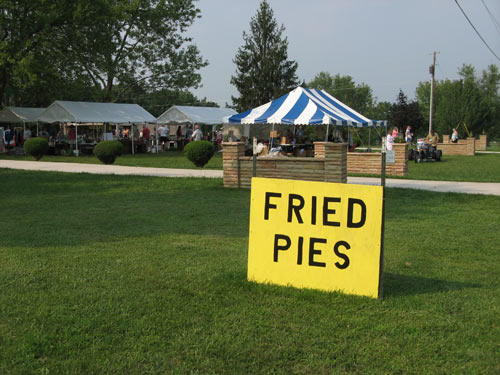
Fried Pies

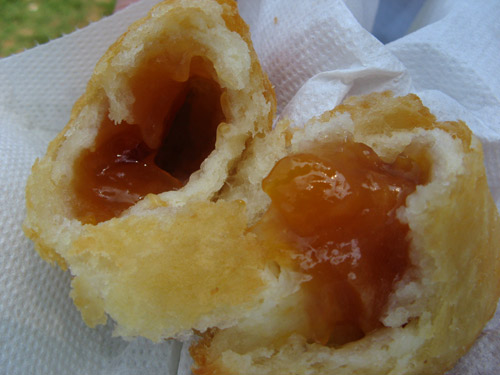
At this particular stand in Kentucky, a handwritten sign promised fresh fried pies at 2:30PM. By 2PM, a small crowd had formed around the empty tables, clamoring for “Mae’s pies.” I took the devoted following as a favorable sign and went off in search of J, who “convinced” me to split one with him. The pies emerged from a fryer off site, fragrant and still warm.

Not what I expected, actually. I had envisioned a wedge of pie — perhaps battered — and deep fried. This was flaky pastry dough, wrapped Hot Pockets-style around fruit filling (here: peach), and dropped into oil… or more likely, lard.
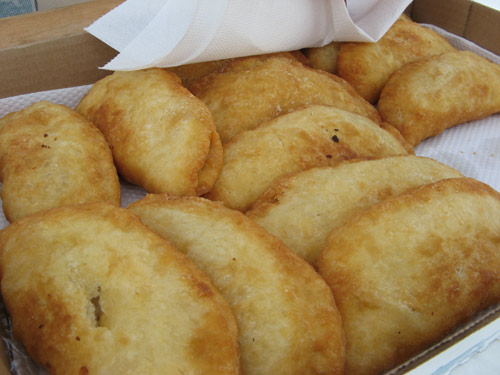
Fried Pies

Oh. My. God.

Fried peach pie

Thankfully for my heart and waistline, I only discovered the glories of fried pie on the second to last day of the sale.
Deep and dirty South

We whipped through northern Tennessee with surprisingly few stops, considering Fentress county had been advertised as the headquarters of the 127 Corridor Sale. After crossing the state border into southern Kentucky, we hit what I think we can all agree in retrospect was the roughest segment of our road trip.
We knew that driving through the rural South would be an eye-opening experience, but I was unprepared for just how eyebrow-raising and, at times, stomach-churning it could be. The overall level of education was discouragingly low: more than once, simple multiplication and addition proved challenging. Spelling, too: I saw more variations of “collectibles” and “antiques” than I possibly could have imagined.

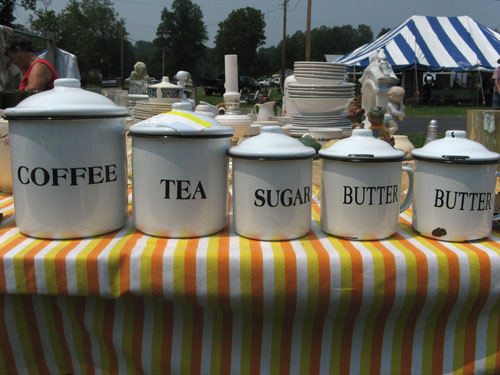
Other observations: Given the dining options available to us thus far, it’s no surprise that Tennessee and Kentucky are two of the ten heaviest states in the nation; more than 25% of TN and KY adults are considered obese. (In the areas along the sale route, I’d put the percentage far higher.) Note the two butter canisters in this set, which clearly also exhibited the most wear and tear.

Highway 127 canisters

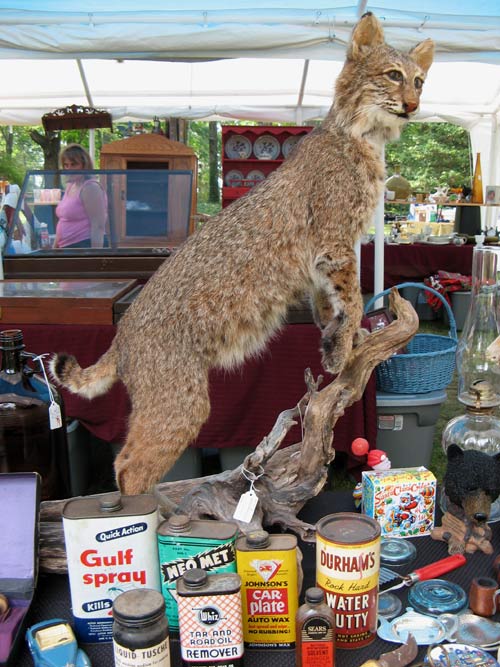
We saw cardboard boxes crammed with the most random assortment of objects for sale, including colored contact lenses(!) and birth control pills(!!)

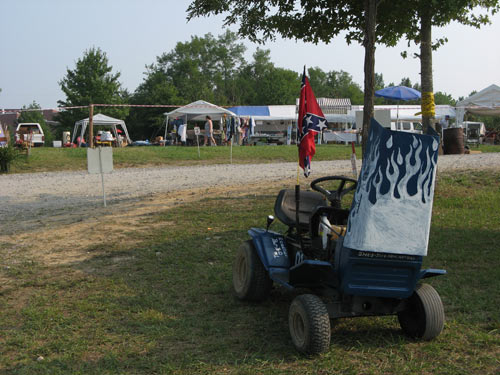
But most appalling of all were some of the southern Kentucky sale items. Not the weirdly kitschy, useless junk (which was consistently abundant throughout), but the downright offensive, racist junk. Everywhere. High flying confederate flags. Lawn jockeys. Sambos and Mammies. Scores of segregation-era memorabilia… most of which — even more disturbingly — appeared to be modern reproductions, suggesting a current and growing market for such items.

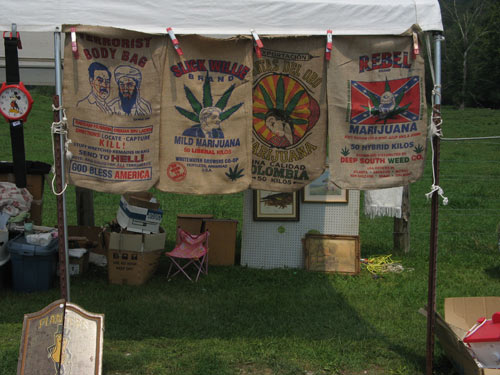
Other offerings: “Rebel marijuana” sacks and “Terrorist body bags”. Egads.

Burlap sacks

She’s sexy now! Ain’t she?“:

Highway 127 Sale

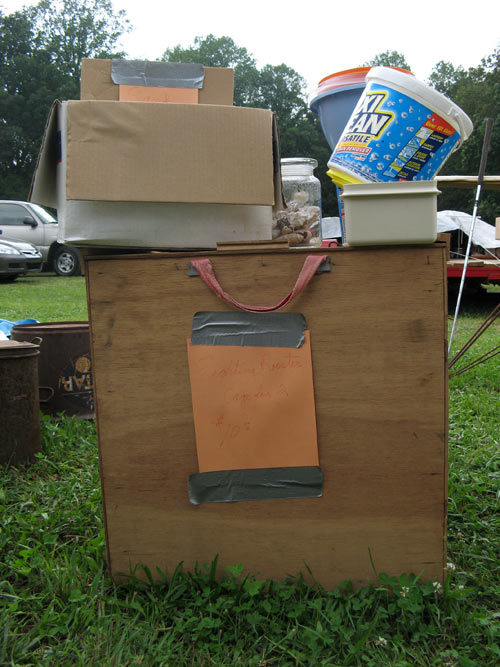
….and here, your all-purpose “Fighting Rooster Cage for 2″:

Fighting rooster cage

The ignorance could well be a function of poverty. In Clinton county (which incidentally, is named for the seventh governor of New York State – and three-time mayor of New York City — DeWitt Clinton), the median household income is $21,711 (vs. $37,369 for all of Kentucky — itself ranked among the bottom ten states in the nation, based on income); fully one quarter of families live below the poverty line. Things did not improve much in the picturesque but poor Lake Cumberland region to the north of Clinton: in Russell and Casey counties, the median household incomes are $24,462 and $23,949, respectively.

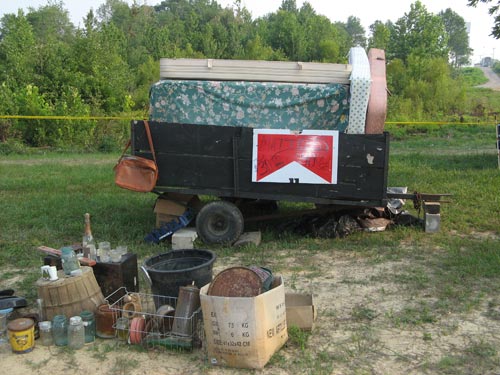
The items for sale along this stretch reflected the state of the local economy: we knew we hit the nadir when we came upon one particularly grimy lot, with grimy vendors to match, featuring a trailer piled high with used mattresses (at $30-$40 apiece) and shelves of stained pillows. Eww.

Highway 127 Sale

This was the one day I bought not a single thing.

Tennessee wine

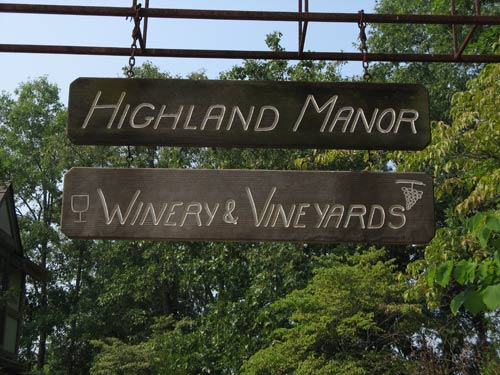
To break up the endless stream of outdoor sales, we made a brief side trip this morning to Highland Manor Winery and Vineyards, Tennessee’s oldest licensed winery, conveniently located just off US 127. I was intrigued since I’d always associated the state more with whisky, or even… well, moonshine. Tennessee, though, has a wine-making history that dates to the late 19th century. The nascent industry was thwarted, however, by the institution of statewide Prohibition in 1909.

Highland Manor

Although a few producers continued to make wines, it wasn’t until the 1980s that the state’s wineries began a serious resurgence. Today, there are over two dozen wineries operating in Tennessee, though with its estimated $13 million in annual sales, the state’s wine market share is dwarfed significantly by its neighbor to the East, North Carolina.

Highland Manor

Highland Manor

Highland Manor

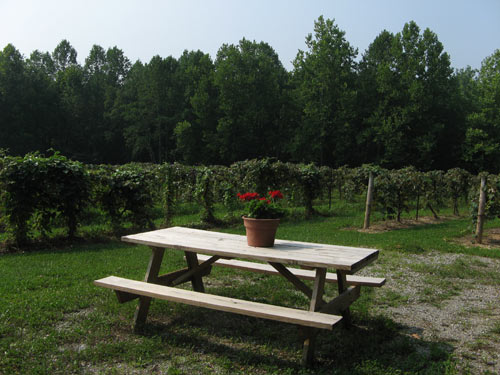
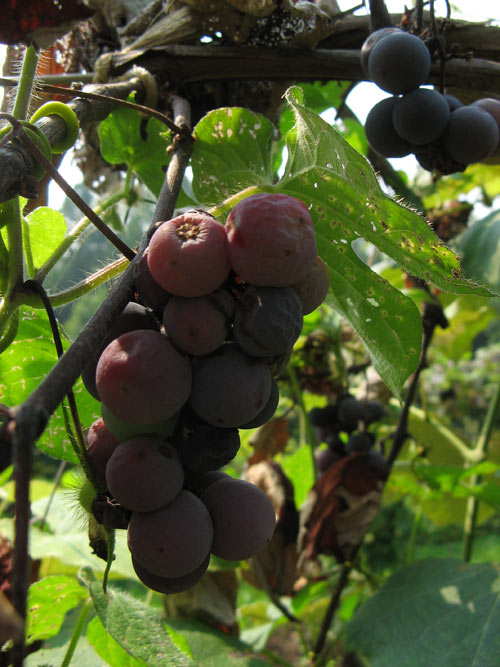
We arrived early on a Saturday morning, and found the winery quiet, and I was able to wander among the vines freely, with no supervision. Eventually, a young woman emerged into the gift shop to offer us select tastings from among Highland Manor’s 15 varieties (dry, semi-dry and sweet), many of which are produced from grapes grown on the winery’s estate vineyards.

Although we were not exceedingly impressed with the available product — Highland Manor’s award-winning muscadine has a one-year waiting list — we picked up a couple of bottles as souvenirs of our visit. When S pointed out that all of the bottles were labeled “table wine” and that none noted a vintage year, our guide explained matter-of-factly that omitting the information saved the winery the cost of reprinting new labels for each harvest.  There’s something almost brilliant about that logic, no?

Historic Rugby

En route to our evening’s accommodations, we were stunned to pass through Allardt, Tennessee (population: about 650), whose “downtown” consisted of just a smattering of storefronts… until we arrived at Rugby, Tennessee, population: about 85.  That’s eighty-five!

Located on the Cumberland Plateau, at the southern edge of the Big South Fork National Park, Rugby is an authentically restored Victorian village. It was founded in 1880 by British social reformer and author Thomas Hughes, best known for his novel Tom Brown’s School Days, and named for his beloved alma mater Rugby School in Warwickshire, England. Hughes envisioned the new Rugby as a cooperative, class-free, agricultural community for the sons of British upper class families, who due to economic recession, could not find local placement in traditional professions. Rugby is now comprised of some 20 preserved buildings, including workshops, overnight lodging (cottages and inns) and the Harrow Road Café whose menu still caters to traditional British Isles specialities: shepherd’s pie, fish (well… catfish) and chips, bangers and mash, and an off-the-menu welsh rarebit (or originally: “rabbit”) which the owner kindly offered to whip up for us to take to back to the Newbury House’s kitchen when we arrived just as the restaurant was closing, having miscalculated the region’s shifting time zones.

Watch Mark Bittman make one – essentially an embellished cheese on toast.

Welsh rarebit

Having lived just about my entire life in New York City, I have to admit, I was unsettled by the utter remoteness of our evening’s accommodations. The complex would have been absolutely impossible to locate without the GPS. (In fact, even after being alerted by Garmin to our destination, we still missed it at first pass.) We never officially “checked in” with anyone: our keys were left for us in an envelope in a basket on the porch outside the house. (Not very secure, I could not help noting. You can take the girl out of the city…) All around us was darkness; in my paranoia-tinged state, the environs felt to me like the setting of every horror movie I’d ever seen: shadowy dirt paths, chirping cicadas, an eerily tranquil lake, a looming, quiet house, creaking staircases, darkened rooms laden with antiques…

It was all I could do to turn down S’s offer to share a bed with me, leaving J to fend for himself in a room down the hall.

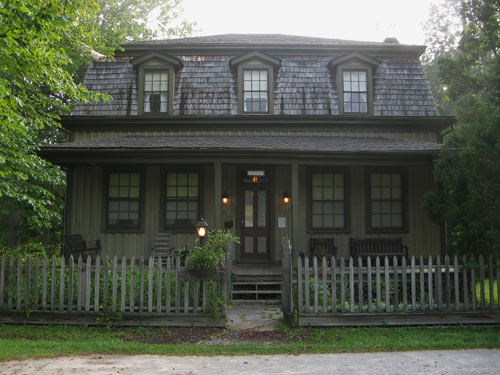
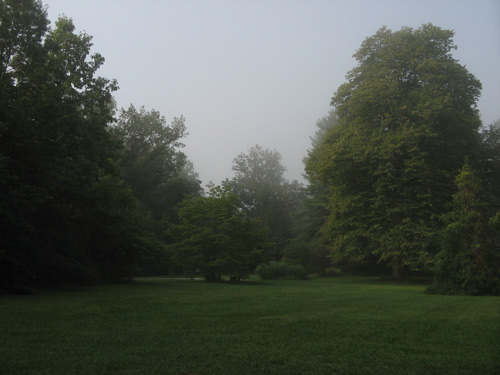
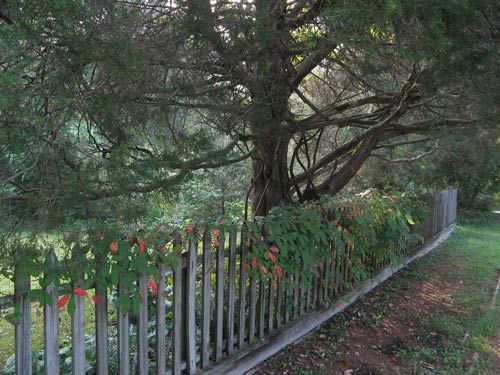
In the early light of day, the house and grounds were far less foreboding, and actually quite lovely.

Newbury House

Newbury House

Newbury House

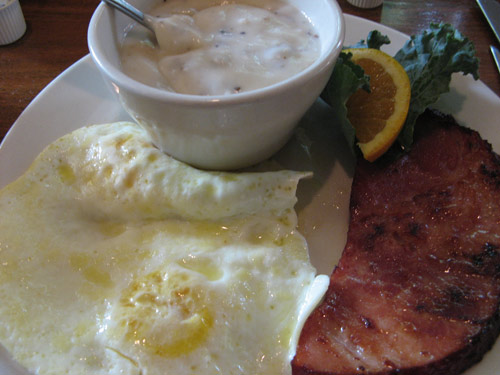
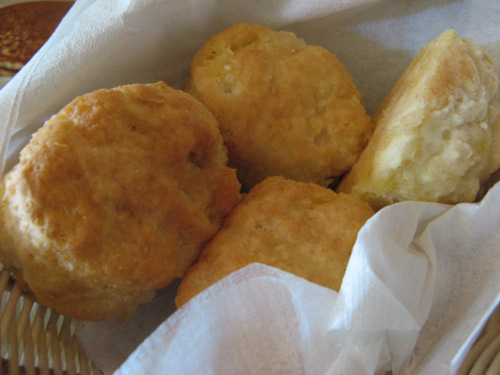
Breakfast at the café was included with our stay: more country ham, biscuits and still more country gravy!

Rugby breakfast

Rugby biscuits

To catch up: backfilling a few July posts

Back to the Sale

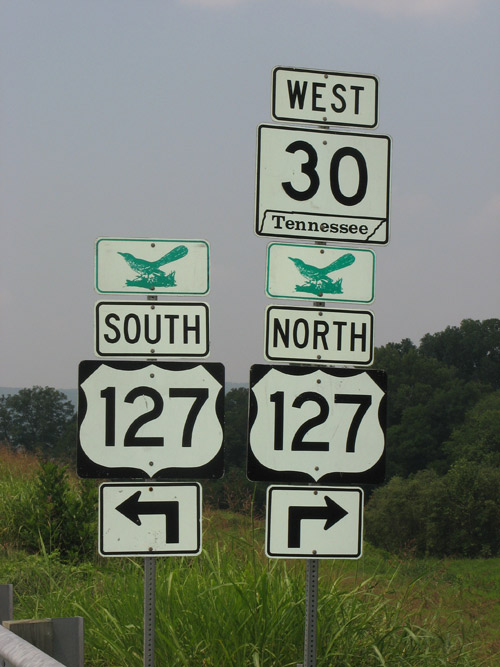
From Dayton, it was about a half hour’s drive to the 127 Corridor Sale.
Highway 127 Signs

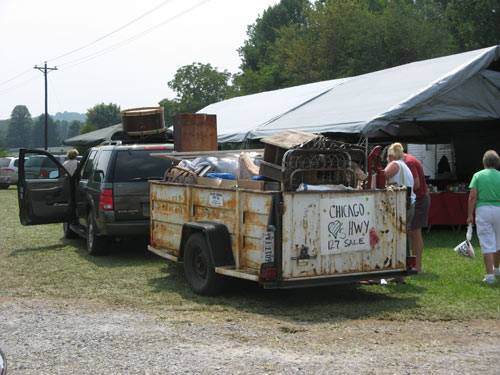
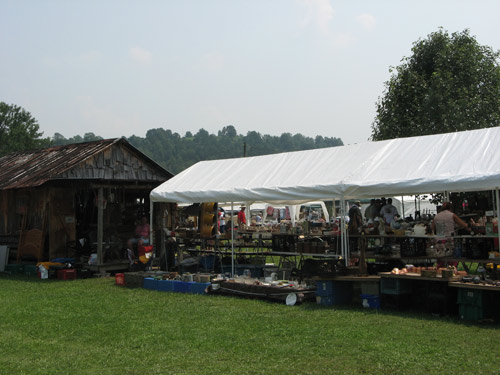
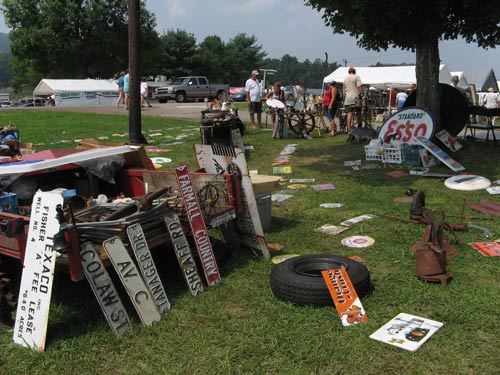
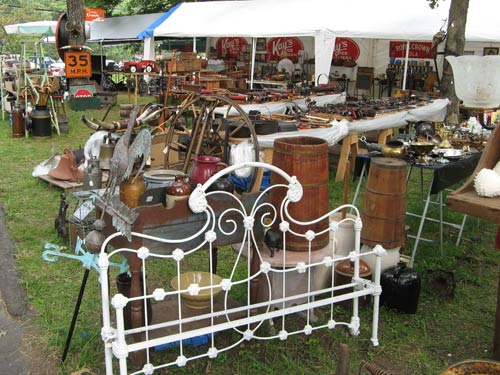
We powered through intense, wilting heat all afternoon, stopping the car every couple miles or so to check out the sales along the way. We were surprised to discover after chatting with a few vendors, that although the official sale did not begin until Thursday morning, many professional dealers began hitting the route earlier in the week, to get first crack at the merchandise as the vendors set up for the weekend.

Which is to say, the best quality items had probably already been snatched up prior to our arrival. Still, with 630 miles of sales to trek, there was plenty yet to be bought.

Highway 127 Sale

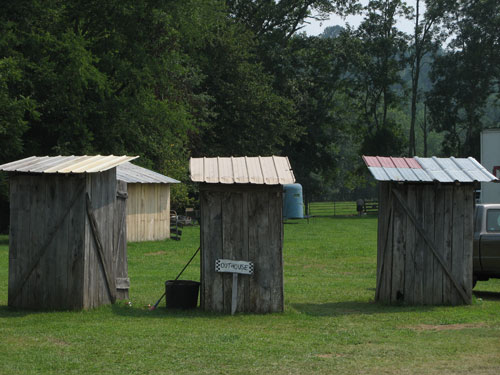
Sale facilities. Having spent most of the day in a perpetual state of perspiration — some might even say, “sweating like a horse”–  I (thankfully) did not need to avail myself of these outhouses.

Highway 127 Sale

Highway 127 Sale

Highway 127 Sale

Highway 127 Sale

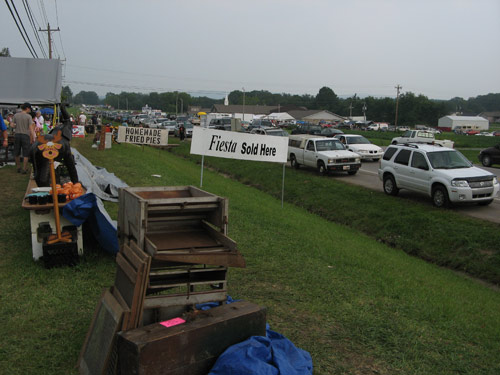
As we wound our way towards Jamestown, TN — the epicenter of the 127 Sale — traffic on the two-lane highway slowed to a crawl. I came thisclose to picking up a desk at our last (and largest) sale of the day, but decided to stand firm on the target price point I had previously established in my mind. No regrets: perhaps even less appealing than the idea of busting my budget so early into the trip was the prospect of spending the next 1,000 miles in the backseat crammed up against a bulky piece of furniture.
Going ape in Dayton, TN

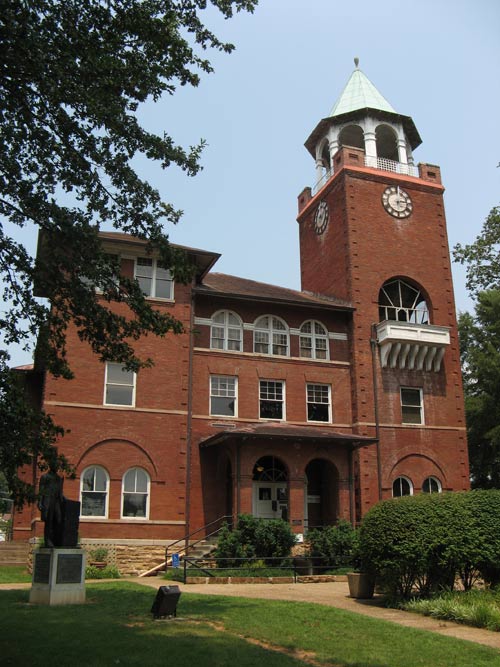
That morning, we retraced our path to Dayton, Tennessee to pay a visit to the Rhea County Courthouse, site of the Scopes Monkey Trial.
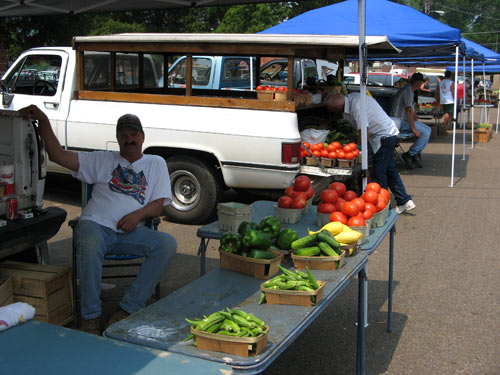
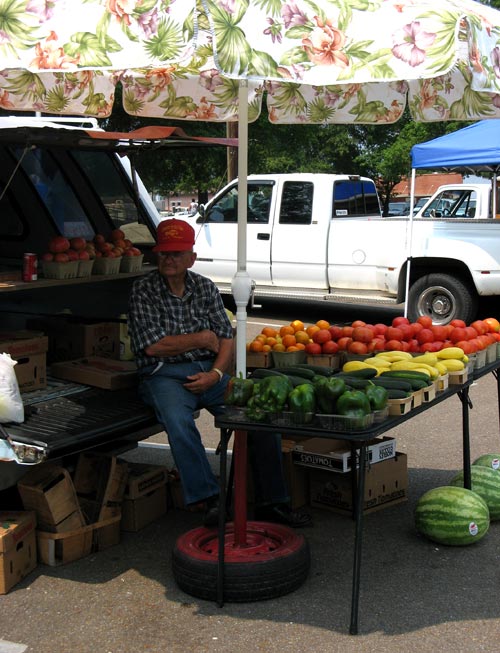
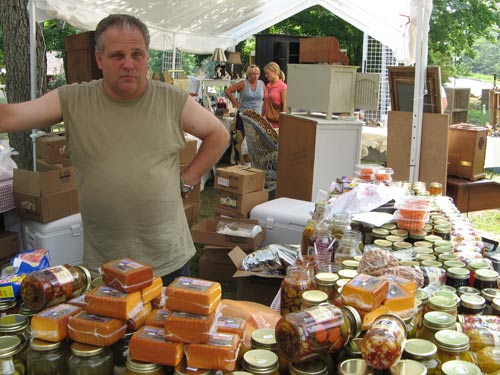
It was a scorchingly hot day when we rolled into historic downtown Dayton. Just outside the still-working courthouse, a street was lined with about a dozen produce vendors, selling gorgeous, vibrantly-colored, homegrown fruits and vegetables from the backs of pick-up trucks. Also, jars of homemade preserves and “chow-chow,” which I learned from J (our resident expert on all things Southern), is a sweet, pickled relish traditionally utilizing vegetables abundant in summer’s harvest.

Dayton produce

Dayton produce

A plaque on the lawn outside the courthouse reads: “Here, from July 10 to 21, 1925, John Thomas Scopes, a county high school teacher, was tried for teaching that man descended from a lower order of animals, in violation of a lately passed state law. William Jennings Bryan assisted the prosecution: Clarence Darrow, Arthur Garfield Hays and Dudley Field Malone the defense. Scopes was convicted.” (The jury returned its verdict in nine minutes, and 25-year old Scopes was fined $100. He never returned to teaching.) The landmarked red brick courthouse was built in 1891, and restored for $1 million upon the completion of the Scopes Trial Museum in 1979. Every year, the town of Dayton and its Christian Bryan College – named for the prosecutor in the case — sponsor a re-enactment of the trial that is the town’s claim to fame.

We toured the two basement rooms of the museum (through which you could also access the one-room Rhea County Heritage Museum with its displays on the county’s notable native sons), which tells the story of the trial with large-scale black-and-white photos, newspaper clippings, memorabilia and information about the trial’s major players. On the way out, we had a rather eyebrow-raising conversation with the museum guide (during which I studiously had to avoid eye contact with my friends), in which he flatly rejected the notion that man could have descended from apes. I won’t rehash here, except to say that his strongest argument against the theory of evolution was to point out that one of the monkeys outfitted in a three-piece suit for the Scopes trial ultimately died, whereas human men were able to tolerate the intense Tennessee heat, “proving” once and for all the disparity between the species.

Would that I were joking.

Dayton Courthouse

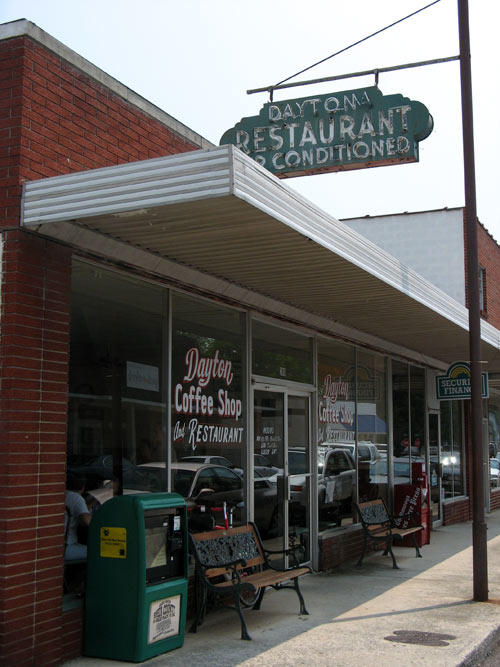
Afterwards, we strolled along the two to three deserted blocks comprising the downtown area, and drawn to the old-school looks of it, decided to lunch at the Dayton Coffee Shop and Restaurant. The dining room was packed full of locals – most a good couple of decades our elders – and like every other eating establishment so far, the daily specials were handwritten on a board mounted to the wall.

Dayton Coffee Shop

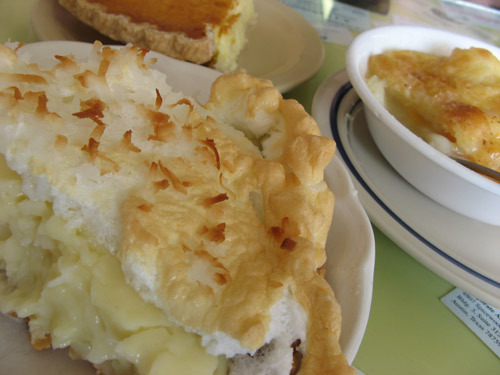
By 1PM, the coffee shop was out of catfish, so S and I once again had vegetable plates. (Mac n’ cheese, by the way, apparently counts as a vegetable in Dayton. Not kidding.) As we expected, desserts were homemade — and at about $1.50 apiece, so inexpensive, it seemed almost silly not to try them: the egg custard and coconut cream pies, and a warm peach cobbler made with canned peaches, just like (J’s) grandma used to make.

Dayton desserts

A Sweet(water) detour

A dubious first: today, I ended up rejecting a hotel room for the first time in my life. Now I’ve stayed in a lot of hotels, and luxury is not a requirement, but a minimum level of cleanliness and infestation is. Suffice to say, the decision to abandon the premises was unanimous.

Unfortunately, since every other hotel in town was booked solid due to the Sale, this meant finding alternate arrangements — and quickly. Garmin to the rescue again: Sweetwater, Tennessee — here we come!

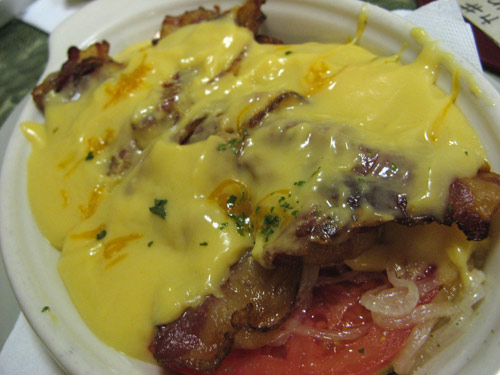
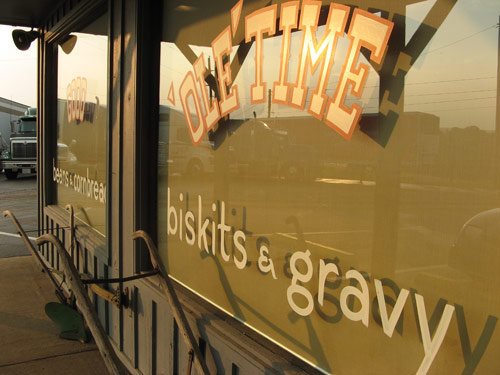
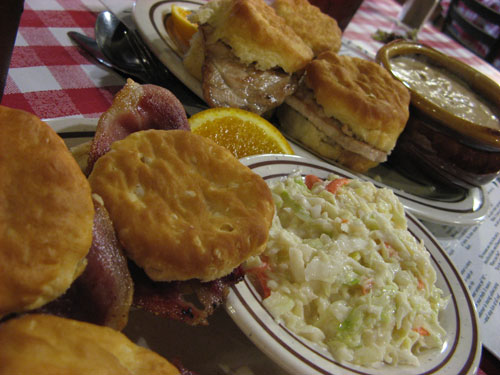
It all worked out in the end. J even found us a grocery/restaurant for dinner that served some “Good ‘Ole’ Time Southern Cooking,” like “aigs & bacon” and “biskits & gravy.” The latter sounded like just the thing to me.  (Check out that gravy portion!)

Biskits and gravy

Dinner Bell biscuits

More 127 Sale photos on flickr.

The world's longest outdoor sale

And we’re off! After parting with our new friends, we made our way through a winding, kudzu-blanketed landscape over Signal Mountain towards Highway 127. It wasn’t long before we spied our first sale, set up along the side of the road. J made the inaugural purchase (a deck of cards, new in its packaging) — the first of what I hope will be many finds over the next few days.

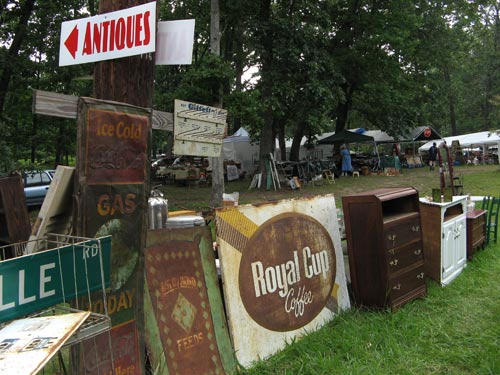
The two-lane route was dotted with random opportunities; after a quiet stretch, we would spot cars pulled over along both sides of the road and on lawns, where enterprising individuals had segmented and rented out space on their ample properties to scores of groups and antiques dealers, creating mile after mile of makeshift tag-sale bazaars stretching out endlessly before us.

Internet access may be intermittent to nonexistent over the next few days as we wend through rural Tennessee and Kentucky, so check out the flickr set (work in progress) for a glimpse of the treasures we spot along the way.

Highway 127 Sale

Highway 127 Sale

Highway 127 Sale

Highway 127 Sale

Eat your veggies

Did we do anything in this town besides eat? Um…

KB and D met us outside The Chattanoogan for lunch at Southern Star. The restaurant was located on the site of the Alabama and Chattanooga Railroad’s former freight depot, converted into a shopping complex in the mid-1980s.

Today’s blue plate specials (meatloaf and pork chops) looked tempting, but after last night’s meat overload, S and I both (and rather uncharacteristically) went for the restaurant’s “Vegetable Plate,” which offered our choice of four vegetables from among those written on a hanging chalkboard.

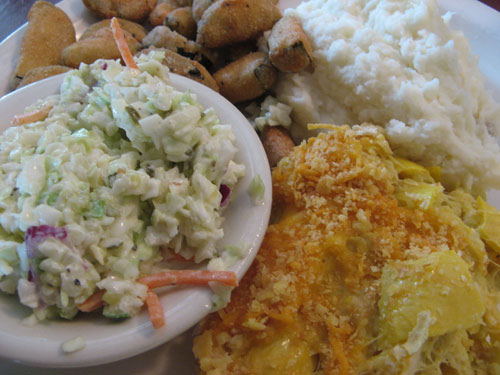
Though what constitutes “vegetable” in Chattanooga is arguably not all that much healthier. Not quite peach cobbler, but mashed potatoes (with butter), (creamy) cole slaw, (fried) zucchini and squash casserole (with cheese.)

Southern Star veggies

J could not resist the warm banana pudding, and after a proffered spoon and very little prompting, neither could I.

Southern Star banana pudding

Ask a local: Shuford's Smokehouse

Despite — or maybe because of — being inundated with garish advertisements on barns and billboards all along the 100+ miles of interstate leading from Nashville into Chattanooga, we decided to forego a trip to Ruby Falls. Instead, we hit the Tennessee riverfront, Coolidge Park, and the Walnut Street pedestrian bridge — the oldest surviving truss bridge in the South, and according to our host this afternoon, the longest pedestrian bridge in the world. (Ironic, since over the course of the day, we saw very few actual pedestrians.) By 6PM, almost all the local shops were closed.

So, too, the museums and galleries in the Bluff View Art District. We drove through the historic area, and again encountered mostly empty streets. Our luck changed for the better, though, when we crossed paths with a friendly local, willing to direct us to her favorite local barbecue joint in a town full of barbecue joints: Shuford’s Smokehouse.

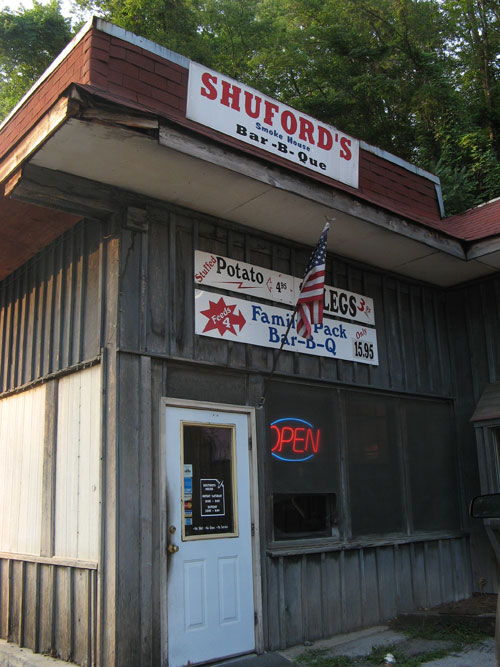
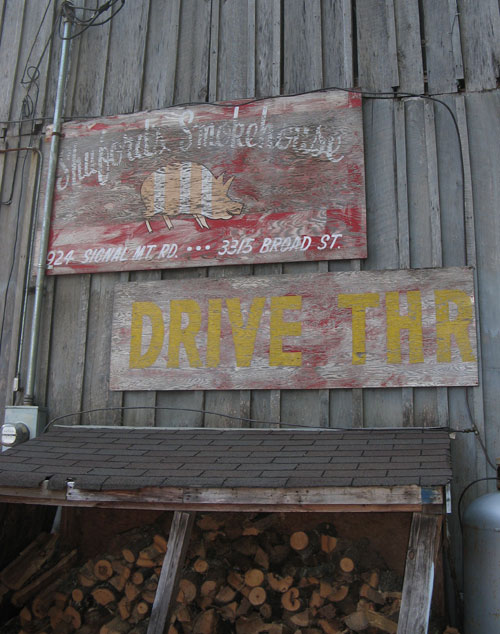
With assistance from the GPS — hands down, the best thing I brought on the trip — we located the small, shack-like restaurant along the side of the road. Having already been warned that the place “wouldn’t look like much,” we stepped inside, undaunted, to embrace the local color. We didn’t even bat an eye when a large, greasy-aproned man emerged from behind a rolling metal gate to slap our slabs of meat onto a cutting board by the cash register.

Shuford’s Smokehouse

Shuford’s Smokehouse

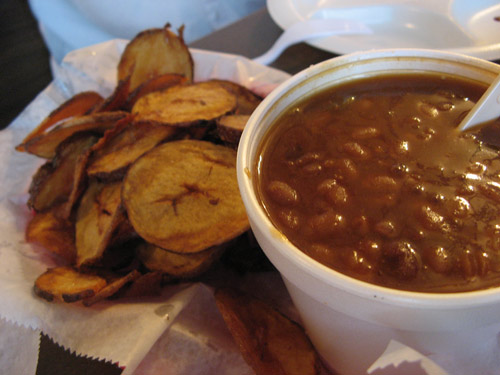
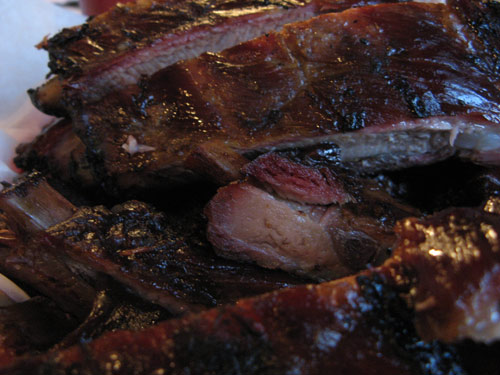
We splurged on the Family Pack Ribs for 4, with sides of tater logs (thin-sliced skin-on potatoes, deep fried) and baked beans (with chunks of bacon… of course.) The lemonade was delicious with bits of actual pulp; we were told by the cashier/owner’s daughter that it’s fresh-squeezed daily. Shuford’s own special barbecue sauce — in regular and hot varieties — is made from scratch, every other day. She had come over to our table in part to check on us, and in part (we suspected) to figure out just what our story was, since she had spotted us taking copious photographs outside before dinner. (We told her that we were from New York City, which seemed to explain a lot.)

Shuford’s sides

Shuford’s ribs

Try as we might, the three of us only managed to polish off about half the family meal for 4. Amateurs all.

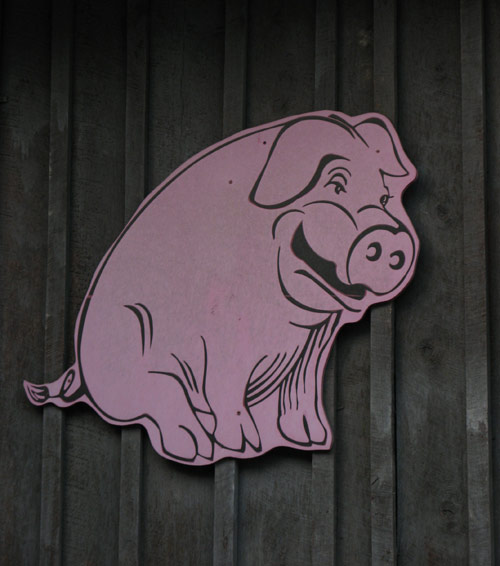
Shuford’s Smokehouse pig