vip in the city, page 31

Lord, what fools these mortals be!

In a city of 8 million people, crowds are inevitable. I don’t know how many years of her life the average New Yorker spends waiting on line, but I suspect that the figure is easily doubled for avid devotees of Shakespeare in the Park.

Of all the Bard’s works, A Midsummer Night’s Dream‘s forest setting is probably the one best suited to the al fresco treatment at the Delacorte. The comedy was last staged in Central Park the summer of 1991 in a production best remembered for its intermittently nude actors.

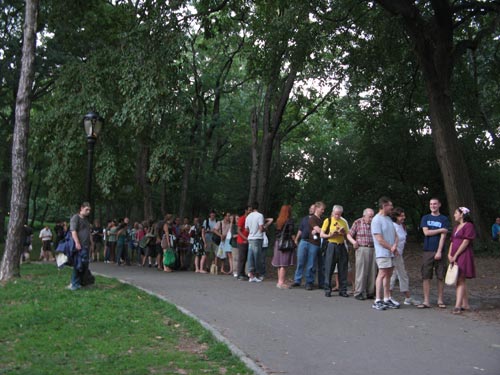
Lines of people everywhere! Into the park…
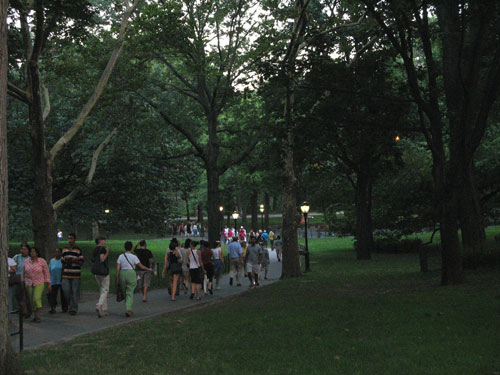
Midsummer Nights Dream

…waiting for stand-by tickets…

Midsummer Nights Standby

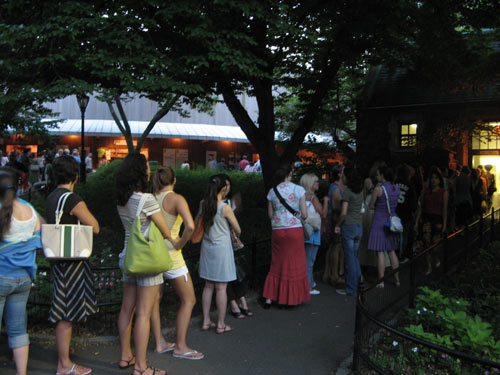
…even to the ladies restroom:

Midsummer Nights Ladies Room

SYB’s six hours of waiting scored us seats in the third row, off center, from which we could catch each sleight of hand trick and every mischievous eye twinkle on the stage. SYB’s “line friend” from Romeo and Juliet — we just happened to run into him while entering the theater — didn’t fare quite as well. On the other hand, he did make it into the performance, and (we noticed) was still accompanied by the young woman with whom he had his first date that night back in early June. Awww... Summer of Love indeed.

Tonight’s cast was solid throughout: Keith David (a stage and screen actor whose voice I recognized from the Navy recruitment commercials) cut an imperious figure as Oberon, King of the Fairies. Jay O. Sanders killed as Nick Bottom — as did the rest of the “rude mechanicals”: Tim Blake Nelson as Peter Quince; Ken Cheeseman as Robin Starveline; Jesse Tyler Ferguson (Richie on CBS’s The Class) as Francis Flute; Jason Antoon as Tom Snout; and Keith Randolph Smith as Snug.

Among the confused lovers, Martha Plimpton, recent Tony-nominee and the evening’s highest profile star, was a standout as the cranky, much-abused Helena. I’ve always thought Plimpton was a pretty cool and interesting actress, not just because she was in The Goonies, or because she (too) hates Duane Reade (“I’d rather have a drunk Mr. Gower filling my prescriptions” — ha!), but then she completely won me over with this exchange from a recent New York interview:

What makes someone a New Yorker?
At this point? Having a Duane Reade Club Card. That, and knowing what this means: “Pix! Pix! Pix! Pix! Pix! Pix! Pix! Pix! Pix! Pix!” Winner receives two lamb chops and some buttered egg noodles under a big buck at my house.

Hey, Martha: I know! I know!

Backtracking… more fun in the Park.
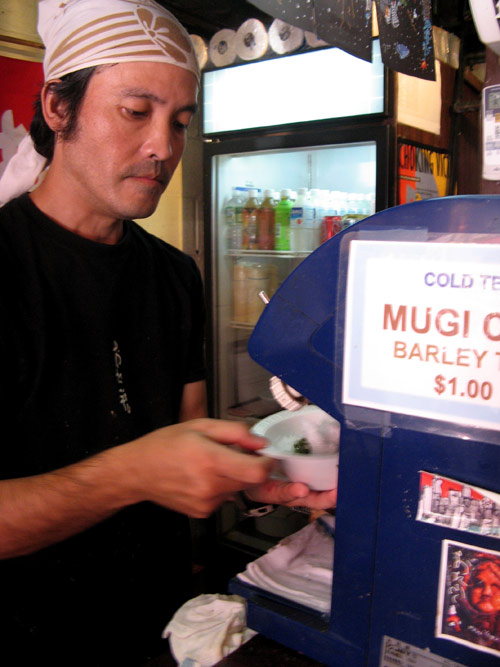
Ice, ice, baby

Sunday brunch in New York City is almost never a simple affair. At most places around town, getting a simple plate of eggs and toast between 11AM and 1PM is nearly impossible unless you’re willing to invest in some significant wait time.

I do love brunch, though, and every once in a while, I make the attempt. SYB had gamely spent his entire morning on line for tonight’s Shakespeare in the Park tickets – the streak is alive! — so really, the eggs seemed like the least I could do in exchange for my seat.

After six hours of waiting on the sidewalk outside the Public, though, he didn’t seem much in the mood for another line. Unfortunately, at 1PM, all the East Village hipsters were just starting their days. Even Veselka’s line stretched down the block. Pretty quickly, we assessed that our prospects might improve if we were willing to expand our search to even less-traditional brunch spots. Although newly opened (and newly reviewed) restaurant Setagaya also proved too popular for us, we eventually found our way to its nearby (less authentic?) ramen rival, Momofuku. (Hey, at least Chef Chang has a sense of humor about it.)
Ah, I do love that place. Maybe because of its hot new competition, we were able to find seats right away. Within fifteen minutes, we were happily slurping away at steaming bowls of the signature Berkshire Pork ramen.

To cool things off a bit, I brought SYB to Otafuku on East 9th, where just a couple of weeks ago, I discovered that this place wasn’t just about the octopus balls (takoyaki).

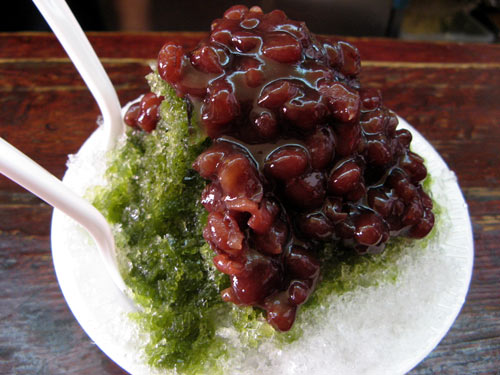
Shaved ice is a treat popular in Southeast Asia: in Hong Kong, it’s “bao bing”; in Korea, pat bing soo.” Malaysians refer to it as “ice – or aiskacang,” or simply “ABC” (air batu campur). I like to think of it as the Asian version of a snow cone, though the consistency is a little different: a mound of thinly flaked (not crushed) ice, topped with combinations of ingredients like condensed milk, chopped fruits, sweet corn, grass jelly, or here at Otafuku: green tea syrup and sweet red beans. (Strawberry and melon flavors are available, too.)

Otafuku shaved ice

Otafuku shaved ice

In Japan, the snack is called “kakigoori”, and in summer months, the stands pop up all around the country.

Ubiquitous fro-yo chain Pinkberry even has a version made of a “bed of shaved ice, mixed fruit + pillows of mochi, gently kissed with sweetened condensed milk, all hidden beneath a top hat of plain pinkberry.”

Ooh!

When in Rom(ania)...

When our friend BL sent out an Evite for a “Romanian hookup,” offering his services as our guide to an authentic Romanian dinner this weekend, how could we refuse?

The venue: Romanian Garden in Sunnyside. We hopped the 7 to a familiar stop, and walked two blocks to historic Skillman Avenue.

Sunnyside Arch

Outside the restaurant, our group of 11 had to wait about 15 minutes for a table this Saturday night, during which S and I entertained CS with the “dirty stories” from our trip through the rural South. Once inside, the garden theme was made apparent by the abundance of artificial greenery: trees, floral vines and trellises, an overall effect mitigated somewhat by the rowdy atmosphere surrounding the television’s blaring broadcast of the day’s soccer highlights.

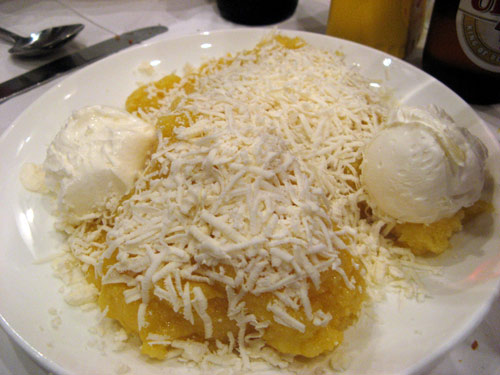
Under BL’s direction, we started off with a fantastic array of appetizers: a very good smoky eggplant spread (similar to a baba ganoush). A cold beef salad. Stewed cabbage. Chiftelute (meatballs). Lots of pickles — I especially liked the green tomatoes. A warm plate of mamaliga cu brinza si smintina (polenta): a calorie-laden dish of soft, grainy yellow maize, topped with salty grated feta and twin dollops of thick sour cream…

Romanian polenta

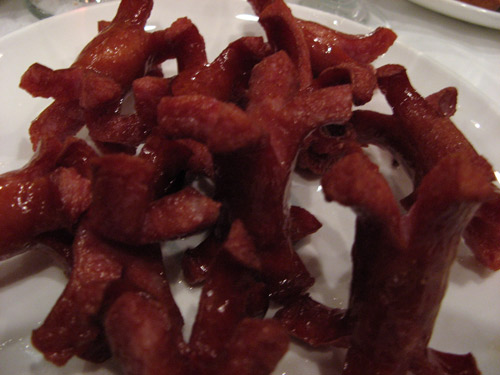
…and the carnaciori oltenesti – cute fried sausages reminiscent of a set of jacks, which I can best describe, by looks and taste, as Romanian hot dogs:

Romanian hot dogs

As expected, the main course options were similarly meat-heavy and ultra-rich. To cut through all the fatty food: very reasonably priced bottles of pinot noir and a round of icy Ursus pilsners — “Regele berii în România” (“The King of Beers in Romania”) which I suppose makes it the Romanian Bud.

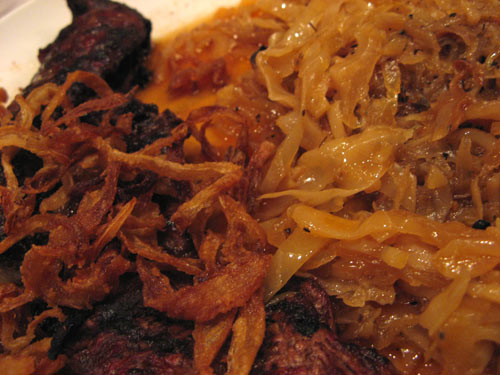
Around the table there were platters of roast chicken, pork in various forms, mititei (or mici: plump, skinless ground beef sausages), and uh… who ordered Romanian steak?

Romanian steak

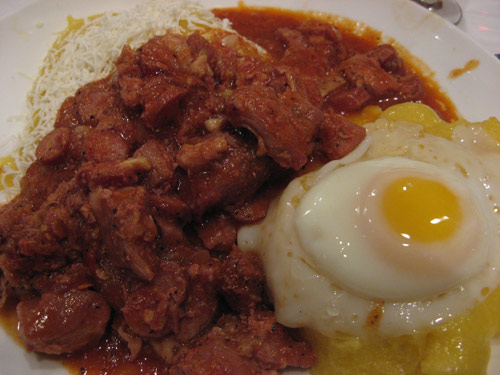
Actually, I ordered the Romanian “stew” (not “steak”) – which is what I finally got after a bit of reiteration. (Oops.)

The dish was hearty and extraordinarily filling with chunks of tender, smoky meat, plated over heaping scoops of the polenta, one topped with feta, the other with a soft egg. I ended up taking half of my plate home; like most stews, it was even better the following day.

Romanian stew

Is there always room for dessert? Apparently so: on a tip from our friendly server, BL secured the last several slices of fresh Napoleon pastry, which despite its not-exactly-Romanian origins, was divine.

A glimpse of Greece

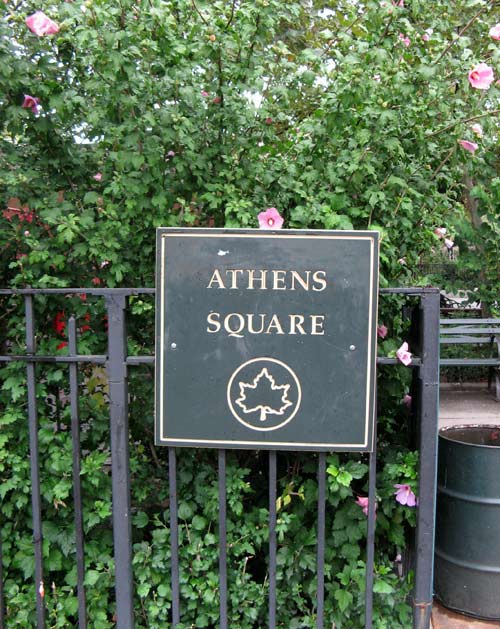
At Athens Square in Astoria, Queens:

Athens Square

In 1839, Stephen Halsey renamed the area then known as Hallet’s Cove for fellow fur-trader John Jacob Astor, the first millionaire in the United States, in an effort to persuade him to become the village’s patron. (Astor, however, invested just $500 in the community – in the form of an endowment to the Astoria Female Seminary.)

Astoria has long been known for its Greek population — the largest in New York City, and it’s been said, the largest outside of Greece. The .9 acre Athens Square on 30th Avenue between 29th and 30th Streets opened in 1971, during the height of Greek immigration, and underwent an extensive $1 million renovation in 1993.

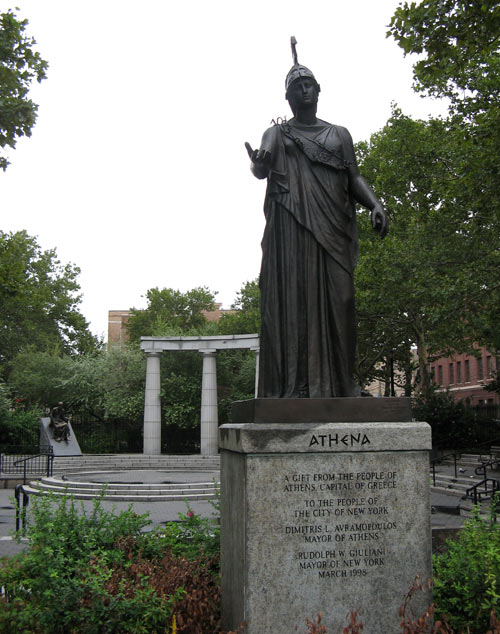
The mayor of Athens presented Astoria with this replica of the Piraeus Athena (c. 350 B.C.), the goddess of wisdom and protectress of Athens, as a gift on March 28, 1998.

Athens Square

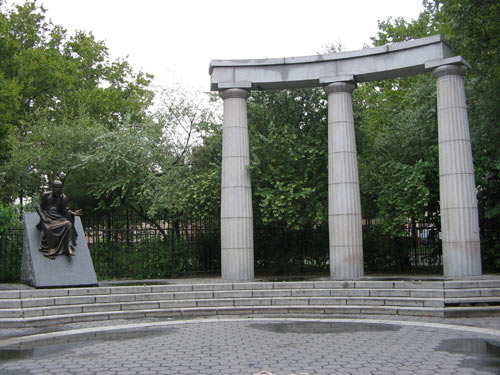
The three Doric granite columns in the sunken amphitheater were erected in a composition echoing that of the Tholos temple of Athena Pronaia in Delphi, 100 miles northwest of Athens.

Athens Square

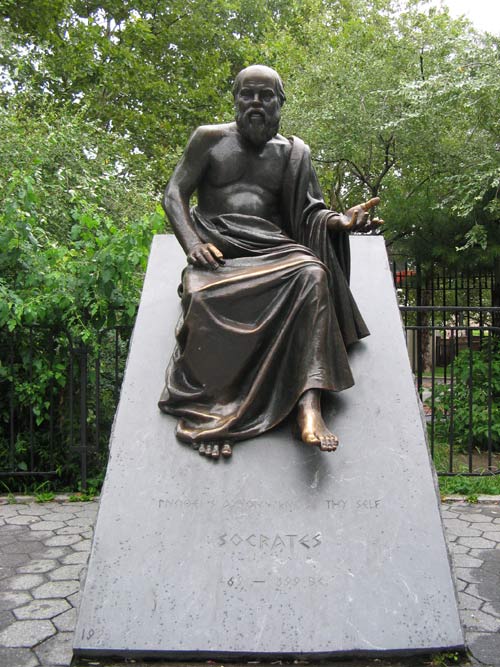
Socrates sculpture, “gesturing as if engaged in dialogue” — the origin of “explaining hands,” perhaps?:

Athens Square

The Greek-looking font on the pedestals – similar to the one on the Anthora coffee cups – is probably about as Greek as the “Wonton” font is Chinese.

Rewind: Catching up on a couple of July eats

Wet n' Wild

What a day to return to the city.

I was awoken at dawn by the sound of howling winds and driving rain pounding against my bedroom windows. The early morning news reported a tornado in Brooklyn (!!!) – according to Wikipedia (where of course there’s already an entry), the strongest on record ever to strike the city.

The storm ripped the roofs off brick rowhouses, upturned over a hundred cars, and felled dozens of trees. Oh, and completely shut down almost the entire mass transit system in New York City.

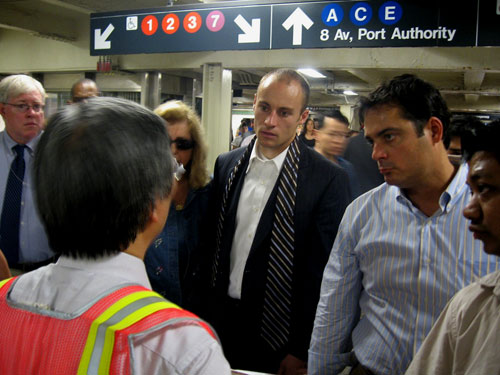
The scene at every station was pandemonium. What a mess: flooded tracks, crowded platforms, and everywhere stifling humidity and mass confusion. I made it as far as Times Square before turning back: the West Side express trains weren’t running past Penn Station. For a while I considered crossing town to try my luck on the East Side. Good thing I didn’t: the Lexington lines weren’t running at all.

None of which was apparent from inside the station, where hapless transit workers were left with minimal (or just inaccurate) information to deliver to the hot and irritable rush hour masses.

Don’t shoot the messenger!

Subway flood

Luck o' the Amish

Final stop: Lancaster, PA

We arrived in Lancaster with a couple hours of daylight left, in time to stop for a round of appetite-spoiling ice cream cones and to catch a drive-by glimpse of the old CTY campus at Franklin & Marshall before dinner. (Ah, memories.)

After a quiet night at the quaint Country Inn of Lancaster on Old Philadelphia Pike (which used to be known as King’s Highway, and once stretched from Philadelphia to Pittsburgh), we rose early for one final round of treasure hunting.

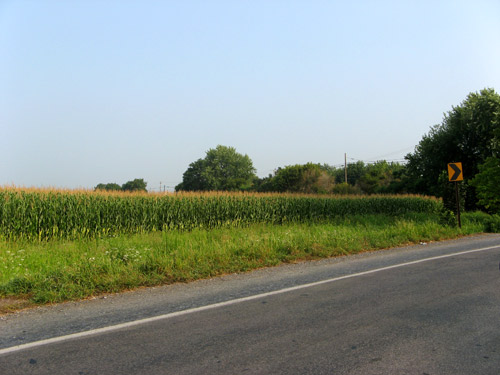
Lancaster corn

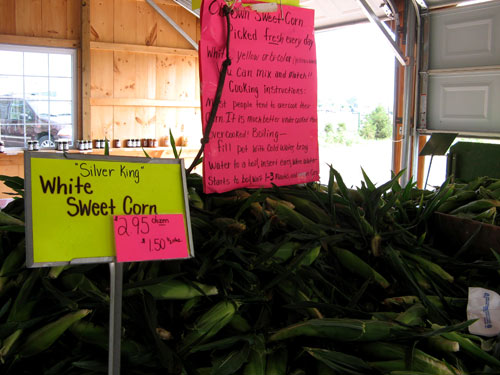
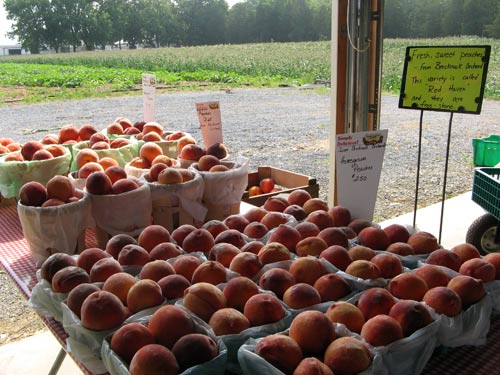
A few sights caught our interest along the way, like this farm market run by two young Amish women, which was overflowing with beautiful, luscious produce. We loaded up on fresh-picked corn on the cob, peaches, melons and tomatoes. But please, no photos of the women:

Lancaster corn

Lancaster peaches

For lunch we set up a picnic table outside a local grocery with “smackaroni salad” (a curious cross between macaroni and potato salads), Amish chicken pot pie (best envisioned as a very thick, very salty, chilled chicken noodle soup, with hefty pasta squares in place of crust), and sweetly tangy pickled beets and eggs (which were actually far tastier than they may sound.)

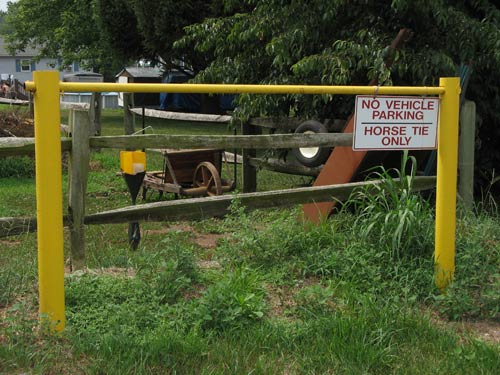
Lancaster horse tie

We wound our way past horse-drawn buggies, through endless miles of cornfields (and the occasional strip mall), skimming along the local townships of Bird-in-Hand, Paradise, Blue Ball and Intercourse, whose saucy-sounding names I recall as a 13-year old were the source of endless snickering.

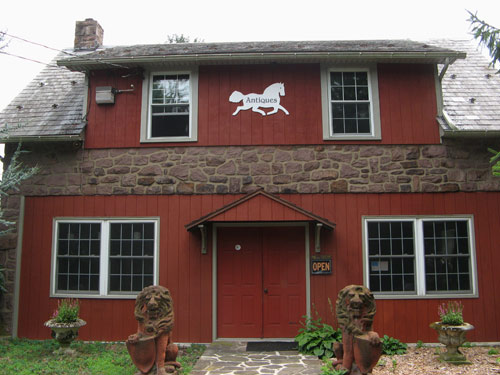
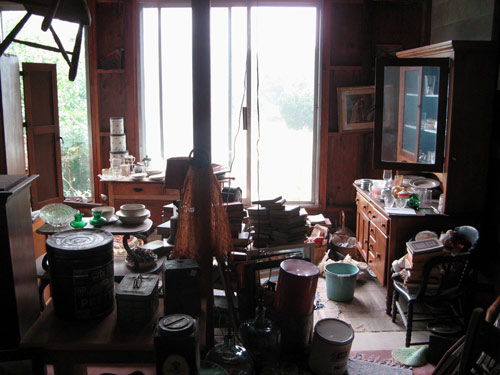
And suddenly, improbably, we happened upon the very antiques shop J and S had discovered on their last trip to Pennsylvania Dutch country some 4 years ago. It was only a matter of time before we found the farm of the woman S had been talking about seeking out for weeks: the kindly octogenarian who sold antiques out of the barn adjacent to her home. We caught up with her at her house – as she was taking a break from mowing her own lawn(!) – and though she informed us she had closed up her business a few years ago, after just a little bit of wheedling, she agreed to open up her barn and shed for our private perusal.

Lancaster antiques

Lancaster antiques

Our persistence paid off! It was all around the most successful sale day of our trip.

I would drive 500 miles

…but I didn’t have to, because J took the wheel for the entire road trip. (Thanks!)

About last night’s hotel: I’d never walked away from a hotel before, and as of this road trip, I’ve now left two. Our Cincinnati hotel was far from fancy… or even, well… clean, but we probably would have stuck it out if S had not pulled back the sheets of her bed to discover a bedbug. A bedbug — eee! She’d read enough horror stories about these highly insidious, notoriously difficult to elimate critters to know that we should not stay.

On the bright side, it was the smoothest hotel check-out ever. The man at the front desk merely shrugged, before processing our bill almost wordlessly, leading us to suspect that we were not the first to have had this issue.

Within half an hour, we were in our new, much improved (i.e., infestation-free) digs at the Sheraton “North Cincinnati,” actually, “Sharonville.”

We got ourselves an early start; we had a lot of road to cover today. Hours and hours of driving later, I had my very first meal at Cracker Barrel. How I managed to avoid this chain on those New York City-Austin treks will remain a mystery; there are a staggering 550+ restaurants spread over 41 states – almost all along interstates (and none in New York City or on the West Coast.)

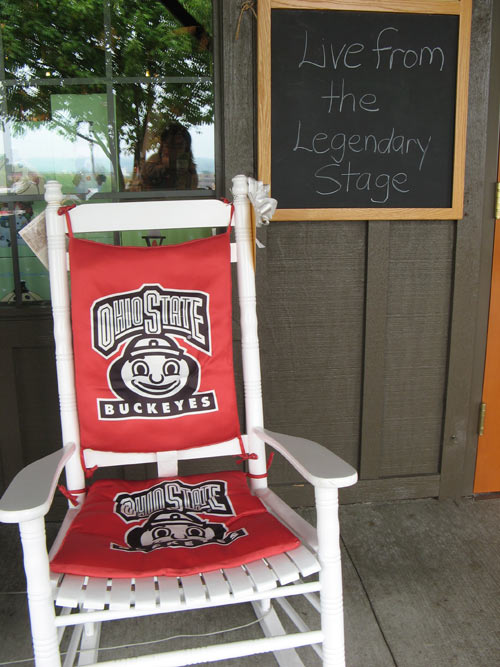
I don’t even know where in Ohio we were when we finally stopped for lunch, but here we are. (Go, Buckeyes!)

Buckeyes rocking chair

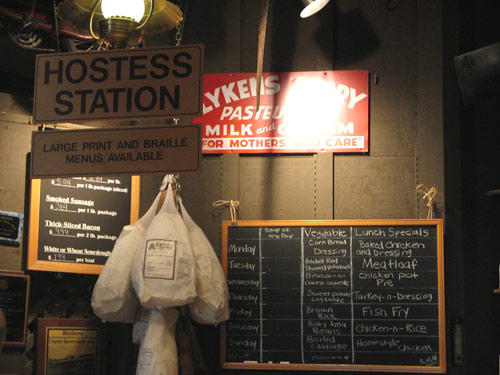
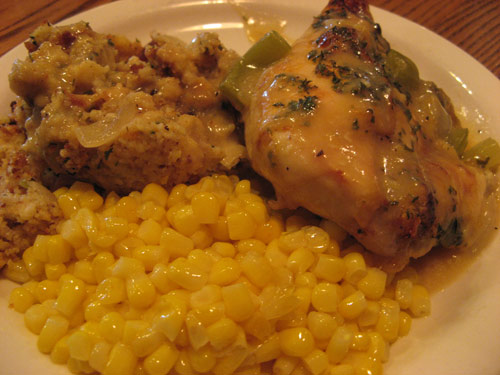
One of the last opportunities for “a glass o’ sweet” and “vegetables” like Monday’s special “cornbread dressing.” (Yes, I had both.)

Cracker Barrel

Baked chicken and dressing

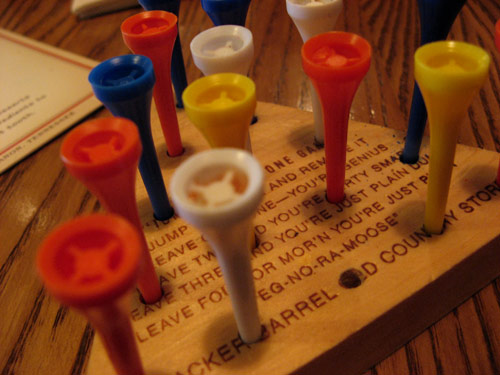
Peg-no-ra-moose

Sweet tea in New York!

Six ways to Sunday

Over the Ohio River into Cincy. Aside from the pair of office buildings we spied in Lexington, KY this was our first glimpse of an urban setting in almost a week.

Cincinnati has one of the largest collections of 19th-century Italianate architecture in the United States, primarily concentrated in Over-the-Rhine, just north of downtown Cincinnati; at the time of their construction, Over-the-Rhine was one of the most densely populated neighborhoods in the Midwest. We saw none of those buildings, though, as the Garmin led us through the desolate, rather seedy-feeling landscapes of downtown to our hotel — more on this later.

After dropping off our bags, we went out in search of some famous Cincinnati chili. According to renowned foodies Jane and Michael Stern, who compiled a book on the nation’s chili recipes, “Cincinnati is a city bewitched by chili; there are at least a hundred joints in town that make a specialty of serving it. And we do mean joints, for chili, Cincinnati-style, tends to be one rude plate of food, best eaten off a Formica counter under humming fluorescent lights after midnight in the company of other chiliheads.”

Back in 1922, Empress Chili became the first chain to serve Cincinnati chili. Just three of their parlors remain, but numerous spin-offs and battlers for chili supremacy abound in Ohio, Indiana and Kentucky – most run by Greek immigrants as was the original.

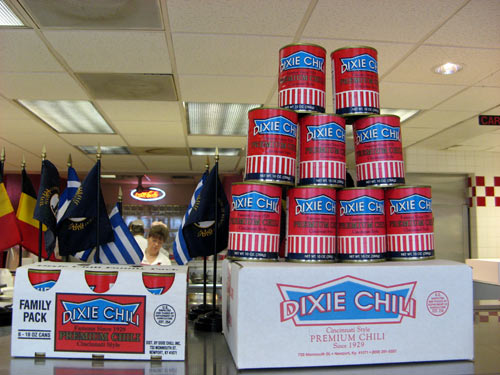
We decamped from downtown Cincinnati in favor of the greener, more friendly streets of Newport, Kentucky across the river to try one of Empress’s first followers: Dixie Chili. Dixie’s was started by a former Empress employee Nicholas Sarakatsannis in 1929.

Dixie Chili

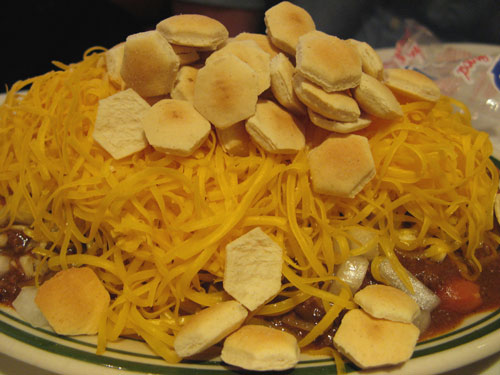
We pulled up to the joint, and one glance at the menu underscored the sense that aside from also being called “chili,” this had very little in common with Texas red. Dixie’s Cincinnati chili is thin, brown, sweet, and (though I’m sure there are variants) scented with cinnamon. (The actual recipe is a family secret.) A “bowl of plain” is how locals refer to the chili alone, but more commonly, it is served over spaghetti(!) – a.k.a. a “two-way” – plus any number of toppings : “three-way,” i.e., a two-way with shredded American cheese; “four-way” – a three-way with sweet onions; “five-way” – a four-way with kidney beans, up to a “six-way” (for chili connoisseurs only), which is topped with chopped, raw garlic cloves. Ay! All bowls are accompanied by oyster crackers.

Dixie Chili

The wonderful Calvin Trillin, in American Fried: Adventures of a Happy Eater (1974) (excerpted in his Tummy Trilogy), devoted a section to Cincinnati chili which I just happened to read the following morning. In it, he claims that Dixie’s once offered a “seven-way,”(!) which included an egg (fried or scrambled), and chopped frankfurters. The chain has since abandoned their egg-cooking operations. (They do, however, still offer a “Coney,” which is a hot dog with chili, topped with onion and/or shredded cheese.)

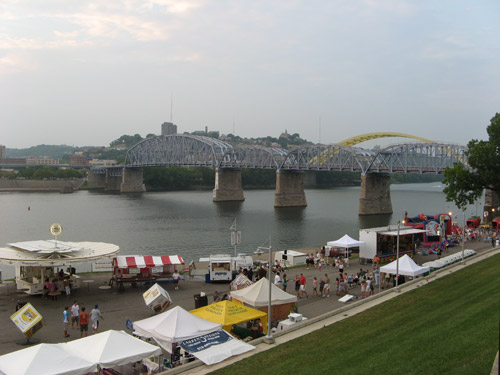
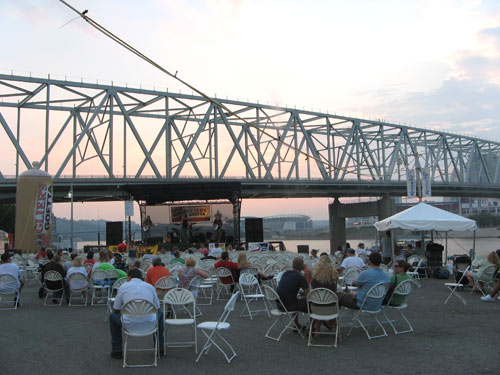
After dinner, we strolled along the Newport Riverfront Levee with its 10-acre pedestrian walk and shopping mall. The annual Glier’s Goettafest was taking place on the waterfront. (Insert obvious “sausagefest” joke here.)

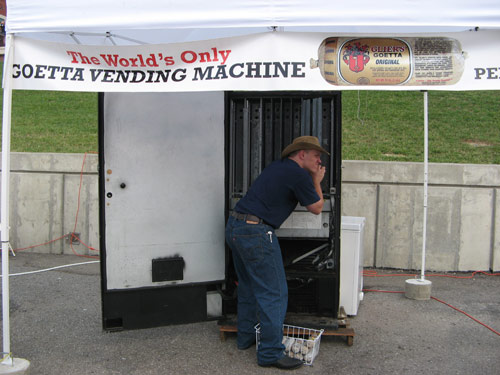
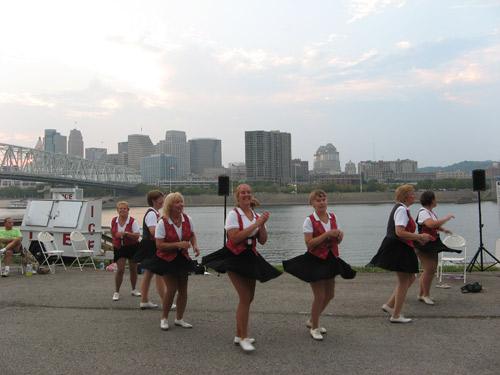
Great bridge-filled view, but very strange: an entire event devoted to German breakfast sausage. There was live entertainment (a pretty mediocre cover band and assorted clog dancers), cooling stations, food vendors serving an almost staggering variety of Goetta-inspired offerings and the “World’s Only Goetta Vending Machine” — being reloaded as we watched — dispensing one pound rolls of Glier’s Goetta for $2.

GoettaFest

GoettaFest

GoettaFest

GoettaFest

Check out flickr for the rest of the fest.

Packing it in

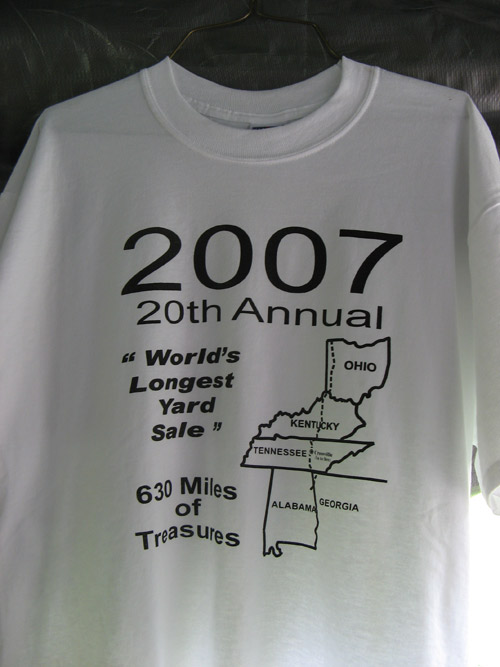
127 Sale t-shirt

Last night’s stay had given us a rosier outlook on Kentucky, and we set out to do a bit of exploring along this last segment of our route.

Unfortunately, we were thwarted – twice – in our side trips this morning. First, at Lovers Leap Vineyard, which was a picturesque, if ultimately pointless detour. Then at the Four Roses Bourbon distillery, where we were turned away by the one person wandering the premises on a Sunday morning: an unfailingly genteel, elderly Southern gentleman. We probably should have anticipated as much; although 90-95% of the world’s bourbon-style whisky is produced in Kentucky, about half of the state’s 120 counties are completely dry, one quarter are wet, and the rest are managed under a prescribed set of specific rules (.pdf), e.g., no alcohol at all on Sundays, or individual drink sales allowed only on golf courses (seriously) or in restaurants with seating over 100.

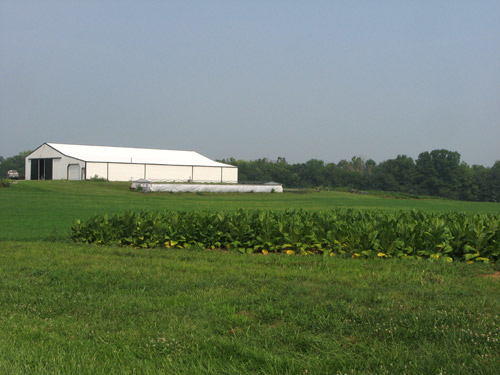
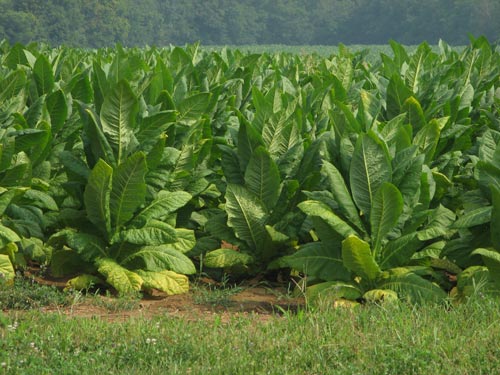
Tobacco fields. Kentucky is the second biggest tobacco-producing state (.pdf), after North Carolina:

KY tobacco

KY tobacco

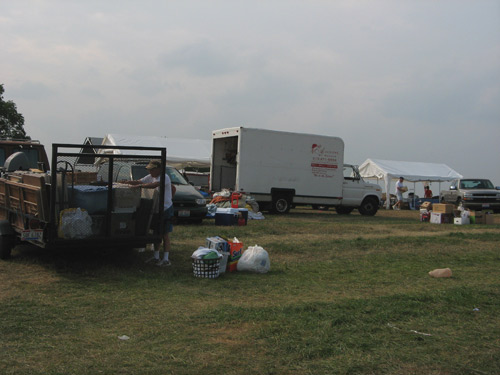
As we made our way north towards Ohio, we learned that just as the sales began earlier than advertised, they ended earlier, too. By 4PM most vendors were already packing up for the long drives home. After days and days of living on outdoor lots in makeshift tents and trailer parks, I don’t blame them.

Thanks to J’s eagle eye, I still managed to score not one – but two – of the vintage crocks I’d been coveting all week, so even though I never found my desk, I still felt the sale a success.

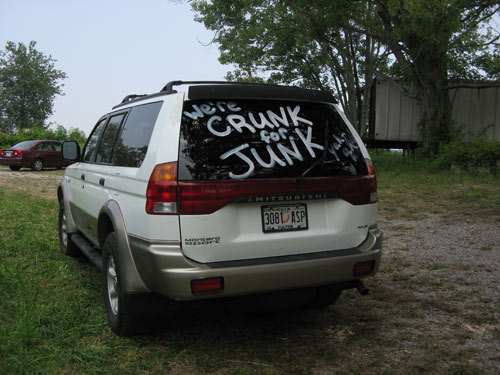
Crunk for Junk

Packing up

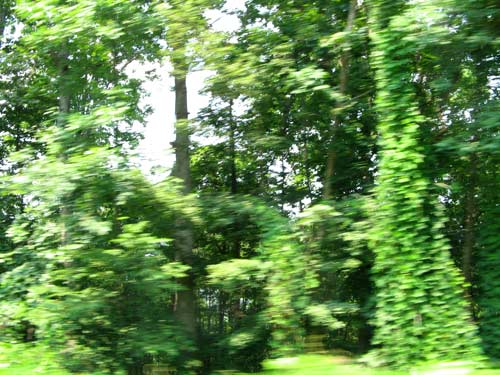
Kudzu

‘Til next year (maybe), Highway 127

The Chambers (Danville, KY)

Our dining choices were limited on the road, and as the dinner hour grew late (in Kentucky time, that’s 7:30PM) we finally settled for a lackluster meal at Village Restaurant in Liberty, KY where I was introduced to red-eye gravy – a thin gravy, made from the drippings (i.e., fat) from pan-fried country ham, mixed with black coffee or water (or according to J: Coca-Cola.)

We arrived in Danville a little before 8:30 and noticed a marked change in our surroundings: fields gave way to strip malls, and then to expansive Southern mansions.

The Chambers Bed and Breakfast is located on North Third Street, a.k.a. “Beaten Biscuit Row” — so named in the 1800s when it was said that one could walk down the street and hear the sound of cooks in the back kitchens, beating biscuits for breakfast.

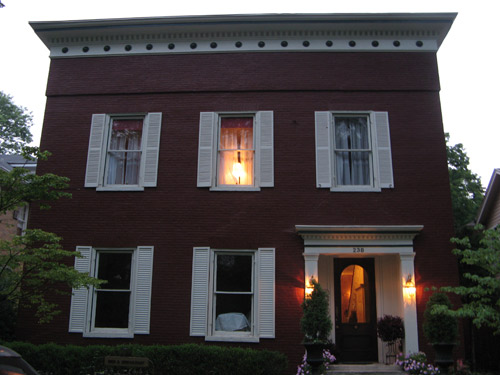
The Chambers B&B

The Chambers B&B

After a long and hot, discouraging day, the clean and beautifully appointed home of innkeepers/partners Wynne Creekmore and Carolyn Hogwood was an oasis of gentility. Their Greek Revival home was actually fashioned from the combination of two 19th century homes — a main house and the servants quarters behind it — and is listed on the National Register of Historic Places.

We were assigned “The Cottage Chamber” with its adjoining bathroom, featuring a refurbished original claw-foot bath tub/shower and iron lavatory sink in which to soak and rinse away the grit and grime of the day.

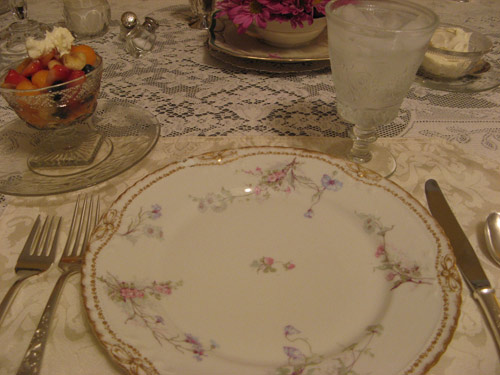
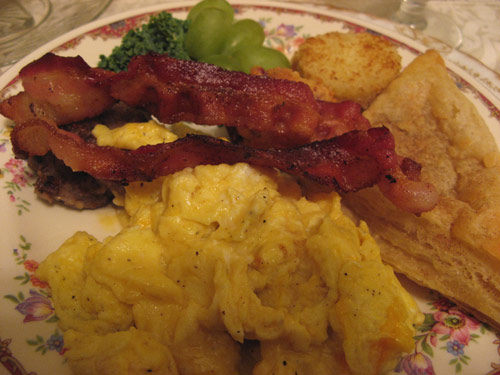
Early the next morning, we were greeted with fresh, hot coffee set out on a silver tray outside our room, to ease us into the morning until the hearty breakfast prepared by Carolyn would be served in the dining room. Fresh fruit salad topped with real whipped cream, eggs — or is that “aigs”? — and bacon, a homemade apple turnover, and a currant scone, but disappointingly, no beaten biscuits.  In their stead, we got what turned out to be (after J just had to ask) a round cut-out of cake, buttered and pan-toasted. Now that’s brilliant.

The Chambers B&B

The Chambers B&B

The Chambers breakfast