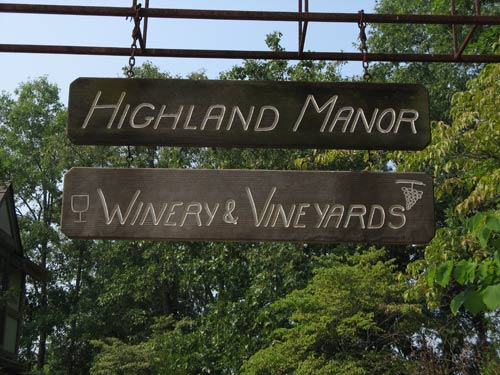
To break up the endless stream of outdoor sales, we made a brief side trip this morning to Highland Manor Winery and Vineyards, Tennessee’s oldest licensed winery, conveniently located just off US 127. I was intrigued since I’d always associated the state more with whisky, or even… well, moonshine. Tennessee, though, has a wine-making history that dates to the late 19th century. The nascent industry was thwarted, however, by the institution of statewide Prohibition in 1909.
Although a few producers continued to make wines, it wasn’t until the 1980s that the state’s wineries began a serious resurgence. Today, there are over two dozen wineries operating in Tennessee, though with its estimated $13 million in annual sales, the state’s wine market share is dwarfed significantly by its neighbor to the East, North Carolina.
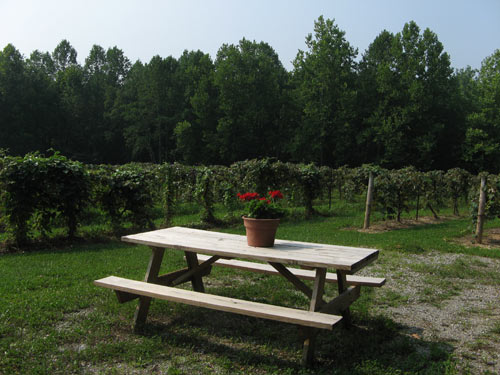
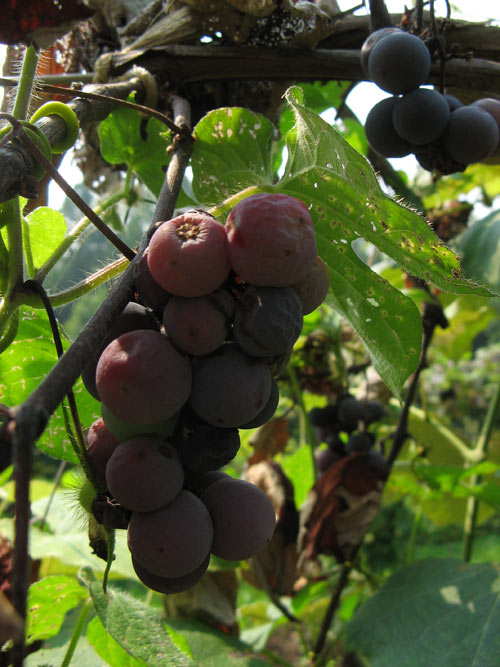
We arrived early on a Saturday morning, and found the winery quiet, and I was able to wander among the vines freely, with no supervision. Eventually, a young woman emerged into the gift shop to offer us select tastings from among Highland Manor’s 15 varieties (dry, semi-dry and sweet), many of which are produced from grapes grown on the winery’s estate vineyards.
Although we were not exceedingly impressed with the available product — Highland Manor’s award-winning muscadine has a one-year waiting list — we picked up a couple of bottles as souvenirs of our visit. When S pointed out that all of the bottles were labeled “table wine” and that none noted a vintage year, our guide explained matter-of-factly that omitting the information saved the winery the cost of reprinting new labels for each harvest. There’s something almost brilliant about that logic, no?
No comments