vip in the city, page 58

In Between Days

In a new collaboration between IFP, its magazine Filmmaker, and MoMA’s Department of Film and Media, the museum screened the five nominees for the “Best Film Not Playing at a Theater Near You” award from November 24–27, 2006. The nominees were selected in October by the editorial staff of Filmmaker and Jytte Jensen, MoMA’s film curator. The five nominees represent the best independent films on the 2006 festival circuit that have yet to find a distributor for theatrical distribution.

The theater was also in the midst of a Roberto Rossellini retrospective, so the lobby was bursting with filmgoers. Rossellini on Paper, an accompanying exhibition of posters, family photographs, and correspondence documenting the Italian filmmaker’s career, is on display in the lobby galleries through April 7, 2007.

In Between Days is the story of Aimie (Jiseon Kim), a newly arrived Korean immigrant, who falls in love with her best and only friend, Tran (Taegu Andy Kang). The film follows the sweetly awkward friendship between the teenagers, from easy camaraderie, to petty jealousies, to tentative sexual experimentation, to heartbreak. Not much happens in this slight 82 minute film — and what does happen seems to taken an awful long time — but for those willing to approach the film as a character study, rather than a strict narrative, it has its rewards. The extended silences are more frequent, and weigh more heavily than any of the (mostly Korean) dialogue. Ponderous, lingering close-ups on the actors’ faces, and long tracking shots offered intimate and naturalistic portrayals of the characters’ emotional states. When Tran inevitably falls for a more Americanized Korean girl, Aimie’s hurt and dejection is made clear without any expositioning dialogue. The remarkably expressive performances of the two leads was all the more impressive when I learned at director So Yong Kim’s post-screening Q&A that neither Jiseon nor Taegu had ever acted in a film before.

One could hear the crunch of snow beneath Aimie’s trudging boots, and almost feel the chill and isolation cloud off the screen during the wintry shots. Despite these strengths, I imagine that a wider audience may be a little maddened by the film’s drearily slow pacing and lack of clear resolution.

The is the first feature from So Yong Kim, who emigrated from Pusan to the United States. In Between Days won a special jury prize for Independent Vision at Sundance earlier this year, and has had a healthy festival run internationally, showing in Pusan, Toronto and Hong Kong among others. So Yong wrote the film with her producer/husband Bradley Rust Gray, who was also at the MoMA that night, accompanying his now significantly pregnant wife. After the film, So Yong described the evolution of the story: how the initial draft was more autobiographical, and much, much longer, spanning decades of Aimie’s life. From there, it was a year and a half editing process to distill the film to the short period of time covered in the finished product. Similarly, editing down the film footage itself was a monumental task. Although the film was shot in just over 3 weeks in Toronto, the shoestring budget forced the director and crew to live with Jiseon, during which they filmed her constantly, often in intense close-up, resulting in about 66 hours of total coverage. Only 2% of the footage made it into the final cut.

It was most interesting to hear how production logistics shaped the finished product. So Yong originally conceived the film around a more Americanized teenage girl, with a Goth sensibility — hence the title of the film, taken from one of my favorite Cure songs. After conducting a series of casting calls in New York and Los Angeles, So Young finally discovered the young woman who would be Aimie behind a coffeeshop counter in New Jersey’s Koreatown. Jiseon Kim was then newly arrived to this country, and So Young rewrote the Aimie role to accommodate her. In addition, the story was originally set in Los Angeles in the heat of summer, but since Jiseon was only available to film during her winter break from FIT (where she’s a current student), the locale was moved to Toronto in the dead of January. The character rewrites and relocations add an entirely new dimension to the story, with outsider Aimie’s quiet alienation and the bleak, icy urban landscapes underscoring the crushing disappointment of first heartbreak.

On November 29, Filmmaker magazine selected Steve Barron’s Choking Man for the “Best Film Not Playing at a Theater Near You” award at the 16th Annual Gotham Awards. NYC TV will broadcast the awards show on Wednesday, December 6 at 9:00PM and Saturday, December 9 at 10:00PM.

Hot dog vendor in front of the MoMA theaters:
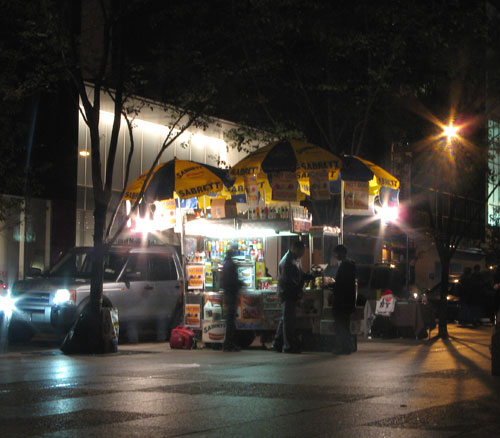
MoMA Hot Dogs

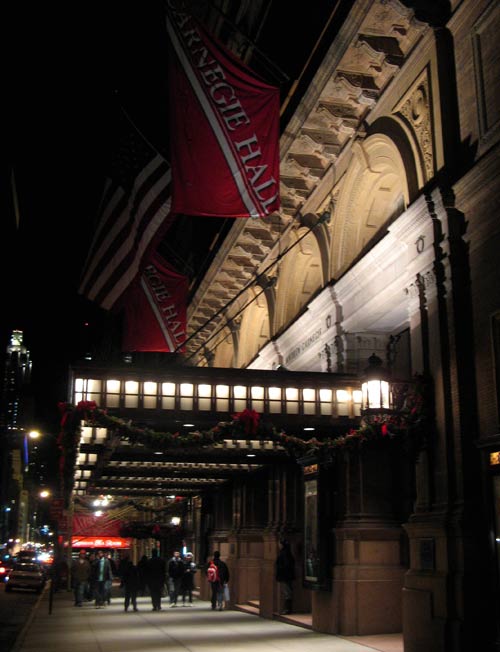
Walking home, past Carnegie Hall.

Carnegie Hall

Yesterday I got so old
I felt like I could die
Yesterday I got so old
It made me want to cry
In Between Days,” The Cure (1985)

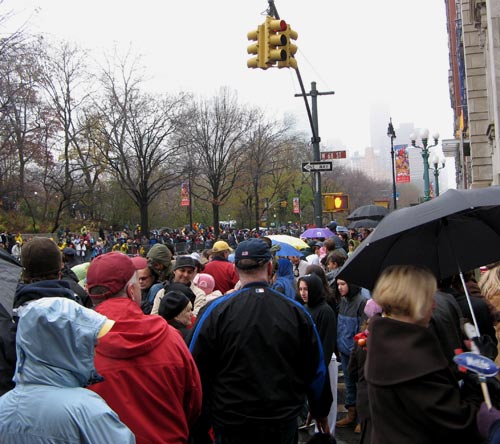
Thanksgiving Day Parade 2006

Happy Thanksgiving!

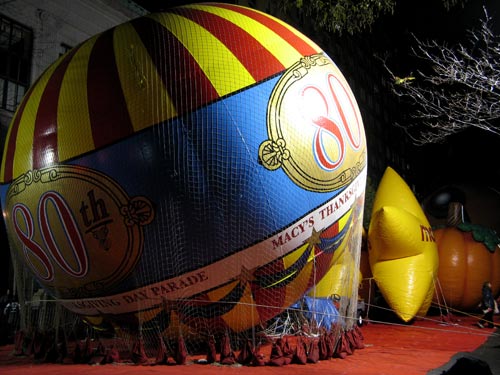
The windy downpour began early this morning, but the parade would go on — rain or shine. I made it to the end of my block amidst the torrents of water to take part in this year’s 80th annual festivites. My umbrella was rendered almost useless by the crowd; I finally gave up and sought partial refuge under a friendly bystander’s shelter.

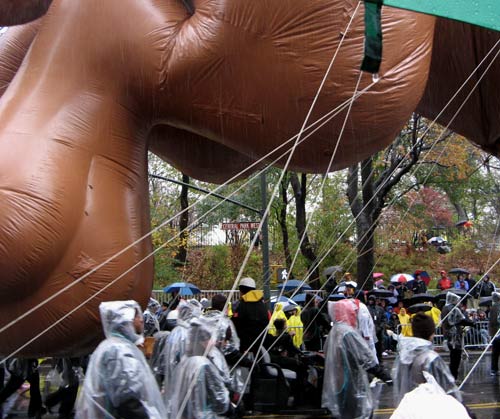
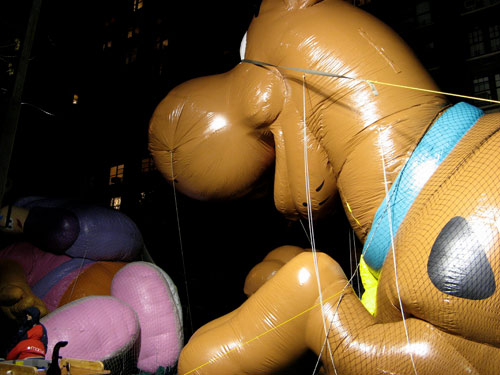
This year’s theme was “Around the World in 80 Parades.” The inclement weather prompted city officials to order the balloons flown lower than usual this year, with none rising beyond 17 feet for safety. I could almost touch Scooby Doo as he went by. During last year’s event, two sisters were injured by debris when a giant M&Ms balloon crashed into a light pole. They attended this year’s parade as special guests of Macy’s… perhaps as thanks for not suing.

Parade Spectators

Some bits familiar from the night before:

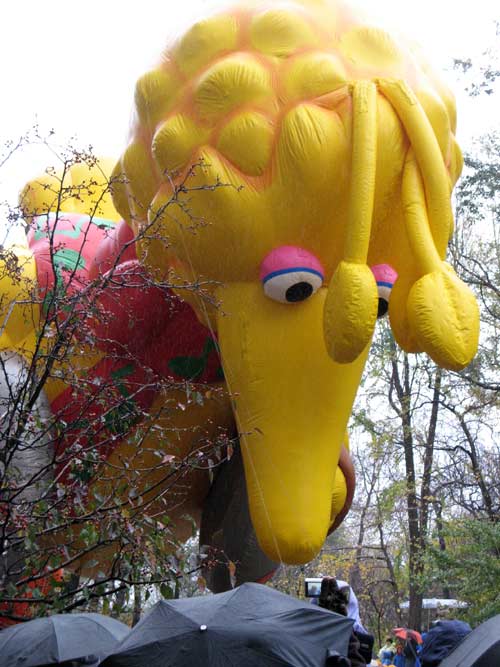
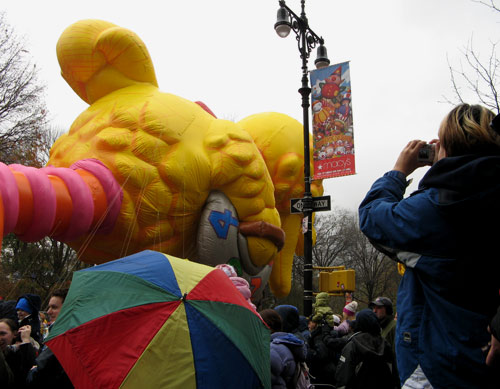
Big Bird

Big Bird

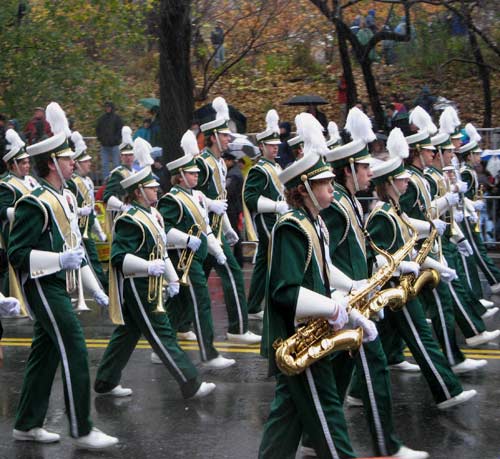
Marching Band

Hippo

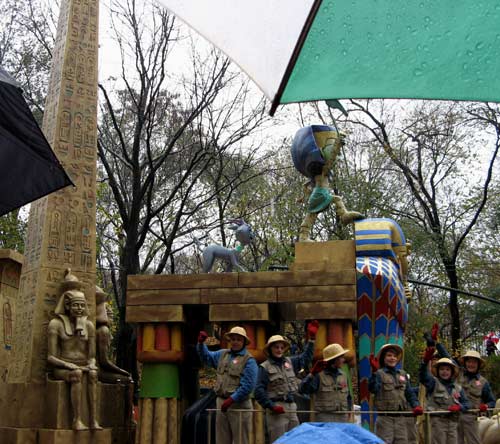
Tarzan Float

Scooby Doo Handlers

SpongeBob SquarePants!

SpongeBob SquarePants

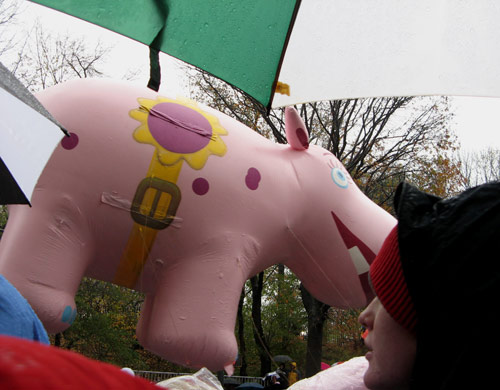
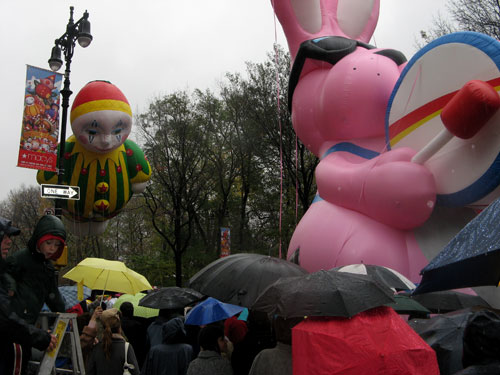
Look Ma, no strings! The giant pink Energizer Bunny, making its debut this year as a “balloonicle,” a type of balloon first introduced in 2004 that moves on its own, like a car. And yes, it keeps going — and going, and going — on batteries.

Energizer Bunny and Clown

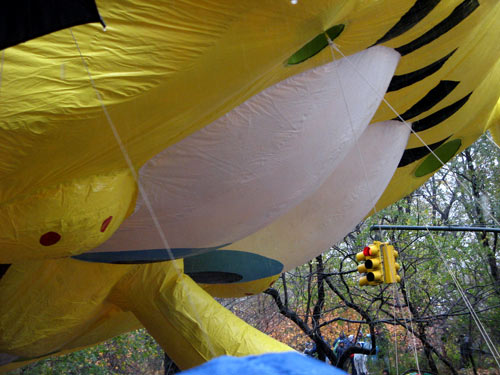
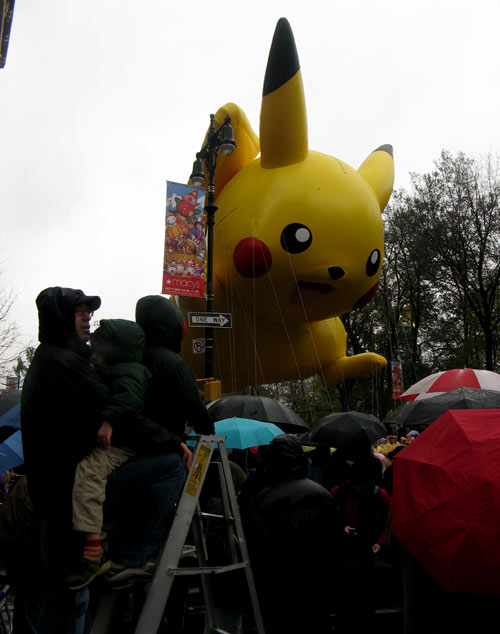
This year’s updated Pikachu balloon with flashing red cheeks. Nice ladder: somebody’s Dad came prepared!

Pikachu

Thanksgiving Eve 2006

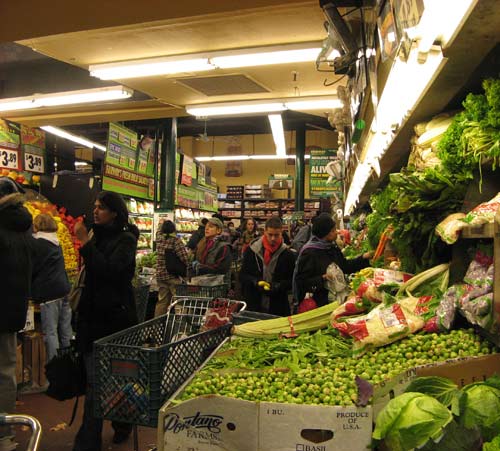
Another nominee for “Worst Things to do in New York City“: Go food shopping at Fairway on Thanksgiving Eve.

I love Fairway Market: the variety, the quality… but on weekends or before 10PM, it’s not for the faint of heart. Browsing the cheese and olives section alone is a full body contact sport, and I have the battle scars to prove it: shin bruises the exact shape of the Maclaren undercarriage; black skid marks over my shoes, matching the tiregrids of shopping cart wheels. (For what it’s worth, I never ever  use a cart at Fairway, and I generally don’t wear open-toed shoes to shop there… anymore.  Yeah, ouch.) It’s the compromise I make for rejecting the often poor quality at the local Food Emporium, and the often outrageous prices at the local Whole Foods. For the value/quality/proximity-to-my-apartment combination, you just can’t beat Fairway.

From a strict observational standpoint, you also can’t beat Fairway as a theatre of social Darwinism. Oh, the drama! Somehow normally functioning people will enter through those doors and lose both their peripheral vision and ability to sense or predict pedestrian traffic flow patterns. I suppose this sort of thing is not just limited to Fairway: I’m constantly amazed at how poor the average person’s understanding of how crowd traffic dynamics can be.

You know exactly to whom I refer: the ones who stop at the top step of a crowded stairway (or worse: escalator) to look around; those who ram their way into, or out of, a subway car only to stop short just in front of the car doors, blocking the entrance/exit for everyone else behind; those who walk three or four abreast on the Broadway sidewalks through SoHo or Times Square during rush hour. It’s a total, almost shocking, lack of awareness. That same group of people will, while shopping at Fairway during peak times, park their carts perpendicularly mid-aisle (or on the corner) while they intently study a label on a can, or casually consider the variety of apple they want to use for their pies. The lack of consideration is directly proportionate to the level of indignance they will display if you attempt to squeeze past — and God forbid, touch them — or worse, ask them to move to the side.

On Thanksgiving eve, you get, in addition to the usual characters, all the people who haven’t fired up an oven since last Thanksgiving. Hilarity ensues. Desperate, frantic cries of “What do shallots look like?” (Kind of like garlic, with bigger cloves/bulbs and papery brown skin like an onion.); “Are sweet potatoes the same as yams?” (Not exactly.); “How many milliliters are in a cup? (240.) “Do you carry non-dairy butter?” (What?) “Is it too late to get reservations at a nice restaurant instead?” (Good luck!)
Fairway

Well, it’s my own fault, really, for waiting until this night to shop the ingredients for tomorrow’s dinner.

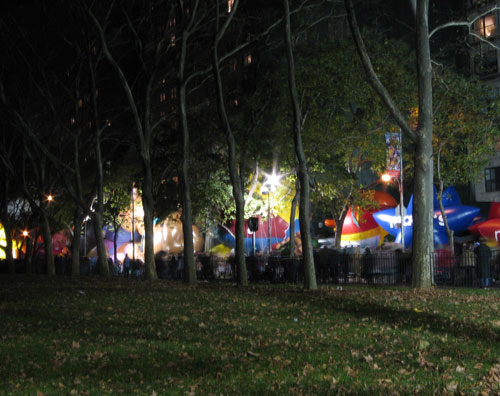
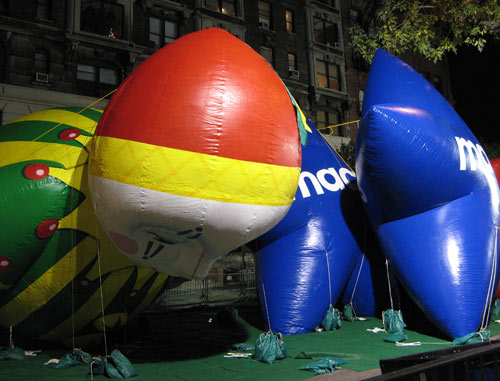
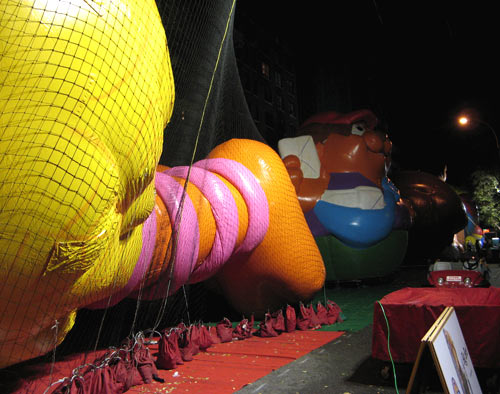
Ah, but one of the best things to do in New York City? Watch the Macy’s Thanksgiving Parade balloon inflation. After dropping off my hard-bought groceries at home, I strolled up towards the blocked off streets around the American Museum of Natural History. The rest of the year, the parade’s stars sit inside a four-story warehouse that spans about half a city block. On this night, though, they take up the streets from 77th to 81st Street, taking shape over the course of the day as pumps fill them with helium. It was towards the end of the evening, and the balloons were almost at full capacity, sitting eerily in wait for their proud trip down Central Park West and Broadway tomorrow morning.

Balloon Inflation

Clown

Big Bird

Scooby Doo

Hot Air Balloon

Central Park West on Parade eve:

Parade Eve

Striking 12

Final delivery for the CSA season! Lots of Thanksgiving produce, including potatoes, carrots, beets, turnips, squash, sage and garlic. As with last year’s final share, we also received ears of two popcorn varieties; after drying the cobs for 8 weeks, they’ll be ready to strip, pop and serve. Stay tuned for movie night come late January.

If you’re interested in learning more about community supported agriculture, check out the Just Food website or the West Village CSA information sheet. Registration for their 2007 season is open now; sign up for membership before December 22 to qualify for the $25 early registration discount.

From SYB’s afternoon pie-making class at the ICE: a chocolate hazelnut torte. So pretty! Unfortunately, I ended up not being able to take it home for Thanksgiving, after all… but it smelled divine.

Chocolate Hazelnut Tart

Because SYB had saved me the trip to the McBurney Y, I made it to the Union Square Starbucks in time to meet B and the family before tonight’s show: LM, and the MAJK crew, newly arrived from the Sunshine State. Since touching down at LaGuardia that afternoon, the busy visitors had already hit Times Square, and had their first taste of New York City pizza.

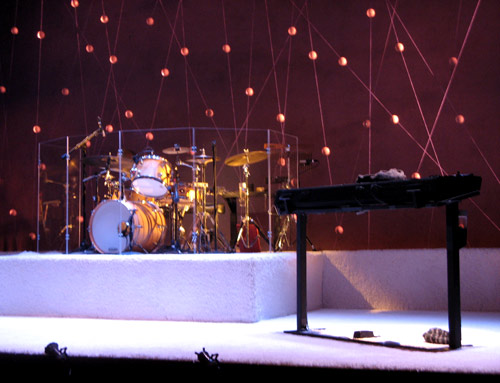
Our group of seven crossed the street to the Daryl Roth Theater, the landmarked site of the former Union Square Savings Bank. Tonight, we were there for Striking 12,  the rock musical by New York City alternative rock trio GrooveLily.

Mid-November through late December is the primest of prime tourist season in New York City. And the thing about having all those tourists descend up our city, is that everything sells out. Everything. Shows don’t have to be much good at all to draw crowds night after chilly night. The worst culprits are the special holiday-themed shows — the spectaculars, the pageants, the revues, the Handel overdoses, the Sugar Plum toothaches… Quality in these productions can feel like a secondary consideration, or a happy coincidence.

As an antidote to all the saccharine entertainment offerings, Striking 12  bills itself as “a cross between a rock concert and a holiday show, for people who don’t really like holiday shows.” I would probably characterize it as more concert than play; the performers are certainly musicians before they are actors. GrooveLily developed the show with Rachel Sheinkin, who won a Tony Award for the book to the 25th Annual Putnam County Spelling Bee.

The story, such as it is, blends a contemporary holiday theme with an old-time children’s tale, with each member of the three piece ensemble contributing characters, and lots of rollicking musicianship: keyboard, drums and electric violin. Keyboardist Brendan Milburn plays a typically overworked and cynical New York City office drone — credited as “The Man Who’s Had Enough” — who is determined to spend New Year’s Eve at home alone, far away from his friends’ forced cheer. What jaded New Yorker hasn’t felt that impulse? His self-imposed isolation is interrupted by a kookily clad (but cute) girl selling Seasonal Affective Disorder-combating “full-spectrum holiday lightbulbs.” She’s played winningly by Milburn’s real life wife, Valerie Vigoda, who doubles as the trio’s rock violinist. Although the Man spurns the girl’s offer, he’s reminded of Hans Christian Andersen’s classic 7 paragraph story, “The Little Match Girl,” which also takes place on the final night of the year. He locates an old copy of the story and recites it aloud — interspersed with original ditties — while fielding numerous interruptions from his reveling friends and co-workers, played by Vigoda and drummer Gene Lewin.

Do you remember how “The Little Match Girl” ended? (Hint: They didn’t all live happily ever after.) The Man didn’t, and as a result, the grimness of the ending comes as something of a shock. It does, though, serve as a launching point for one of the evening’s catchier tunes, “Screwed-up People Make Great Art.”

The repertoire of songs was varied, engaging and inventive, with unique instrumentation, covering a wide variety of genres: ballads, hard rock, funk. All three performers impressively played, acted and sang — and in one instance, perhaps the evening’s only awkward misstep: rapped. (Yikes.)

Despite its barebones setting — The New York Times dubbed it a “thoroughly winning minimalist musical” — Striking 12 is a refreshing exception to the lousy holiday fare trend, managing to be touching without being cloying. And when the trio rocked out for their finale, you’d be hard-pressed (and hard-hearted) to argue with the character who declared, “Everyone likes “The Little Drummer Boy”!

Striking 12

10 Items or Fewer

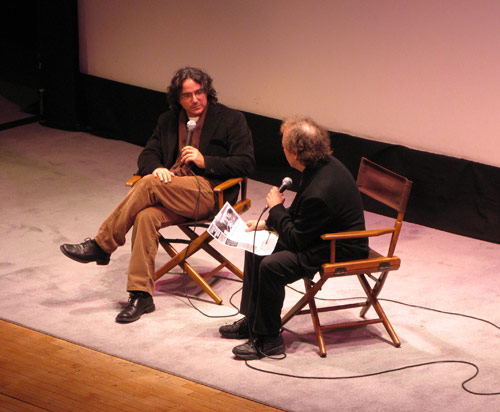
I started my Feature Film Series at Town Hall. Tonight’s class was the first of two “bonus screenings” before we settle into the bi-weekly schedule in 2007. The class is hosted by Scott Siegel, renowned film critic and author of dozens of books, who introduces the films and then leads invited guests through a Q&A session following the screening.

Tonight: 10 Items or Less — no relation to the TBS show of the same name — directed by Brad Silberling (Lemony Snicket’s A Series of Unfortunate Events), who was also that night’s guest interviewee.

Siberling and Siegel

10 Items or Less stars Morgan Freeman as a literally nameless commitment-phobic actor, venturing out to the ethnic fringes of Los Angeles to research a potential role in an indie project, after a four year hiatus from Hollywood. His co-star is fetching Spanish actress Paz Vega, whom the Sean Hayes character on Will and Grace once described to Bobby Cannavale (who coincidentally has a bit part in this film) as “Spanish for Ashley Judd.” One of the recurring jokes in the film involves Freeman’s character, billed only as “Him,” constantly finding dusty VHS copies of his last blockbuster with Judd in discount bins around town. Would that be High Crimes ? Kiss the Girls ? It’s all so meta.

In reality, Vega made her fame on the Iberian peninsula on television and in movies (Sex and Lucia, Pedro Almodovar’s Talk to Her) before making her American debut in Spanglish. Her subtle performance, as the express checkout line cashier aspiring to be something more, was the thing I enjoyed most about the film.

Not much to say about the slight 82 minute film, which was modest in feel and ambition: a cast of two, plus a couple of other actors and a dozen or so colorful non-acting locals. Danny DeVito and Rhea Perlman make a drive-by cameo appearance, which director Siberling told us was filmed in less than half an hour at a traffic stop on their way to their real life Brentwood home. That anecdote was indicative of the film’s minimalist production. Siberling informed the audience that night that 10 Items or Less was shot over 15 days for a budget of $2 million; compare that to his Lemony Snicket, which cost $125 million and filmed for 132 days. To keep costs down, Freeman (who was also an executive producer), Vega and some key crew members agreed to be paid on S.A.G. scale in exchange for gross points, or shares, in the finished film.

The financing model is one Siberling believes could be viable for independent film; in addition, 10 Items or Less will debut an experimental bifurcated distribution plan through digital entertainment venture Clickstar, Inc. Clickstar, which was founded by Freeman’s production company, Revelations Entertainment with an investment from Intel Corporation, will launch this film as the first through its broadband entertainment service, two weeks after the national theatrical release on December 1. The company seeks to become an online resource for first-run, pre-DVD-release films and artist-created entertainment channels, designed to give film makers a vehicle to reach broader geographical markets in an affordable and flexible way.

About that grammatically problematic movie title…

According to The American Heritage Book of English Usage, “[t]he traditional rule says that you should use fewer for things that can be counted (fewer than four players) but less with mass terms for things of measurable extent (less paper, less than a gallon of paint),” but makes allowances for using less with plural nouns in the expressions “no less than” and “or less.” The Columbia Guide to Standard American English makes the same distinction: “less with mass nouns and fewer with plural count nouns,” also acknowledging the exceptions of “a few idiomatic locutions,” noting that “[e]dited English prefers fewer, and for many conservatives, the use of less where fewer is expected remains a strong shibboleth.”

Count me among those grammar “conservatives.” And kudos to places like Whole Foods Market — the only chain I know to use the technically proper “…or fewer” in their express checkout signage.

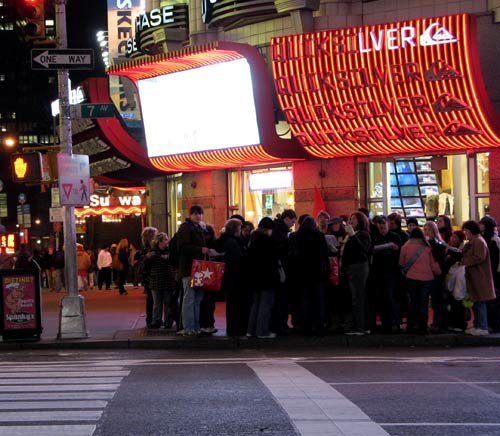
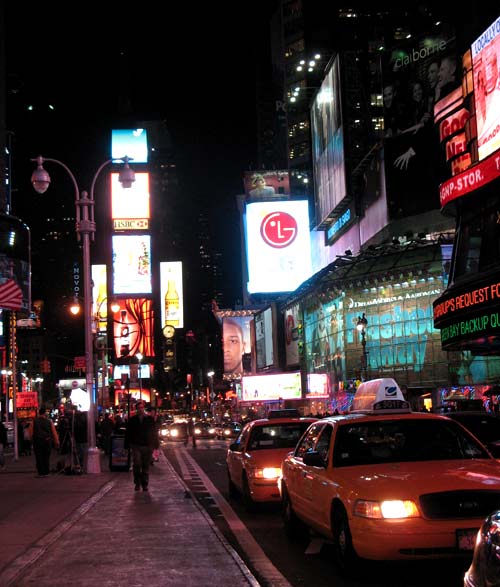
Passing through Times Square on the way home:

Times Square Tourists

Times Square

Books and Bond

Is there anybody out there?

Met SYB at Bouchon Bakery for a last minute pre-date pep talk. So much nervous excitement! I was disappointed to find that quality lemonade is only offered at Bouchon during the summer; their cold weather offering is apple cider, which I suppose makes sense. Though I, for one, find lemonade agreeable any time of the year.

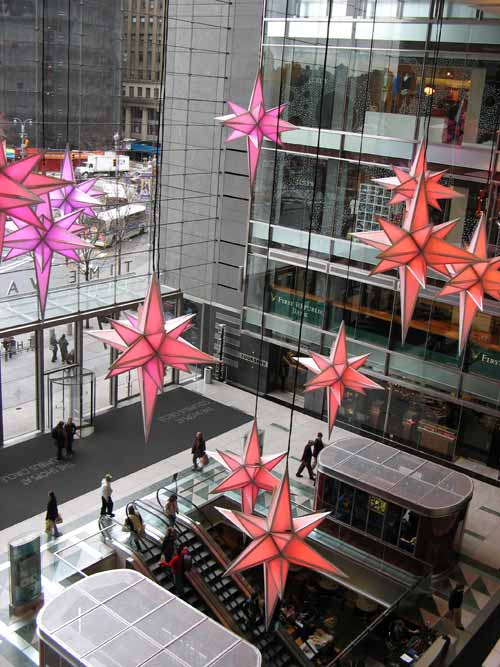
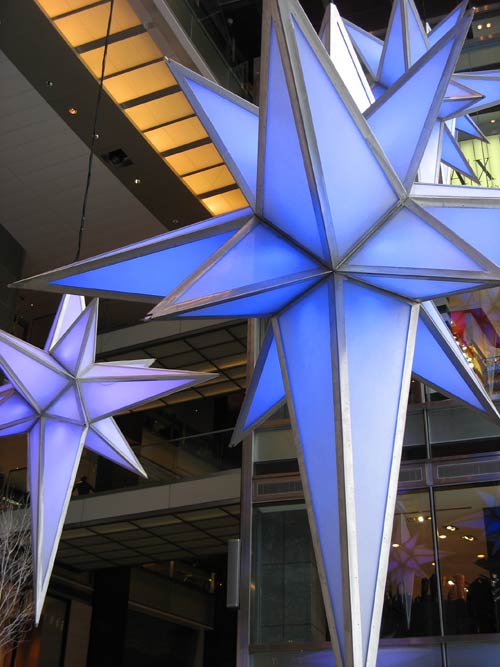
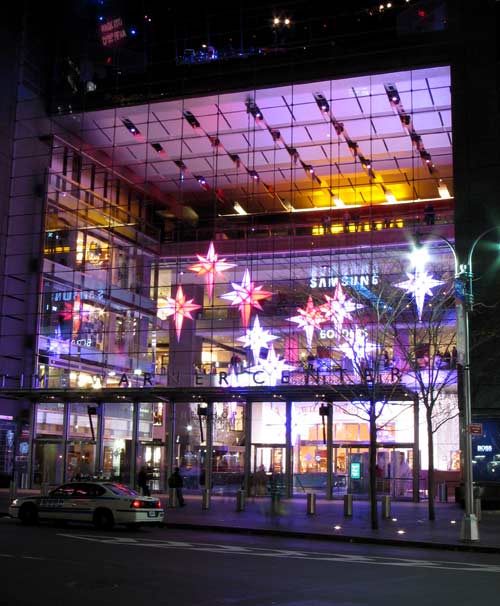
Changing colors of the Time Warner Center Holiday Stars:

TWC Stars

TWC Stars

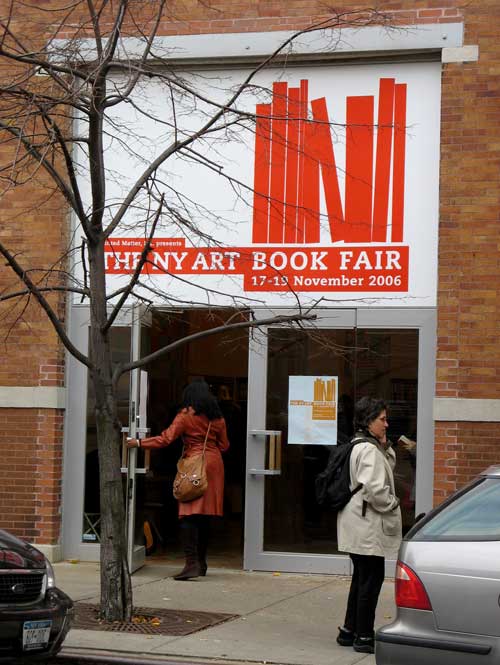
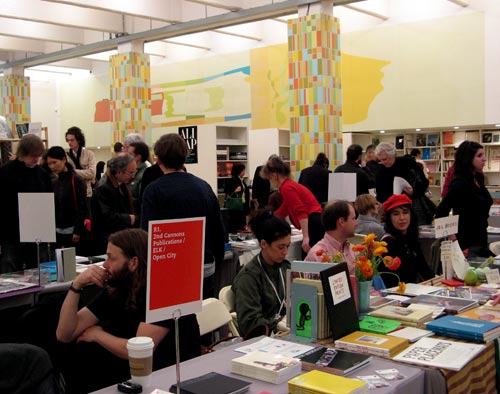
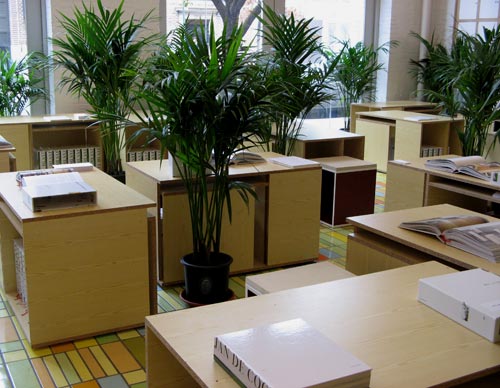
Hit the inaugural New York Art Book Fair, the city’s first-ever fair devoted to contemporary art books and artists’ books, with 2 floors showcasing 70+ exhibitors from around the world: from mainstream and overseas distributors to antiquarian dealers to a section called “Friendly Fire” devoted to zines, artists and other independent publishers. The event was held at a gallery in West Chelsea, in the former Dia Art Foundation space. Judging from the very healthy turnout, independent book publishing is alive and well. The event was organized by Printed Matter, the world’s largest non-profit organization dedicated to the promotion of publications made by artists.

NY Art Book Fair

NY Art Book Fair

NY Art Book Fair

So much to see: from free, photocopied pamphlets piled up on milk crates to precious antique tomes, housed in glass cases.

By the time I made it back to my neighborhood theater, all the afternoon showings of Casino Royale were sold out. Grrr. I generally try to avoid blockbusters on opening weekend for precisely this reason — the crowds, the inordinate amount of planning required… not to mention that AMC just raised ticket prices to $11(!) — but I was intrigued to see Daniel Craig reinvent the James Bond role. Could he really be “the best Bond since Connery?”

B was game to join me, so after loading up on reinforcements (i.e., chocolate Twizzlers and Hershey kisses), we hit the theater the recommended hour in advance to queue up outside the theater entrance. There was the usual jockeying for line position, and sneaky shenanigans, but we secured our prime seats and sat back to enjoy the show.

I’d managed until then to avoid most of the film reviews, so knew very little about the plot going in. Does it matter, really? There are international terrorists and beautiful women involved, and one squirm-inducing torture scene, that made the men in the theater very, very uncomfortable. When I first heard that Craig was selected to take up the mantle left by Pierce Brosnan, I was skeptical, but Craig admirably filled the bill. Casino Royale, being an “origins” picture like Batman Begins, introduces a young, hungry Bond, ambivalent about his chosen profession. It sets the scene for the character’s evolution from cocky thug to suave spy. In that sense Craig was perfect as Bond 1.0: he pulled off the action sequences with ease, humor, and a good deal of raw charisma, while still emoting a certain emotional vulnerability. And when he preened before the mirror for the first time in his new tuxedo, Craig looked as dashing as Connery or Brosnan ever did.

The film sets up the intriguing idea that the people most responsible for defining Bond — his steely-eyed dispassion, his ruthlessness, his misogyny, his drink, his dinner jacket — were women: M (Judi Dench) and Bond girl exemplar Vesper Lynd (Eva Green). I first saw Green in her film debut in Bernardo Bertolucci’s The Dreamers (2003). Actually, far more of Green than was on display in Casino Royale; Fox Searchlight released the film in its original NC-17 form.

Casino Royale maintained a tight rein on the double entendres, super high-tech gadgets and over-the-top action sequences. Even the opening black-and-white scene, showing Bond earning his 00-agent status, was a bit of a departure from the usual: not a single fiery explosion, speeding plane, train, or automobile in sight, which made the violence, and ensuing body count, much more personal. My favorite set-piece was also remarkably-free of CGI special effects: an extended foot chase through the streets of Madagascar between Bond and Parkour promoter Sébastien Foucan, playing an African bombmaker with super-human agility.

Craig’s 007 opened at No. 1 in 49 of the 50 countries where it’s showing; Americans gave a slight edge to the tap-dancing penguin. Still, with many major foreign territories yet to go, including Japan, Korea, Italy and Australia, the movie is on course to surpass 2002’s Die Another Day to become the top-grossing Bond installment. Bring on more Blond Bond.

Anne-Sophie Mutter at Carnegie Hall

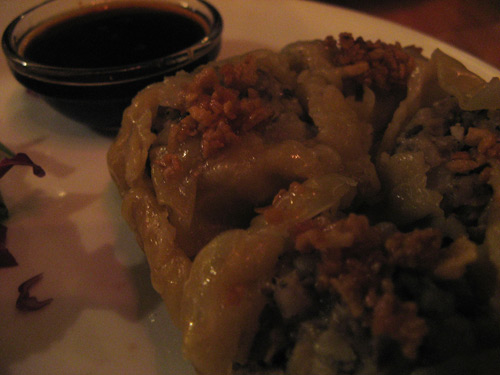
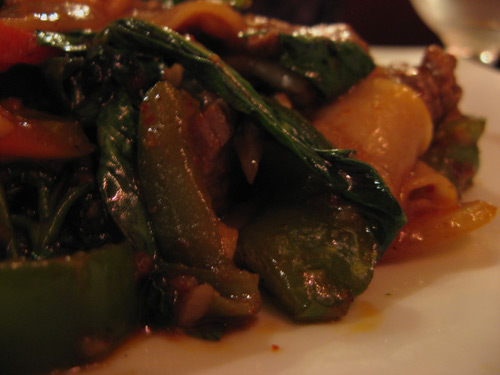
Another Carnegie Hall concert. This time, SYB and I decided to forego the usual pre-concert trip to Burger Joint in favor of something different. After weighing the alternatives, we settled on Pam Real Thai. SYB had never been there — which was a bit surprising since I’ve eaten there about half a dozen times in the last few months — so he was looking forward to making the Thai taste comparison. We arrived just before the dinner rush, and quickly decided upon Fried Tofu, Steamed Chive Dumplings and the Pad Key Mao (stir-fried flat noodle with beef, chili, basil and garlic, which we decided would be our baseline of comparison.) And of course, our flame-quenching Thai iced tea and coffee.

The noodles were far less incendiary than those we had on our other outings, probably because we did not specifically request “Thai spicy.” I have to admit that I did miss the heat, just a little bit.

As usual, a solid meal otherwise. Interestingly, in all the times I’ve been to Pam’s, I’ve never once ordered dessert. Maybe one day. Durian with rice pudding, anyone?

Fried Tofu

Steamed Dumplings

Pad Key Mao

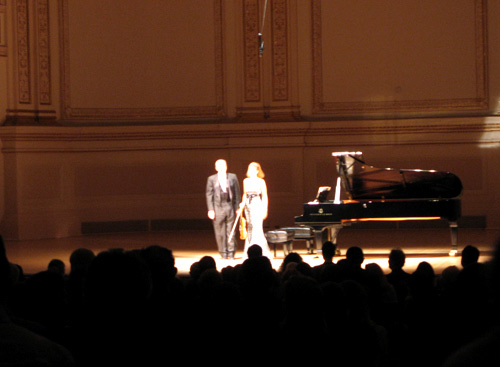
So we were back at Carnegie Hall for the second of German violinist Anne-Sophie Mutter‘s three all-Mozart programs. In honor of Wolfgang Amadeus Mozart’s 250th birthday, Mutter launched Das Mutter Mozart Projekt — an ambitious series of four new Deutsche Grammophon CDs containing all of Mozart’s major compositions for violin. To complement and promote the recordings, Mutter and her accompanist Lambert Orkis have been performing Mozart recitals all over Asia and Europe. This month, they conclude their tour in the United States, with concerts in St. Paul, Chicago, Boston, New York and Washington, D.C.

Tonight, Mutter was performing a set of five Mozart violin sonatas: the C Major, K. 296; the F Major, K. 377; the D Major, K. 306; the E-flat Major, K. 302; and the A Major, K. 526.

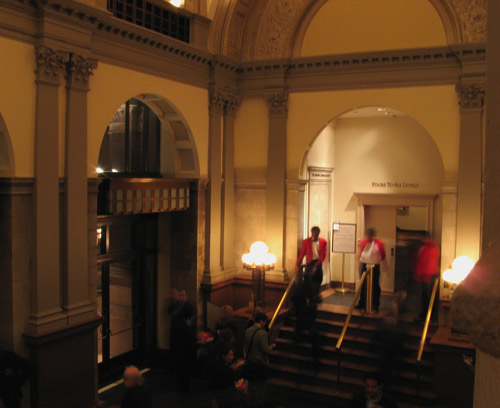
Carnegie Hall Lobby

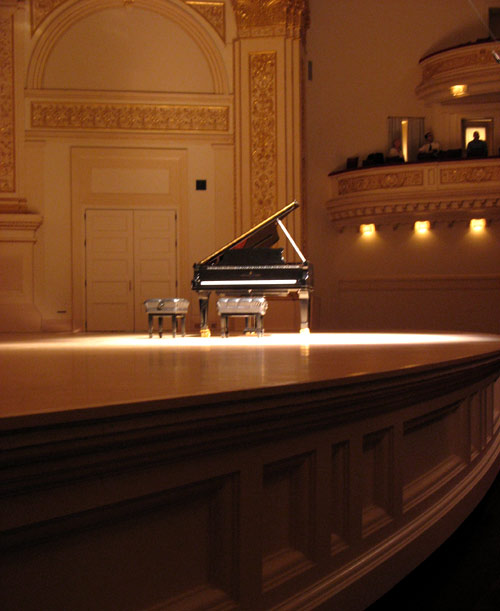
Piano on Stage

Mutter’s playing was dependably pretty (The New York Times quibbled: at times, too pretty, at the expense of texture and nuance) and technically prodigious. Mutter is known among classical musicians as something of a diva. She lends an undeniable star power to any concert, and few soloists attack their Strads the way she does. She’s a dynamic — and let’s face it: strikingly beautiful — performer. 2006 also marks the 30th anniversary of her debut at the Lucerne Festival, where she was discovered as a 13 year old. A year later, she appeared as a soloist at the Salzburg Whitsun Festival under the baton of flamboyant conductor Herbert von Karajan. The German popular press has covered her avidly ever since: through her marriage, while in her twenties, to Detlef Wunderlich, von Karajan’s lawyer and tax adviser who was then more than twice her age; after Wunderlich’s death from cancer in 1995, her second marriage to the oft-wed, also much senior pianist, conductor and composer Sir André Previn in 2002; their subsequent divorce in August of this year. (The former couple continues to collaborate professionally.)

In addition, there has been occasional grumbling over Mutter’s seemingly out-of control salary demands; it’s reported that she earns over $3 million performing sixty dates a year. For two seasons in the early 1990s, Mutter was effectively blacklisted from performing in London for refusing to cut her standard £10,000 performance rate. She eventually discounted her price, earning herself back in the London Symphony Orchestra‘s good graces. A good investment: the LSO booked her Mozart Project sonata cycle, and is paying the star a budget-busting £30,000 for each of three concerts. Compare that to the £25,000 per year earned by the second violinist of Hallé, Britain’s longest-established symphony orchestra, after fifteen years tenure. Do celebrated soloists have a moral obligation to subsidize their fees to assist financially struggling institutions?

Our seats this night were not quite second row center, but rather second to last row. Still on the parquet, though, and for $10, no complaints. And Mutter came out for one encore, before taking her final bow.

Orkis and Mutter

Infinite Jest, most excellent fancy

In cooperation with the National Book Critics Circle, Housing Works Used Book Café in SoHo was hosting Jest Fest 2006: an event to celebrate the 10th anniversary of David Foster Wallace‘s postmodern behemoth of a novel, Infinite Jest.

Wallace’s debut novel, The Broom of the System (1987) and his story collection, Girl With Curious Hair (1989) earned him one of those “Young Writers to Watch” reputations. His much anticipated follow-up arrived on the literary scene in 1996 to a hurricane of hype, and almost universally lauding reviews. Harper’s Bazaar hailed Infinite Jest a worthy contender for the next Great American Novel; Newsday’s Dan Cryer raved, “This book teems with so much life and death, so much hilarity and pain, so much gusto in the face of despair that one cheers for the future of our literature.” The often harsh Michiko Kakutani of the New York Times called Wallace “one of the big talents of his generation, a writer of virtuosic talents who can seemingly do anything.” The book was called “truly remarkable” (Newsweek), “spectacularly good” (New York Magazine) and “brilliant.” (San Francisco Chronicle.)

A stunning accomplishment for a writer then not yet 35 years old, for a supremely ambitious second novel–1,079 pages, including 90 pages of esoteric endnotes–that defies easy categorization or synopsizing. The subject matter ranges from drugs, tennis and political coups; a rambling cast of characters includes a filmmaker, government operatives, politicians, spies, tennis prodigies, suicidal drug addicts, their friends and lovers and the prettiest girl of all time (“PGOAT” – in signature Wallace parlance.) The near-future setting is a fascist state, dubbed the Organization of North American Nations (ONAN)–which the United States forced Canada and Mexico to join–where even the calendar years are auctioned off for corporate sponsorship, to droll effect. To wit: the Year of Glad and the Year of the Depend Adult Undergarment (YDAU.)

Tonight was billed as an evening of discussion and readings by both people involved with the book and fans of IJ. Sadly, Wallace himself, who is notoriously publicity-shy, did not participate.

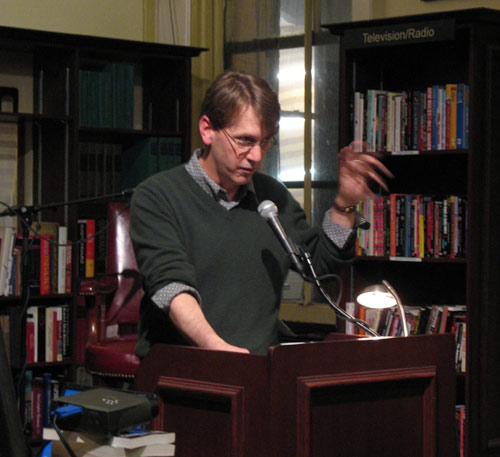
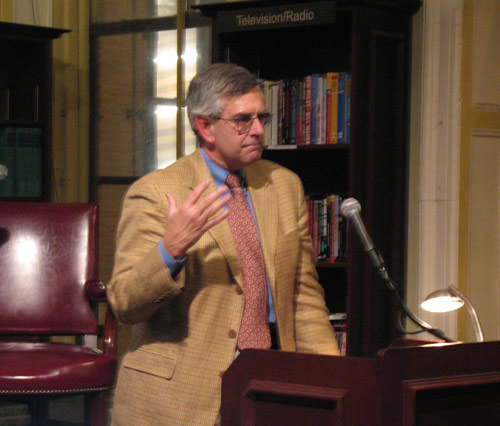
Wallace’s editors were there, reading brief excerpts from the book, and sharing anecdotes about the man, and the unique challenges to editing and marketing his work. (No doubt! Dare I mention again: 1,079 pages? ):

DFW Second Editor

DFW First Editor

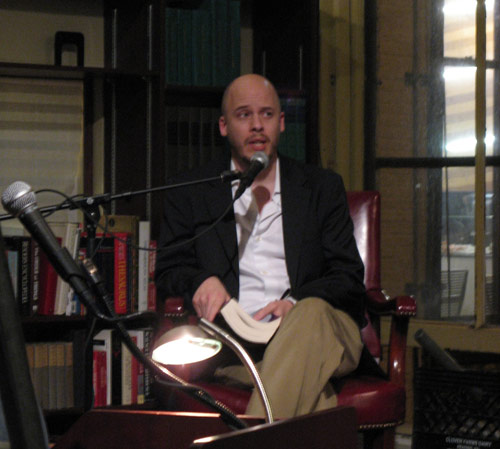
Lev Grossman, author and book critic/technology writer for Time, discussing the novel’s impact with Laura Miller, Salon editor and sometime New York Times book critic, who interviewed Wallace in March 1996.

Lev Grossman

The screenwriter, currently adapting Infinite Jest for film, read the excerpt: “TENNIS AND THE FERAL PRODIGY”, NARRATED BY HAL INCANDENZA, AN 11.5-MINUTE DIGITAL ENTERTAINMENT CARTRIDGE DIRECTED, RECORDED, EDITED, AND–ACCORDING TO THE ENTRY FORM–WRITTEN BY MARIO INCANDENZA, IN RECEIPT OF NEW-NEW-ENGLAND REGIONAL HONORABLE MENTION IN INTERLACE TELENTERTAINMENT’S ANNUAL “NEW EYES, NEW VOICES” YOUNG FILMMAKERS’ CONTEST, APRIL IN THE YEAR OF THE YUSHITYU 2007 MIMETIC-RESOLUTION-CARTRIDGE-VIEW-MOTHERBOARD-EASY-TO- INSTALL UPGRADE FOR INFERNATRON / INTERLACE TP SYSTEMS FOR HOME, OFFICE OR MOBILE (SIC), ALMOST EXACTLY THREE YEARS AFTER DR. JAMES O. INCANDENZA PASSED FROM THIS LIFE.

IJ Screenwriter

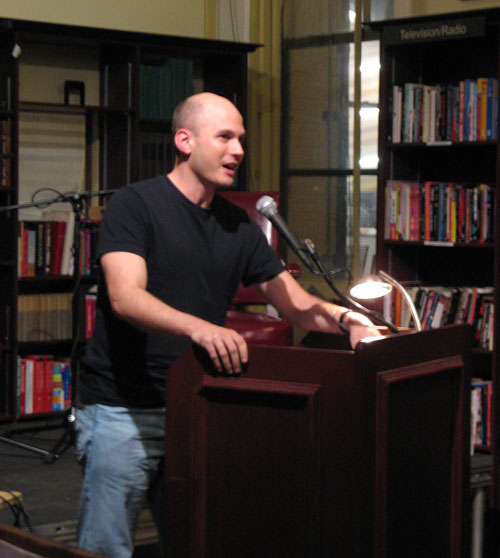
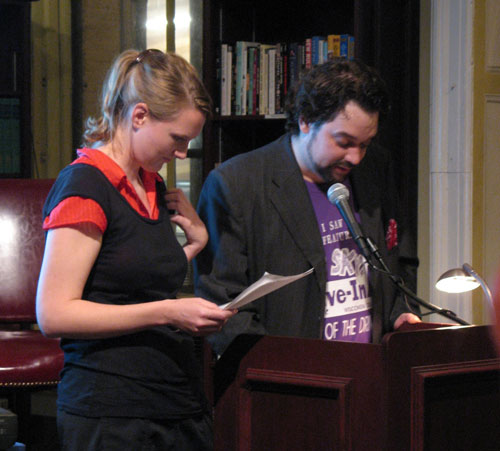
Todd Hanson, head writer for The Onion, with his former co-editor (and ex-girlfriend) Carol Kolb. The pair staged a reading of the Onion piece from 2003: “Girlfriend Stops Reading David Foster Wallace Breakup Letter At Page 20.” The bit struck me as typical of a lot of Onion pieces (and SNL sketches): hinged on a single, sometimes funny, premise — DFW writes really long books! — followed by an ever slightly too long piece that spends the majority of the space reiterating that same joke, to diminishing effect. In this case, bonus points for wink-wink erudite jokiness, only amusing to those few familiar with Wallace’s writing style. (I can’t imagine a more receptive audience on that score.) Sprawling, half-page sentences? Check!  Liberal use of acronyms? Check!  Endless footnotes? Check!  By the time Hanson reached the point in the faux-letter describing the chemical make-up of crystal meth (no, seriously), the audience had had enough.

Onion Writers

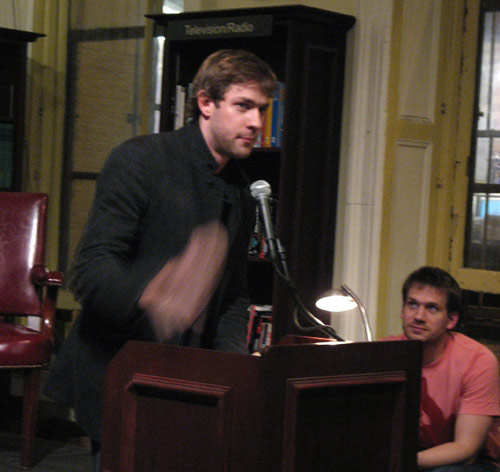
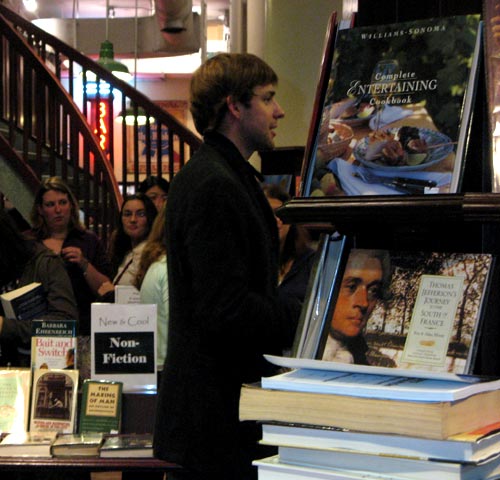
And the biggest draw of the evening: John Krasinski, who plays Jim Halpert on NBC’s The Office. Krasinski is currently working on the film adaptation of Wallace’s 1999 collection of short stories, Brief Interviews With Hideous Men–writing, directing, and possibly starring in a small role. He animatedly read the story, “Victory for the Forces of Democratic Freedom”–which was bizarre, funny, intense and dark all at once… a description befitting of a lot of Wallace’s writings.

John Krasinski

Krasinski lingered around after the event, charmingly chatting up the gaggle of (predominantly female) fans that descended on him after the final word was read. Ooh, isn’t he dreamy?

Ladies Love John

Yayoi Kusama exhibition

‘Tis the season! The Holiday tree went up at Lincoln Center this morning. The official lighting ceremony will take place the Monday after Thanksgiving.

Lincoln Center Tree

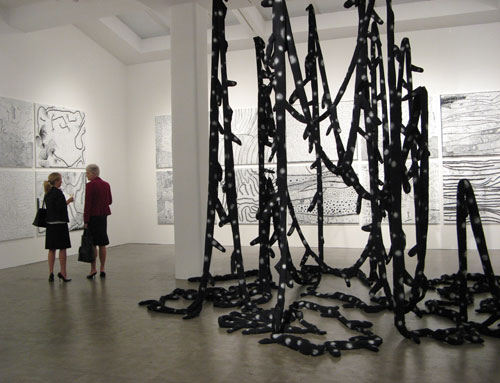
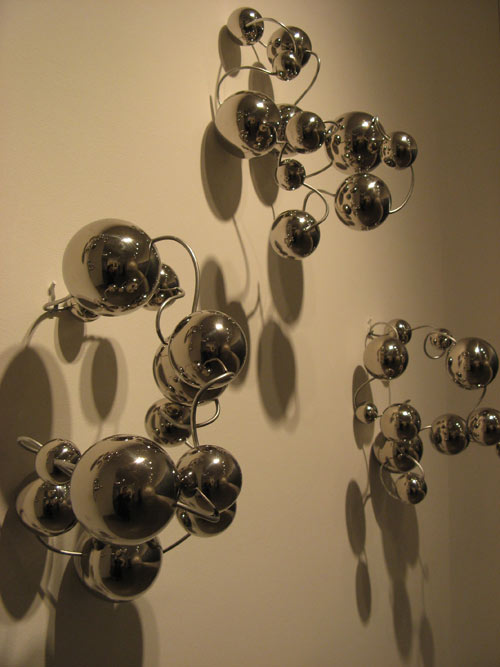
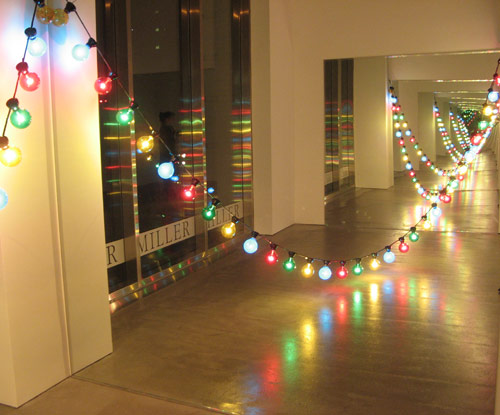
Tonight I attended a reception at the Robert Miller Gallery in Chelsea with the gallery curator, who was on site to introduce the Yayoi Kusama exhibition. The exhibition (on display through November 25) consisted of paintings, sculptures, mirror works, light installations and silkscreens by one of postwar Japan’s most influential artists.

Installation

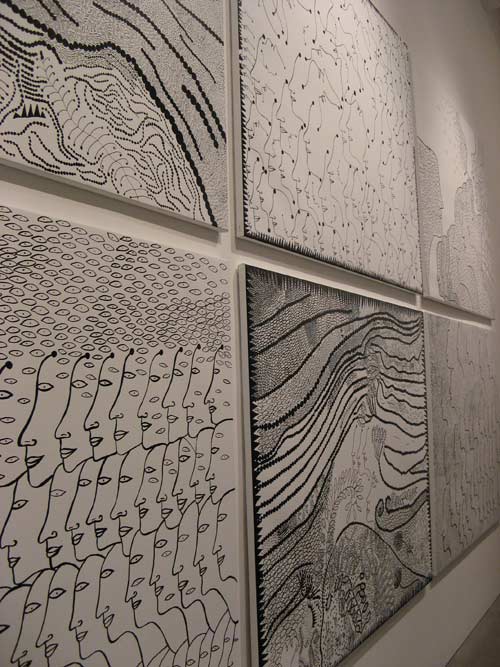
Kusama’s works all share an obsession with repetition and pattern, which she claims are inspired by hallucinations of dots, nets and flowers she experienced as a child. At the gallery talk, the curator offered some additional background on the artist: Kusama, now in her mid-70s, arrived in New York from Japan in 1958 and quickly established herself among the city’s avant-gardists, and an important precursor for Minimalism and the Body Art movement. Her works then also included books, photo collages, film and performance art–even landing her on the front page of the Daily News in August 1969 after she, along with a bunch of naked co-conspirators, infiltrated the Museum of Modern Art’s sculpture garden to perform her “Grand Orgy to Awaken the Dead.” Yoko Ono was among her devotees; she rivaled Andy Warhol on the quirky pop art scene. Despite this, she never quite achieved long-term critical or financial support. She returned to Tokyo in 1972.

Kusama was hospitalized at a Tokyo mental hospital in 1975, where she has voluntarily resided ever since. She continues to produce work there and at her condominium-turned-studio, a few minutes walk from the hospital.

In 1998, MoMA launched an exhibition focusing on Kusama’s prolific New York period, entitled Love Forever. Her pieces are now part of the museum’s permanent collection.

Kusama’s “infinty net” works were unsettling in their density; her 2006 largescale installation, “Black Nerve” (first photo, above) reminded me of a droopy set piece out of Little Shop of Horrors.

Prints

Balls

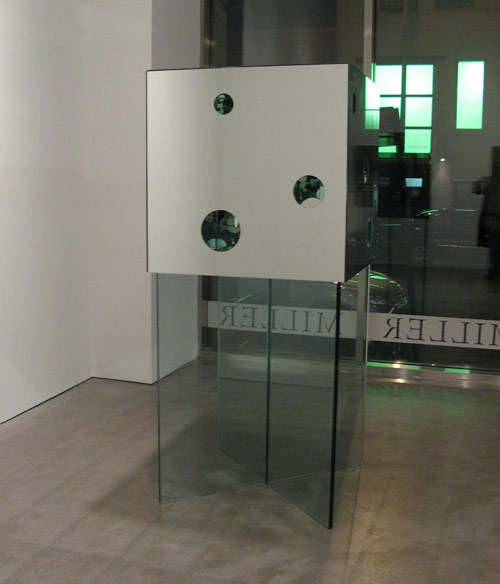
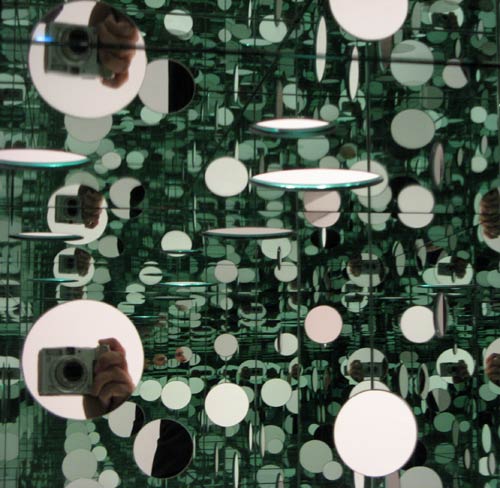
More palatable were the two “mirror box” works, which are smaller versions of Kusama’s trademark “infinity mirror rooms.” Others installations on display included “Ladder to Heaven,” which featured a lit ladder bracketed between a floor and ceiling mirror in a darkened room, creating the illusion of an infinite climb.

Infinity Mirror

Mirror Box

Mirror Box