vip in the city, page 18

New Year's Rockin' Eve

We convened after work at Grand Central Terminal for tonight’s gathering in Tudor City. Are kooky glittered “2008” glasses required to ring in the new year properly? Indeed they are.

Happy New Year 2008

En route to the party, we made a stop at a surprisingly crowded Goodburger for — what else? — burgers. Make that a turkey burger for me, as I’d already exceeded my beef quota for the week. With the works, minus mayo: pickles, lettuce, tomato, onion, ketchup and mustard. Really good, but for me, Westville‘s version still tops my list, and not just for hot dates.
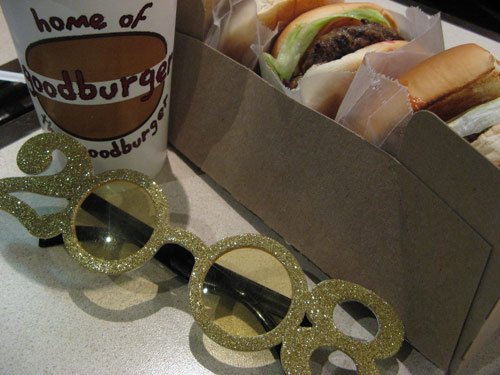
NYE Goodburgers

Then on to MC’s where a group of revelers had gathered to unleash their inner rock stars on this last night of 2007. I’m referring, of course, to Harmonix “Rock Band,” a.k.a. the Best Party Game Ever. Sorry, “Guitar Hero,” but though the thrasher battles can be cool to watch, the ability to include other band members in a collaborative jam session makes for far more fun. “Rock Band,” which was released for PS2, PS3, and Xbox 360 on November 20, 2007 — three weeks after the launch of “Guitar Hero III: Legends of Rock” — allows players to perform in virtual bands by providing up to four would-be rockers with the ability to play the peripheral of their choice (mic, guitar, bass guitar or drums). The “instruments” are used to simulate the performance of actual rock songs by hitting scrolling notes on-screen.

The song selection is what you’d expect: as a group, we put together some rousing renditions of the Rolling Stones’ “Gimme Shelter,” David Bowie’s “Suffragette City,” The Ramones’ “Blitzkrieg Bop,” Rush’s “Tom Sawyer,” (check out this crazy Rock Band drumming action), The Clash’s “Should I Stay or Should I Go,” Metallica’s “Enter Sandman,” Nirvana’s “In Bloom,” The Beastie Boys’ “Sabotage,” The Killers’ “When You Were Young” … and a whole lot of songs I didn’t know. Yes, I have an embarrassingly large gap in my musical repertoire when it comes to classic rock. I pitched in on vocals on Radiohead’s “Creep until on a lark, I took up the wooden sticks and discovered that I may be a drummer at heart. Not a good one, mind you, but a drummer just the same.

Me, banging the skins — a mini drum kit with four color-coded, pressure-sensitive heads and a simulated bass pedal:

Rock Band drums

Play well enough and the “crowd” gets into the act by singing and clapping along, as in an actual concert. Play badly, and the song will be cut short. There are ways to drive up the cumulative score (with bonuses and multipliers for consecutive correct beats/notes/phrases, or by playing in unison), but I was concentrating too hard on just getting through my sections, which was both frustrating and exhilarating at the same time.

Rock Band

And oh yes, before the night was through, there was also a very respectable performance of Blue Öyster Cult’s “Don’t Fear the Reaper” that really could only have been improved by more cowbell.

At ten minutes to midnight, we switched over to the live broadcast of Times Square, where Dick Clark was hosting the countdown for the third time after recovering from his 2004 stroke. Along with an estimated one million spectators in Times Square and over a billion people throughout the world, we watched as the new Waterford Crystal/LED-lit ball dropped to commemorate the final dwindling seconds of 2007.

To new beginnings. Happy new year, everyone!
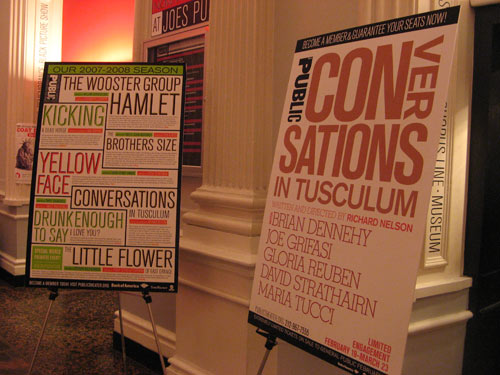
Yellow Face at The Public

At the Public Theater on Lafayette for a performance of David Henry Hwang’s Yellow Face, which recently extended its run until January 13, 2008. The play premiered in 2007 at the Los Angeles Music Center’s Mark Taper Forum as a co-production with East West Players.

Yellow Face

The play, which Hwang has called a “mockumentary,” explores themes of race and art, starts off as a semi-autobiography, with a lead character named David Henry Hwang or DHH (wittily portrayed by Hoon Lee), just as he is reaching a high point in his nascent career, having just won the 1988 Tony, Drama Desk, Outer Critics, and John Gassner awards for his Broadway debut, M. Butterfly. With his new stature as the premier Asian-American playwright, Hwang was in a high profile position to lead the Actors’ Equity union protests against the yellow face casting of Caucasian actor Jonathan Pryce in the 1991 Broadway production of Miss Saigon. Hwang was initially praised by Asian groups for his support, but when Broadway producers refused to mount any Broadway run that did not include Pryce, which would result in the loss of many local jobs, the union backed down and Hwang was ultimately abandoned by the theatrical community. (Pryce, of course, went on to win both the Tony and the Drama Desk awards for his dynamic portrayal of a Eurasian pimp.)

From that point, the events turn to farce as fact blends with fiction. A stung Hwang tries to move on with his life and return to writing. Cruel irony builds when the playwright mistakenly casts a white actor named Marcus G. Dahlman (a charismatic Noah Bean) as an Asian-American in his M. Butterfly follow-up Face Value, believing the young man to be Eurasian. When Hwang discovers his error, he must go to great efforts to stretch the definition of what it means to be “Asian” – hence, a young man whose father was a Russian “Siberian” Jew, could perhaps, technically, almost be considered “Asian.” (To further bolster his position among a group of activists, Hwang produces a map showing Siberia just north of China, and a magazine cover of Buryat model Irina Pantaeva.) Dahlman, whose name is now truncated to “Marcus Gee,” goes along with the charade reluctantly at first, but eventually is so touched by how the community supports and embraces him that he comes into his own as a spokesperson for Asian-American actors, with a higher profile even than Hwang himself. Hwang manages to fire Gee – replacing him with the more traditionally Asian actor B.D. Wong — but Face Value famously flops, closing even before its Broadway premiere in 1993, ultimately losing its entire $2 million investment.

When is ethnicity “authentic”? Is identity something that can be adopted? The first half of the play was the comical high point, filled with the playwright’s self-mocking commentary and strewn with theatrical in-jokes; refreshingly, real names are used. (B.D., Jane Krakowski, then-Times theater critic Frank Rich, novelist Gish Jen and mega-producer Cameron Mackintosh are just a few who pass through the stage.)

By the second half, things take a grim and scary turn: the FBI’s investigation against Los Alamos nuclear weapons scientist Wen Ho Lee; the “Donorgate” campaign-contribution probe; the Senate investigation of the Chinese government’s transactions with Chinese-American banks, which implicated Hwang’s father Henry Y. Hwang (played with quiet dignity by Francis Jue) founder of the first Asian-American-owned federally chartered bank in the continental United States. (Although the Far East National Bank was a target of those investigations, no formal charges were ever brought against the elder Hwang, but the disillusionment of his American dream is one of the real tragedies of the play.) Things take on an even more sinister bent when a racial stereotyping New York Times reporter referred to as NWOAOC (“Name Withheld on Advice of Counsel”) tries to manipulate DHH (who once sat on the board of the FENB) into deflecting blame by betraying his father, and raising questions about whether there is any inherent paradox in the term “Chinese-American.”

In the end, there are no neat conclusions. A thought-provoking evening of theater, and a “lively, messy and provocative cultural self-portrait of a play.”

Starbucks, 4:20 AM

We stopped in at the 24-hour Starbucks in my neighborhood to post-mortem the evening among the other night owls, and stumbled onto a new employee training session in progress. Baristas Dan and Exodus plied us with their practice creations and before you knew it, we were the very buzzed recipients of seven tall drinks: a no-whip peppermint mocha, a cappuccino, a non-fat latte, a soy green tea latte, a double espresso macchiato, a soy chai latte and an Americano.

Starbucks cups

I guess I wasn’t planning to sleep tonight anyway.

Village wanderings

Over the Queensboro Bridge, and back into the city

Queensboro Bridge view

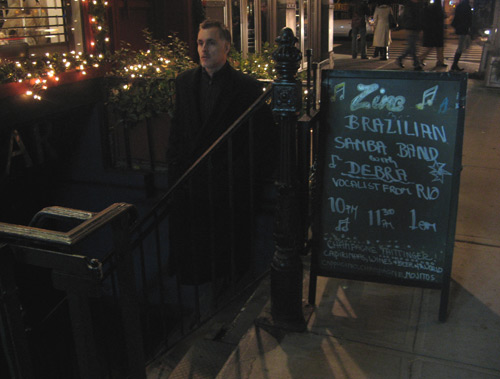
It took over 45 minutes for me to crawl my way downtown to Zinc Bar on the M5 bus – half that time spent on Fifth Avenue between 47th Street and 57th Streets — for a night of Brazilian Samba.

Zinc Bar

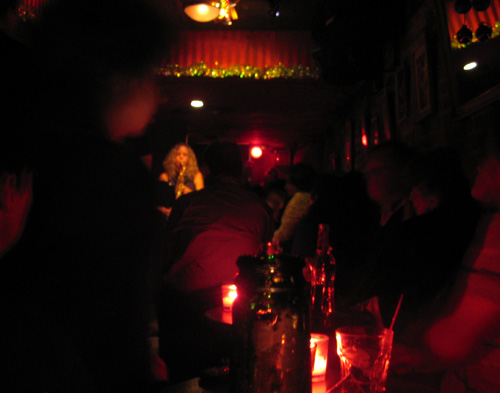
Dark room, cold beer and a sexy saxophone:

Zinc Bar

After the set, we took to the streets of Greenwich Village, where WGY pointed out the giant Picasso sculpture at NYU’s I. M. Pei-designed Silver Towers residential complex. How could I not have noticed the 36-foot high “Bust of Sylvette” before? The mammoth 60-ton version of Picasso’s painted metal bust of Sylvette David was created in 1967 by Norwegian sculptor Carl Nesjär, who sandblasted the cast-concrete surface to reveal the black basalt underneath, in lines to duplicate the Spanish master’s brushstrokes.

Random and brilliant. WGY is right, in a way that only those who leave New York can appreciate: this is the best city in the world.

Our nocturnal wanderings took us past the Murray’s cheese caves, to Red Mango (better than Pinkberry’s frozen no-gurt?) and to Mamoun’s for super cheap, extra-spicy falafels. (How there was appetite to spare after the banquet at Mandarin Court remains a mystery to me.) Along the way, we steered some tourists from the Christopher Street piers, discovered that 85 Bedford is not, in fact, the location of a bar in the West Village, and assessed that we are entirely too curmudgeonly to suffer the crowds waiting for entry to Employee’s Only on a Saturday night.

White Horse Tavern farther up on Hudson, however, proved an acceptable fallback. Any watering hole good enough for Dylan Thomas is good enough for us.

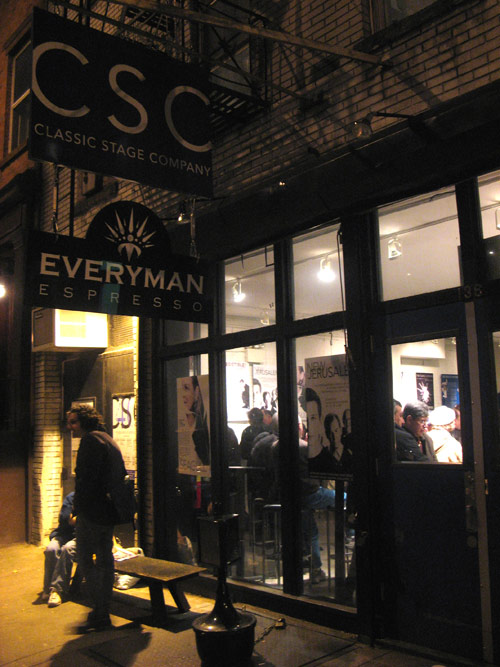
New Jerusalem at the Classic Stage Company

At the Classic Stage Company on East 13th Street tonight for the first preview of David Ives’ play, New Jerusalem, which will run through February 3, 2008. The playwright has had an eventful 2007; in addition to staging this debut, Ives wrote his third young adult novel and is currently collecting accolades for his Broadway adaptation of Mark Twain’s previously unproduced 1898 play, Is He Dead?

For his latest work, Ives focuses on the events of July 27, 1656 when a 23-year old Baruch (“Bento”) de Spinoza, was summoned to the Talmud Torah Congregation in Amsterdam to be interrogated for his espousal of positions contrary to Jewish belief. At the convocation of his temple board, a proclamation of kherem (excommunication) was imposed against Spinoza, permanently banishing him from all interactions with people of his faith, and sending the young man into spiritual exile. The historical drama is somewhat of a departure from Ives’s typical comedic one-acts, but raises questions perhaps inspired by his own orthodox Polish-Catholic upbringing, and subsequent training at an all-boys Catholic seminary.

Fortunately for Ives’s creative process, very little is known of Spinoza’s life: a Dutch philosopher of Portuguese Jewish origin, Spinoza lived a brief and modest life as a lens grinder, displaying a general indifference to fortune, fame and positions of power. The majority of his philosophical works were published posthumously, at the expense of an anonymous donor, including his master work, Ethics, in 1677. Spinoza is generally considered among the most significant of the post-Cartesian philosophers; his rationalism laid the groundwork for the 18th century Enlightenment and modern biblical criticism, and he claims Goethe, Hegel and Albert Einstein among those influenced by his views on God and Nature.

Classic Stage Company

Ives’s account of Spinoza’s interrogation plays like a philosophy lesson. As the main tenets of Ethics are formulated and expositioned — rather more briskly than I recall from my forays into Spinoza’s writings at college — the ideas started filling in: the systematic, almost mathematical, attempt to probe the identity of God with Nature, the inseparable relationship between mind and body, the concepts of freedom, causality and predetermination.

Award-winning actor Richard Easton plays the chief rabbi of Amsterdam and Spinoza’s pained mentor in a heralded return to the stage after his appearance in Tom Stoppard’s epic Tony-winning period trilogy, The Coast of Utopia at Lincoln Center last season. Also featured in the cast are television veterans Fyvush Finkel (Picket Fences, Boston Public) and David Garrison (Married with Children), and Jenn Harris (offering hammy, comic relief as Spinoza’s half-sister Rebekah), Michael Izquierdo and Natalia Payne.

But New Jerusalem really is Spinoza’s show, and Jeremy Strong (last seen on stage at MTC’s Defiance in 2006) commanded our rapt attention as the sensitive, but passionate persecuted philosopher, holding center stage for almost the entire play, including through intermission.

Beef, it's what's for dinner

I now know two people who converted to vegetarianism after reading The Omnivore’s Dilemma, Michael Pollan’s reflection on ethical eating. Hmm, put that way, it sounds a bit like a cult. Pollan himself, though, is no vegetarian; rather, he promotes awareness of the origins and implications of our diet, and raises valid, disturbing points about factory farms, industrial agriculture, and resource inefficiency. I generally try to limit my meat intake anyway, at least as much from a health standpoint (heart disease, high cholesterol, cancer) as from the perspectives of environmental impact (water usage, waste contamination, rainforest destruction) and public health (food-borne illness, irradiation, antibiotics and growth hormones). But I also love a good burger, and every once in a while, I’ve been known to embrace fully, happily, the world of meats.

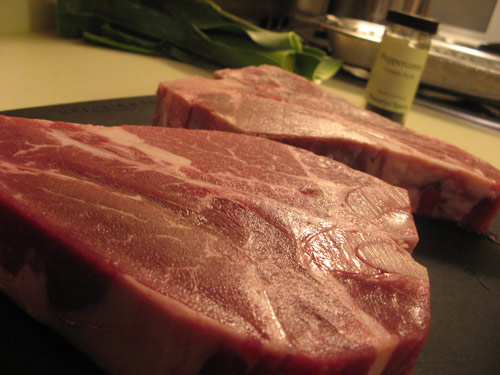
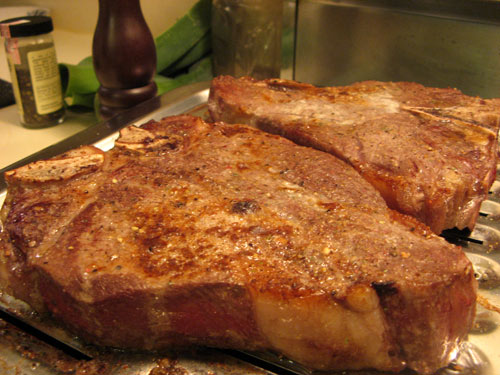
Like tonight, where we were gathered at Casa B for a sumptuous dinner of porterhouse steaks. Check out these thick, beautiful slabs from Omaha Steaks:

Omaha Steaks

Porterhouse steaks are T-bones cut from the marbled, larger, rear end of the short loin, and are comprised of both tenderloin (filet mignon) and New York strip steak sections. According to local lore, the name traces its origins to early 19th century New York City, where the steak was a popular menu item in public alehouses — or “porter houses.”

Our 1½ pound steaks were prepared simply, as all quality meat should be: liberally seasoned with salt and pepper and topped with spoonfuls of butter — Peter Luger-style, over which, most will agree, there can be little improvement.

Porterhouses

Afterwards, the party moved into the living room, where after homemade desserts of chocolate bundt cake, apple crumble and Christmas cookies, we divided into teams of three for a rousing game of Cranium. Among the challenges tonight: do a Clint Eastwood impersonation, spell “c-a-r-a-m-e-l” backwards, hum “Brick House” by The Commodores, mold a lion out of blue clay, act out a “quadruple bypass” and draw a surfer with one’s eyes closed. Hunter women reign supreme!

Dinner at Ocean Jewels

M & LL were back in town after spending the holiday in Alexandria with the newlyweds, so the family gathered in Queens once again for a post-Christmas dinner with our visiting friends.

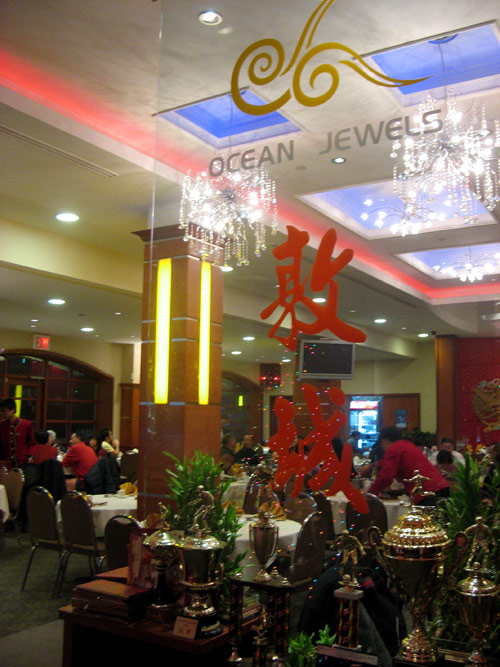
I never eat better in Chinese restaurants than when my parents or their Hong Kong compatriots take command of the ordering. I can’t even replicate the meals on my own if I try; half the time, those same dishes don’t seem to appear anywhere on the standard English menu to which I’m most often relegated.  This cold, wet evening we all met at Ocean Jewels Seafood Restaurant, located across 39th Avenue from the Flushing Mall. (One day I’ll have to devote an entire post to that kitsch and foodie paradise.)

The upscale Cantonese-style restaurant was previously known as Gum Tong Gung and before that, I think, East River… though it’s difficult to keep track among all the changes in downtown Flushing. I’ve seen it most often touted for its impeccably fresh seafood and beautiful assortment of dimsum, though the food is very good across the board; most peak meal times you’ll find Ocean Jewels jammed with a predominantly Chinese clientele, though of course, all are welcome.

Ocean Jewels

Tonight, we shared the restaurant with a wedding party in progress. The sounds of karaoke filtered in from the adjacent banquet room, adding to the overall festive atmosphere. (At least I’m pretty sure it was karaoke. Either karaoke, or a not-particularly-talented wedding singer.)

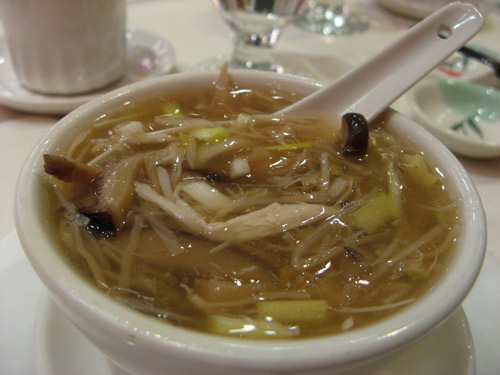
On to the food! Dried Scallops with Yellow Chives Soup:

Dried Scallops Yellow Chives Soup

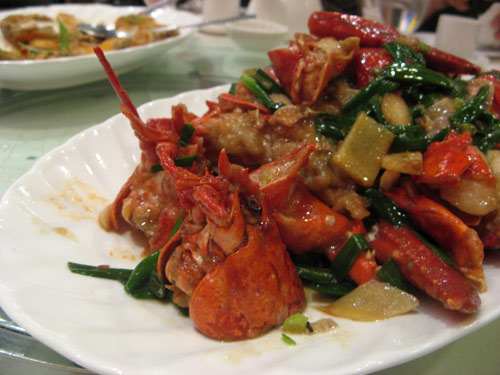
I noticed that Ocean Jewels has a lotus-leaf-wrapped version of the sticky rice/Dungeness crab dish that I love of late, but tonight, our crustacean of choice was the Lobster with Ginger and Scallions:

Lobsters w. Ginger and Scallions

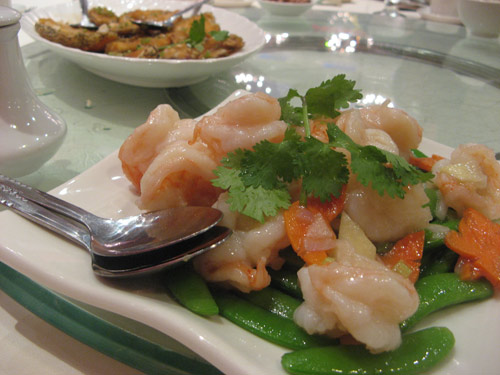
Sauteed Shrimps with Crystal Sauce:

Sauteed Shrimp

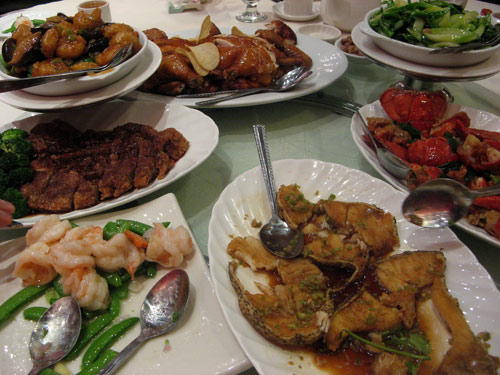
And because it seemed cruel to delay further everyone else’s meal with my obsessive photo-taking, here’s the rest of the spread, which included Crispy Fried Chicken (with Pringles, which nowadays seem to be the go-to stand-in for shrimp chips), House Special T-bone Steak and House Special Baked Sable Fish (or as it appears on Nobu’s menu: Black Cod.)

Ocean Jewels spread

Christmas 2007

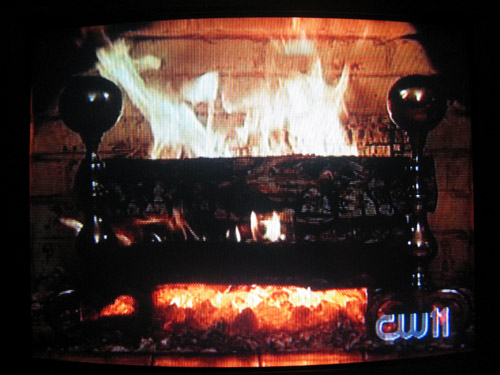
Ah, the WPIX Yule Log: as a girl growing up in New York City (where the program ran for 23 consecutive years, beginning in 1967) I remember opening presents on Christmas morning, before the orange glow of this six and a half minute video loop of a log burning in a fireplace, as a soundtrack of holiday classics played in the background. For a few of those years, our family television actually sat alongside the real-life working fireplace, which in retrospect, seems very odd indeed.

Eventually, WPIX became the WB which became the CW, and the Yule Log fell by the wayside as one of those anachronisms of a hokier time. But it’s back by popular demand, and in 2003, the station even upgraded to a High Definition version.

This one’s all old school, though:

Yule Log

I’ll be back blogging after the holiday, offering a highlight reel of this past month, in my attempt to launch 2008 with some semblance of timeliness. Merry Christmas, everyone!

The Devil's Disciple

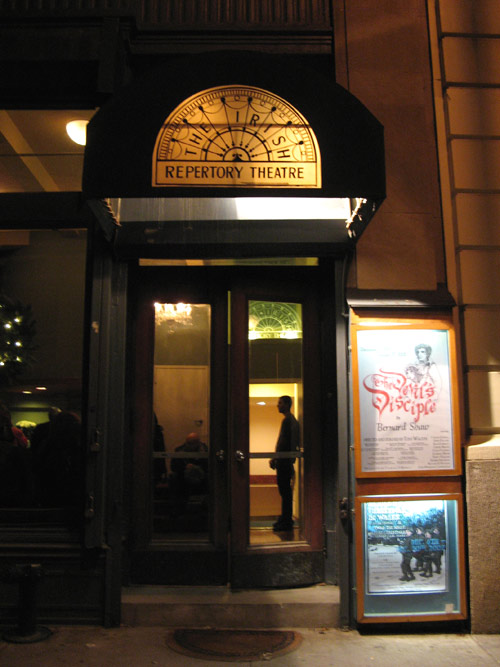
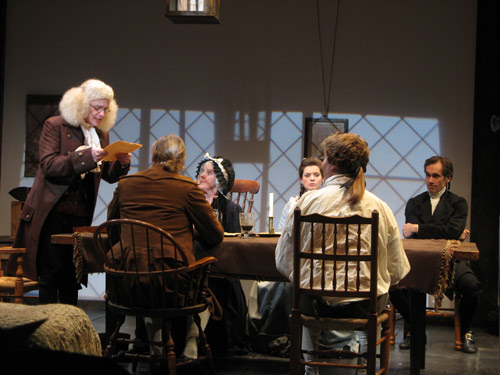
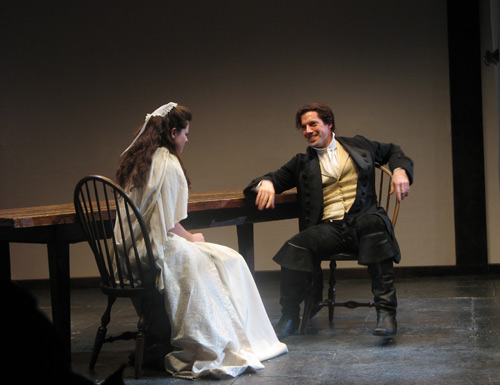
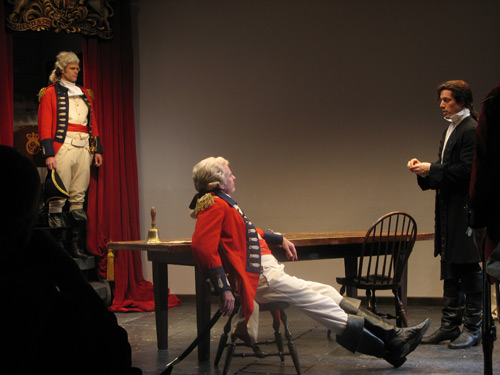
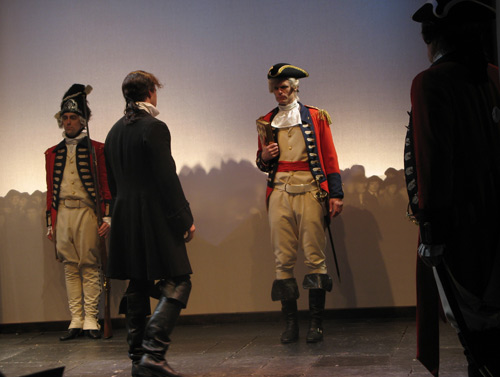
At the Irish Repertory Theatre tonight for The Devil’s Disciple, the first of George Bernard Shaw’s Plays for Puritans (1901) and his only full-length play set in America.  The Revolutionary War-era comedy is the story of rascal Dick Dudgeon, a renegade at odds with his strict, religious society.  As usual, Shaw’s acerbic wit shines in its skewering of self-important piety and political conceit.

Lorenzo Pisoni was all rakish charm in the lead role, gleefully tweaking the establishment, while proving himself in action to be as moral a character as any.

Glowing reviews all around, and a well deserved extended run.

Irish Rep Theatre

The Devil’s Disciple

The Devil’s Disciple

The Devil’s Disciple

The Devil’s Disciple