vip in the city, page 67

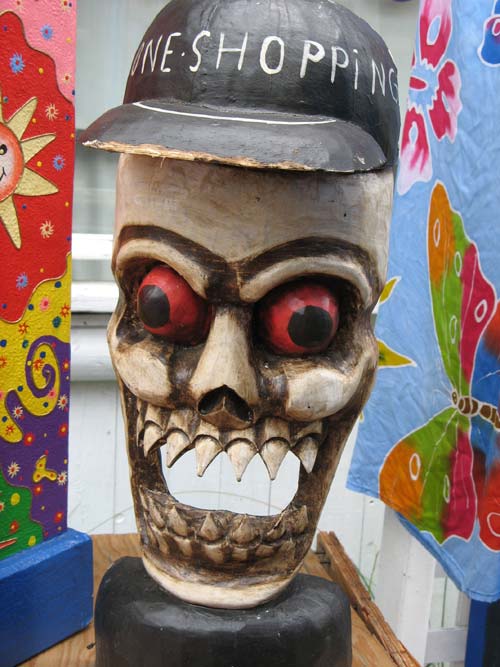
Gone Shopping

It rained almost the entire day on Sunday – remnants of the hurricane making its way out to sea – so we spent most of the day indoors: hitting our favorite Cape Cod eateries and shops (including the new-to-me Trader Joe’s in Hyannis), and breaking into Season 2 of 24 – the first year J did not see in its entirety.

Gone Shopping

Somehow watching the episodes back-to-back without the usual week’s respite made the already tense action and violence seem more over-the-top than usual. Dad had never seen a single episode, and was quickly and almost inevitably sucked in. J left him with the remaining three discs when he, J and I left the Cape the following night.

I think that one of my favorite things about the show is Kiefer Sutherland’s voice.

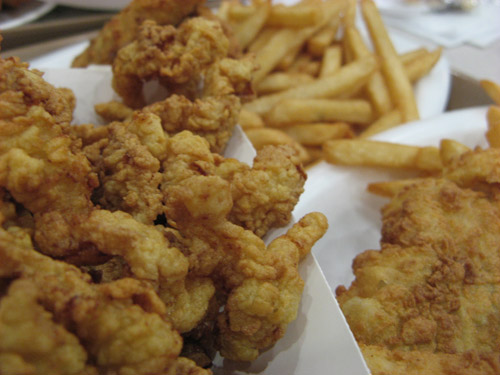
Seafood Sams

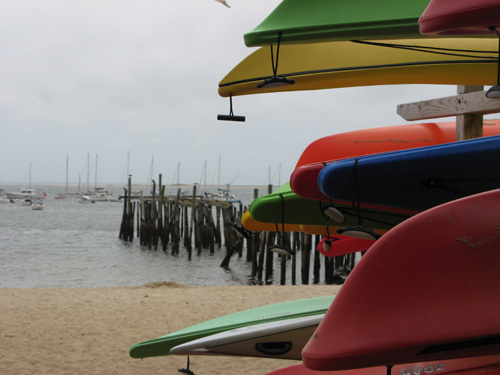
Beach

J and I stayed up until later than everybody else, talking into the night. I’ll be happy when she and J move back to New York next summer.

To Provincetown

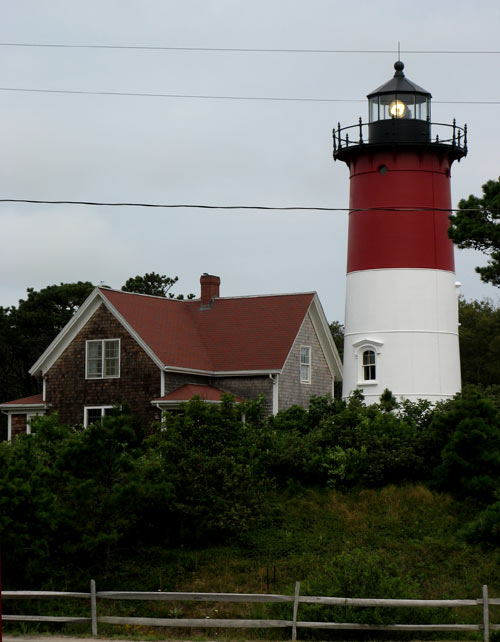
After a breakfast at Hearth ‘n Kettle — or “H ‘n K,” as I see them refer to themselves on occasion — we set out for a leisurely drive up Route 6 to Provincetown. On the way we made several stops to visit the old familiar sights (and a couple of yard sales.) Here, the iconic Nauset Lighthouse (and adjacent privately owned lightkeeper’s house) in Eastham, instantly recognizable from its countless postcards, calendars and potato chip bags. This 48-foot cast iron structure was built in 1877 and painted its distinctive red and white in 1940. The lighthouse was originally set in Chatham, high on a cliff over Nauset Beach, but steady erosion forced its move farther inland in 1923, where it replaced the last remaining of “The Three Sisters” lights at the Nauset Light Station. By the early 1990s, the lighhouse was in danger of falling into the sea yet again after decades more of erosion brought the coastline precariously close to its edge. After a groundwell of public support formed to preserve the structure, the Nauset Lighthouse was relocated over two days in November 1996 to the site 200 feet from the cliff edge, where it sits today. At the time of the move, just 35 feet separated the lighthouse from the water.

Nauset Lighthouse

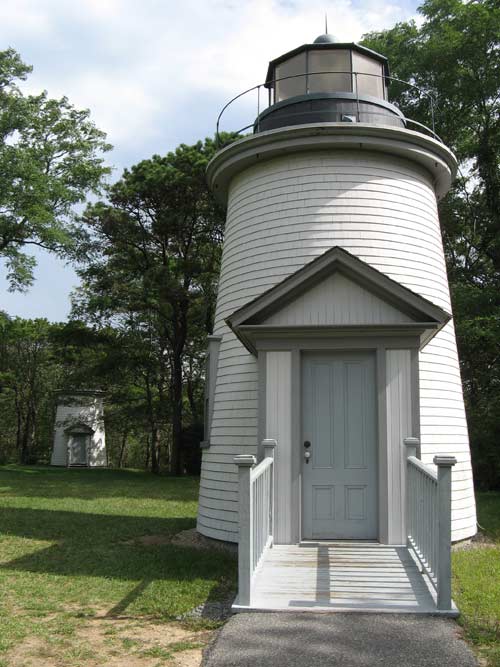
These identical 15-foot tall lighthouses date from 1892 when they served as a trio, guiding ships from a bluff over Nauset Beach. When the Bureau of Lighthouses opted for a more efficient single lighthouse formation in 1911, the two defunct sisters were taken out of service and sold to a private family in 1918 for $3.50, who incorporated the lighthouses into their summer cottage. By 1923, the remaining sister was replaced by the red-striped Nauset Lighthouse above (though it was all white at the time), also passing into private owndership. In 1975, all three sisters were purchased by the National Park Service, who reunited them in their original configuration on Cable Road about 1,800 feet from Nauset Lighthouse in 1989.

Pictured here are two of “The Three Sisters,” only one of which still has a light atop.

Three Sisters

En route to Provincetown, we passed the Wellfleet Drive-in Theatre. The last drive-in on Cape Cod, it is open seasonally from mid-May to mid-October (like the much of the Cape,) and has been in continuous operation since the 1957.

As of June, there are 406 surviving drive-in theaters in the United States — five in Massachusetts. I still have yet to experience this rapidly disappearing bit of Americana. Too bad I have no interest in seeing Barnyard and I’ve already seen Talladega Nights (the day I visited an entirely different Lighthouse in NYC…)

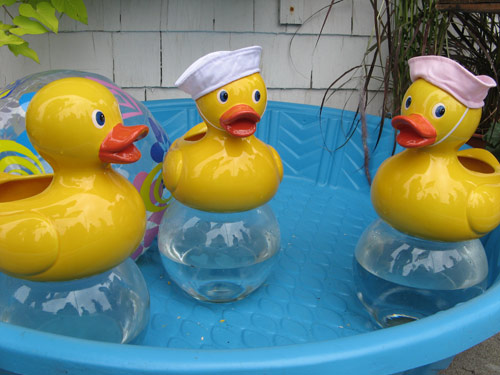
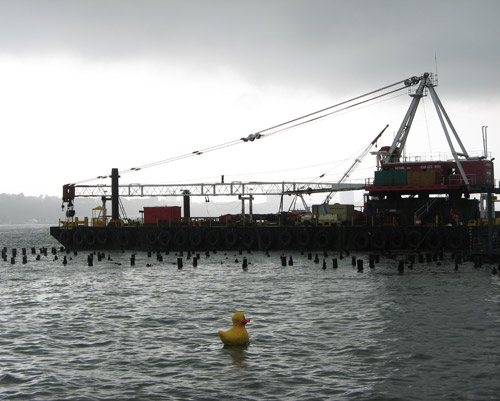
Provincetown photos. This one reminds me of the last — and only — cruise my family took all together, just before the first of the weddings. Our last night in the Caribbean, J purchased five sailor-hatted or begoggled rubber ducks from the ship’s giftshop and left one on each of our pillows to find at bedtime. I still have mine.

Duckies

Lobster Pot

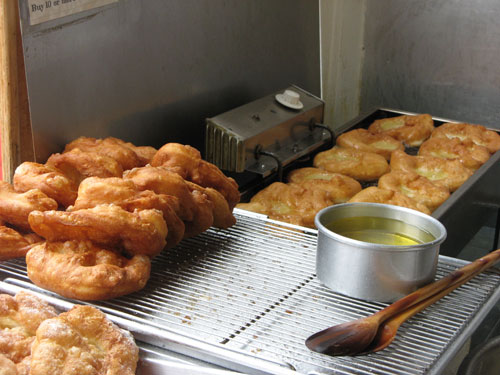
Malassadas from the Portuguese Bakery on Commercial Street — the bustling main artery of P-town. The bakery has been around forever, but I only discovered the tasty treats a few years ago… and have bought them every time I’ve been in Provincetown since. These fried dough fritters — think: giant zeppoles, down to to the generous sprinkling of powdered sugar — originate from Portugal’s Azores (Açores) islands.

Malassadas

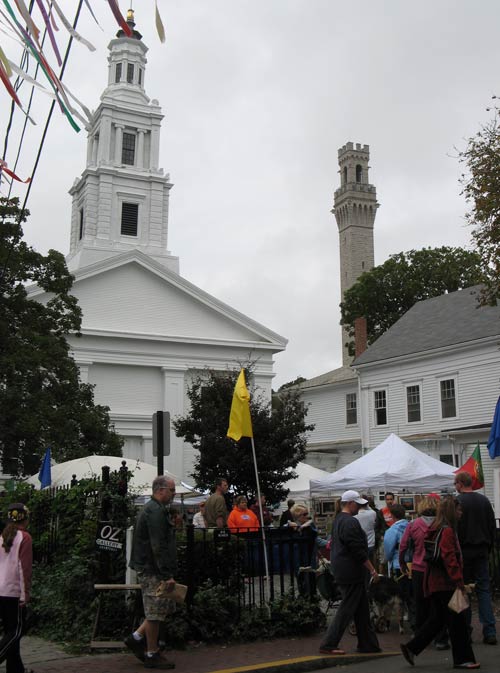
The Pilgrim Monument (right), symbol of Provincetown, and the tallest all-granite structure in the United States. On a clear day (which today certainly was not) it’s said that you can see Boston’s skyscrapers from the top of the 252-foot tower. It was built between 1907 and 1910 to commemorate the first landing of the Mayflower Pilgrims in Provincetown on November 21, 1620.

Commercial Street

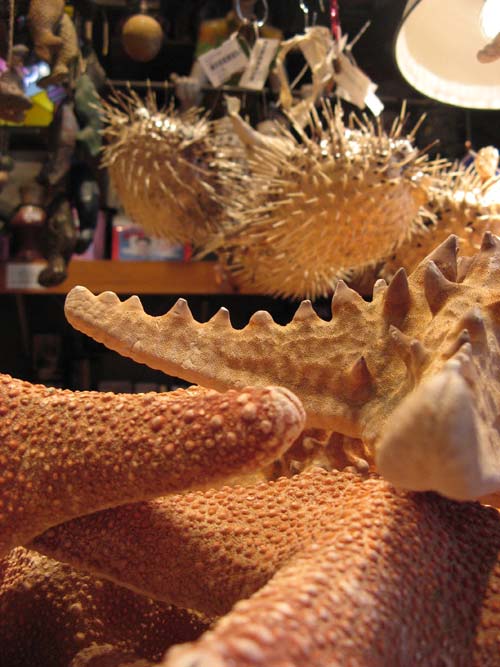
Starfish and Porcupinefish for sale at the Marine Specialties store:

PTown Starfish

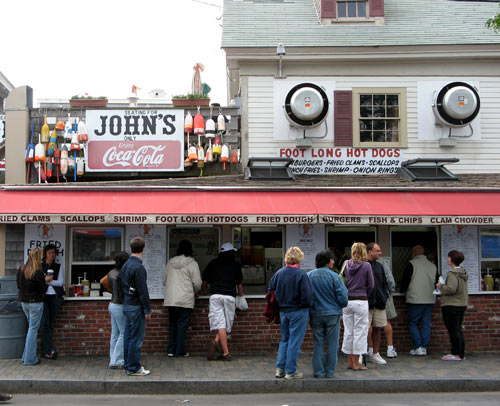
John’s Foot Long on the pier:

PTown Johns

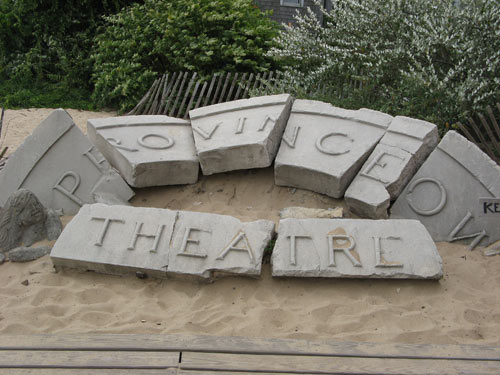
Provincetown Theatre

A typical Provincetown scene:

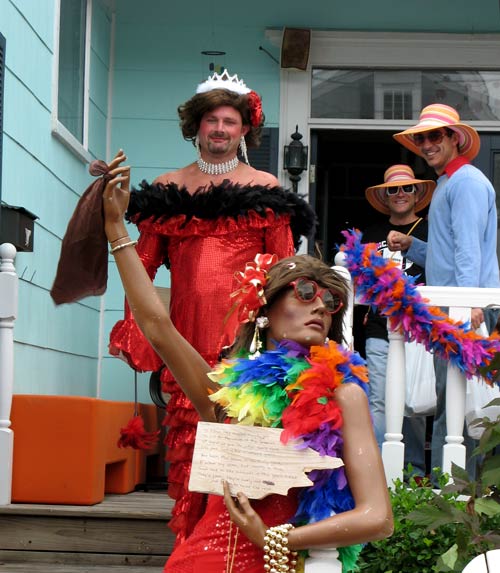
Drag

Off the hook

We arrived at the Ocean Street Dock in Hyannis early this chilly morning, all set for a half day of fishing. The cruise operator warned us of rough Ernesto-churned waters ahead; the exact words were to expect a “four hour roller coaster ride.”

We boarded with some trepidation, but reconsidered after about ten minutes, rescheduling our trip for Monday morning. Let’s hope for calmer seas then.

The National Weather Service issued a small craft advisory for the day, predicting gusts up to 35 knots and seas rising six to nine feet. Yeah… good call.

Bait

To Cape Cod

Mom, Dad and I set out for Cape Cod in the early afternoon. Labor Day traffic clogged the I-95 through the southern half of Connecticut; the GPS informed us that we lost an hour and a half in traffic, but as the cars ground to a standstill around New Haven, it felt much, much longer.

J & J drove in from Boston after a full day’s work to meet us at the Cove. By the time the four of us settled in, it was well after dark. Alas, perennial favorite Seafood Sam’s closed at 9:00PM on Friday — Toto, I’ve a feeling we’re not in New York City anymore — as did just about every other restaurant in the area. After considering our dwindling options, we settled upon a dinner of classic American chain fare at Friendly’s, home of the Fribble and the Jim Dandy: five scoops of ice cream, strawberry, marshmallow and chocolate topping, a split fresh banana, sprinkles, walnuts and whipped topping — “divine decadence” indeed!

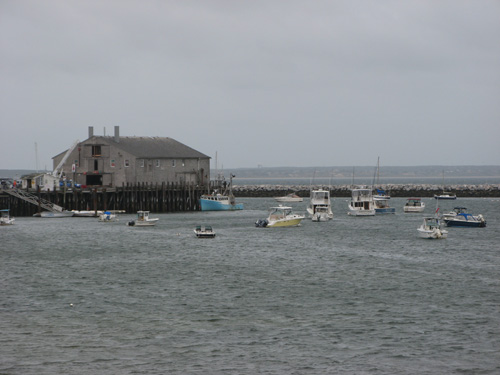
Cape Cod Boats

Shakespeare and Ssäm

SYB and I had reserved tickets to The Public Theatre Shakespeare Lab‘s performance of The Tempest. Tonight’s staging was the culmination of a 13-week intensive acting program. The first two-thirds of the course is class-based, focusing on elements of Shakespearean performance (e.g., monologues, clown work and stage combat); beginning in the 10th week, the students study and rehearse an entire play to perform before a live audience.

A condensed version, anyway: the entire five act play ran 75 minutes with no intermission. Also, to more equitably distribute the lines, three of the parts were shared by two actors: two Mirandas, two Prosperos and two Ariels. The whole thing worked remarkably well, in no small part due to the enthusiasm of the thespians.

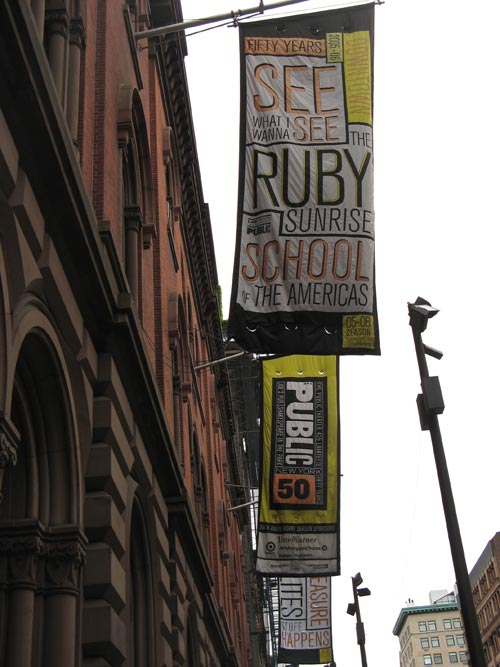
Banners

Public Theatre

After the performance, inspired by our recent trip to Momofuku Noodle Bar, we thought we would attempt to check out Chef David Chang’s new venture: Momofuku Ssäm Bar. Chang has described the casual dining restaurant’s signature item as an “Asian burrito,” his interpretation of the ssäm, which SYB explained is the Korean word used to describe any wrapped food item. After the hour-plus wait at the Noodle Bar on Saturday night, and the relentless press coverage leading up to the opening earlier this week, we were prepared for the worst.

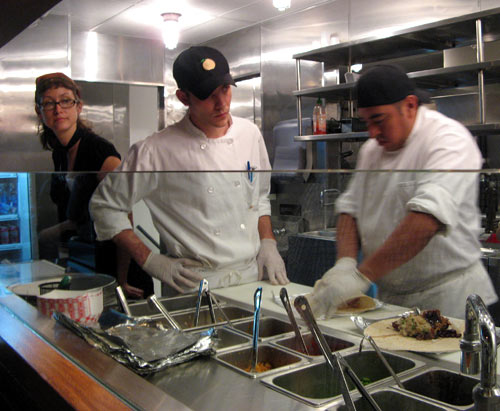
So we were pleasantly surprised on Thursday night to find the long, sleekly minimalist counter space full, but not packed. After some slight confusion over how to place our orders (turns out you just march up to the glass and relate your choices to the counter guys — cafeteria style), we stood by to watch our ssäms and steamed buns being prepared. The entire experience has been aptly compared to a slicker Chipotles.

As our flour tortillas were being rolled with Berkshire pork and kimchi, who should step out to observe and offer tips than Food and Wine’s Best New Chef 2006 himself. Just for a moment, though — not long enough for me to snap a photo.

Ssam Bar

The staff, for their part, seemed slightly amused by all my camera wielding; clearly they’re accustomed to diners of my ilk. At one point, the handsome delivery coordinator asked, “And what blog will these photos be on?”

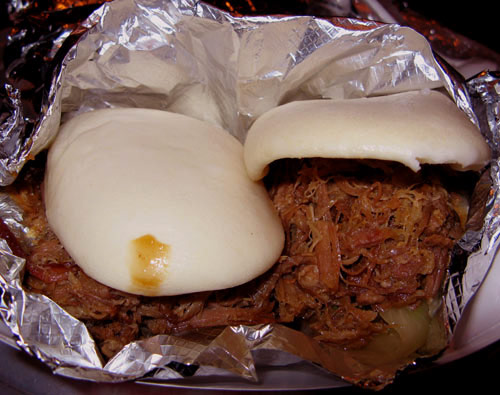
Steamed Buns

Blogumentary

Alex returned to my apartment in the late morning to start work on the tub. Reglazing is apparently a rather involved task that entails using powerful chemicals to strip the tub, patching and smoothing the chips, etching the surface with acid, applying a primer and finally spraying on several coats of enamel glaze. The entire process took a few hours, sending clouds of noxious, high-inducing fumes throughout the apartment.

But in the end, I had a shiny, new tub (surface) to show for it, yay! And I’m sure this light-headedness will wear off eventually…

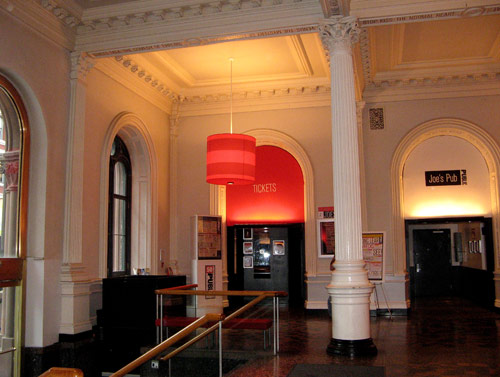
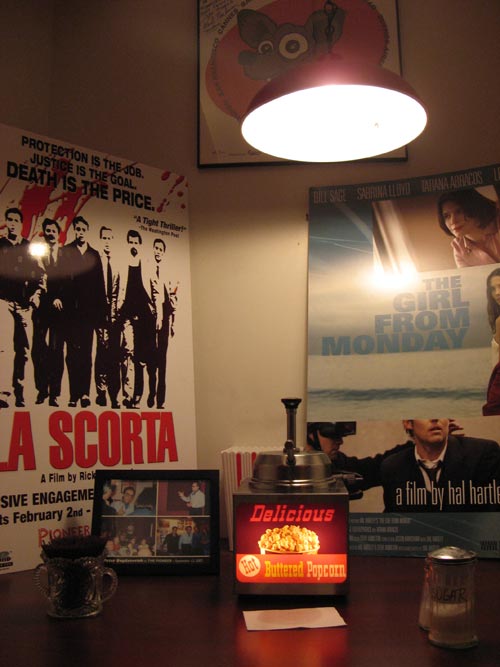
Later in the evening, B stopped by (with a bottle of cachaça — thanks!) and we took the subway downtown to Two Boots Pioneer Pizza for the premiere of Blogumentary — a lightweight documentary about the influence of web logs on media, politics and culture. Yep: it’s a film about bloggers blogging! The theatre was less than half full, despite the promoted appearance of the filmmaker, Chuck Olsen. Perhaps the relevance of blogs has been overhyped — another case of the vocal (or prolific) few generating disproportionate coverage and skewing general perception.

According to a recent article, a staggering 175,000 new blogs are created every day. Hmm… am I really just a cliche?

Two Boots

Good bye, Pluto. Hello, Kryptonite.

Back at the apartment, I had a run-in with the super, and as a result, the work I had arranged to have done in the apartment this afternoon got postponed to tomorrow morning. So I guess I won’t be going back to the office until Thursday. Gotta love co-op living.

B, RS and JS were planning a trip into Manhattan, and joining them on their continuing tour of New York seemed vastly preferable to sitting at home sulking over my own thwarted plans. We met at the movie theatre and headed uptown to The American Museum of Natural History. (We were about to to hit the MoMA, until SYB reminded us that the museum is closed on Tuesdays. Good looking out!)

We entered the Rose Center for Earth and Space first, recalling to mind that the last time I set foot inside, a year and a half ago, it was 4:00AM on a pitch black and icy, mid-January morning. SYB, B and I (and a couple hundred other hardy/crazy souls) had made the trek there to witness the live feed of the Huygens spacecraft touching down on Titan, the largest of Saturn’s moons. When those first black, white and flaming orange grainy images started flitting across the screens before our bleary eyes, it was a sight to behold. The excitement at the Center was palpable, and well worth losing the few hours sleep.

Today, at a far more reasonable hour, we zipped among the fleets of Maclarens through the spiral walkway with the timeline of the universe (Big Bang to present): 13 billion years of cosmic evolution in ten minutes! I always liked the Scales of the Universe upper walkway feature, offering size comparisons ranging from the known universe to subatomic particles by using the 87-foot Hayden Sphere in the center as a reference.

As for the scaled model of the solar system inside: there is no Pluto. Never was, from the time the Center opened in 2000. A display for the model notes that “Beyond the outer planets is the Kuiper Belt of comets, a disk of small, icy worlds including Pluto.” A controversal concept at the time, now widely accepted.

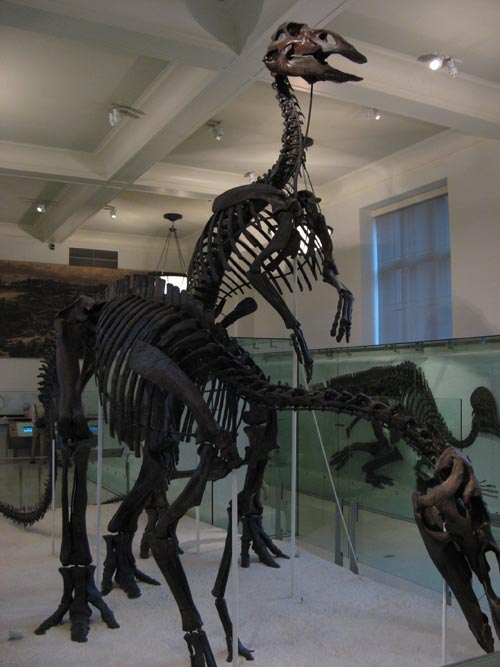
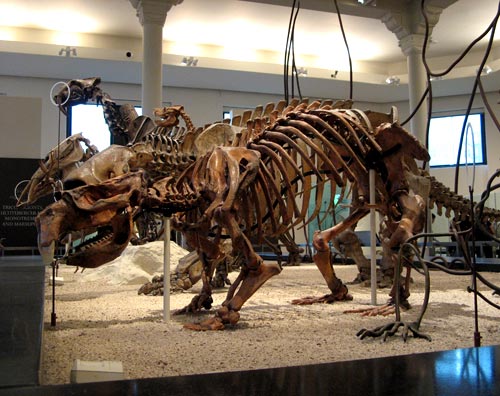
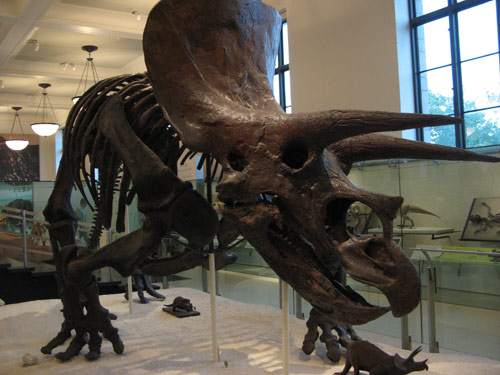
No field trip to the Museum is complete without checking out the dinosaurs:

Skeleton

And while we were there…

Skeleton Skeleton

We were out of there in record time, opting for a leisurely dinner of New York pizzas with the visitors before the IMAX screening of Superman Returns… in 3-D! We were handed giant plastic glasses at the door to don for four film sequences (and the trailers, which were also projected in 3-D.) Actually, though, it was three film sequences and an approximately ten second long clip of the Man of Steel flying around just before the closing credits rolled. Still, pretty cool!

On Governors Island

Governors Island lies just a seven minute ferry ride from the southern tip of Manhattan, at the confluence of the Hudson and East Rivers. After taking over “Noten Eylandt” (and “New Amsterdam”) from the Dutch in 1664, the British New York Assembly renamed Noten “The Governor’s Island” in 1698 and earmarked the land for “the benefit and accommodation of His Majestie’s Royal Governors for the time being.” Eventually both the “The” and the apostrophe were lost, leaving the current name as it stands today.

Its strategic location suited ideally for the command headquarters and military post of the United States Army from 1794 until 1966. From 1966 until their move to Fort Wadsworth in 1996, the island was the United States Coast Guard’s largest and most complex installation. In 2003, Governors Island was sold to New York City for the bargain price of $1.00 and transferred to two parties: 22 acres, designated as the Governors Island National Monument, to the Secretary of the Interior, and managed by the National Park Service; and 150 acres to the Governors Island Preservation and Education Corporation (GIPEC), a corporation formed jointly by the State and City of New York.

Currently, Governors Island is open to the public on a seasonal basis. This summer, public access continues through this Saturday, September 2, 2006. Since it was the last week to take advantage of the free tour and ferry ride out to the Island, I took the day off on Tuesday to explore in the morning, before returning home to take care of more mundane apartment matters.

Ferries to Governors Island depart from Slip 7 of the Battery Maritime Building terminal , northeast of the Staten Island Ferry terminal. At one time, this now-crumbling landmark building served as a twin to the original Staten Island Ferry Terminal.
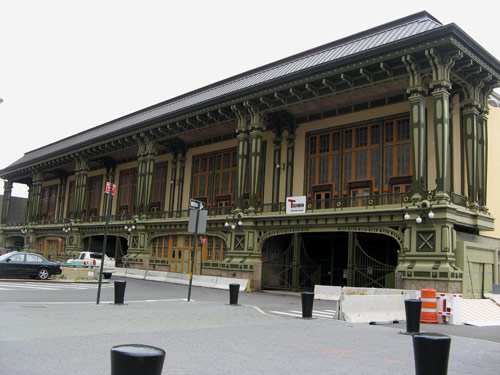
Battery Maritime

Tuesdays through Thursdays just 40 people are permitted on the Island at a time for a guided tour. B and I arrived by 9:30AM with plenty of time to spare — affording me the chance to check out the new Whitehall terminal again.
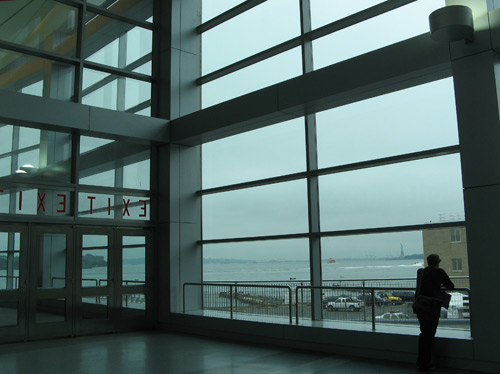
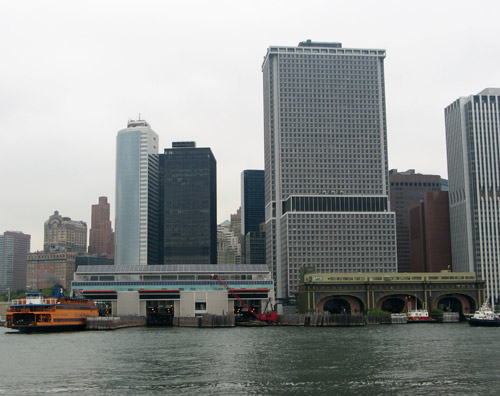
SI Ferry Terminal

Terminals

We pulled into Soissons Dock at Governors Island’s northern edge aboard the Coursen, a 1955 vessel certified to accommodate 493 passengers. The dock commemorates “the heroic participation of the 16th U.S. Infantry Regiment from Governors Island in the victorious attack against German forces near Soissons, France, July 18, 1918.”
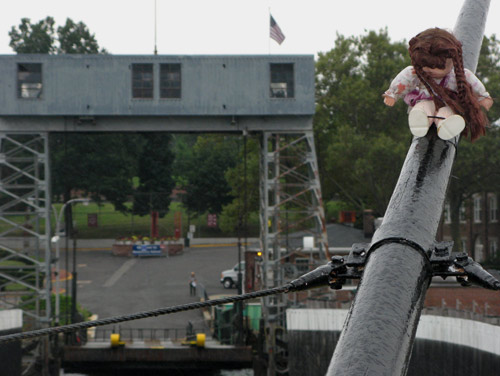
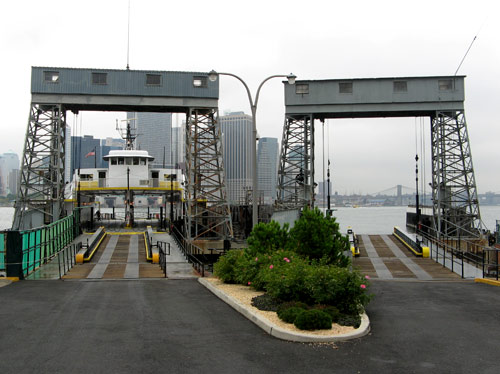
Gov Island Terminal

Gov Island Terminals

Our group of about 15 was met at the Ferry Waiting Room/Visitors Center by two Parks Department guides – both named Meg[h]an, and one of whom was actually raised on the Island, back when it served as Coast Guard housing. The building across was once the island’s Post Office, and now houses a gift shop and a security station – the first of many repurposed structures on the island we would see over the next hour and a half.

Our tour was limited to the historic district, with the military history. The GIPEC-owned majority of the island, is (from what we were told) far less picturesque, comprised of corporate park, modern apartment complexes, and other supporting features. A prominent white tower sits at the island’s northern end: the air vent to the Brooklyn-Battery Tunnel, which runs beneath Governors Island. For two centuries, the island was run as a small, self-sustaining town for Army, and later Coast Guard, personnel, government employees and their families. There was the aforementioned post office (with a Manhattan zip code), a hospital, elementary school P.S. 26 (most high schoolers had a two-ferry commute to Curtis High School in Staten Island), two churches and a synagogue, a golf course and a Burger King – the only one in the country to serve both pizza and beer (to service the adjacent bowling alley).

Many of these structures have since fallen into disrepair, so we on the tour were only allowed the view from the street for safety reasons.
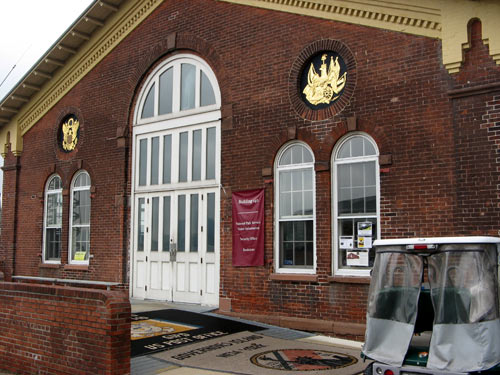
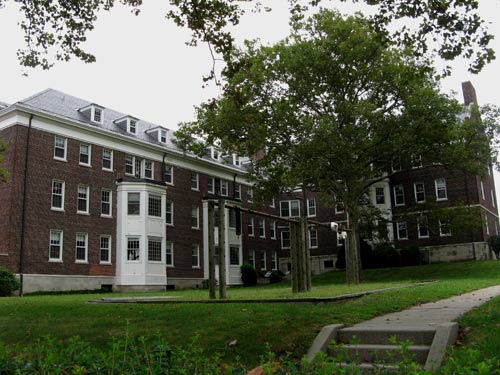
Gov Island Main

Army Housing

The two most prominent military fortifications on the island are Fort Jay and Castle Williams, which were erected between 1796 and 1811 in preparation for the War of 1812. Both structures sit within the Landmark District and are surrounded by unparalleled views of New York Harbor.
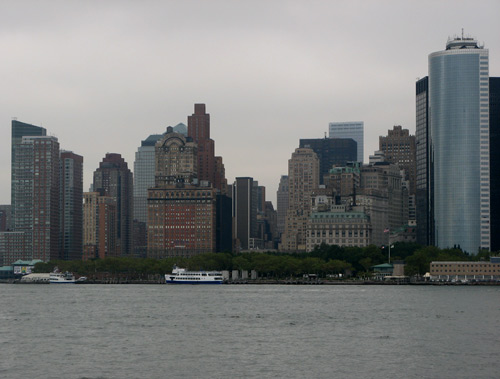
Lower Manhattan

With walls forty feet high and eight feet thick, this round sandstone bastion was set up to accommodate four tiers of cannons, when it was completed in 1811. Castle Williams and its twin fort, Castle Clinton in The Battery, were built to guard the waterway between Governors Island and New York City. The British never attempted to breach the harbor, though, and the growing sophistication and reach of firepower after the War of 1812 rendered these forts obsolete before they ever fired a single blast. A technical point: because the structures are fortified entirely of stone, they are named “castles,” and not “forts.”
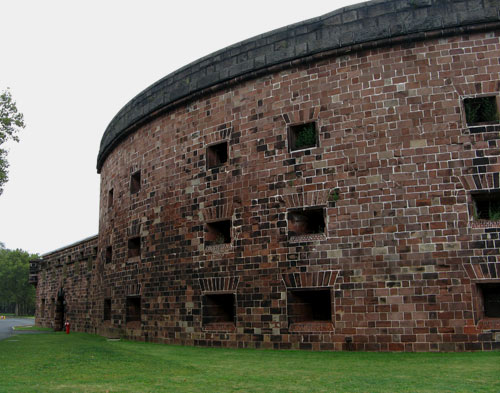
Castle Williams

Once inside the Castle, its former life as a jail became apparent. From the Civil War through 1966, Castle Williams held as many as 1,000 prisoners at a time. At its most cramped, the unsanitary conditions led to many deaths; later, when conditions improved, it was considered a resort-type minimal security prison for AWOL Army soldiers. Several prisoners are rumored to have escaped from here and successfully swam to Brooklyn.
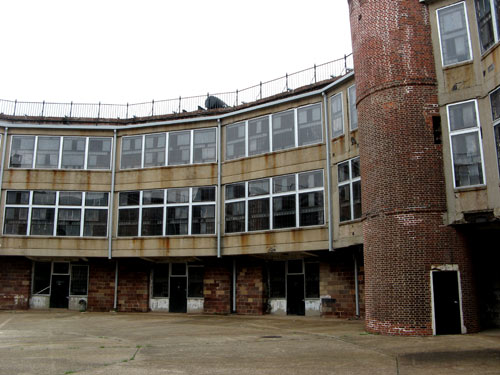
Castle Williams Interior

As we left the fort, the rain started coming down hard, limiting the photo opportunities. We passed the elegant brick houses of “Colonels’ Row,” which were built after the Civil War to entice men to join the service. At the time the homes were built, they sat facing the waterfront. By 1901, however, landfill from the excavation of the Lexington Avenue subway line expanded the Island to over twice its original size, pushing the waterfront out of view.

Nolan Park, set in idyllic woods, was the area reserved for the Army and Coast Guard highest officers. The houses in this area are clearly the grandest – mostly brick with tall white-columned entryways, free of the yellow-painted wood siding which marks the lower-ranked officers housing.
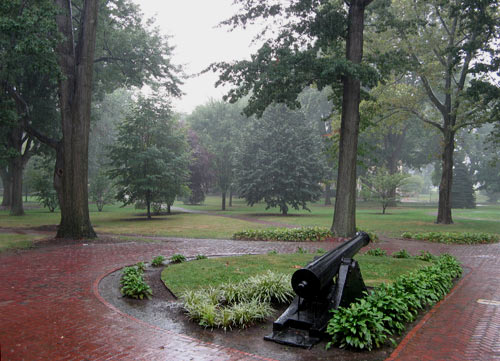
Colonels Cannon

We ended our soggy tour at Fort Jay — named for New York Governor and U.S. Supreme Court Justice John Jay — which was built on the highest point of Governors Island. A dry moat, intended to blend into the surrounding land, runs around the perimeter of the 5-pointed-star-shaped fort (currently under scaffolding.)
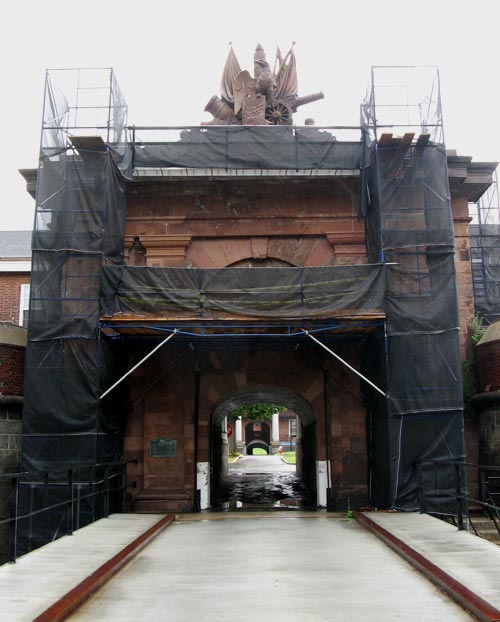
Fort Jay

The terms of the Governors Island deed transfer protect acres of park land and prohibit the construction of permanent housing, effectively preserving the island for public use by eliminating its value for real estate developers. Other restrictions forbid its use for gaming venues and heavy industry. The Governors Island Alliance has created a set of illustrated guidelines for the parks and public spaces on the 172 acre island. Future plans under consideration for the island include proposals for a waterfront esplanade, hotel, amphitheater, museum, athletic facilities and a new City University of New York campus.

Back in Manhattan…
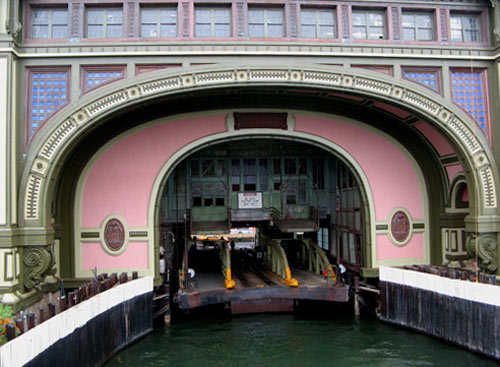
Battery Maritime

Adventurous eating @ Congee Village

SC and JG had arranged for a group of us to meet at Congee Village on Allen, with a call to “bring your appetite and your sense of adventure.” Congee Village, you see, specializes in Hong Kong and southern Chinese dishes of organ meats, innards and a startling array of pause-inducing fare. Still, I suspected that growing up in a traditional Chinese household had probably inured me to such things for the most part. Plus, I was interested in finally checking out this place which, since its opening seven years ago, has become a popular, almost hip dining destination among the late night Lower East Side bar revelers.

I arrived about half an hour early — forgetting how quick the ride from Wall Street could be on the J/M/Z train. I promptly ran into JB on Delancey and we decided to retreat to the nearby Starbucks for cool drinks before returning to the restaurant at the appointed time. Once there, we met (engaged!) AC at the neon-lit, lacquered wood bar; the three of us settled into the odd assortment of hulking wood and futuristic plastic chairs in the lounge area to await the others. SC and JG arrived soon after, with LR trickling in eventually.

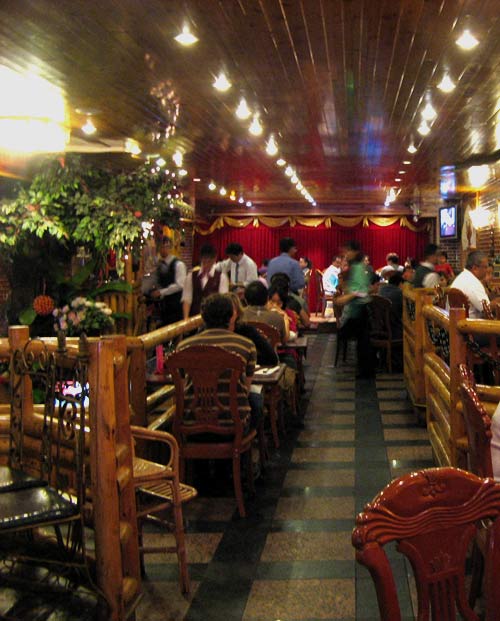
Congee Village

Our group was escorted — well, partly escorted — to one of the banquet rooms down the narrow stairs. The restaurant is in fact, quite large — much larger than just the main upstairs dining space would suggest. I wonder if this was one of the basement karaoke rooms I’d read about?

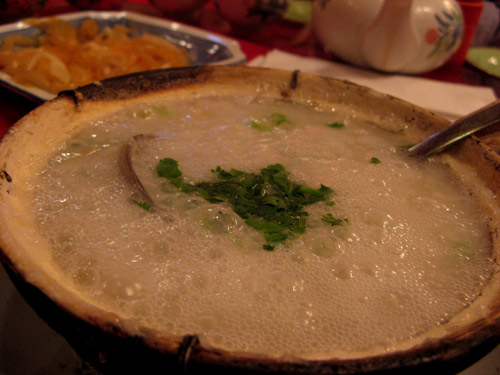
After some negotiation, we settled upon a mix of “safe” and “adventurous” dishes from the impressively extensive menu. Here, the dried scallop congee, which arrived at the table still boiling, but a bit too gingery for most of our tastes. Also, fish maw congee… because SC and I couldn’t decide upon just one.

(Actually, all the congee is listed on the menu as “porridge,” which seems odd given the name of the restaurant.)

Congee

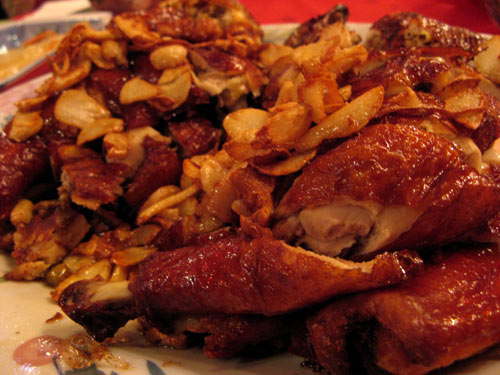
The “House Special Chicken” — crisp skinned and garlicky: one of my favorites of the evening. Sharing this “safe” end of the spectrum were the “Han Moon Style Chow Mei Fun” (thin rice noodles with shrimp, Spam(!) slivers, egg, beansprouts and vegetables) and a cylindrical bamboo pot filled gift-like with sticky sweet rice and meats. We were about a third of the way through the dish when we realized that what we were eating was not the “Sizzling Frog in Casserole” we’d ordered; it tasted like chicken because it was chicken (with black mushroom.) The waiter had inadvertantly brought us another table’s dish — whoops! (The frog came later.)

Special Chicken

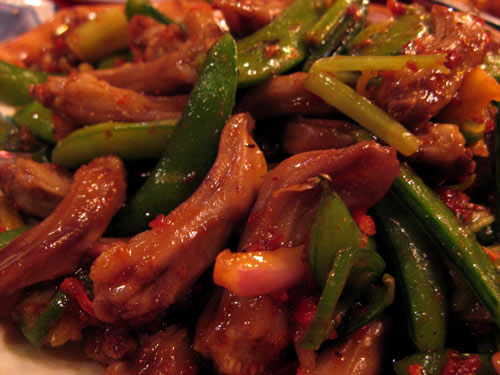
Chilled jellyfish and this dish of “Sweet Pea Pods and Sauteed Duck Tongues in XO Sauce” over explanations of vernacular and “Would You Rathers” among friends both old and new — what could be finer?

Duck Tongues

Out of the Frying Pan

Inspired by my recent Friends of the High Line event, I returned to Pier 63 Maritime to revisit the Frying Pan lightship. The first tours were scheduled for 2:00PM, so on the way over on 23rd Street, I stopped in at the Choux Factory.

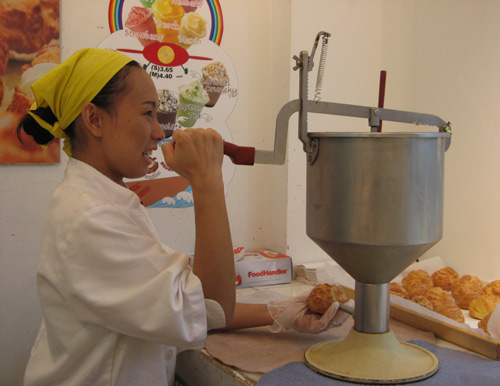
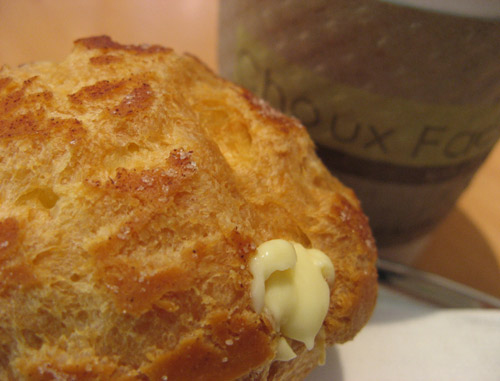
Japanese chain Choux Factory opened its first U.S. store in Tudor City in 2004 to challenge Beard Papa’s for cream puff supremacy. Like its rival, the shop specializes in piped-to-order pastry puffs, bursting with a variety of flavored custards. Other similarities between the chains are striking: brightly colorful, shiny interior and a cheerful staff, greeting every customer in a chorus of enthusiastic Japanese. Choux Factory also serves Kona coffee, muffins and sandwiches.

The Choux Factory puffs are softer, sweeter and slightly smaller (and more expensive) than Beard Papa’s puffs. The vanilla cream is also thicker, though to my taste, not quite as good: the vanilla flavor of the Choux Factory custard seems less pronounced, and I do miss the dark flecks of bean evident in the Beard Papa’s. Still, accompanied by a steaming cup of their rich Hawaiian Kona, it made for a perfect snack on this chilly, rainy afternoon.

Choux Factory

Creampuff

By 1:30 it was raining pretty hard, but I was determined to tour the Frying Pan this last Sunday in August.

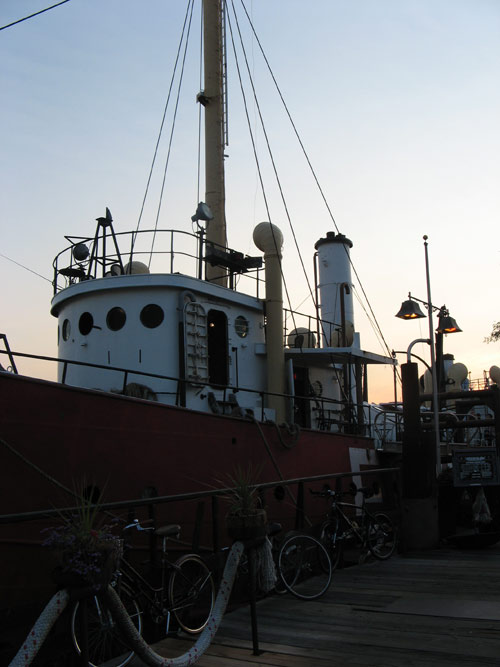
Lightship #115 is one of only 13 remaining from more than 100 built. Another lightship, the Ambrose, is moored at South Street Seaport and serves as a permanent exhibition space on navigation and the role of lightships. The U.S. Coast Guard used lightships as floating lighthouses to guard and guide ships that could not be served by a lighthouse – either due to distance or topography. Many were also used to mark the entrances to harbors. The ship at Pier 63 was originally stationed at its namesake, Frying Pan Shoals, 30 miles off of Cape Fear, NC from 1930 to 1965. After being decommissioned and used for a time as a museum in Southport, NC, the ship was sold in 1984 and moved to an old cannery in the Chesapeake Bay, where it capsized and sunk, remaining underwater for three years before being raised by its current owners. After tons of silt and shells were removed from the hull, the ship was outfitted with a replacement engine and in 1989 cruised under its own power to New York City’s West Side.

Frying Pan

The driving rain kept everyone else away; I was the only visitor to the pier this afternoon, and there was no tour to be found. After wandering around aimlessly for a bit, I tracked down a young man swabbing the deck (really), who invited me aboard to tour the ship on my own. And so I did.

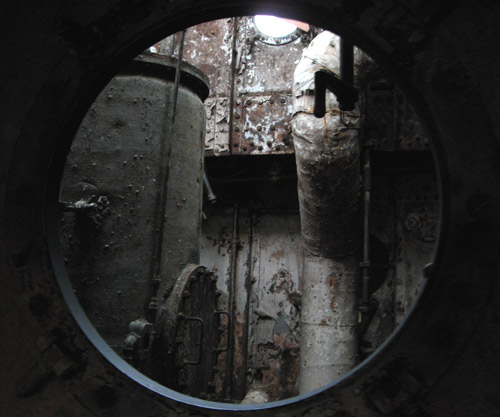
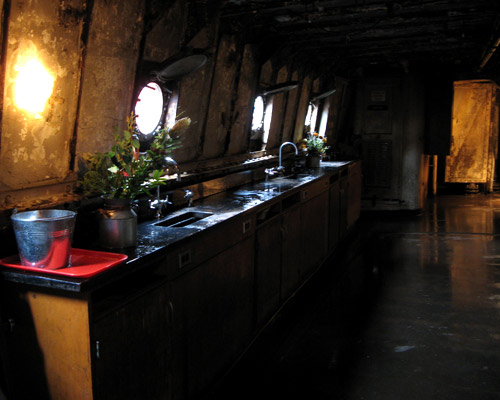
Difficult to imagine 15 men living on the ship in such close quarters for months on end. I explored the three levels of the darkened ship at my leisure: the engine room, the galley, cabins and common areas.

Frying Pan Engine

Frying Pan Galley

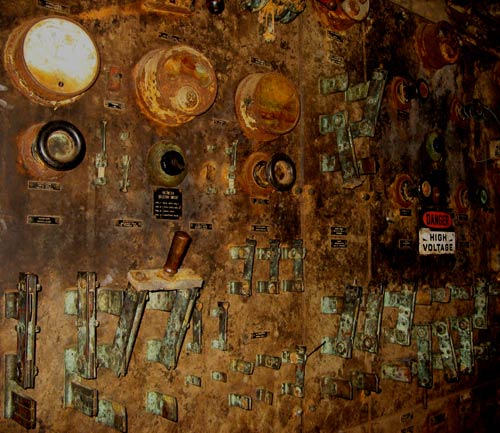
Frying Pan Controls

Pier 63

I arrived home, did a quick load of muddy, rain-spattered laundry and headed out to meet B and his newly arrived Tennessee cousins for an early dinner at Vynl. By the time we finished our meal, the drizzle had let up enough to allow for an impromptu tour of the Upper West Side. The four of us strolled up to the Time Warner Building, passing the Hearst Tower, which gave me the opportunity to share some of what I knew. From there we hit Central Park, stopping to admire the prettily lit lanterns at Tavern on the Green, which I pointed out was the site of my high school prom, those many years ago. As darkness fell, we somehow found ourselves near Rowboat Lake and the edges of the Ramble. I don’t know which made me more uneasy: the relatively deserted environs or the shadows of Park critters skittering about — eek!; in either case, we hastily made our way back up to Bethesda Terrace and out to the misty streets.