vip in the city, page 41

Marco! Polo!

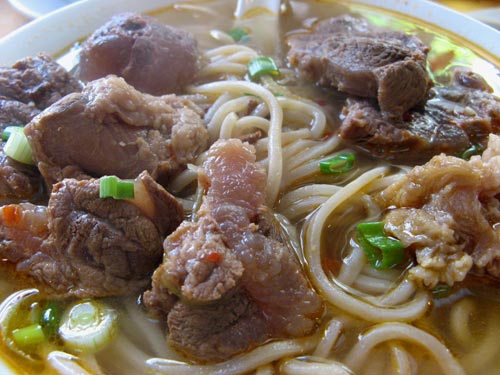
At Marco Polo Noodle Shop at 94 Baxter Street, the house specialty is, as one would expect: noodles. Here, the Lanchou style beef stew noodle soup , which are “fresh made” in house daily. It was very good – and for $4.75 for this generous bowl, great value! — but I miss the spectacle of the hand-pulled variety at the other noodle shops, farther east.
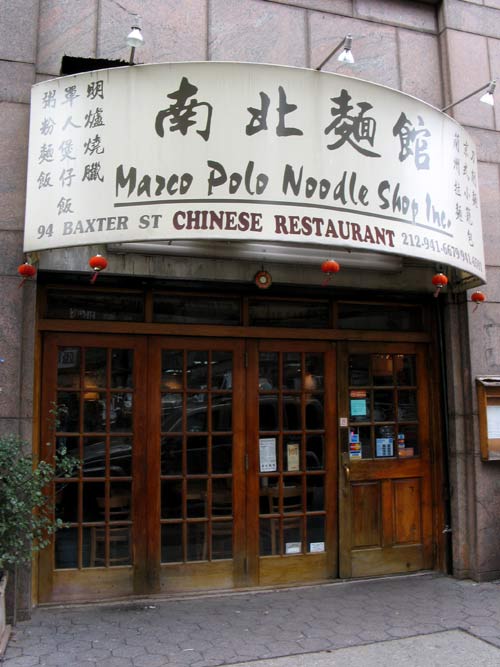
Marco Polo

beef stew noodle soup

So why a Chinese noodle shop named for an Italian? As any fifth grader can tell you, Marco Polo’s 13th century wanderings along the Silk Road served as the basis for his travel account, which became an important document of East-West exchanges. His writings (the veracity of which has been disputed through the years) formed the basis of the popular idea that the explorer introduced Chinese noodles to the Italians, where they were reborn as spaghetti. (“We [Italians] take credit for it, but we just added oregano,” as the Estelle Getty character quips to a Chinese doctor in one episode of The Golden Girls.) It’s a version perpetuated by the Chinese, where the schools promote national pride for the Four Great Inventions: the compass, gunpowder, paper and movable type.

More accurately, it appears that macaroni/noodles evolved independently in the two countries, though the origins trace far earlier in China — further even than was believed until a couple of years ago. In 2005, Chinese researchers unearthed a 4,000-year-old container of noodles in northwestern China, predating the first written mention of noodles by at least 2,000 years. (Insert old Chinese leftovers joke here.)

In one of those cross-cultural idiosyncrasies, “Italian noodle” is actually quite popular in Hong Kong, where the Spaghetti House restaurant chain has 25 outlets throughout the region.
Eating on Avenue B

After a couple of postponements, CL, CF and I had our long-awaited dinner at the new-ish Italian spot, Enoteca Barbone.

I hopped the 4 to Union Square for a quick stop at Trader Joe’s. Well, “quick,” is relative – the store, located on the ground level of NYU’s Palladium residence hall, named for the once-popular Steve Rubell-Ian Schrager owned dance club which it replaced, has been perpetually mobbed since it opened last spring.

A couple packs of roasted almonds and dark chocolate covered espresso beans later, I headed east to Avenue B with my TJ’s brown paper bag. I arrived at our destination early to find CF at the bar, already enjoying a pre-dinner quartino of wine – a signature feature of the Babbo wine program, most likely carried over by Barbone chef John Baron, who spent time in Mario Batali’s kitchens at Babbo and Lupa.

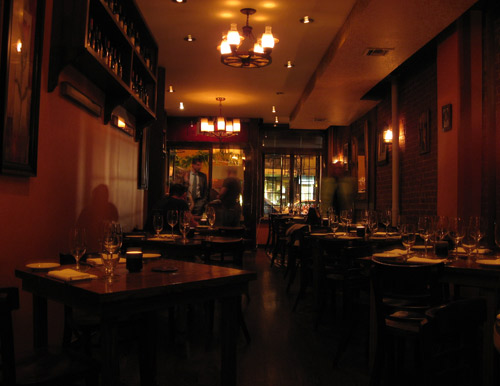
At 7:00PM on a Wednesday, the restaurant was oddly empty of other diners. The front dining room had a warm, rustic design: exposed red brick walls, dark wood, white tablecloths – reminiscent of half a dozen similarly-themed Italian inotecas. Once CL arrived and our server led us down a short, narrow hall into the back, it was another story: Barbone’s raison d’être, and the feature that sets it apart from the other East Village Italians in its price range (Max, Supper, Il Bagatto, Frank, etc.): its expansive outdoor garden, a charming green-filled patio with European vintage-styled street lamps and wood and rattan seating, which offers a soothing respite amid the still occasionally gritty Avenue B.

Enoteca Barbone

In the garden, the scene was more lively; eventually every table was filled with groups of diners, relaxing in the warm open air with glasses from the extensive, all-Italian wine list, many under $40.

We began with plates roasted artichokes and terrific asparagus fries – delicate, tender stalks battered in a light wine batter and served with pancetta aïoli. We each selected from among the fine, homemade pasta offerings ($12-$15): for CL and CF, the ricotta gnocchi with brown butter and sage; for me, the linguine with clams pancetta, white wine, garlic and chili — a good yardstick dish. To finish, we three friends shared creamy cheesecake and a dish of the affogato – vanilla ice cream topped with a shot of hot espresso – as we laid the groundwork for future travels come winter.

On the way out, we chatted briefly with the gracious owner, a native of Istria, who explained to us the origins of the restaurant name: “enoteca” for “wine shop,” “barbone” meaning “tramp” (as in hobo) – a moniker which seems to belie the casual elegance of this welcome addition to the East Village.

Stand clear of the closing doors

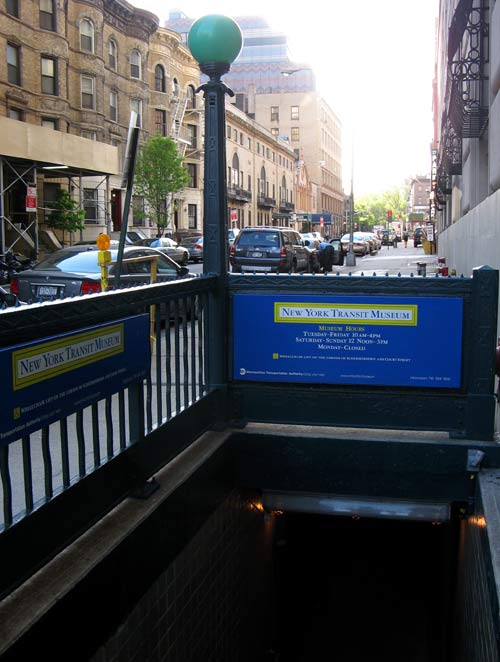
At the New York Transit Museum tonight for the opening reception of “Collages by Chris Pelletiere,” touted as “the first complete presentation of this series of subway collages” by this painter, illustrator, and cartoonist. The works on display were inspired by charcoal sketches made in 2003 during the artist’s commute from his home in New Jersey to his job at the Museum of Modern Art.

I’d been to the museum annex gallery a few times but never to the main site in Brooklyn Heights. How fitting that a museum dedicated to the history of the city’s rail transportation would be housed in a decommissioned (but still operational) subway station at the corner of Boerum Place and Schermerhorn Street. The Court Street station was opened in 1936 as part of the Independent Subway (IND) as the western terminus of the the Court Street Shuttle service to the (still operational) Hoyt-Schermerhorn Street station, just three blocks away. Plans to extend the line beyond Court Street – as a potential route to the new Second Avenue Subway – were abandoned, due to budget constraints. Because of low passenger use and the ready availability of several nearby alternate stations, the Court Street station was officially closed to passengers on June 1, 1946. For the next three decades, the station was used for training, supply storage, and commercial film shoots before becoming the permanent site of the New York Transit Museum in 1976.

Transit Museum entrance

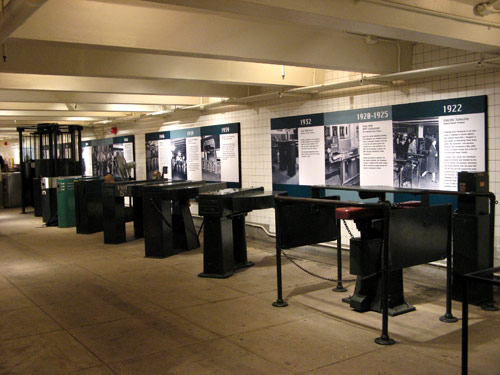
After perusing the collages on display, I turned to the century’s worth of memorabilia housed at the museum collection, among them a fascinating display of antique turnstiles devices used by the MTA through the years.

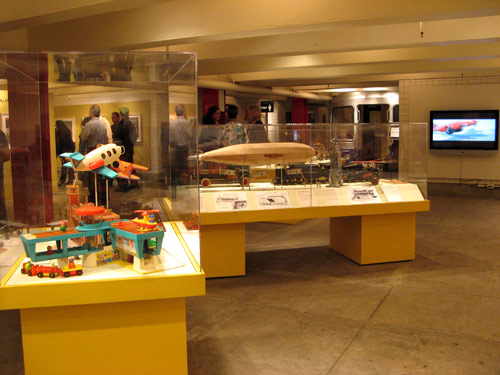
Transit Museum displays

Transit Museum turnstiles

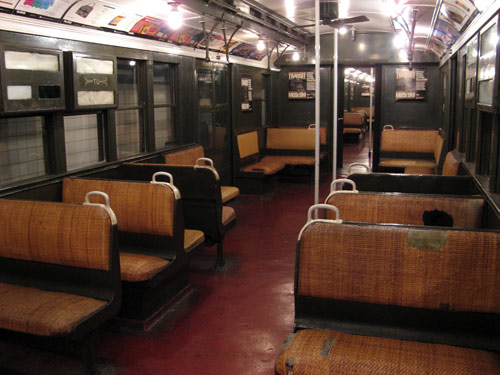
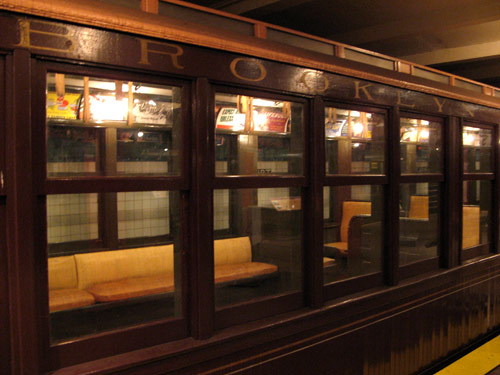
And down the stairs, the highlight: a vintage collection of subway and elevated train cars, refurbished by New York City Transit’s Division of Car Equipment — two entire tracks full, all open for exploration. Very cool!
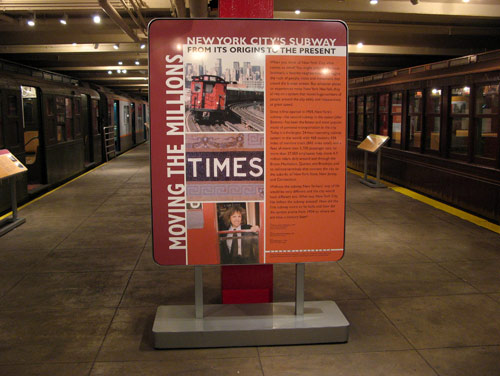
Transit Museum tracks

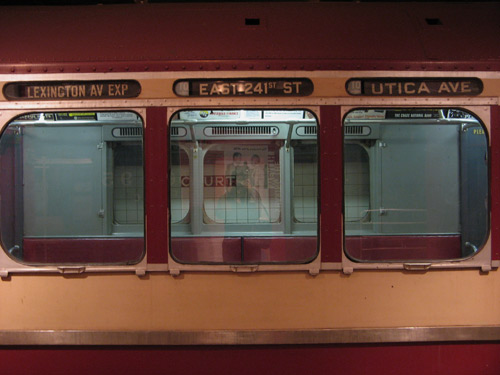
Vintage subway car

Vintage subway car

Vintage subway car

I learned that several of the cars are even operational, and are sent out for special “Nostalgia Train Rides” throughout the year. Trips planned for the summer include “Summer Celebration at Rockaway Park” (Sunday, July 22), “Coney Island Caper” (Sunday, August 12) and “IND Anniversary September Special: A Day on the A” (Saturday, Sept 8). I have got to sign up for one of these.

The unusually brief hours of museum operation make a weekday visit all but impossible, save for these special after-hour events. The museum is, however, open on weekends, 12:00PM – 5:00PM, during which a return visit is in order, if only for the trains.

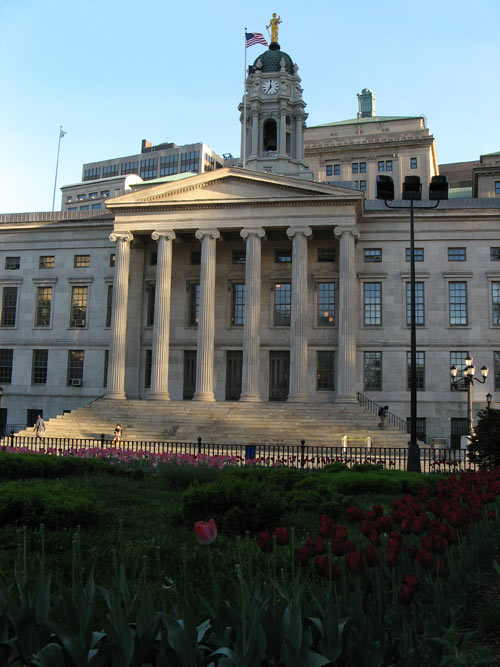
Brooklyn Courthouse

Three simple words

Over the past couple of weeks, I’ve had the luxury of several uninterrupted hours in which to finally, finally complete Ian McEwan’s Atonement — a book who first 50 pages I’ve reread perhaps half a dozen times over the past few years, without ever progressing much beyond that point. My reasons for the false starts are inexplicable: I’ve read several other novels from start to finish in the interim, but somehow this one — which many critics consider to be McEwan’s masterpiece — eluded me. There may have been some subconscious aversion at work; perhaps I associated the book with the time in my life I acquired it, and just kept setting it aside, like so many other things.

McEwan’s book was shortlisted for the Booker Prize for Fiction in 2001, ultimately losing the top prize to Peter Carey’s True History of the Kelly Gang. At the time, many felt that McEwan had been handicapped by having won the prestigious prize just three years earlier for Amsterdam. The same year he was passed over for the Booker, the Whitbread Novel Award was presented to Patrick Neate for Twelve Bar Blues in a decision Neate himself considered an upset. Nonetheless Atonement did go on to become an international bestseller and to collect several other honors including the National Book Critics Circle Award, the WH Smith Literary Prize, the Los Angeles Times Prize for Fiction, the Santiago Prize for the European Novel and “the People’s Booker.”

So a couple of weeks ago, with endless hours of solitude ahead of me, I decided to tackle this work once and for all. It’s not difficult reading; McEwan’s richly evocative descriptions build the narrative slowly at first, but once the plot was set in motion, I was riveted.

Having just turned the stunning, final page, I can say that I loved this book. Structure-wise, the story is organized into three parts — set in 1935, 1940, and 1999 — and hinges upon the misunderstandings and betrayals of one summer night and their tragic ramifications. I won’t say much more for fear of spoiling it for the others I know among you who haven’t read it yet. But do read it, and we’ll compare notes, off the blog. People still do that, sometimes, I think.

The film adaptation, which reunites star Keira Knightley with her Pride & Prejudice director Joe Wright, is scheduled for release in September 2007. The Internet Movie Database describes the movie as “based on the British romance novel by Ian McEwan.” Hmm… for me, “romance novel” always seems to carry with it rather Harlequin-esque associations, which I don’t think captures the essence of the story. The publisher describes Atonement as a “symphonic novel of love and war, childhood and class, guilt and forgiveness.”

And yet:

Finally he spoke the three simple words that no amount of bad art or bad faith can ever quite cheapen. She repeated them, with exactly the same slight emphasis on the second word, as though she had been the one to say them first. He had no religious belief, but it was impossible not to think of an invisible presence or witness in the room, and that these words spoken out loud were like signatures on an unseen contract.

*sigh*

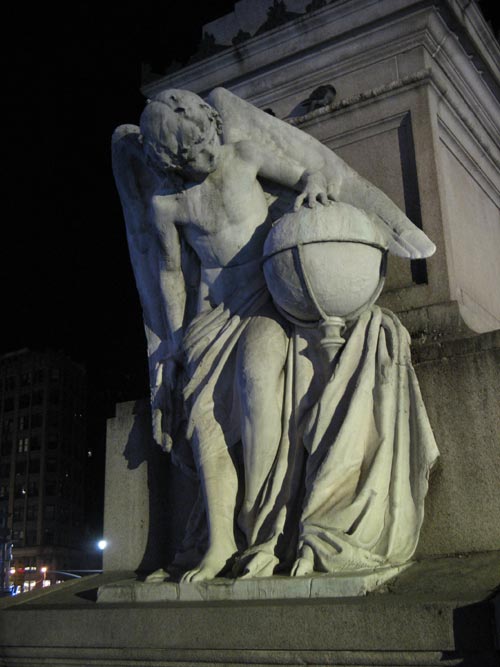
Columbus Circle Statue

Looking forward to McEwan’s scheduled appearance at the 92nd Street Y on June 5.

The power of the press

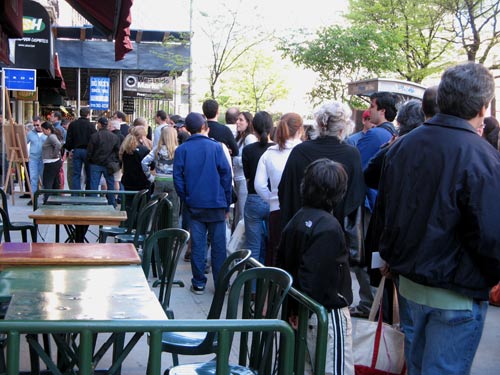
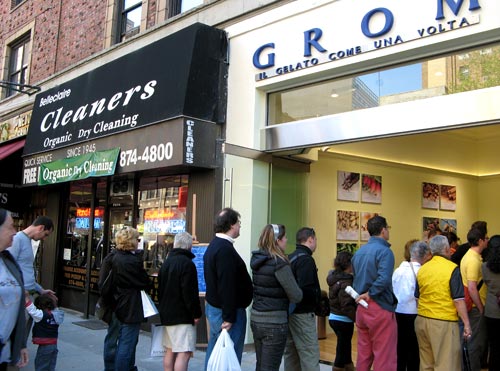
Shopping at my local Fairway — and on a Sunday afternoon! — is a somewhat less pleasantly civilized experience than I imagine it would be in Red Hook. But I had no choice: there was a dish to prepare for SYB’s pot luck dinner this evening, and no groceries at home with which to prepare it. Like one girding herself for battle, I decided to treat myself beforehand to a brief detour at newly opened Grom, the first American outpost of a popular Italian artisinal gelateria chain, about which I’d read so much recently. What could be finer on such a beautiful, sunny day?

As I neared my intended destination, there was a noticeable thickening in pedestrian traffic. My pace slowed as I reached the corner of Broadway and 76th Street, until…

Grom line

Yikes.

Clearly, I was not the only one with the same idea — not by a long shot. I should have anticipated as much: the thought had been planted firmly and enticingly in our collective consciousness in a week-long media blitz of publicity: New York magazine. A profile in the Times dining section. Time Out New York. Gothamist.
The crush was unavoidable and inevitable. Paired with the sudden arrival of one of those perfect spring afternoons that New York City will sometimes produce, it meant that there was no way I was getting my cup of quality gelato today — not unless I was willing to brave the madding crowd for at least an hour. Which I was not. But gee, those that did wait it out sure looked happy.

Grom line

Haven’t seen such lines since… well, since the weekend Beard Papa opened its first NYC creampuff shop in 2004, just two doors up from Grom’s current spot.

With apologies to O. Henry, “after this can any one doubt the power of the press?

More Red Hook

What a great place for a walk!

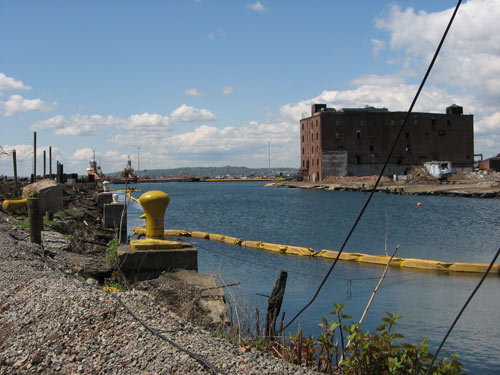
Red Hook Waterfront

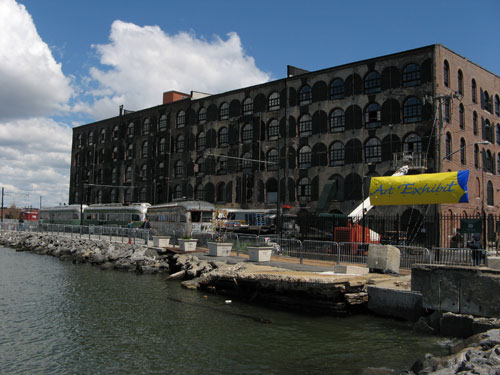
The Red Hook Fairway Market is housed inside a beautifully restored pre-Civil War era warehouse on the waterfront at the end of Van Brunt Street.  Above the market, the building is used as office space for businesses and local non-profits, artist work space and luxury residential units.  Fairway arrived in Red Hook in May 2006 to much fanfare and enormous crowds.  This afternoon, strolling through the clean, spacious aisles, along the well-stocked displays and colorful chalkboards touting store specials — such a stark contrast with the cramped, combativeness of the Upper West Side location — I could not help but be a little envious.

Red Hook Fairway

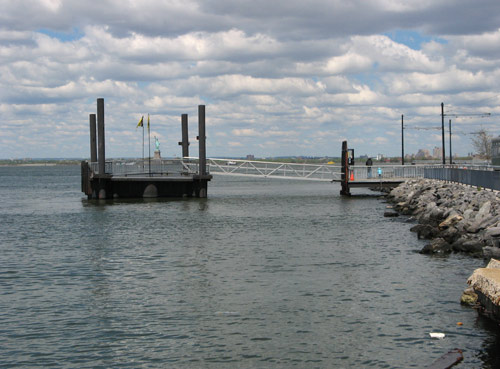
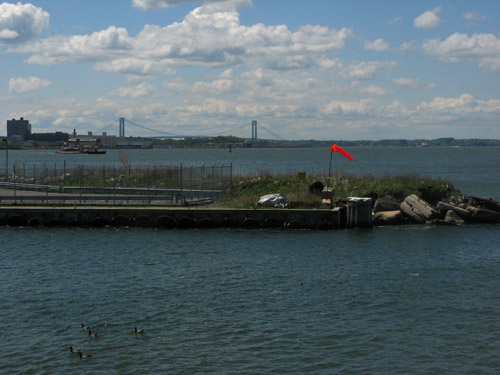
A view of the Verrazano-Narrows Bridge (and a few ducks) from the red-brick Beard Street Warehouse at 499 Van Brunt Street, which now houses over 40 businesses, including the offices for the New York Water Taxi (which maintains a dock just outside the Fairway), a glass-blowing studio and gallery, the Brooklyn Waterfront Artist’s Coalition (Red Hook’s premier art venue, and the largest artist-run, not-for-profit art organization in Brooklyn), and the set and costume designers for Blue Man Group.

Verrazano-Narrows Bridge

More walking, along the Beard Street pier, on streets scattered with bars, restaurants, galleries and shops, including Steve’s Authentic Key Lime Pie, touted endlessly on the Food Network.

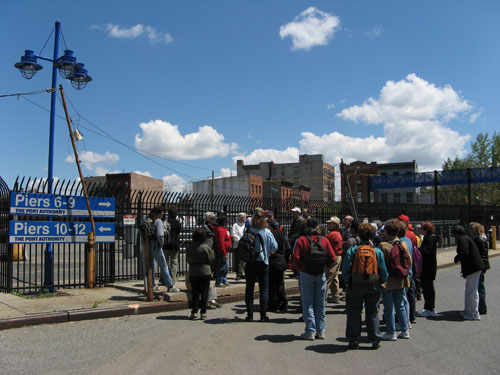
Our group’s numbers dwindled as the gentrified streets gave way to warehouses and desolate looking stretches until we reached the Red Hook Container Terminal, which sprawls along 80 acres of waterfront.  The Port Authority of New York and New Jersey leases the terminal in part to American Stevedoring.

Red Hook Terminal

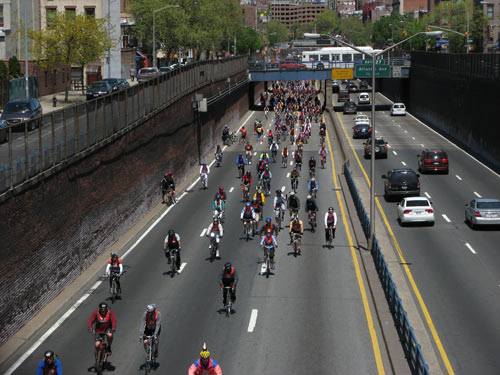
We wound past a couple of community gardens, crossing paths at the BQE with the 5 Boro Bike Tour.

5 Borough Bike Tour

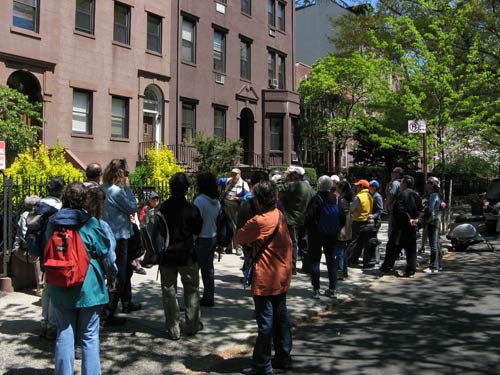
And nearly four hours after we first met, our final stop: the stark contrast of the stately brownstone rowhouses of the Carroll Gardens Historic District — once considered part of Red Hook.

Carroll Gardens

We broke away from the group as they made their way to the subway station, to explore the annual Court Street Fair, sponsored by the Gowanus Canal Community Development Corporation (GCCDC).  By summer’s end I’m usually in full-grip of street fair fatigue, but on this brilliantly sunny spring day, I was happy to wander among the stalls, taking in everything from the curious (not a tube sock or mozzarepa stand in sight!) to the unconscionable ($4 for 6 zeppole?!)

Lunch at the newest Carroll Gardens location of Mexican mini-chain Mezcal’s, after which we made a dessert of some more reasonably priced (but still messy) zeppole from one of the Court Street pizzerias.

Court Street Fair

Court Street Fair

Off the Hook

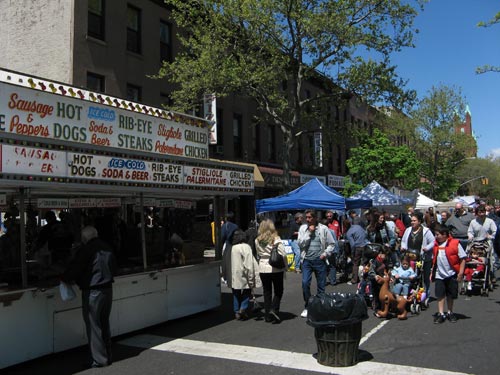
I joined up for a walk through Red Hook — the peninsula edged by Buttermilk Channel (which separates Brooklyn from Governors Island), Gowanus Bay and the Gowanus Canal at the southern edge of Downtown Brooklyn. The event was sponsored by TAWNY — that’s Take a Walk, New York! — the Neighborhood Open Space Coalition and the Bette Midler-founded New York Restoration Project.

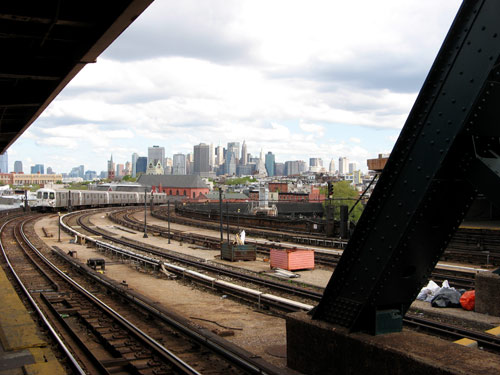
The advertised “light-hearted prowl” — part stroll, part history lesson — began bright and early this sunny morning at the Smith/9th Street station; at 91 feet, it’s the highest elevated stop in the subway system, owing to an antiquated regulation to allow for tall-mast shipping beneath the rails. Good thing for all those clipper ships that sail through Gowanus Creek… (pause)… not!

Smith Street Station

Red Hook native Dave Lutz brought our group — at over two dozen strong, a surprising turnout for 10:00 AM on a Sunday morning — through cobblestoned, residential and industrial streets, past “waterfront” parks… from which the public is blocked access to the waterfront.

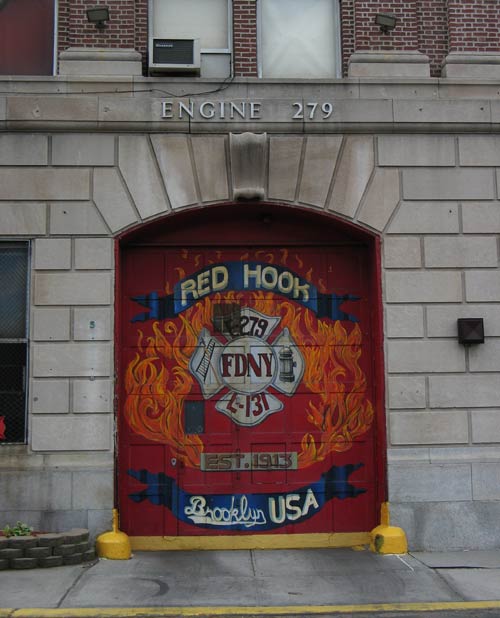
Red Hook FDNY

On through the Red Hook Houses, one of the largest public housing projects in the country, first built as a Federal Works Program initiative under FDR. Quite a lot has changed in the area over the past several years, but old perceptions die hard; at one point, one of the walk participants muttered that we should have brought bulletproof vests, earning himself a prompt chiding from our local walk leader.

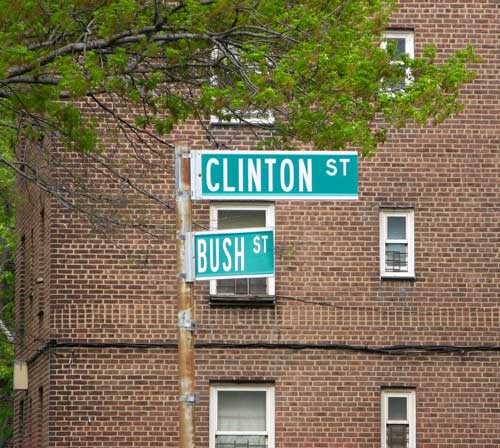
Clinton and Bush

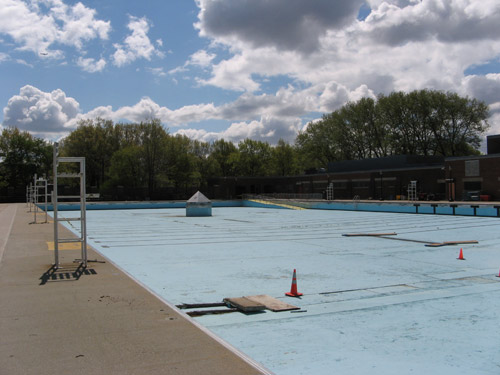
We stopped in at the Red Hook Commmunity Farm and the Sol Goldman Pool (still closed for the season) which opened in 1936, as one of the 11 WPA-funded pools opened under Mayor Fiorello H. Laguardia and Parks Commissioner Robert Moses. Last summer, photographs of the then-named “Red Hook Pool” were included in an exhibit on the city’s public pools at Central Park’s Arsenal Gallery.

Which reminds me that there are still a couple more weeks to check out the exhibitions on Moses (whose Gowanus Expressway cut off Red Hook from Brooklyn proper in 1946) at the Queens Museum and the Museum of the City of New York.

Red Hook Pool

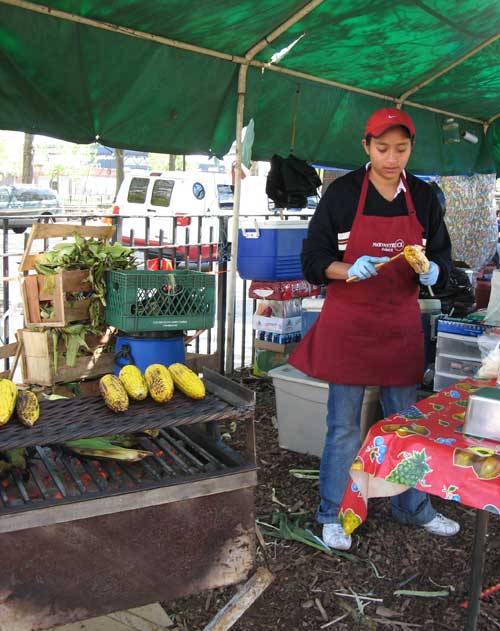
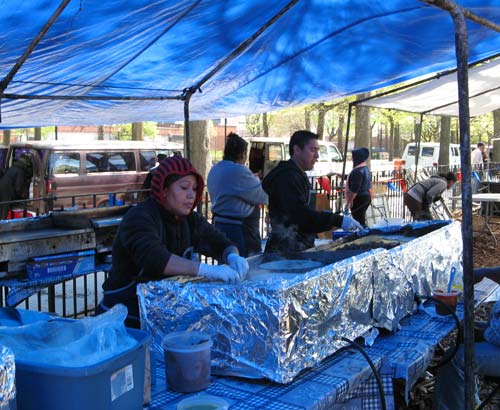
I’d read so much about the variety and quality of food available from the stalls surrounding the Red Hook ball fields that I could hardly believe that I finally made it to this foodie paradise. Unfortunately, my stomach couldn’t quite handle the tacos, enchiladas, huaraches, pupusas, ceviche and grilled corn at this early hour, so I was relegated to just taking in the sights and smells. This time.

Red Hook Ballpark vendor

Red Hook Ballpark vendor

We were brought past the historic shipyard, before which Lutz briefly mounted his soapbox to deliver his unvarnished views on the negative impact a big (blue) box retailer, and accompanying vehicular traffic, would have on this neighborhood with no direct subway access.

Red Hook Waterfront

A Grand view

AH generously offered to host JL‘s birthday festivities at her penthouse-floor apartment in the Seward Park Houses on Grand. This complex of a dozen brown-brick highrises sits in an area south of the the Williamsburg Bridge and west of FDR Drive. The cooperatives were sponsored and financed by textile/garment trade unions and the United Housing Foundation, in a drive to create moderately-priced housing for union members; in 1959, initial offerings were priced at about $3,000(!) per unit. The lobbies still feature original Hugo Gellert murals of Thomas Jefferson, Abraham Lincoln, Franklin D. Roosevelt, and Albert Einstein; the upper-level balconies, some outstanding views of Lower Manhattan.

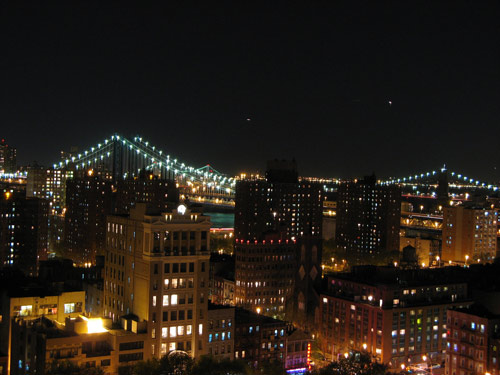
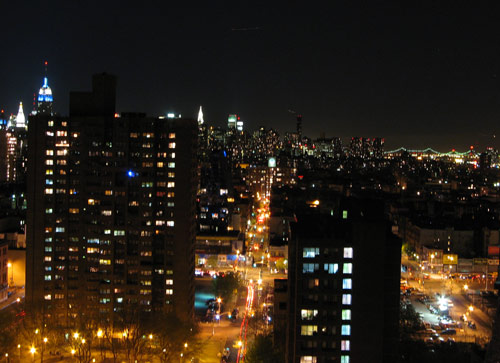
Grand Street view

Grand Street view

I was last here in September for another birthday, the highlight of which was AH’s home-baked carrot cake. This time, though, in deference to JL’s strict dietary regimen, the cupcakes were brought in from Babycakes. The Lower East Side bakery touts products that are certified Kosher, Parve and vegan, and fully — almost improbably — organic, dairy-free, sugar-free, gluten-free, wheat-free, nut-free and egg-free. How do they do it? Short answer: spelt flour or garbanzo/fava bean flour mix instead of wheat flour; agave nectar or unrefined, unprocessed cane juice instead of white sugar; and soy milk instead of dairy. All of which sounds potentially taste-free, but which is actually far more palatable than one would have any right to expect. In fact, New York magazine caused quite a stir when they declared Babycakes the best cupcakes in the city — that’s best overall! — in 2006.

Happy 30th, JL!

Return to Skyway

Wasn’t I just in Chinatown?

No matter: this time, I hopped the B from the Upper West Side to join the B brothers at Skyway for what some foodies claim to be the Sripraphai of Malaysian food — a high compliment indeed. I was last at the restaurant in the Fall; this time, with two additional diners, I hoped to be able to delve a little further into the menu.

Skyway

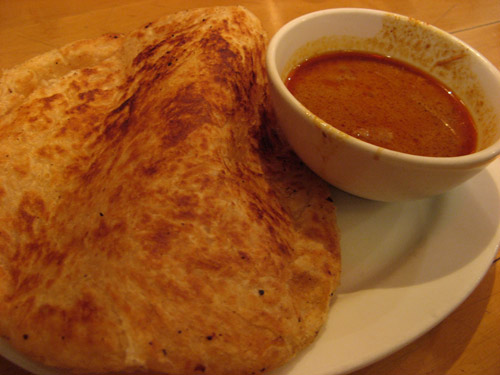
Roti canai — pronounced “Chennai,” after the city formerly known as Madras — is also called roti prata (or paratha ) in Singapore. The traditional Mamak (Indian Muslim) griddle-fried dough pancake is available around the clock throughout the streets of Malaysia, where I first sampled it off the ubiquitous roadside stalls of Kuala Lumpur. Best served piping hot: buttery-crisp on the outside, fluffy and flaky within, I had relegated the simple snack to fond memory when I recently learned that the dough is stocked frozen in Asian and Indian markets. Hmm, interesting.

Here at Skyway, the roti is served with a side bowl of soupy chicken curry for dipping.

Roti canai

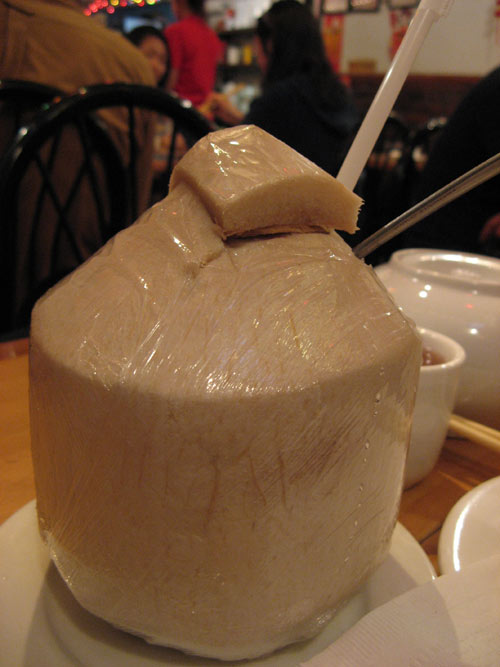
Both SYB and HYB opted for the “fresh coconut drink,”; the regular (un-fresh?) coconut drink, which appeared as a separate (less expensive) item on the menu, turned out not to be an option when HYB attempted to order it, to the slight chagrin of our server.

Fresh coconut

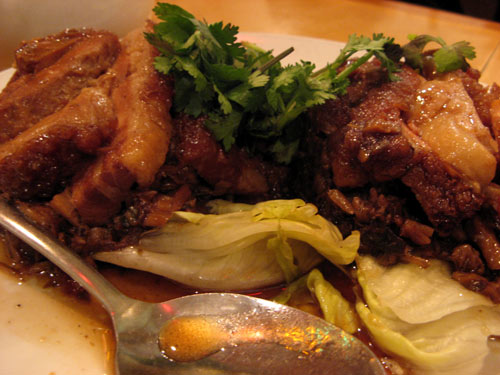
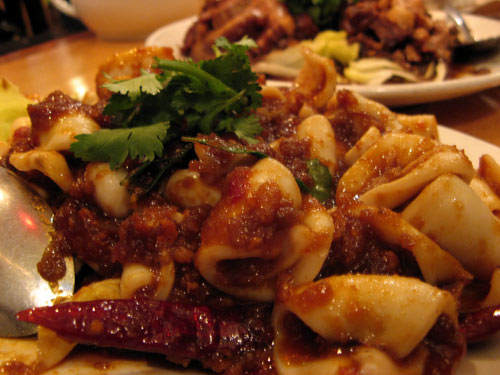
We each picked one dish to contribute to our family-style dinner: pork and preserved vegetables (HYB;); the vaguely-named “squid with special sauce” (me); and the pearl noodles (SYB), not pictured here.

Pork and preserved vegetables

Squid with special sauce

Ah, good stuff. Those noodles were just as delicious as I remembered, and what was left of the squid dish, with its special, “kicky” sauce — check out that enormous red chile pepper — was deemed worthy of being packed up for home. Unfortunately, not one of the three of us remembered to retrieve the takeout box from AH’s refrigerator later that night… but I guess that’s what a couple buckets of bubbly will do.

Oh Yeah

Another destination on the seemingly endless tour of Chinatown lunch spots: New Yeah Shanghai Deluxe on Bayard. The restaurant is most often compared to the two other hu cai eateries on the same street: New Green Bo and Shanghai Cuisine, local favorite of chef Ming Tsai.

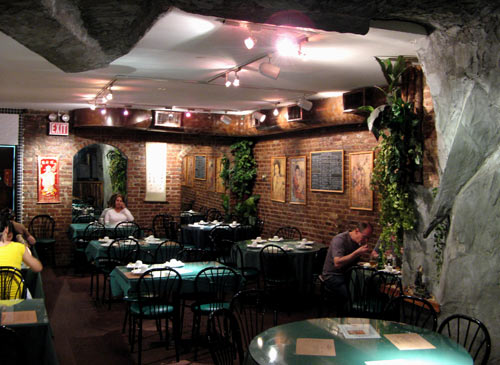
NYSD is the youngest (and seemingly least popular) of the restaurant trio; decor-wise, it sits a notch above the other two, in that there exists at least some attempt at ambience: exposed brick walls, scads of fake greenery, curious cave-like wall and ceiling treatments… taken as a whole a little odd, perhaps, but as Chinese restaurants go, I’ve seen worse.

The restaurant feels more spacious than most Chinatown restaurants, too, in large part due to the depth-enhancing mirrors strategically placed along the back wall, which briefly fooled the eye of my dining companion this afternoon. We crossed over a short, fountain-lined footbridge into the back room, which was lined with framed, vintage-looking Shanghai ladies advertising posters.

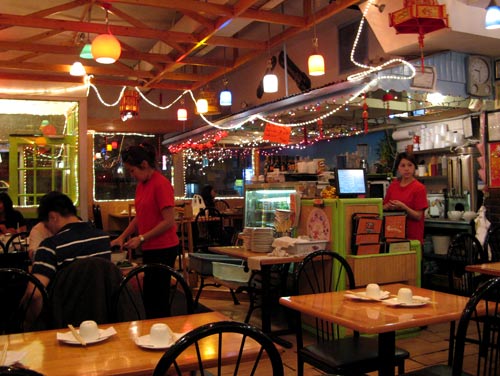
Yeah Shanghai

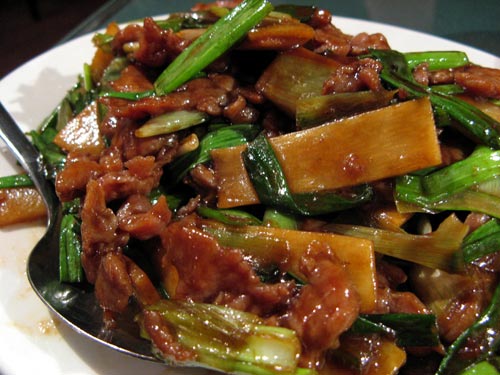
I forewent the highly recommended (but possibly too heavy for midday) honey roasted pork — I wonder if it’s anything like “candy pork“? — in favor of the bargain lunch specials, served over rice and accompanied by a bowl of hot and sour soup — most $4.25 – $4.95.

Beef and Scallions

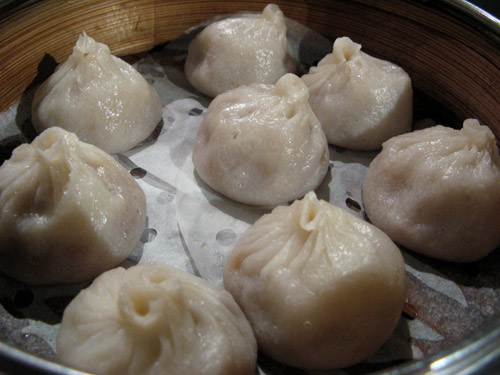
And of course, we could not pass up a bamboo steamer full of those pinched pouches of molten deliciousness: the Shanghai soup dumplings. New Yeah Shanghai Deluxe serves up respectable rendition, certainly, but I would have to give the edge here to New Green Bo.

Xiao long bao

*chik… chika-chiKAH*