vip in the city, page 35

Pretty produce

Organic produce tends to have more blemishes than conventionally grown produce which, although not detrimental to the nutritional value, may be unappealing to shoppers unaccustomed to the natural look. Those same shoppers, however, would probably prefer a few scars over more chemicals in their food. 71 to 90 percent of conventionally grown produce have traces of pesticide residue, compared with 13 to 23 percent of their organically grown counterparts. Sometimes it’s worth seeking out the organic variety.

Of course, all of the vegetables we receive in our weekly CSA share from Stoneledge Farm are organic, which is to say, grown without antibiotics, hormones, synthetic pesticides, or synthetic fertilizers. After a few weeks of lacey arugula and mismatched beets, it was nice to see some truly picture-worthy specimens.

Buttercrunch lettuce:

Buttercrunch lettuce

And a CSA special, opal basil:

Opal basil

Good (looking) eats

J had offered to accompany me back to the doctor early this morning, which was fortunate for me, as I quite literally could not have navigated my way the ten blocks to Roosevelt Hospital, and then through its labyrinthine corridors, without her physically guiding me the entire way.

And so this beautiful day wouldn’t be all about my medical crisis, we stopped in for lunch at Bouchon Bakery, with its stellar views over Columbus Circle into the southwest corner of the park. Not that I could really enjoy it: in my impaired state, I only narrowly avoided a very embarrassing situation when I couldn’t determine with certainty which set of doors led to the women’s restrooms. The photos below were just as much for me to review later as they were for this blog.

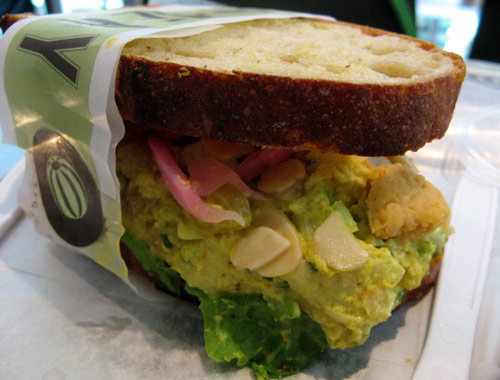
J and I split a curried chicken salad sandwich, which was hands down the best chicken salad sandwich I’d ever had — in a mall or otherwise. Thomas Keller – of Yountville’s French Laundry and Ratatouille fame – elevated this simple café fare with his focus on fresh, premium ingredients. The gourmet version of our sandwich was made up of tender chunks of roast chicken, studded with golden raisins and toasted almonds, and served on hummus-spread fennel semolina bread, with romaine lettuce, pickled red onions and a side of cornichons.

chicken salad sandwich

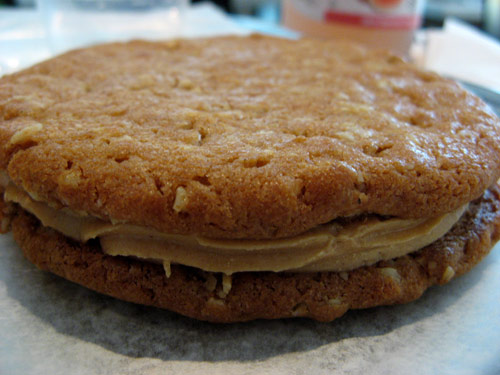
Though his were just named the best sticky buns in the city, this afternoon we opted for the Thomas Keller Nutter Butter – a decadent, yet comforting take on the classic Nabisco cookie. (There’s a TKO — Thomas Keller Oreo — also.) At just under $20 for the two items, plus a quality lemonade and a bottled soda, our lunch wasn’t exactly “cheap eats,” but at less than one-tenth the price of a the prix-fixe tasting menu at Per Se upstairs, well worth the small splurge.

TK nutter butter

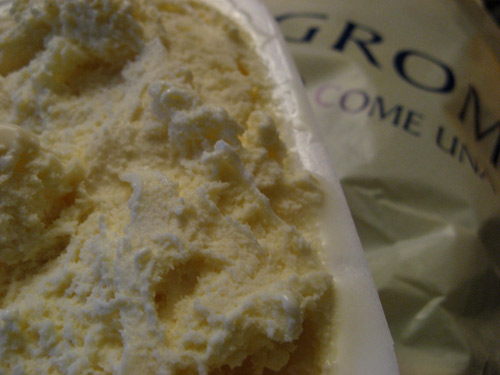
Back at my still-dimmed apartment, J kept me company as we sat through a mini-marathon of Top Chef. Later still, SYB dropped in for a brief visit after having valiantly endured the still-considerable crowds to bring by another taste of luxury in the form of Madagascar vanilla gelato from Grom.

Grom gelato

I think I could get used to this.

Timing is everything

On July 1, thousands of freshly minted physicians, weeks out of medical school, begin their hospital residencies. It’s the day the annual turnover of interns and residents occurs, prompting what is known in teaching hospitals around the country as the “July effect” or “July phenomenon.” Quantifying the phenomenon is challenging – do the newbies make more errors than those who have been on the job a little longer? Or does the extra vigilance by their attending supervisors counterbalance their inexperience? – but even doctors make morbid jokes about it.

According to a recent panel of New York City doctors, another time to avoid the hospital is during shift change – usually 7 to 8AM and 11PM to 1AM – when important information can get lost in the shuffle.

So it was with much apprehension in my heart (and searing, blinding pain in my eye) that I found myself having to visit the emergency room of the largest voluntary teaching hospital in New York State, at the worst time of day, on the worst day of the year. Obviously, one does not get the luxury of scheduling such visits. So after my panicky, tearful wake-up call, B raced into the city in record time, and we were on our way.

I’d been through this before, and suffice it to say: nobody wants to be in the emergency room. If you’re there, it’s because something has gone horribly awry. You’re nervous, vulnerable, and completely dependent on others. Your own miseries are barely distinguishable in the communal distress of the teeming, chaotic exam rooms. It’s a fully humbling and overall wretched experience.

Aside from some misplaced paperwork — which I only learned about the next day — my July 1 visit went as smoothly as I could hope for. Three doctors, a couple of wheelchair rides, and several hours later, I was sent back to my darkened home with a handful of prescriptions and instructions to return to the hospital the following morning. In the meantime: no reading, television watching or Internet usage.

It was going to be a long night.

P.S. 1 Warm Up

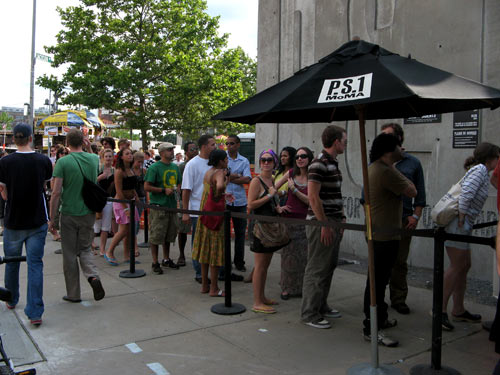
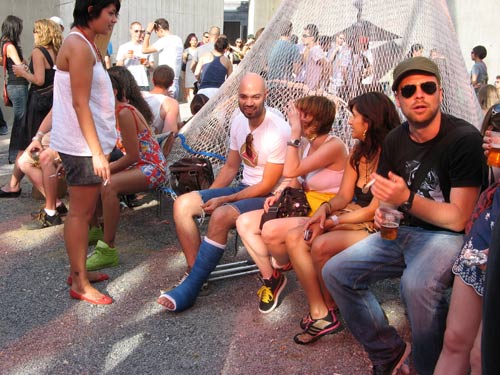
The first P.S. 1 Warm Up of the 2007 season drew the entire hipster population of Brooklyn, along with some brand new iPhones, and quite a few European expats, into Long Island City. As if to prove the point, while on line for beer tickets, I actually ran into a couple I met at MC’s birthday party at Williamsburg’s Soft Spot a couple of weeks ago.

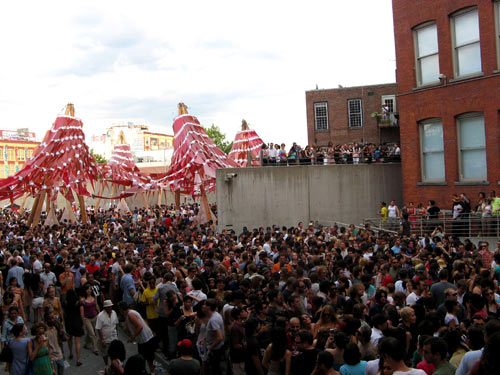
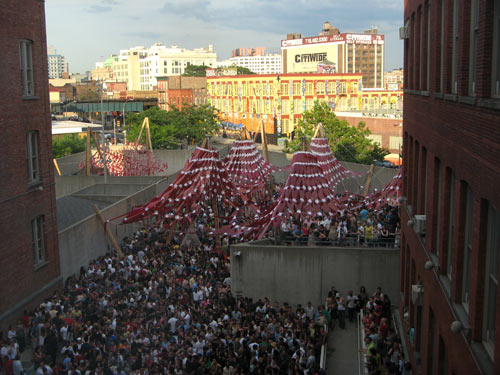
This afternoon was our first glimpse at the winning installation of this year’s MoMA/P.S.1 Young Architects Program: “Liquid Sky” by Los Angeles-based Ball-Nogues, which three of us had seen as a work in progress over Memorial Day weekend.

Warm Up line

Warm Up crowd

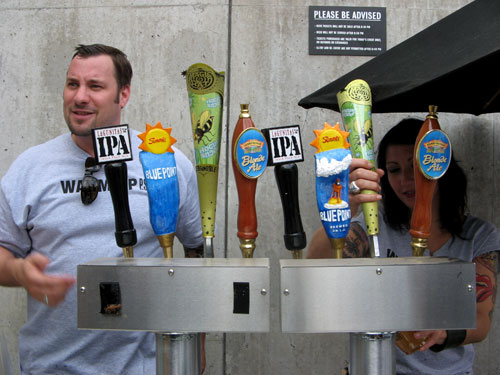
Warm Up bartenders

The crowds were crushing on this sweltering summer afternoon, and underneath the kaleidoscopic crimson canopies, a few skirmishes were inevitable. While on the endless queue with our Brits for Magic Hats, a couple of bold weasels attempted to take advantage of our cheerful distraction to squeeze in line ahead of us. We all noticed their encroaching movements at the same moment; I felt my dander rise, but before I could call them out on it, TH stepped in with a quick smile and a sly remark that completely disarmed the would-be infiltrators. Within seconds, they were chuckling ruefully and apologizing — actually apologizing! – to us for the “misunderstanding.” I stood by agog during the round of good-natured backslaps and handshakes — we’re all friends now?! — after which they cheerfully left us to take their rightful places at the back of the line.

Despite having witnessed the entire exchange firsthand, I could hardly believe that this potentially explosive situation played out the way it did. Mr. Charming, indeed!

Warm Up crowds

Warm Up crowds

For more, check out my full PS1 Warm Up 2007 flickr set — which includes photos of our subsequent (less insanely crowded) visit.

AntiGravity

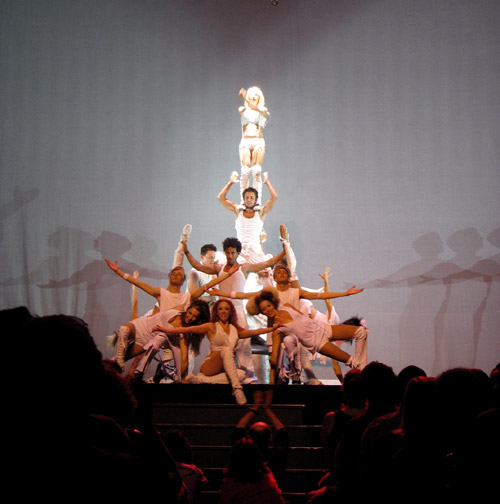
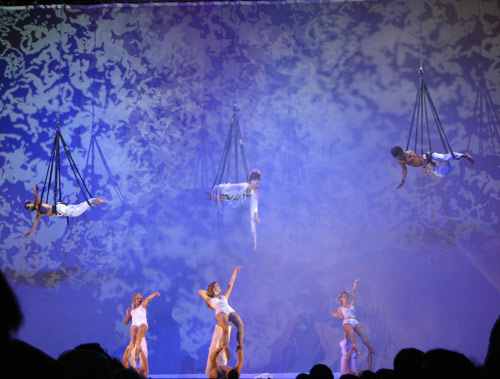
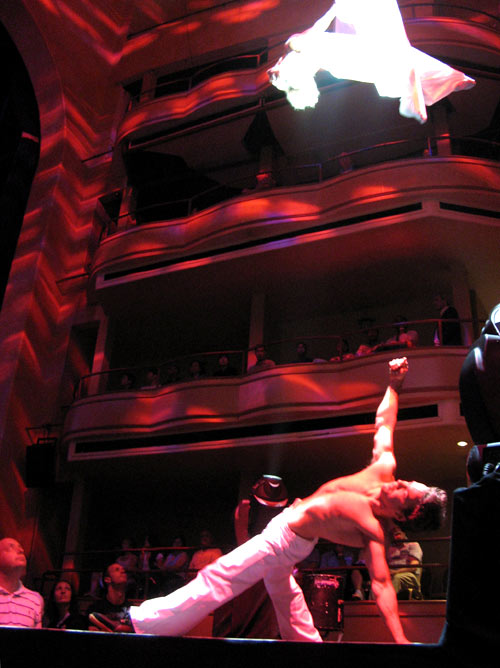
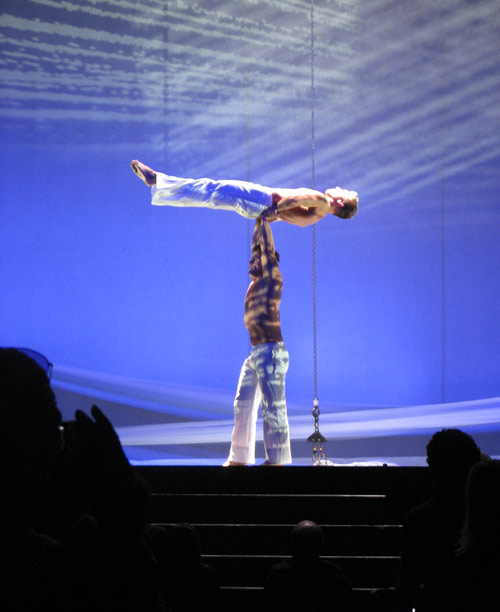
At the Hammerstein Ballroom tonight to see AntiGravity, New York City’s only aerial performance dance and acrobatic company, created by Christopher Harrison in 1990. This was to be the troupe’s hometown stop of their national tour: a variety show of gymnasts, modern dancers, circus acrobats and stunt artists, set to a blaring, pounding soundtrack of techno, dance and Top 40.

Anti-Gravity

Anti-Gravity

Anti-Gravity

Anti-Gravity

Anti-Gravity

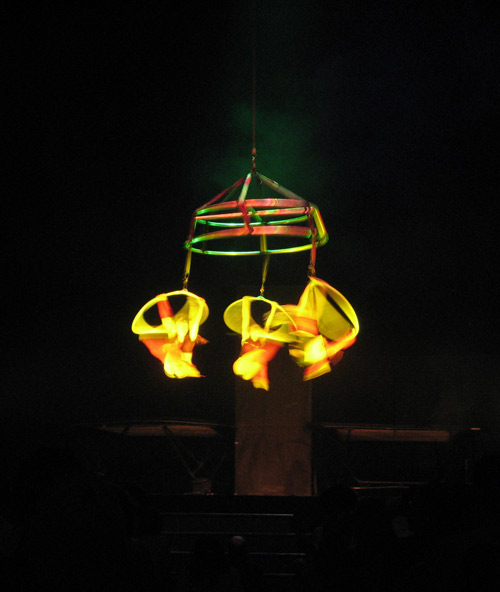
The show was billed as “New York’s answer to Cirque de Soleil,” – which in its best moments, might be apt. Not all of the sets were as successful, though: the Argentine “Lombard Twins” were far more entertaining when they forewent the awkward, flirty audience banter to show off their synchronized pop-and-lock dance moves. Several segments felt too gimmicky: the “TechnoRiders on Cruise Control” set piece, featuring performers on Segways and roller-skates, felt wildly chaotic (not in a good way); others, like the “X-dream” trampoline wall and the AntiGravity boots set, made better and more whimsical use of the stage props. Most impressive, from a sheer physical standpoint, were the Acroduet “Strength Bruts” (reminiscent of the Aussie English gents from last year’s “Absinthe” show at the Seaport) and of course, AntiGravity’s signature aerial acrobatic stunts: dangling and twirling in hammocks, harnesses, bungee cords, and neon-lit hoops.

Excellent dumplings

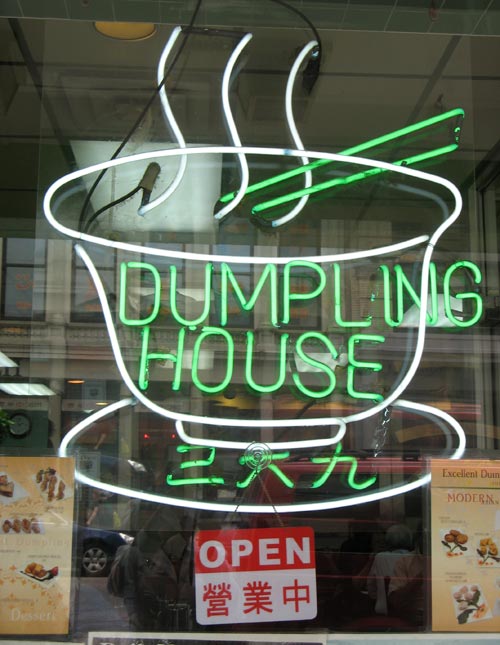
We chose this spot for Thursday’s lunch primarily for its proximity to the Canal Street subway station. The name of this unassuming restaurant on Lafayette is Excellent Dumpling House, though the neon signage in the front window modestly indicates just “Dumpling House. ”

Excellent Dumpling House

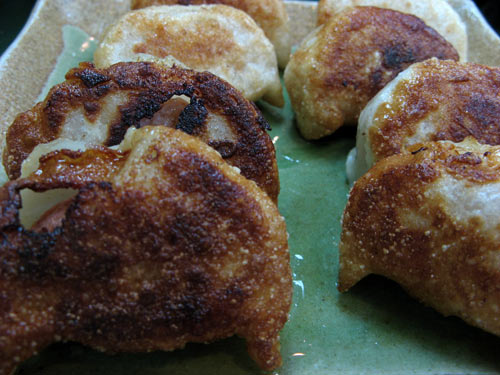
The restaurant specializes in classic — some would say: humble — Cantonese dishes. And of course: dumplings. (Yes, they’re pretty excellent.)

EDH dumplings

And in other news: some not-so-excellent dumplings.

Black Gold

After another trip to the bánh mì shop on Walker Street, I made my way to The Tank Space for Performing and Visual Arts for tonight’s screening of Black Gold.

The 2006 UK documentary examines the unjust conditions under which coffee is sold, tracking the fair trade movement as exemplified in the efforts of Tadesse Meskela, general manager of the Oromia Coffee Farmers Cooperative Union (OCFCU) in southern Ethiopia. The film follows as Meskela works tirelessly to secure equitable prices for 74,000 coffee farmers in his region.

Between 2001 and 2003, the price for coffee hit a 30 year low — a direct result of an acute glut in the world market linked to aggressive new producers, particularly in Vietnam, which in one decade went from a nonentity to becoming the second largest supplier of coffee beans, after Brazil. African farmers could no longer support themselves and famine spread throughout the coffee region. Schools closed for lack of funds, and many farmers were forced to uproot their coffee trees to replant more profitable chat, a narcotic widely used in East Africa.

In the conventional marketplace, producers in poor countries receive only a minuscule fraction of the total revenue; for every $3.00 cup of coffee sold at Starbucks, a farmer receives only about three cents. Most of the remainder is distributed among middlemen, especially the four multinational food conglomerates (Nestle, Kraft Foods, Procter & Gamble, and Sara Lee) who dominate the $80 billion retail industry. The fair trade system guards against price fluctuations created by commodity brokers, processors, creditors and exporters, and guarantees a living wage for producers of the commodity: for coffee farmers, at least $1.26 per pound of beans, as compared to the international market price of about $.50 per pound.
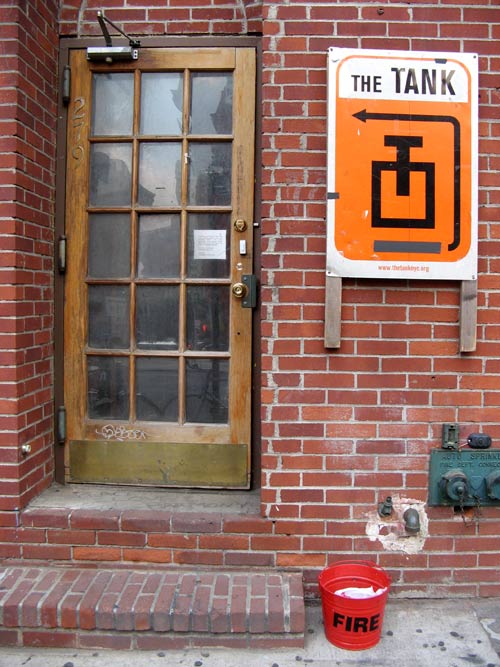
The Tank

For more, view the 13-minute video on Nicaraguan coffee farmers, produced by Equal Exchange, the largest for-profit Fair Trade company in the United States.

The decision to seek out Fair Trade Certified products makes an important and tangible difference in people’s lives. At the Q&A afterwards, with representatives from the New York Fair Trade Coalition and The Fair Trade Resource Network, much of the discussion revolved around Seattle-based juggernaut Starbucks.

SBUX corporate policy dictates that the company will brew a fresh cup of Fair Trade coffee for you upon request – a challenge taken up by several bloggers. In practice, though, the request is usually greeted with perplexed looks – and no Fair Trade coffee. (We tried this ourselves over the next couple of weeks in the financial district outlets with similar results.) According to a 2006 press release (.pdf), the company is committed to fair trade and to paying producers equitable prices for all of their coffee, which are often substantially above the prevailing commodity-grade as set by New York – regardless of labels and certifications.

In 2003, at the nadir of the coffee price slump, Dunkin’ Donuts became the first national brand to use exclusively Fair Trade Certified coffee in all their espresso-based beverages. Humanitarian agency Oxfam applauded the efforts, but note that the policy applies to espresso beverages only, which account for about 2% of the company’s coffee bean purchases. Baby steps.

The post-film reception of coffee, cookies and brownies:
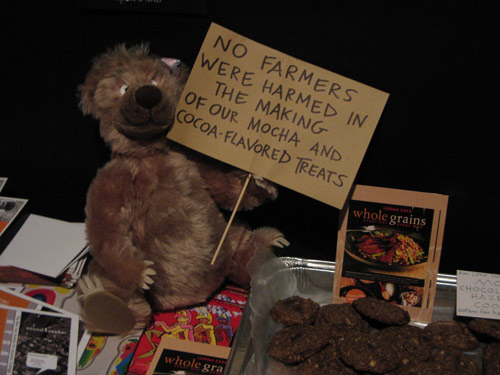
Black Gold Bear

For an alternate view, read the recent Economist article arguing against Fair Trade on an economic basis, as it interferes with the invisible hand of the market.


E Pluribus Venom

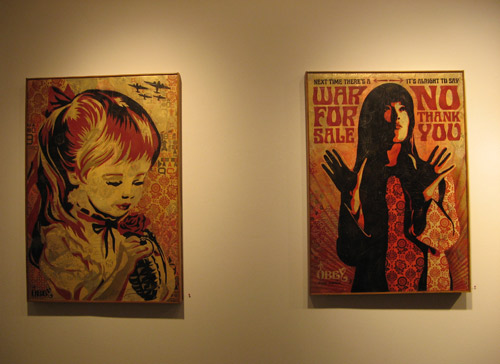
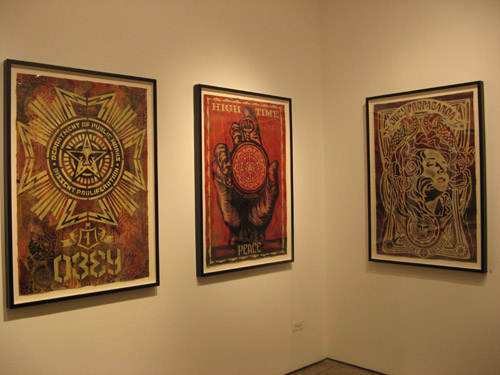
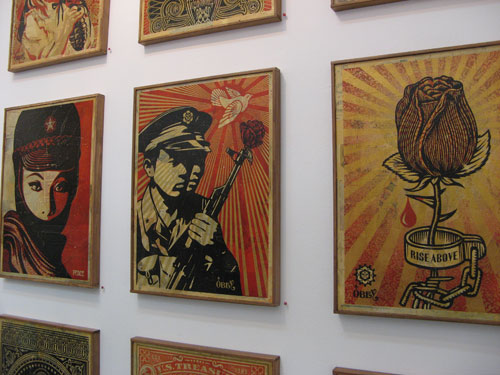
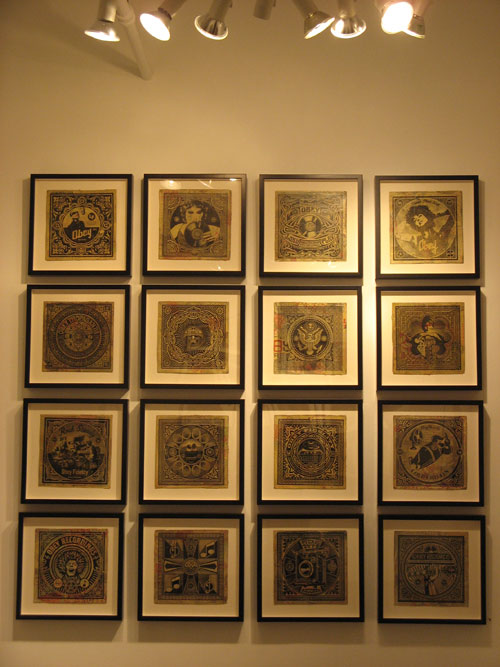
At a reception for Shepard Fairey’s “E Pluribus Venom” show at the Jonathan Levine Gallery — on view through July 21, 2007.

As a risd undergrad in 1989, Fairey launched his “OBEY GIANT” street sticker campaign, which he dubbed “an experiment in phenomenology.” The experiment was a tremendous success: throughout the 1990s, the silk-screened visage of André the Giant turned up unexpectedly on streetlights, sidewalks and buildings around the world.

From those grassroots beginnings, Fairey built a clothing line, a design firm and a lifestyle magazine, and solidified his place in the pop art world with his street art, Fender guitars, album covers, and movie posters — including the one for 2006’s Walk the Line.

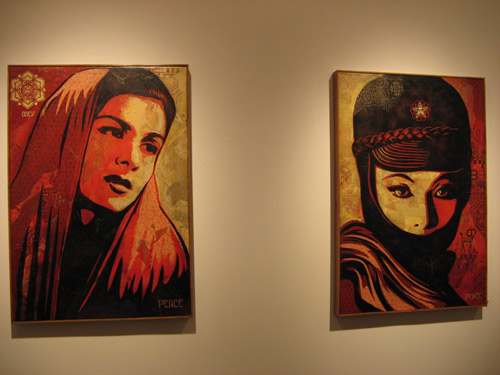
Fairey’s new exhibit includes small to large-scale, politically-charged paintings, prints, and mixed media pieces rich in metaphor. Its title, which translates to “out of many, poison,” is derived from the motto that appears on most American currency.

Shepard Fairey

Shepard Fairey

Shepard Fairey

Shepard Fairey

Shepard Fairey

Levine was on hand to offer a brief presentation on Fairey’s works.  Judging from the buzz of the crowd tonight and the ubiquitous red pushpins – indicating pieces already claimed for purchase – the show was a smash hit.

Joshua

The final film seminar of the season: Joshua, starring starring Sam Rockwell and Vera Farmiga as a perfect, privileged Manhattan couple, and Jacob Korgan as their 9-year old son, who has difficulty adjusting to the arrival of his new baby sister. Another film in the creepy-kid genre – see The Bad Seed and The Omen — which I tend to find too preternaturally disturbing to enjoy even when done well, which was not the case here.

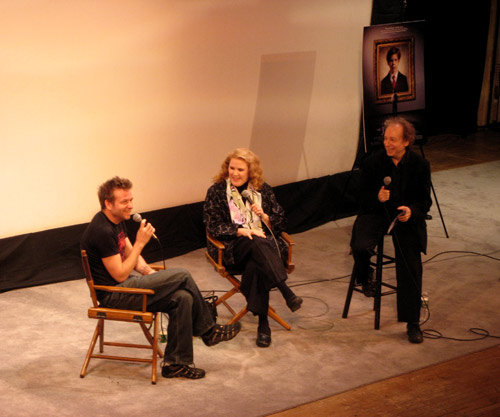
At the post-film discussion: co-stars Celia Weston and Dallas Roberts.

Joshua cast

It took me a few minutes, but I finally recognized Roberts from 2004’s A Home at the End of the World – the independent film adaptation of a Michael Cunningham novel, perhaps better known as “that movie where [Colin Farrell]’s naked but it was apparently ‘too distracting’ so they’ve cut it out.” (Yeah, seriously.)

I’d seen Weston in perhaps a dozen film and television appearances without ever knowing her real name – a level of fame just short of stardom that the now-hiatused Fametracker.com used to refer to aptly as “Hey! It’s That Guy!

When asked what inspired them to take on their respective roles of a flamboyant gay uncle and an evangelical Christian grandmother, Roberts jokingly (but candidly) responded, “Money is a great motivator.” Weston, for her part, concurred, citing one film part she had been hesitant to accept after reading the script, but ultimately, was glad she did; the movie went on become a “cash cow of residual checks,” thanks to its endless airings on television. Despite our pleadings, she tactfully refused to name the film. I’m pretty sure she was referring to How to Lose a Guy in Ten Days.

Food, friends, family

I was intrigued from the moment I first learned of the “Big Pig Gig” at Daisy May’s BBQ USA – let it be noted: many months before the “Fat, Glorious Fat” piece appeared in The New York Times. J and J’s return to the city the week of my birthday suggested a synchronicity that created a perfect excuse for a gathering of my nearest and dearest over copious amounts of food.

The days leading up to Sunday’s dinner was a flurry of planning – much of which, as it happens, went on behind the scenes (spearheaded by SYB) to my blissful ignorance. To SC’s disappointment, we opted not for the whole pig, in favor of the more manageable pork butt. Much has been written about this particular feast, which Daisy May’s began offering in 2005, and although personally I was not bothered by the prospect of a full pig-out, I feared the more sensitive among us would not well endure the sight of a 30 to 35-pound pig propped on the table.

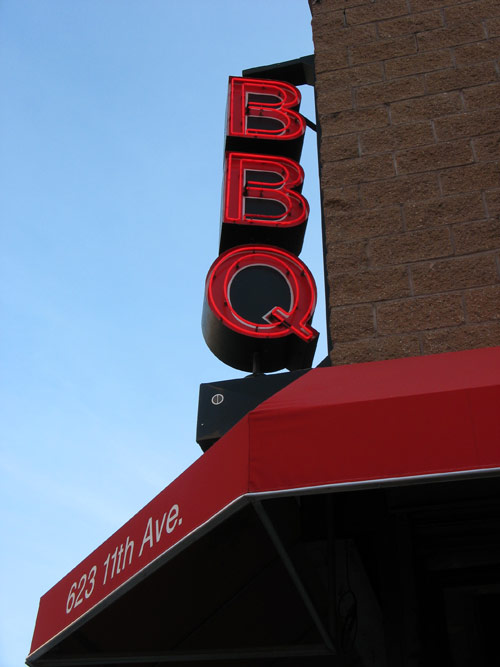
Daisy May BBQ

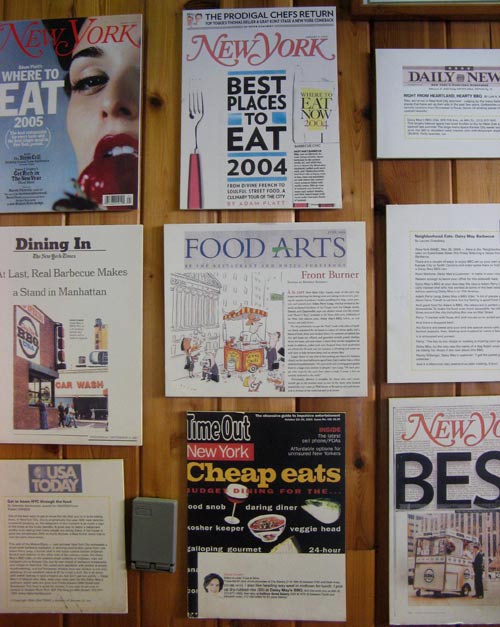
Daisy May reviews

My attempts to spare my friends came to naught when the group at the adjacent table ended up ordering the half pig feast – which in some ways, was more disturbing than the whole. Think: two hooves, half a head, half a snout, one ear… that last which somehow made its way to our table into SC’s clutches.

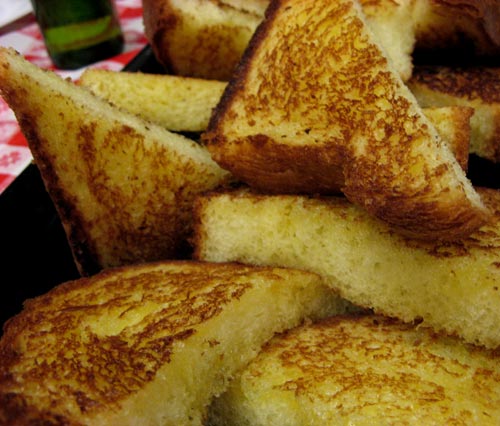
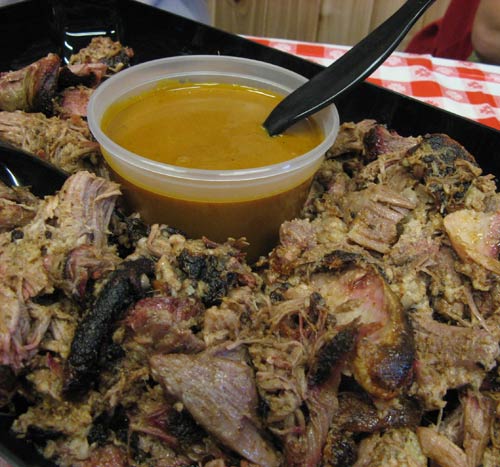
Our pork butts arrived as twin piles of shredded meat, accompanied by a bowl of gravy. The rack of lamb made a somewhat more elegant presentation. (Both were wildly delicious.) Recovering vegetarian J, who has a two leg limit on the animals she consumes, had the “Tennessee whisky beer can style” chicken. To supplement all this meat: “Texas Toast” (which, from what I could tell, was just buttered toast — but bigger), Creamy Cole Slaw, Black Beans with Burnt Ends, Rustic Creamy Corn with New York State Cheddar, Mashed Potatoes with Red Eye Gravy, Cajun Dirty Rice and Beans, Sweet Potatoes with Brown Sugar and Bourbon Peaches. And to wash it all down, cold beer and mason jars of sweet — intensely sweet — iced tea.

Texas Toast

Pork Butt

The 14 of us – me in my Gay Pride lei, compliments of MLF — ate until we could eat no more. When we were done, there was food enough left for another feast. Which we had, back at the surprise gathering at S & J’s new home. (Very tricksy, my friends!)

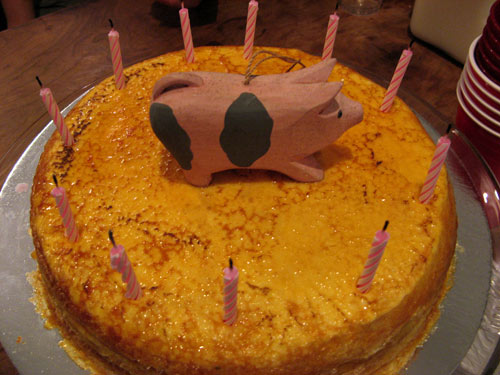
The long- coveted and precious (definitions 1, 2 and 3) Lady M Mille Crêpes cake, with its 22-23 dazzling layers of crepes and cream. (The wooden piggy was a bonus.):

Lady M Mille Crepes

(I hear they make a fine cheesecake, too.)

…and as if this were not bounty enough: the generous gift of music — which thanks to B, I did not abandon in the cab on the way home.

Mille mercis!