Dim sum, the bite-size delicacies inextricably linked to the Chinese social tradition date from the 10th century Sung Dynasty, when chefs created these delicate morsels from rare and expensive delicacies like bird tongues and pheasant to tempt the jaded palates of the imperial court and, hopefully, to touch their hearts (which is the poetic-sounding, literal translation of “dim sum.”) Soon, teahouses along the trade routes of southern China began offering the light snacks to accompany tea served to travelers and area rural farmers, where the bites became part of a longstanding dining tradition. In the 13th century, Mongol invaders, under the command of Genghis Khan, forced the royal court – and dim sum – south to Canton.
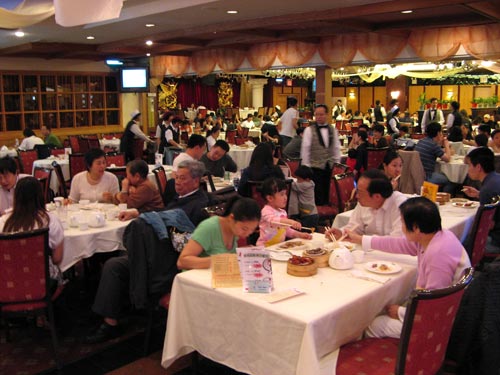
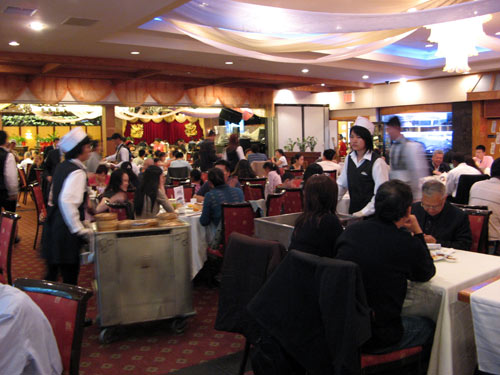
The midday weekend crush at East Manor restaurant in Flushing:
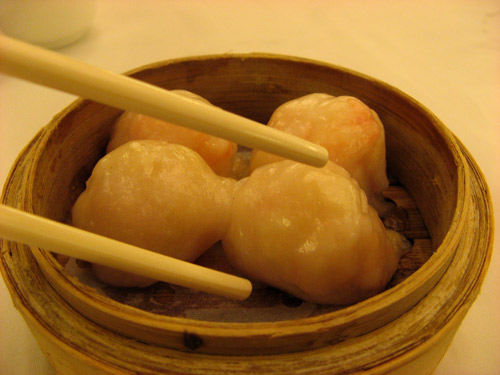
Har gow (shrimp and bamboo-shoot dumplings):
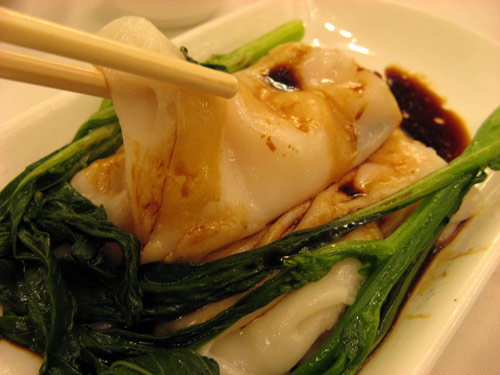
Har cheong fun (shrimp rice noodle rolls, or shrimp rice crepes — depending on the menu):
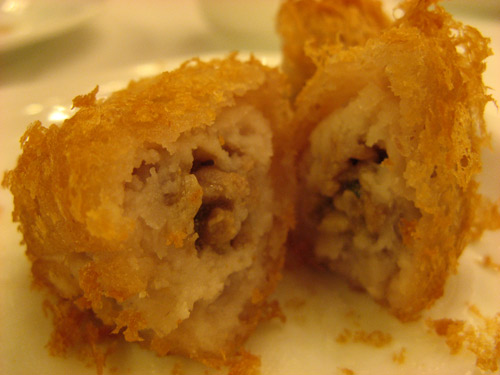
Woo kok (taro root dumplings):
“Going for dim sum,” by the way, is a completely Westernized phrasing; native Cantonese never use this construction, instead referring to the meal as “yum cha,” literally, “drinking tea,” which was onetime the central focus of the gathering.
2 comments
Qsoz on
vipnyc on